
Running a small retail business with seasonal inventory comes with unique financial rhythms. Sales might surge during the holidays and slow to a trickle in the off-season. That kind of cash flow pattern can make it challenging to secure traditional financing — but the Small Business Administration (SBA) offers loan programs specifically designed to help businesses like yours. Before you can access those funds, though, you'll need to understand what documents are needed for an SBA loan for a small retail business with seasonal inventory. Getting your paperwork in order early can dramatically improve your chances of approval and speed up the process considerably. This guide covers everything you need to know, from core financial records to seasonal-specific documentation that lenders often require.
Why SBA Loans Are a Smart Fit for Seasonal Retail Businesses
SBA loans — particularly the popular SBA 7(a) program — are known for their flexible terms, competitive interest rates, and longer repayment schedules compared to conventional business loans. For a seasonal retail operation, these features can be especially valuable. Longer terms mean lower monthly payments, which is helpful when revenues dip during your slow season.
The SBA doesn't lend money directly. Instead, it partially guarantees loans made by approved lenders, which reduces the lender's risk and makes them more willing to work with small businesses that might not qualify for standard bank financing. Retail businesses with seasonal inventory fluctuations often fall into this category, so understanding the SBA loan application for seasonal retail business is a critical first step.
Before diving into the document checklist, it's worth noting that lenders will want to see that your business is viable year-round — even if revenue is concentrated in certain months. That means your documentation needs to tell a complete financial story, not just a snapshot of your peak season.
Core Business Documents Every SBA Applicant Must Provide
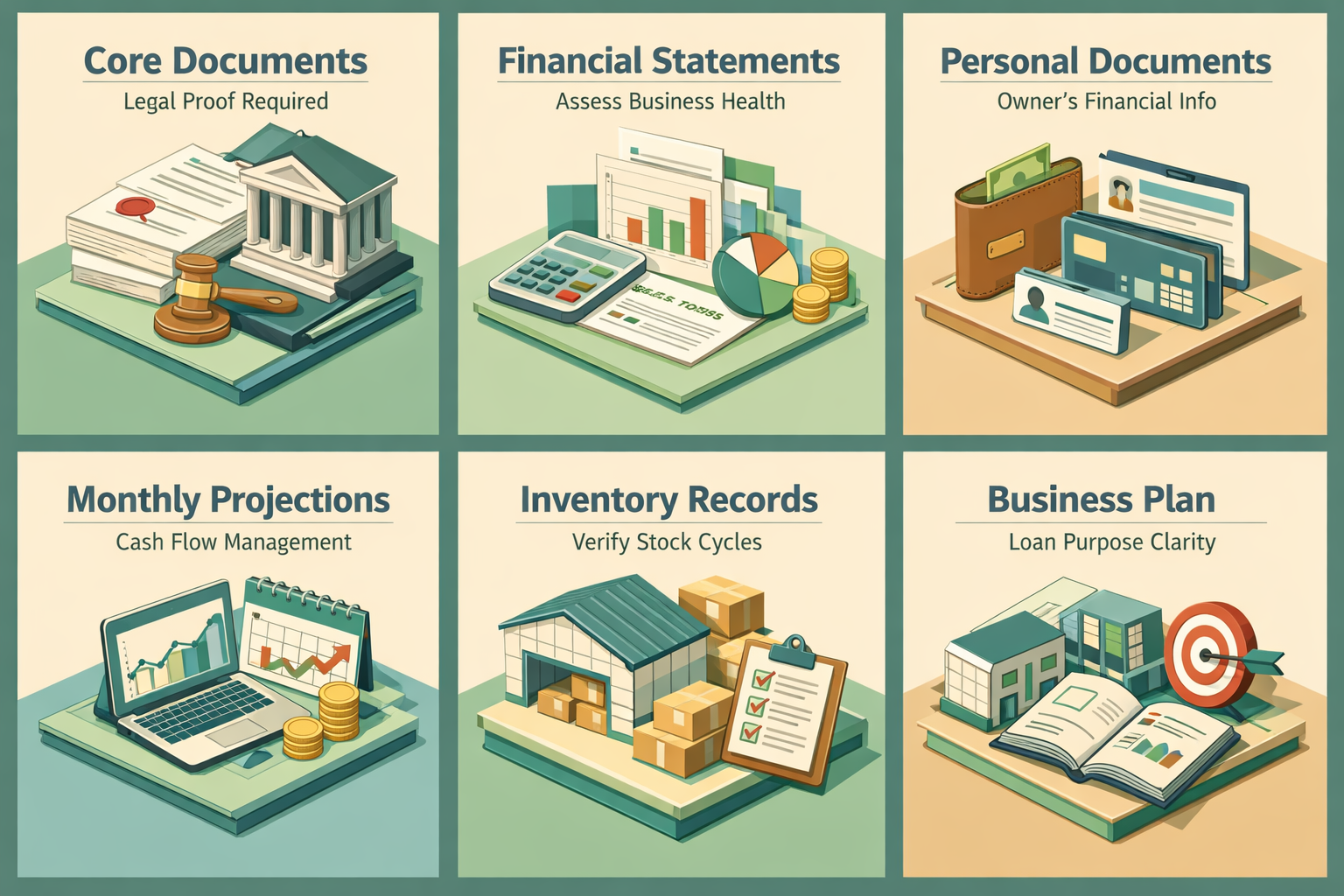
Regardless of your industry or business model, SBA lenders typically require a standard set of business documents to verify your legal standing and operational history. These form the foundation of your application.
- Business license and registration: Proof that your retail business is legally registered in your state or municipality.
- Articles of incorporation or organization: If your business is structured as an LLC, corporation, or partnership, you'll need to provide your formation documents.
- Employer Identification Number (EIN): Your federal tax ID, which lenders use to verify your business identity.
- Business certificates and permits: Any licenses specific to your retail operations, such as sales tax permits or local business permits.
- Ownership and affiliations: Documentation showing the ownership structure of your business, including any affiliates or related entities.
- Lease agreements: If you operate from a physical retail location, a copy of your current lease or property ownership documents is typically required.
These foundational documents help lenders confirm that your business is legitimate, properly structured, and operating within the law. Missing even one of these can slow down or derail your application, so gather them early in the process.
Financial Statements That Show Your Business's True Health
Financial documentation is arguably the most important part of any SBA loan application. Lenders use these records to assess your ability to repay the loan. For seasonal retail businesses, this section requires extra attention because your financials may look very different from month to month.
Profit and Loss Statements
Most lenders will ask for two to three years of profit and loss (P&L) statements. These should reflect the full calendar year — not just your busy season — so lenders can see how your business performs across all twelve months. If your business is newer, provide whatever history you have along with projections.
Balance Sheets
A current balance sheet showing your assets, liabilities, and equity gives lenders a snapshot of your financial position. For retailers carrying seasonal inventory, this document might show significant fluctuations in asset values depending on the time of year. That's normal, but be prepared to explain it.
Business Tax Returns
Lenders typically request two to three years of business tax returns (IRS Form 1120, 1120S, or 1065 depending on your business structure). These are considered highly reliable because they've already been filed with the federal government. Make sure your returns are consistent with your P&L statements.
Current Year-to-Date Financials
In addition to historical returns, you'll likely need a current-year income statement and balance sheet, especially if significant time has passed since your last filed return. Lenders want to see what's happening in your business right now.
Personal Financial Documents Required From Business Owners
SBA loans typically require a personal guarantee from anyone who owns 20% or more of the business. This means your personal financial health matters almost as much as your business's. Here's what you'll likely need to provide:
- Personal tax returns: Usually two to three years of personal federal tax returns (IRS Form 1040), including all schedules.
- Personal financial statement: The SBA has its own form for this — SBA Form 413 — which lists your personal assets, liabilities, income, and contingent liabilities.
- Personal credit history: Lenders will pull your personal credit report. Strong personal credit (typically 650 or above, though requirements vary by lender) can improve your chances of approval.
- Proof of identity: A government-issued photo ID such as a driver's license or passport is standard.
- Résumé or management biography: Some lenders request a brief professional history to verify that you have the experience to run a retail business successfully.
It may feel intrusive to share personal financial information, but this is standard practice for SBA lending. Lenders are taking on meaningful risk, and they want confidence that the people behind the business are financially responsible.
Seasonal-Specific Documentation for Retail Businesses With Inventory Cycles
This is where understanding what documents are needed for an SBA loan for a small retail business with seasonal inventory becomes especially important. Standard applicants may not need some of these items, but for seasonal retailers, they can be critical to winning lender confidence.
Monthly Cash Flow Projections
Because your revenue likely peaks during certain months, lenders will want to see a 12-month cash flow projection that accounts for both busy and slow periods. This should show how you plan to manage loan payments during your off-season. The more detailed and realistic your projections, the better.
Inventory Purchase Records and Supplier Agreements
Lenders may ask for documentation of your inventory purchasing history, including invoices, supplier contracts, or purchase orders. These help verify that your seasonal inventory cycles are real, documented, and manageable. If you have long-standing supplier relationships, letters of reference or ongoing agreements can strengthen your application.
Seasonal Sales History
Point-of-sale (POS) reports, sales summaries by month, or merchant processing statements can paint a clear picture of your seasonal revenue patterns. This data supports your financial statements and demonstrates that your business follows a predictable, manageable cycle rather than unpredictable instability.
Explanation Letter for Revenue Fluctuations
Many SBA lenders appreciate — or even require — a brief written explanation of your seasonal business model. A short letter explaining why your revenues fluctuate (holiday shopping, back-to-school season, summer tourism, etc.) and how you manage cash flow during slower months can go a long way toward building lender confidence.
Business Plan and Loan Purpose Statement
SBA lenders want to know exactly how you plan to use the loan funds and how that use will benefit your business. This is where a well-prepared business plan becomes essential.
Your business plan should include:
- Executive summary: A brief overview of your retail business, its products, target market, and competitive advantages.
- Market analysis: Evidence that there's demand for what you sell, including any research on your local retail market and customer base.
- Operational plan: How your business runs day-to-day, including staffing, inventory management, and supplier relationships.
- Financial projections: At least two to three years of projected revenue, expenses, and net income. For seasonal businesses, these projections should reflect the natural ebb and flow of your annual sales cycle.
- Loan use statement: A clear explanation of how the loan funds will be used — whether that's purchasing pre-season inventory, upgrading your retail space, bridging a cash flow gap, or expanding your product line.
A strong business plan demonstrates that you've thought carefully about your business's future and that the loan has a specific, productive purpose. Lenders are far more likely to approve applications backed by a credible, detailed plan.
Additional SBA Forms and Lender-Specific Requirements
Beyond the documents mentioned above, the SBA and individual lenders typically require several standard forms. Being aware of these ahead of time can save you valuable days during the application process.
- SBA Form 1919 (Borrower Information Form): This form collects background information about the business and its owners, including any criminal history or prior government loans.
- SBA Form 912 (Statement of Personal History): Required for owners who answer certain background questions affirmatively on Form 1919.
- SBA Form 413 (Personal Financial Statement): As mentioned earlier, this form captures the personal financial picture of each qualifying owner.
- Debt schedule: A list of all current business debts, including outstanding balances, monthly payments, lender names, and maturity dates.
- Bank statements: Most lenders request six to twelve months of business bank statements to verify cash flow and average account balances.
Keep in mind that individual lenders may have their own supplementary requirements beyond the SBA's standard checklist. It's always a good idea to ask your lender for a complete document list early in the process so there are no last-minute surprises. Working with an experienced SBA lender or a Small Business Development Center (SBDC) advisor can also help you navigate lender-specific nuances with greater ease.
●Conclusion
Preparing a complete, well-organized loan package is one of the most important things you can do to improve your chances of SBA loan approval. Understanding what documents are needed for an SBA loan for a small retail business with seasonal inventory gives you a real advantage — because many applicants underestimate how much preparation is involved, especially when seasonal revenue patterns add complexity to the file.
Start gathering your financial statements, tax returns, business documents, and seasonal sales data as early as possible. Build a realistic cash flow projection that honestly reflects your off-season challenges alongside your peak-season strengths. And don't overlook the power of a well-written explanation letter and business plan — these narrative documents can make your numbers come alive for a lender reviewing dozens of applications.
At LoanWise, we're here to help small business owners navigate the SBA loan application for seasonal retail business with clarity and confidence. Ready to take the next step? Connect with one of our knowledgeable lending advisors today and let's build a financing strategy that works for your business — in every season.