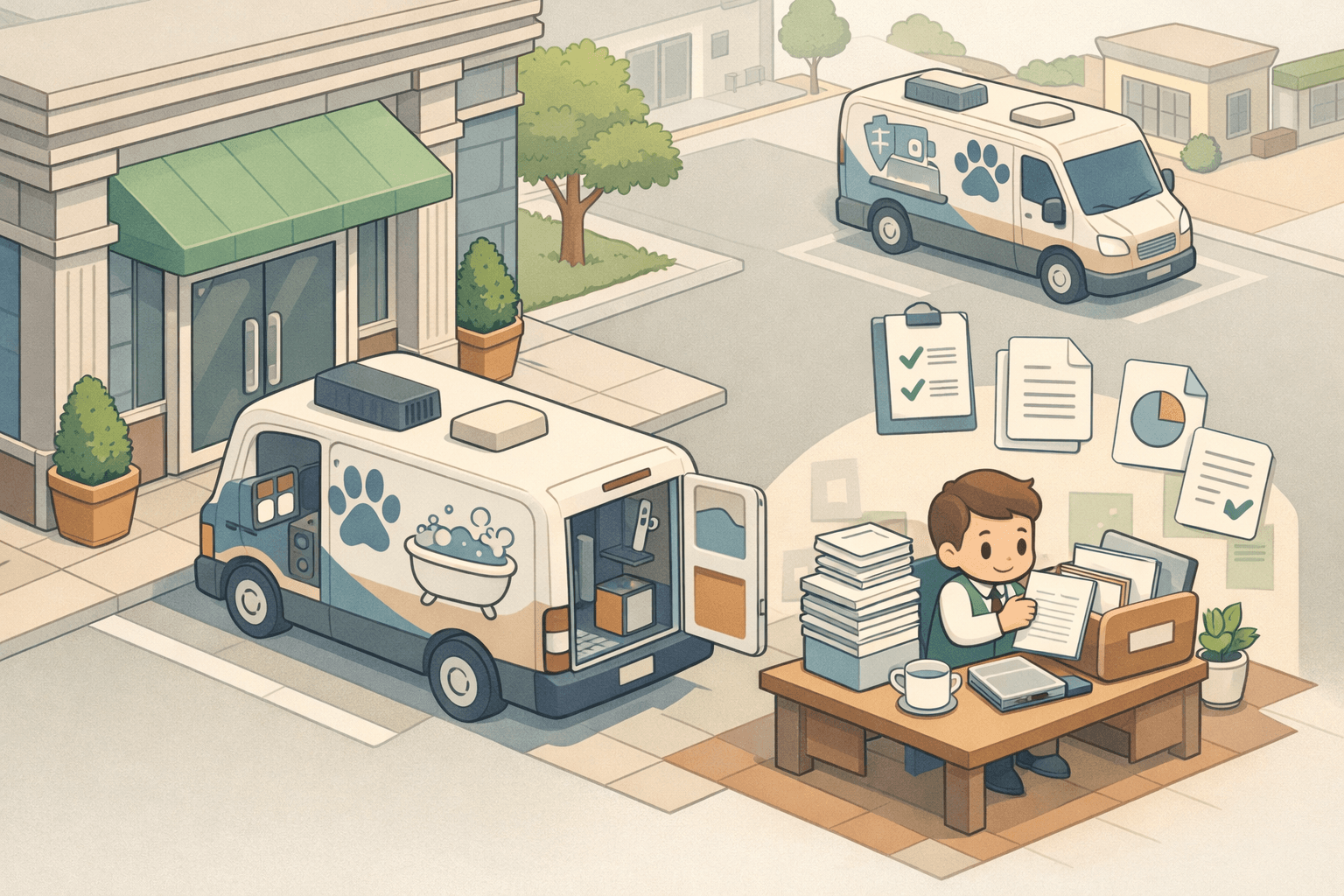
Growing a mobile dog grooming business is an exciting milestone. Whether you're adding a second grooming van, hiring additional groomers, or expanding into new service territories, reaching that next level often requires outside capital. For many small business owners, an SBA loan is one of the most accessible and cost-effective financing tools available. But before you can secure those funds, you'll need to understand what documents are needed for an SBA loan for a mobile dog grooming business with expansion plans. Being well-prepared can make the difference between a smooth approval process and a frustrating delay. This guide walks you through every key document category so you can approach your lender with confidence.
Why SBA Loans Are a Strong Fit for Mobile Grooming Business Expansion
SBA loans — particularly the SBA 7(a) program — are widely considered one of the best financing options for small business owners looking to grow. These loans are partially guaranteed by the U.S. Small Business Administration, which reduces risk for lenders and often results in more favorable terms for borrowers, including lower down payments and longer repayment periods.
For mobile dog groomers, this matters a great deal. Grooming vans, specialty equipment, marketing costs, and working capital to hire and train staff can add up quickly. An SBA 7(a) loan can typically be used for a wide range of business purposes — including equipment purchases, working capital, and business expansion — making it a flexible tool for entrepreneurs in the pet services industry.
That said, SBA loans do come with thorough documentation requirements. Lenders need to verify that your business is creditworthy, financially stable, and has a realistic plan for growth. Understanding what's expected upfront can help you organize your paperwork efficiently and avoid unnecessary back-and-forth with your lending partner.
Business Formation and Ownership Documents Every Lender Will Request
The first category of SBA loan documents focuses on proving your business is legitimate, properly registered, and structured correctly. Lenders want to know who owns the business, how it's organized, and whether it's operating legally. For a mobile dog grooming business, you'll typically need to gather the following:
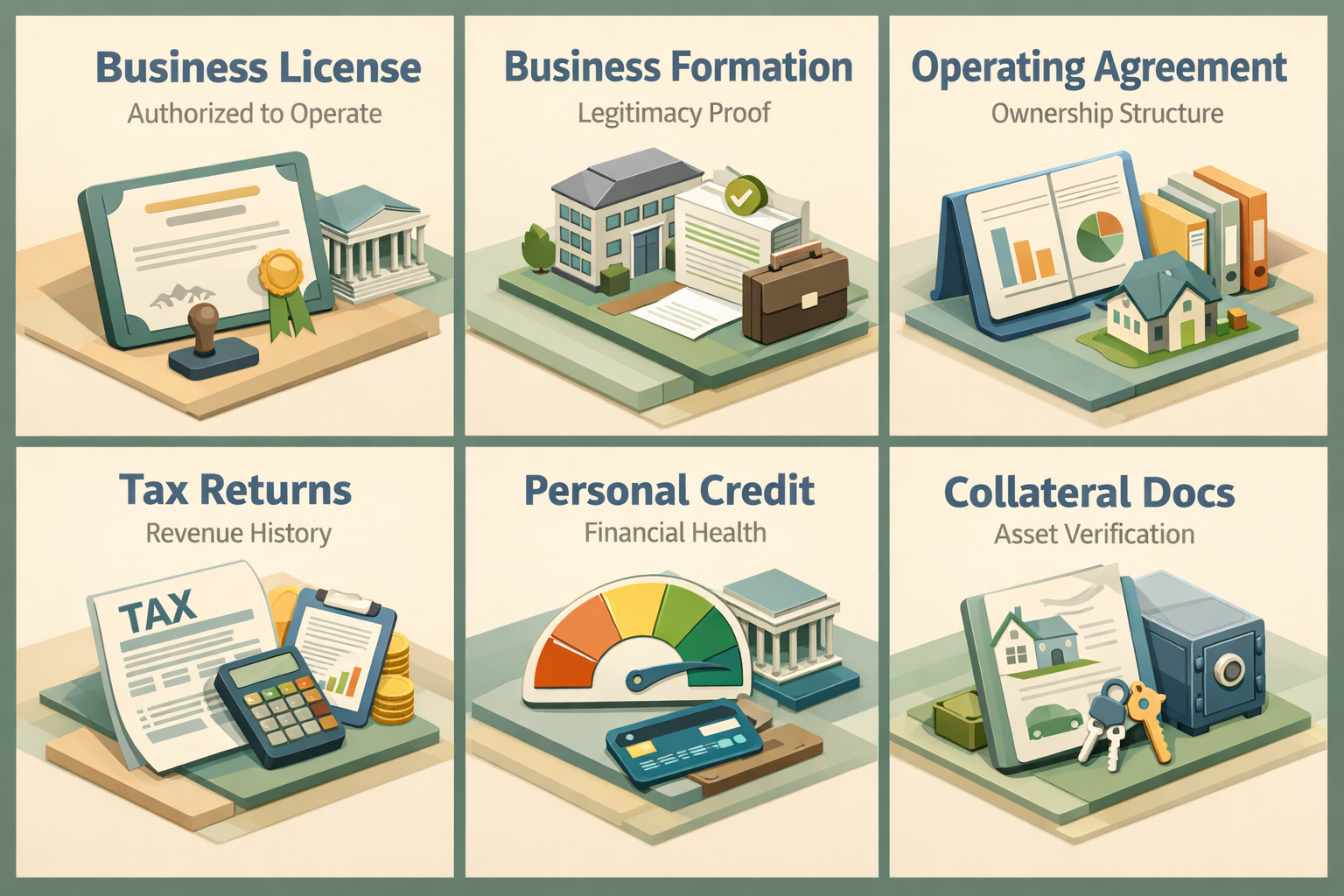
- Business license and operating permits: These confirm your business is authorized to operate in your city, county, or state. Mobile grooming operations may also need vehicle permits or animal handling certifications depending on local regulations.
- Business formation documents: This could include your Articles of Incorporation (for a corporation), Articles of Organization (for an LLC), or a DBA (Doing Business As) registration if you operate under a trade name.
- Operating agreement or bylaws: These documents outline ownership structure, roles, and decision-making authority within your business.
- Employer Identification Number (EIN): Issued by the IRS, your EIN is required for tax and lending purposes.
- Ownership and management resumes: Lenders want to understand your professional background and relevant experience in business ownership or the pet care industry.
If your mobile grooming business is co-owned, all individuals with a significant ownership stake — often defined as 20% or more — may need to provide personal information and documentation as well.
Financial Statements That Demonstrate Your Business Health
One of the most important parts of any SBA loan application is the financial documentation. Lenders use these records to evaluate whether your business generates enough revenue to repay the loan comfortably. For an established mobile dog grooming operation, you'll generally be asked to provide:
- Business tax returns: Most lenders request two to three years of federal business tax returns. These provide a historical view of your revenue, expenses, and profitability.
- Personal tax returns: As a small business owner, your personal financial health is also evaluated. Expect to submit two to three years of personal federal tax returns as well.
- Profit and loss statements (P&L): A current year-to-date P&L statement helps lenders see how your business is performing right now, not just historically.
- Balance sheet: This snapshot of your assets, liabilities, and equity gives lenders a clear picture of your business's financial position.
- Bank statements: Typically, lenders request three to six months of recent business bank statements to verify cash flow and confirm the financial records you've submitted.
If your mobile grooming business is newer and doesn't yet have multiple years of financial history, lenders may place greater emphasis on your business plan and personal financial strength. In some cases, that could mean being asked to provide additional collateral or a stronger personal guarantee.
The Business Plan: Mapping Out Your Expansion Goals for Lenders
When you're applying for financing with growth in mind, your business plan becomes one of the most compelling documents in your application. A well-crafted business plan communicates your vision, demonstrates market awareness, and gives lenders confidence that you have a viable path to repayment. For a mobile grooming business seeking expansion capital, your business plan should address:
- Executive summary: A concise overview of your business, your mission, and what you're asking for in financing.
- Business description: Details about your services, target market (pet owners in specific neighborhoods or regions), and what sets your grooming business apart from competitors.
- Market analysis: Research on the local demand for mobile pet grooming services, growth trends in the pet care industry, and how your expansion fits into that landscape.
- Expansion strategy: A specific explanation of how you plan to use the SBA loan funds — for example, purchasing an additional grooming van, hiring and training staff, or launching marketing campaigns in a new service area.
- Financial projections: Projected income statements, cash flow forecasts, and break-even analysis for the next two to three years, incorporating the impact of the expansion.
Your financial projections should be realistic and supported by data wherever possible. Lenders tend to view overly optimistic projections with skepticism, so grounding your numbers in actual historical performance and market data can strengthen your application significantly.
Personal Financial Information Required From Business Owners
SBA lenders evaluate both the business and the individual behind it. As a small business owner, your personal financial profile plays a meaningful role in the approval process. Here's what you should be prepared to provide:
- Personal financial statement (SBA Form 413): This form outlines your personal assets, liabilities, and net worth. It's a standard requirement for SBA loan applications.
- Personal credit report: Lenders will typically pull your personal credit report as part of the underwriting process. A credit score in the mid-600s or higher is often cited as a baseline for SBA loan eligibility, though individual lender requirements may vary.
- Personal identification: A government-issued photo ID such as a driver's license or passport is required to verify your identity.
- Personal guarantee: Most SBA loans require a personal guarantee from owners with a significant stake in the business. This means you're personally liable if the business defaults on the loan.
It's worth reviewing your personal credit report before applying. Addressing any errors or outstanding delinquencies ahead of time could potentially improve your credit standing and support a stronger application.
Collateral, Debt Schedules, and Other Supporting Documentation
Beyond the core financial and business documents, lenders may request additional supporting materials depending on the size and nature of your loan request. Knowing what documents are needed for an SBA loan for a mobile dog grooming business with expansion plans means being ready for these supplementary requests as well:
- Collateral documentation: If your loan will be secured by assets — such as a grooming van or equipment — lenders may request titles, registration documents, or appraisals to determine the value of those assets.
- Existing debt schedule: A list of your current business debts, including loan balances, monthly payments, and lenders. This helps the underwriter assess your total debt service coverage.
- Accounts receivable and payable aging reports: These reports show what your customers owe you and what you owe to vendors, giving lenders a clearer view of your cash flow dynamics.
- Vendor and supplier contracts: If your expansion depends on specific vendor relationships — such as a grooming supply company or a vehicle dealer — having those agreements documented can add credibility to your plan.
- Lease agreements: If you rent a garage, parking space, or storage facility for your grooming vans, your lease agreement may be required to confirm ongoing operational costs.
Every lender may have slightly different document checklists, so it's a good idea to ask your loan officer early in the process whether there are any institution-specific requirements beyond the standard SBA documents.
Tips to Organize Your SBA Loan Documents and Strengthen Your Application
Pulling together a complete SBA loan application can feel overwhelming at first, but a strategic approach to document preparation can make the process far more manageable. Here are some practical tips to help mobile grooming entrepreneurs put their best application forward:
- Start a document folder early: Create a dedicated digital folder — organized by category — where you store all relevant documents as you gather them. This prevents last-minute scrambling when a lender requests something specific.
- Work with an accountant: A qualified accountant or bookkeeper can help you prepare clean, accurate financial statements that are formatted the way lenders expect to see them.
- Be consistent across documents: Make sure the numbers in your tax returns, bank statements, and financial statements align. Discrepancies can raise red flags during underwriting.
- Communicate with your lender proactively: Don't wait for your lender to ask for missing items. Follow up regularly and respond to document requests promptly to keep your application moving forward.
- Consider an SBA-preferred lender: Working with an SBA preferred lender — a bank or credit union that has been granted delegated authority by the SBA — may allow for faster processing and a more streamlined experience.
Understanding what documents are needed for an SBA loan for a mobile dog grooming business with expansion plans is the critical first step, but presentation and organization matter just as much. A well-assembled application signals professionalism and increases a lender's confidence in your ability to manage both your business and your debt responsibly.
●Conclusion
Securing an SBA loan to expand your mobile dog grooming business is an achievable goal — and the documentation process, while thorough, is very manageable with the right preparation. From business formation records and financial statements to a compelling business plan and personal financial disclosures, each document serves a purpose in telling your business story to potential lenders. The more clearly and completely you can present that story, the stronger your chances of approval. If you're ready to take the next step, consider connecting with a lending specialist at LoanWise who can guide you through the SBA loan process and help you find the financing solution that fits your expansion goals.