Freelancing as a graphic designer offers incredible creative freedom, but it also comes with one persistent challenge: irregular income. One month you might land three major clients, and the next you could be waiting weeks for an invoice to clear. That kind of financial unpredictability can make it difficult to cover software subscriptions, pay subcontractors, or simply keep the lights on. That's exactly where a working capital loan can make a meaningful difference. If you've ever wondered how to get a working capital loan for a freelance graphic designer with fluctuating client payments, this guide is built for you. We'll walk through what lenders look for, which loan products tend to work best, and how to position yourself for approval even when your income doesn't follow a predictable schedule.
Understanding Working Capital and Why Freelancers Need It
Working capital is simply the difference between the money coming in and the money going out of your business on a day-to-day basis. For a salaried employee, this is rarely a concern. But for freelance graphic designers, the gap between completing a project and getting paid can stretch from a few days to several weeks — or even longer with net-30 or net-60 payment terms.
This delay creates what's commonly called a cash flow gap. You may have already done the work, but the payment hasn't arrived yet. Meanwhile, your expenses — things like Adobe Creative Cloud, project management tools, equipment maintenance, or even a co-working space — keep coming due on a fixed schedule.
A working capital loan is designed to bridge exactly that kind of gap. It's a short- to medium-term financing solution that gives you access to funds you can use for everyday operational expenses. It's not typically meant for large capital investments like buying real estate or heavy equipment. Instead, it's meant to keep your business running smoothly while you wait for client payments to come through.
Understanding this distinction matters because it helps you approach lenders with clarity. You're not asking for startup capital or a long-term investment loan — you're asking for operating funds to support a business that's already generating revenue, just on an uneven schedule.
Why Fluctuating Income Makes Loan Approval More Challenging — and How to Overcome It
Traditional lenders, such as banks and credit unions, often prefer borrowers with consistent, verifiable income. When your monthly revenue swings significantly from one period to the next, underwriters may view that as a risk factor. This is one of the core hurdles freelance graphic designers face when seeking freelance graphic designer funding through conventional channels.
However, that doesn't mean approval is out of reach. It means you need to present your finances in a way that tells a compelling story. Here are a few strategies that may help:
- Show an upward trend: Even if your income fluctuates month to month, lenders may look more favorably on your application if your overall revenue has been growing over the past 12 to 24 months.
- Document everything: Bank statements, tax returns, invoices, and contracts with clients can all help demonstrate that your business is legitimate and actively generating revenue.
- Highlight recurring clients: If you have clients on retainer or repeat customers who commission work regularly, make sure that's visible in your documentation. Recurring revenue, even if variable, signals reliability.
- Separate business and personal finances: Having a dedicated business bank account and credit card shows lenders that you're operating professionally. It also makes it much easier to present clean financial records.
Some lenders, particularly online and alternative lenders, have built their underwriting models specifically around variable-income borrowers. These lenders may weigh average monthly deposits and overall cash flow more heavily than a single snapshot of income, which can work in a freelancer's favor.
Loan Products That Work Well for Freelance Graphic Designers
Not every loan product is suited for a freelance creative professional. The good news is that there are several cash flow financing options that tend to align well with the way freelancers earn and operate. Here's a breakdown of the most relevant options:
Business Line of Credit
A business line of credit is often considered one of the most flexible tools available for managing irregular income. Rather than receiving a lump sum, you gain access to a credit limit that you can draw from as needed and repay over time. You only pay interest on what you actually use, which makes it a cost-effective option during slower months. This product may be particularly useful for covering recurring expenses while waiting on client invoices to clear.
Invoice Financing
If your income gaps are caused specifically by slow-paying clients, invoice financing — sometimes called invoice factoring — could be a strong fit. With this type of financing, you essentially use your outstanding invoices as collateral. The lender advances you a percentage of the invoice value upfront, then collects payment directly from your client. Once the invoice is paid, you receive the remaining balance minus fees. This approach ties your financing directly to your existing work, which can make approval more accessible even for newer freelancers.
SBA Microloans
The U.S. Small Business Administration offers microloans through nonprofit intermediaries, with amounts typically up to $50,000. These loans may be a good fit for freelance graphic designers who need modest working capital and are willing to work with a mission-driven lender. SBA microloans often come with business support resources as well, which can be valuable for solo entrepreneurs building their practices.
Short-Term Business Loans
Online lenders often offer short-term business loans with faster application processes and more flexible eligibility requirements than traditional banks. These loans are usually repaid over a period of three to 18 months. They can be helpful during a temporary cash crunch, though it's important to carefully review the interest rates and repayment terms, as they can be higher than conventional options.
Step-by-Step: How to Get a Working Capital Loan for a Freelance Graphic Designer with Fluctuating Client Payments
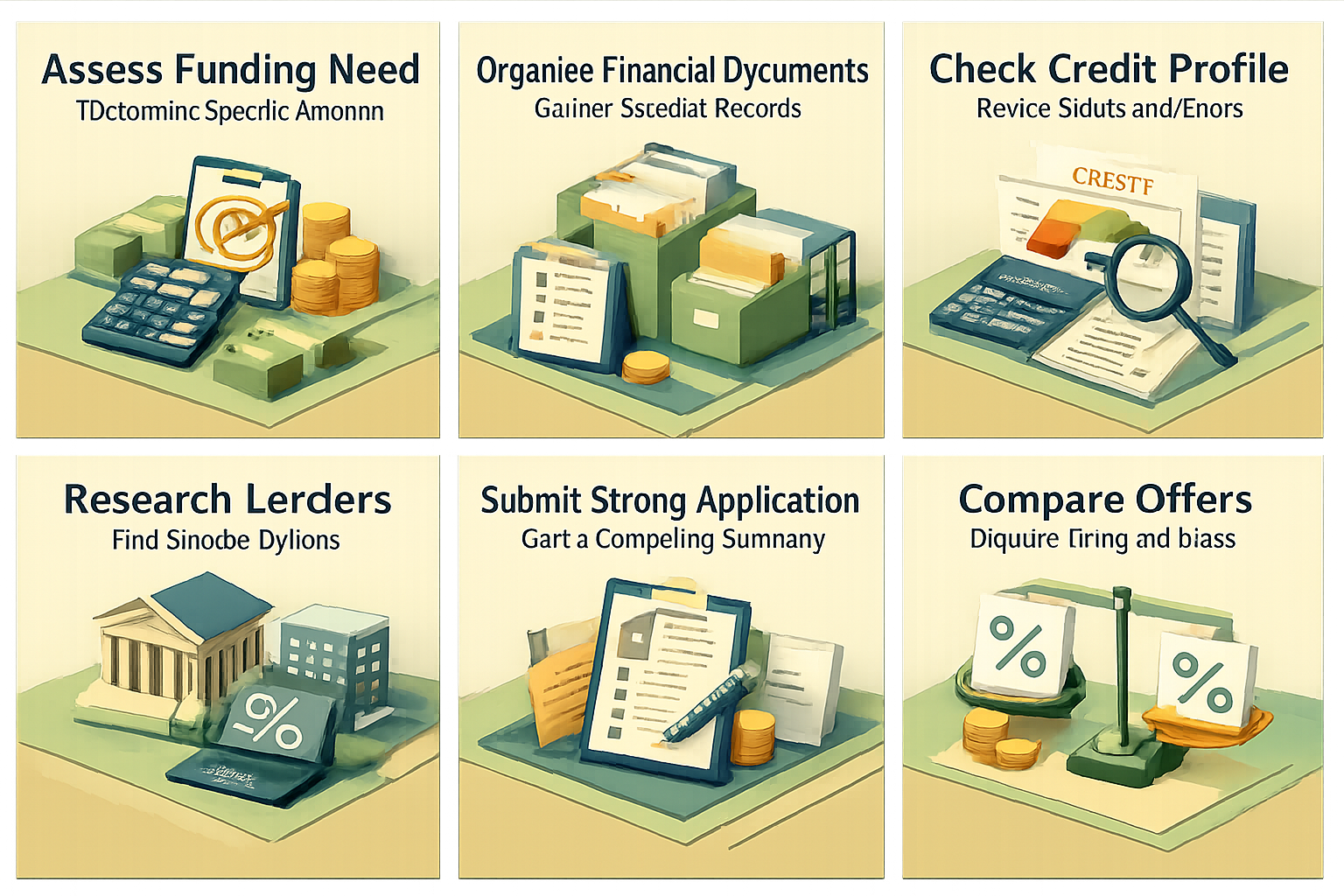
Knowing which loan products exist is a great start, but the actual process of applying requires careful preparation. Here's a practical roadmap for how to get a working capital loan for a freelance graphic designer with fluctuating client payments:
- Step 1 — Assess your actual funding need: Before approaching any lender, determine exactly how much working capital you need and what you'll use it for. Lenders appreciate specificity. Whether you need to cover a payroll gap, purchase design software licenses, or bridge a two-month slow season, having a clear purpose strengthens your application.
- Step 2 — Organize your financial documents: Gather at least 12 months of bank statements, your most recent two years of tax returns (personal and business if applicable), a list of active contracts or outstanding invoices, and any business registration documents. The more complete your file, the smoother the process tends to go.
- Step 3 — Check and strengthen your credit profile: Review both your personal and business credit scores. Many lenders use personal credit as a factor for freelancers who operate as sole proprietors. If there are errors on your report, dispute them before applying. Paying down existing balances can also improve your score in the weeks leading up to your application.
- Step 4 — Research lenders that specialize in variable-income borrowers: Not all lenders are created equal. Look for online lenders, community development financial institutions (CDFIs), and credit unions that have experience working with self-employed individuals or creative professionals. Reading borrower reviews and asking about their underwriting approach can save you time.
- Step 5 — Submit a strong application: Write a brief business summary if the lender requests one. Explain your freelance model, your client base, and why your income fluctuates. Framing your situation proactively — rather than leaving the lender to draw their own conclusions — can make a meaningful difference.
- Step 6 — Compare offers carefully: If you receive multiple offers, compare the annual percentage rate (APR), repayment schedule, fees, and any prepayment penalties. The lowest monthly payment isn't always the most affordable loan over time.
Building a Stronger Financial Profile Before You Apply
If you're not quite ready to apply today, taking a few months to strengthen your financial profile could open up significantly better loan options. Here's what may help improve your chances of securing freelance graphic designer funding on favorable terms:
Establish or Build Business Credit
If you've been operating as a sole proprietor using your personal credit, consider forming an LLC or S-Corp and obtaining an employer identification number (EIN). Over time, opening a business credit card and paying it on time can help you build a separate business credit profile. This gives lenders more data points to evaluate and may reduce their reliance on your personal credit history.
Diversify Your Client Base
Lenders tend to view heavy reliance on one or two clients as a concentration risk. If a single client accounts for the majority of your revenue, losing that relationship could significantly impact your ability to repay. Broadening your client portfolio — even if individual contracts are smaller — may make your income appear more stable and reliable over time.
Create a Business Financial Cushion
Maintaining even a modest cash reserve in a dedicated business savings account demonstrates financial responsibility to lenders. It also reduces the urgency of borrowing during slow months, which gives you more leverage to choose the right loan product rather than accepting the first offer available.
Work with a Financial Advisor or CDFI Counselor
Many Community Development Financial Institutions offer free or low-cost business counseling. These advisors can help you understand what lenders are looking for and guide you through the application process. This kind of support can be especially valuable for freelancers who haven't borrowed commercially before.
Common Mistakes Freelancers Make When Seeking a Working Capital Loan
Even well-prepared applicants can run into trouble if they overlook a few key details. Here are some common pitfalls to avoid when pursuing a fluctuating income business loan:
- Applying to too many lenders at once: Each hard credit inquiry can temporarily lower your credit score. Instead, research lenders thoroughly before applying and focus on those most likely to approve your profile.
- Underestimating the true cost of borrowing: Some short-term loan products carry fees that aren't immediately obvious. Always ask for the total cost of the loan in dollar terms, not just the interest rate or factor rate.
- Borrowing more than you need: It might be tempting to request a larger amount while you have the opportunity, but taking on more debt than your cash flow can support creates unnecessary financial pressure. Borrow for a specific, well-defined purpose.
- Ignoring repayment timing: Some lenders require daily or weekly repayments, which can be difficult to manage during a slow client month. Make sure the repayment cadence aligns with your expected income cycle.
- Not having a repayment plan: A working capital loan is a tool, not a safety net. Before you borrow, map out how you'll repay the loan based on your projected income over the loan term. If you're not confident in that projection, it may be worth waiting until your pipeline is stronger.
●Conclusion
Navigating the lending landscape as a freelance graphic designer isn't always straightforward, but it's entirely manageable with the right preparation and the right loan product. The key is understanding that your fluctuating income doesn't disqualify you — it just means you need to approach the process strategically. By organizing your financial records, choosing lenders who understand variable-income borrowers, and selecting a product that fits your repayment capacity, you can secure the working capital your business needs to stay stable and continue growing. At LoanWise, we're here to help entrepreneurs like you explore financing options that make sense for the way you actually work. Whether you're ready to apply today or just starting to research your options, we encourage you to connect with a lending expert who can guide you through the next steps with confidence.