For eligible veterans, active-duty service members, and surviving spouses, a VA loan can be one of the most powerful home financing tools available. It typically offers no down payment, competitive interest rates, and no private mortgage insurance. But when the home in question is a modular home rather than a traditional site-built house, many borrowers wonder whether the process changes — and if so, how. The short answer is yes, there are some additional considerations. Understanding what documents are needed for VA loan on a modular home can help you move through the process with confidence and avoid unnecessary delays.
Understanding the Difference Between Modular and Manufactured Homes
Before diving into paperwork, it's important to clarify what a modular home actually is — because many borrowers confuse it with a manufactured home, and lenders treat these two property types very differently.
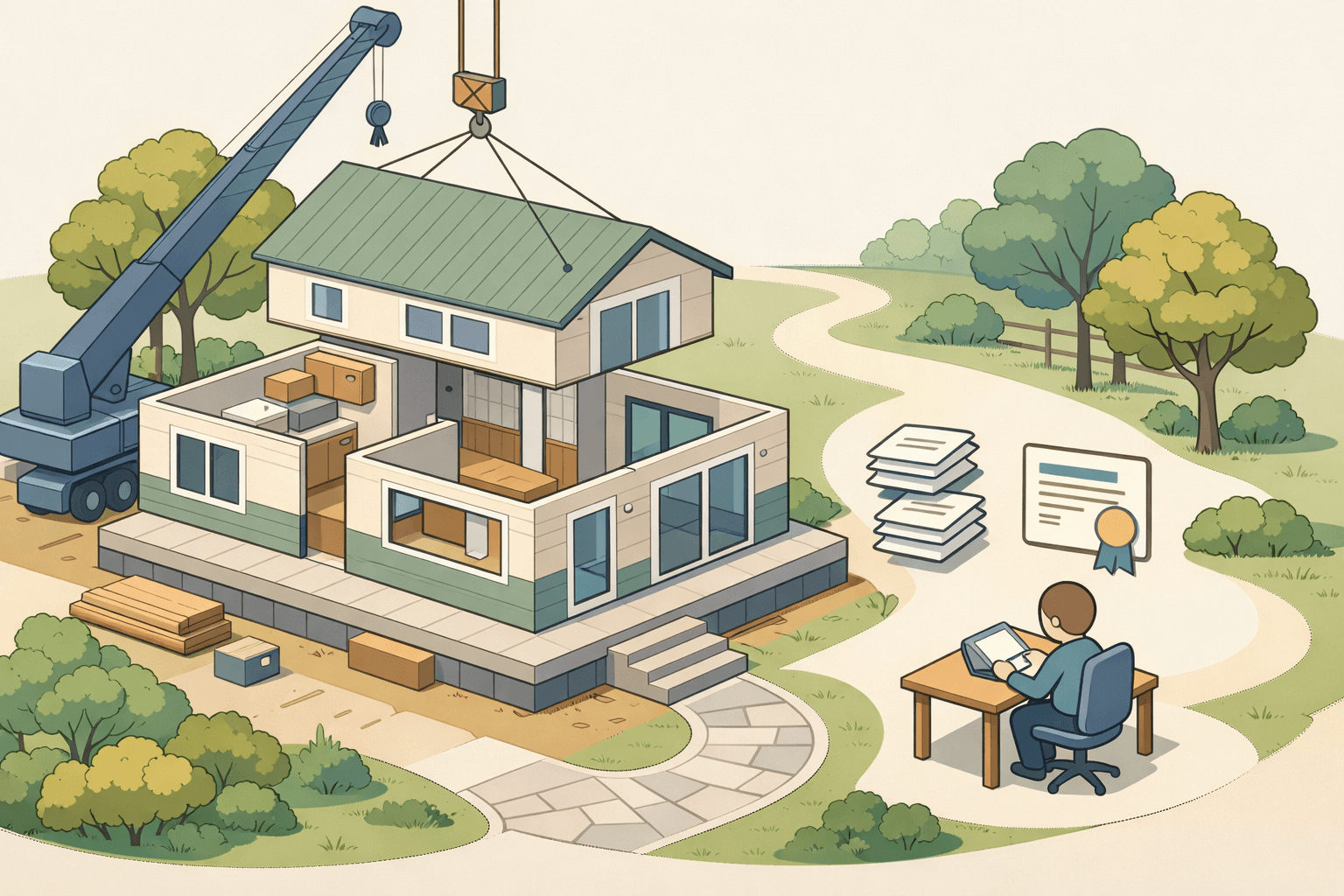
A modular home is built in sections at a factory, then transported to a permanent foundation on the property. Once assembled, it's considered real property and must conform to local and state building codes, just like a traditional stick-built home. A manufactured home, on the other hand, is built entirely in a factory under federal HUD code standards and is typically placed on a non-permanent chassis.
The VA generally looks more favorably on modular homes because they're treated as conventional real estate once permanently affixed to a foundation. This distinction matters because it directly affects the documentation requirements, the appraisal process, and overall loan eligibility. When you're gathering what documents are needed for a VA loan on a modular home, you'll want to be prepared to demonstrate that the home meets both VA and local construction standards.
Core VA Loan Eligibility Documents Every Borrower Needs
Regardless of the property type, every VA loan application starts with proving your military service eligibility. These foundational documents are required for any VA-backed mortgage and should be gathered early in the process.
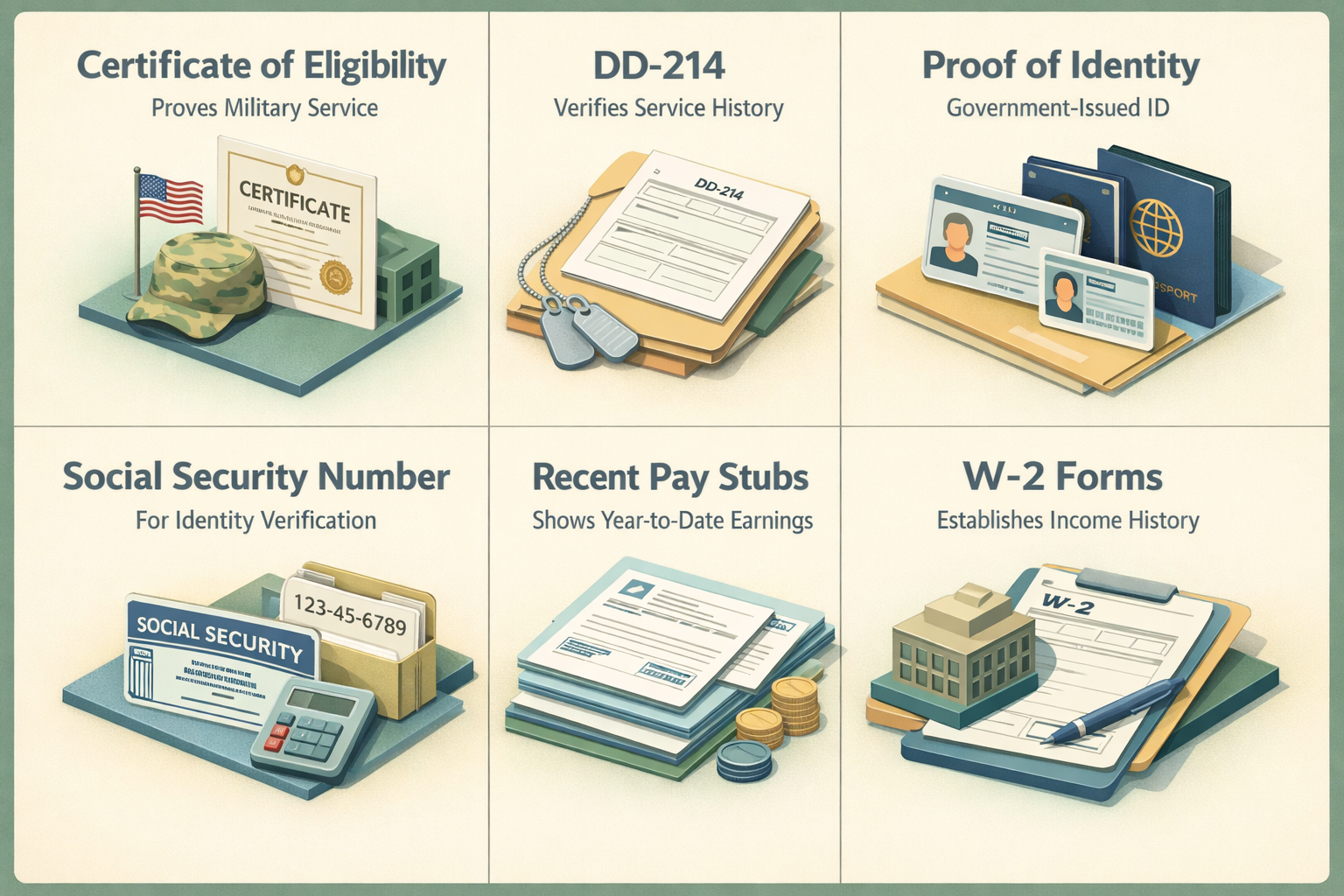
- Certificate of Eligibility (COE): This is the single most important document for any VA loan. It confirms your entitlement to the benefit. You can request it through the VA's eBenefits portal, ask your lender to pull it electronically, or submit VA Form 26-1880 by mail.
- DD-214 (Certificate of Release or Discharge from Active Duty): Required for veterans to verify service history and honorable discharge status. Active-duty members may provide a statement of service instead.
- Proof of Identity: A government-issued photo ID such as a driver's license or passport is standard across all loan types.
- Social Security Number: Required for credit checks and identity verification purposes.
If you're a surviving spouse of a veteran, you may also need to provide marriage documentation and proof of the veteran's service-connected disability or death in service. Your lender can guide you through the specific eligibility pathway that applies to your situation.
Financial Documents Required to Qualify for VA Financing
Once your eligibility is confirmed, the lender will turn its attention to your financial profile. VA loans don't set a strict minimum credit score at the federal level, though most lenders apply their own overlays — often requiring a score of at least 580 to 620. Your income, debt load, and residual income will all be evaluated carefully.
Here's what you'll typically need to provide:
- Recent pay stubs: Usually the most recent 30 days of pay stubs from your employer, showing year-to-date earnings.
- W-2 forms: Covering the past two years to establish a consistent income history.
- Federal tax returns: Two years of signed returns, particularly if you're self-employed, have rental income, or receive non-W-2 earnings.
- Bank statements: Typically two to three months of statements from all checking and savings accounts to verify assets and closing funds.
- Employer contact information: Your lender may conduct a verification of employment (VOE) before closing.
- Documentation of other income: This may include Social Security award letters, disability compensation statements, retirement income documentation, or rental income records.
If you have any recent large deposits in your bank accounts, be prepared to provide a written explanation and sourcing documentation. Lenders are required to account for the origin of all funds used in the transaction.
Property-Specific Documents for VA Loan Modular Home Requirements
This is where the modular home purchase diverges from a standard site-built transaction. The VA has specific property eligibility standards, and demonstrating that a modular home meets those standards requires additional documentation beyond what a typical homebuyer might expect.
The following property-related documents are commonly required under VA loan modular home requirements:
- Modular home manufacturer's data plate or certification tag: This is typically found inside the home and verifies that the unit was built to the applicable building codes. Unlike manufactured homes, modular homes are built to local or state standards rather than HUD code.
- State or local building permits: Documentation showing that permits were issued and inspections were completed during construction can help establish compliance.
- Certificate of Occupancy (CO): This document — issued by the local government — confirms that the home has been inspected and is legally fit for habitation. Most lenders will require this for modular home purchases.
- Foundation certification: The VA requires that all homes be on a permanent foundation. A licensed engineer or inspector may need to certify that the modular home's foundation meets VA guidelines, particularly if the home was previously relocated or the foundation type is non-standard.
- Real property classification documentation: You may need to show that the modular home has been legally classified as real property and is properly titled as such in your state. If it was previously on a leased lot, de-titling paperwork may be required.
- Purchase contract or sales agreement: A fully executed contract between buyer and seller outlining the agreed-upon price and terms.
It's worth noting that lenders may have their own internal checklists that go beyond the VA's minimum requirements. Working with a lender experienced in modular home VA financing can help you anticipate requests that might otherwise slow your closing timeline.
The VA Appraisal Process for Modular Homes
Every VA loan requires an appraisal performed by a VA-approved appraiser. The appraisal serves two purposes: it estimates the home's market value and assesses whether the property meets the VA's Minimum Property Requirements (MPRs). These MPRs are designed to ensure the home is safe, sound, and sanitary.
For modular homes, the appraisal process works much the same as it does for traditional homes — but the appraiser will look closely at comparable sales in the area. Since modular homes may be less common in certain markets, finding suitable comps can sometimes be a challenge. This doesn't automatically disqualify the home, but it could affect the appraised value.
The appraiser will also verify that the home is permanently affixed to the foundation, that the foundation appears structurally sound, and that the home meets general habitability standards. If any conditions are noted — such as exposed wiring, roof damage, or inadequate utilities — those issues will typically need to be resolved before the loan can close.
In some cases, especially with newer modular homes still under a builder's warranty, the appraiser may also request documentation confirming the warranty terms. While this isn't always required, it may come up depending on the lender and the age of the home.
Tips for Organizing Your VA Loan File for a Modular Home Purchase
The most common reason VA loans take longer than expected to close is missing or incomplete documentation. Being proactive about your file can make a measurable difference in your experience. Here are some practical strategies:
- Start with your COE: If you don't already have your Certificate of Eligibility, request it as early as possible. Processing can occasionally take time if your records require manual review.
- Contact the seller or builder early: Ask for the modular home's certification tag information, building permits, and Certificate of Occupancy before you're deep into underwriting. Sellers aren't always aware these documents are needed.
- Consult a VA-experienced lender: Not all mortgage lenders handle modular home VA loans regularly. Choosing a lender with hands-on experience in this niche can reduce the risk of surprises and ensure you receive an accurate document checklist from the start.
- Keep digital copies of everything: Organize your documents in clearly labeled folders — both on your device and in a cloud backup. You may need to resubmit items during underwriting.
- Respond quickly to underwriter requests: Conditions issued by the underwriter are time-sensitive. A fast turnaround on any outstanding items helps keep your closing date on track.
It's also a good idea to confirm with your lender whether a foundation inspection or engineer's certification will be required given the specific property you're purchasing. Some foundations are clearly compliant and require no additional review, while others may need verification.
●Conclusion
Knowing what documents are needed for VA loan on a modular home puts you in a much stronger position as a buyer. Between your eligibility records, financial documentation, and the property-specific paperwork that comes with VA loan modular home requirements, the file can feel substantial — but it's very manageable when you approach it systematically. The key is to start early, work with a lender who understands modular home transactions, and stay responsive throughout the process. Veterans and service members have earned access to one of the best loan programs available, and with the right preparation, a modular home purchase through the VA can be a smooth and rewarding experience. If you're ready to explore your options, LoanWise is here to help you take the next step.