
If you own a small bakery that sees its busiest days around the holidays, summer farmers markets, or wedding season, you already know that cash flow can look very different from one month to the next. That reality can make financing feel complicated — but it doesn't have to. An SBA loan may be one of the most accessible and affordable funding options available to small food businesses like yours. The key is understanding what documents are needed for SBA loan for a small bakery with seasonal revenue and how to present your finances in the most compelling way possible. This guide walks you through every document category, explains why lenders ask for each one, and offers practical tips to help your application stand out — even when your revenue ebbs and flows with the calendar.
Why SBA Loans Are a Strong Fit for Small Bakeries
Small bakeries often operate on thin margins and require capital for equipment upgrades, ingredient inventory, lease improvements, or staffing. The U.S. Small Business Administration's loan programs — particularly the SBA 7(a) loan — are specifically designed to help small businesses that may not qualify for conventional bank financing. Because the SBA guarantees a portion of the loan, participating lenders can take on slightly more risk, which may benefit bakery owners with limited collateral or uneven monthly revenue.
Seasonal businesses are not automatically disqualified from SBA lending. In fact, the SBA recognizes seasonal operations and has provisions that may allow borrowers to demonstrate financial health using annualized or averaged income figures rather than single-month snapshots. This makes the program particularly relevant for bakeries that peak during the holidays or summer months and slow down at other times of year.
That said, the application process does require thorough documentation. Lenders need to see a complete financial picture to assess your ability to repay the loan — even during slower seasons. The more organized and transparent your paperwork, the better your chances of approval.
Personal and Business Identification Documents
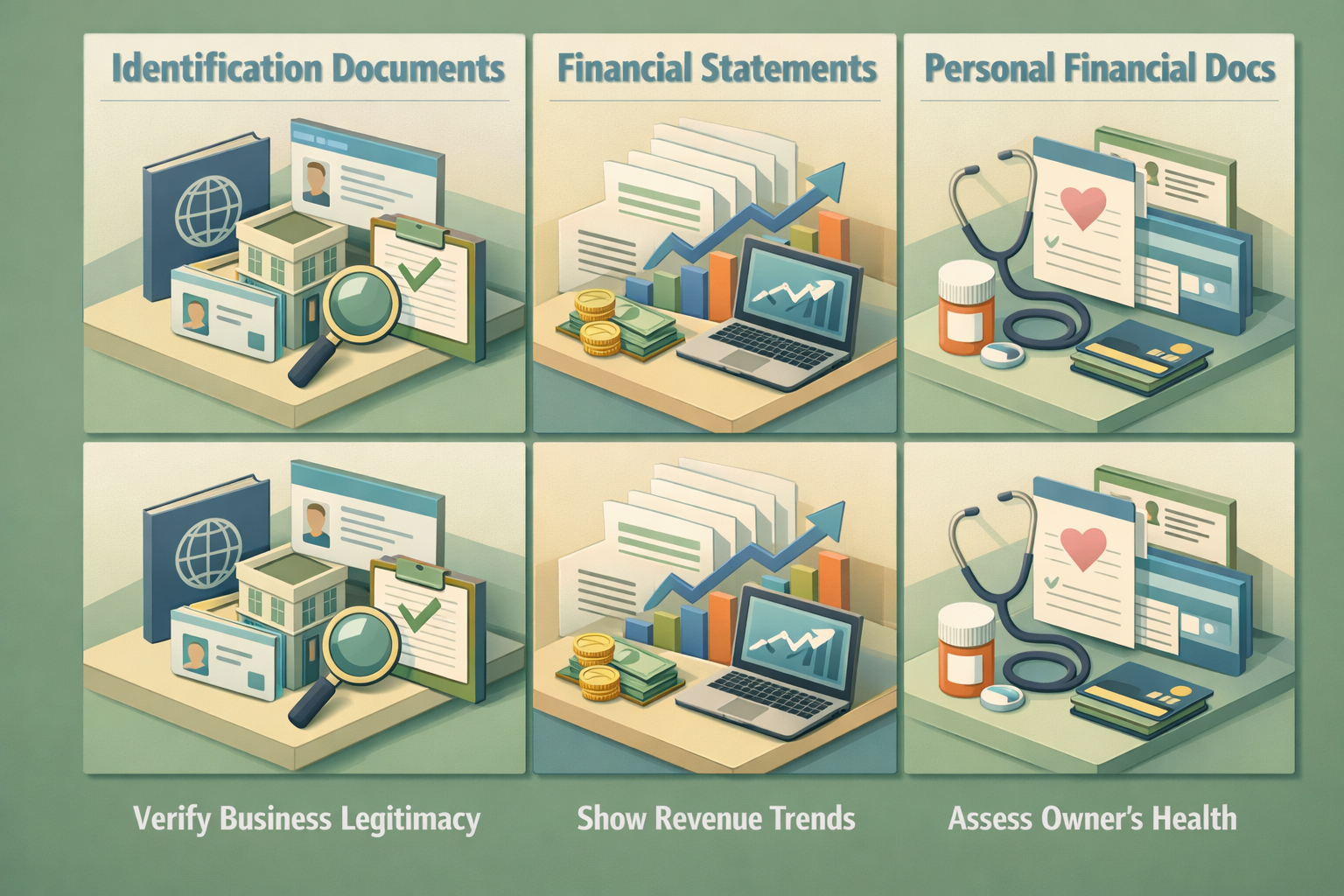
Before a lender can evaluate your financials, they need to verify who you are and confirm that your bakery is a legitimate operating business. You'll typically need to gather the following identification and legal documents:
- Government-issued photo ID for all business owners with 20% or more ownership stake
- Business formation documents such as your Articles of Incorporation, Articles of Organization, or a Partnership Agreement
- Employer Identification Number (EIN) confirmation from the IRS
- Business licenses and permits, including your food handler's permit, health department certification, and any local operating licenses required for your bakery
- Fictitious business name filing (also called a DBA certificate) if you operate under a name different from your legal entity name
These documents establish the legal foundation of your application. Missing even one of them can delay the review process, so it's worth assembling this package first before moving on to the financial components.
Financial Statements That Tell Your Bakery's Story
Financial documentation is the heart of any SBA loan application. Lenders want to understand your revenue trends, profitability, and debt obligations. For a bakery with seasonal revenue, this section is especially important because it gives you the opportunity to frame your numbers in context. Here's what you'll likely need to provide:
- Business tax returns for the past two to three years, showing gross revenue, deductions, and net income
- Profit and loss (P&L) statements — ideally month-by-month for the past two years, so lenders can clearly see seasonal patterns rather than drawing incorrect conclusions from a single slow month
- Balance sheet reflecting your assets (equipment, inventory, receivables) and liabilities (existing loans, accounts payable)
- Business bank statements for the past twelve months, which give lenders insight into actual cash flow cycles
- Accounts receivable and accounts payable aging reports, if applicable, to show outstanding invoices and obligations
For seasonal bakeries specifically, a month-by-month P&L is one of the most powerful tools at your disposal. It shows that your slower months are predictable and manageable — not signs of financial distress. Lenders are generally more comfortable with cyclical revenue than with erratic or unexplained drops in income.
Personal Financial Documents Every Borrower Must Submit
SBA lenders don't just evaluate your business — they also assess the personal financial health of the business owners. If your bakery is structured as a sole proprietorship, LLC, or S-corporation, the SBA typically requires a personal guarantee from owners holding 20% or more equity. To support that guarantee, you'll need to provide:
- Personal tax returns for the past two to three years (all schedules included)
- Personal financial statement using SBA Form 413, which summarizes your personal assets, liabilities, income, and expenses
- Personal bank statements for the past three to six months
- Resume or biography outlining your experience in the food service or bakery industry — this can strengthen your credibility as an operator
Your personal credit score will also be pulled as part of the evaluation. While the SBA doesn't publish a universal minimum score, most lenders look for a score of at least 650 or higher, though requirements can vary by lender and loan program. If your score needs improvement, it may be worth addressing that before submitting your application.
What Documents Are Needed for SBA Loan for a Small Bakery with Seasonal Revenue — The Business Plan
One of the most overlooked components of an SBA application is a well-crafted business plan. For seasonal bakery operators, this document is especially critical because it gives you a platform to explain your revenue model, outline how you manage cash flow during off-peak periods, and demonstrate a clear repayment strategy.
A strong bakery business plan for an SBA loan should include:
- Executive summary describing your bakery's concept, location, and years in operation
- Market analysis identifying your customer base, local competition, and any unique positioning (e.g., wedding cakes, gluten-free products, farmer's market vendor)
- Seasonal revenue explanation — a written narrative describing which months generate peak revenue, why, and how you manage expenses and inventory during slower periods
- Use of loan proceeds — a specific, itemized breakdown of how you plan to use the funding (e.g., new commercial oven, walk-in freezer, expanded retail space)
- Financial projections for the next two to three years, including monthly cash flow forecasts that account for seasonal fluctuations
- Repayment plan demonstrating how loan payments will be covered even during low-revenue months
Lenders want to see that you've thought through the lean months. If your projections show that you've built a cash reserve strategy or secured a line of credit to bridge seasonal gaps, that level of preparation can significantly boost lender confidence.
Collateral Documentation and Supporting Business Records
SBA loans may require collateral to secure the financing, depending on the loan amount and program. While not every loan requires collateral — particularly smaller SBA Microloan amounts — larger 7(a) loans often do. For bakery owners, eligible collateral might include commercial baking equipment, a vehicle used for deliveries, or real estate owned by the business or its principals.
Documents related to collateral typically include:
- Equipment appraisals or purchase invoices for commercial ovens, mixers, refrigeration units, or display cases
- Real estate appraisals if property is being offered as collateral
- Vehicle titles for delivery vans or trucks associated with the bakery
Beyond collateral, lenders may also request several supporting business records to complete their due diligence:
- Lease agreement for your bakery space, including lease term, monthly rent, and any renewal options
- Supplier contracts or vendor agreements that show consistent sourcing relationships
- Existing loan or debt agreements so lenders can calculate your total debt service obligations
- Franchise agreement, if your bakery operates under a franchise brand
Having these records organized in advance can speed up the underwriting process considerably. Many lenders appreciate borrowers who submit a complete package upfront rather than responding to document requests one at a time.
Tips for Presenting Seasonal Revenue Favorably to SBA Lenders
Understanding what documents are needed for SBA loan for a small bakery with seasonal revenue is only half the battle — how you present those documents matters just as much. Here are several strategies that may help your application receive a more favorable review:
- Provide a seasonal revenue narrative: Include a brief written explanation with your financial package. Describe your peak seasons (such as November through January for holiday orders), and show how those months offset slower periods like mid-spring or late summer.
- Use annualized averages: Rather than letting a single slow month define your income, ask your accountant to present annualized revenue averages that better reflect your true earning capacity over a full business cycle.
- Highlight year-over-year growth: If your bakery has grown revenue consistently — even if it fluctuates month to month — make that trend visible. Steady growth signals sustainability to lenders.
- Demonstrate cash reserve management: Show that you actively build reserves during peak months to cover operating costs during slower periods. Bank statements that reflect this habit can be very persuasive.
- Work with an SBA-preferred lender: Not all banks offer SBA loans, and not all SBA lenders have experience with food service businesses. Seeking out a lender who understands seasonal industries can make the review process smoother and more informed.
It's also worth noting that preparation time matters. Assembling your documentation months before you actually need the funds gives you the opportunity to address weaknesses — such as a low credit score or a gap in financial records — before they become disqualifying issues.
●Conclusion
Applying for an SBA loan as a seasonal bakery owner may feel daunting at first, but the process becomes much more manageable when you know exactly what's required. From business licenses and tax returns to a detailed business plan with seasonal projections, every document you submit contributes to a stronger, more credible application. The more clearly you can demonstrate that your bakery's revenue fluctuations are predictable, manageable, and part of a sustainable business model, the better your chances of securing the funding you need. At LoanWise, we're here to help small business owners like you navigate the lending landscape with confidence. Reach out to our team today to explore your SBA loan options and get expert guidance tailored to your bakery's unique financial profile.