Starting a brewery is an exciting venture, but it comes with significant upfront costs — equipment, facility build-out, licensing, inventory, and working capital all add up quickly. For many aspiring brewery owners, an SBA loan is one of the most accessible and affordable financing paths available. But before a lender can say yes, you'll need to bring a lot of paperwork to the table. Understanding what documents are needed for SBA loan for a new brewery startup can save you weeks of back-and-forth and put you in the best possible position to get funded. This guide walks you through every major documentation category so you can approach the process with confidence.
Why SBA Loans Are a Strong Fit for Brewery Startups
The U.S. Small Business Administration doesn't lend money directly — instead, it partners with approved lenders and guarantees a portion of the loan, which reduces the lender's risk. That guarantee is what makes SBA loans particularly attractive for startup businesses that might not qualify for conventional bank financing on their own.
For a new brewery, the SBA 7(a) loan program is often the most relevant option. It can typically be used for a wide range of business expenses, including equipment purchases, leasehold improvements, working capital, and even commercial real estate acquisition. The SBA 504 loan is another option worth exploring, especially if you plan to purchase the building where your brewery will operate.
Because startups carry more risk than established businesses, lenders compensate by asking for more thorough documentation. A well-organized, complete application signals that you're a serious entrepreneur who understands their business — and that can make a meaningful difference in how a lender evaluates your file.
Business Plan: The Foundation of Your Brewery Loan Application
For a startup, your business plan may be the single most important document in your loan package. Since you don't yet have years of operating history to point to, lenders rely heavily on your business plan to assess the viability of your concept and your ability to repay the debt.
A strong brewery business plan typically includes:
- Executive summary — A concise overview of your brewery concept, target market, and financial goals
- Company description — Your legal business structure, location, ownership details, and mission
- Market analysis — Research on local craft beer demand, your target customer profile, and competitive landscape
- Products and services — Details on your beer styles, taproom experience, distribution plans, or wholesale strategy
- Marketing and sales strategy — How you plan to attract and retain customers
- Operational plan — Staffing, production capacity, equipment needs, and supply chain
- Financial projections — At least two to three years of projected income statements, cash flow statements, and balance sheets
Your financial projections should be realistic and supported by industry data where possible. Lenders understand that startup numbers are estimates, but they want to see logical assumptions behind every figure.
Personal and Business Financial Documents You'll Need to Gather
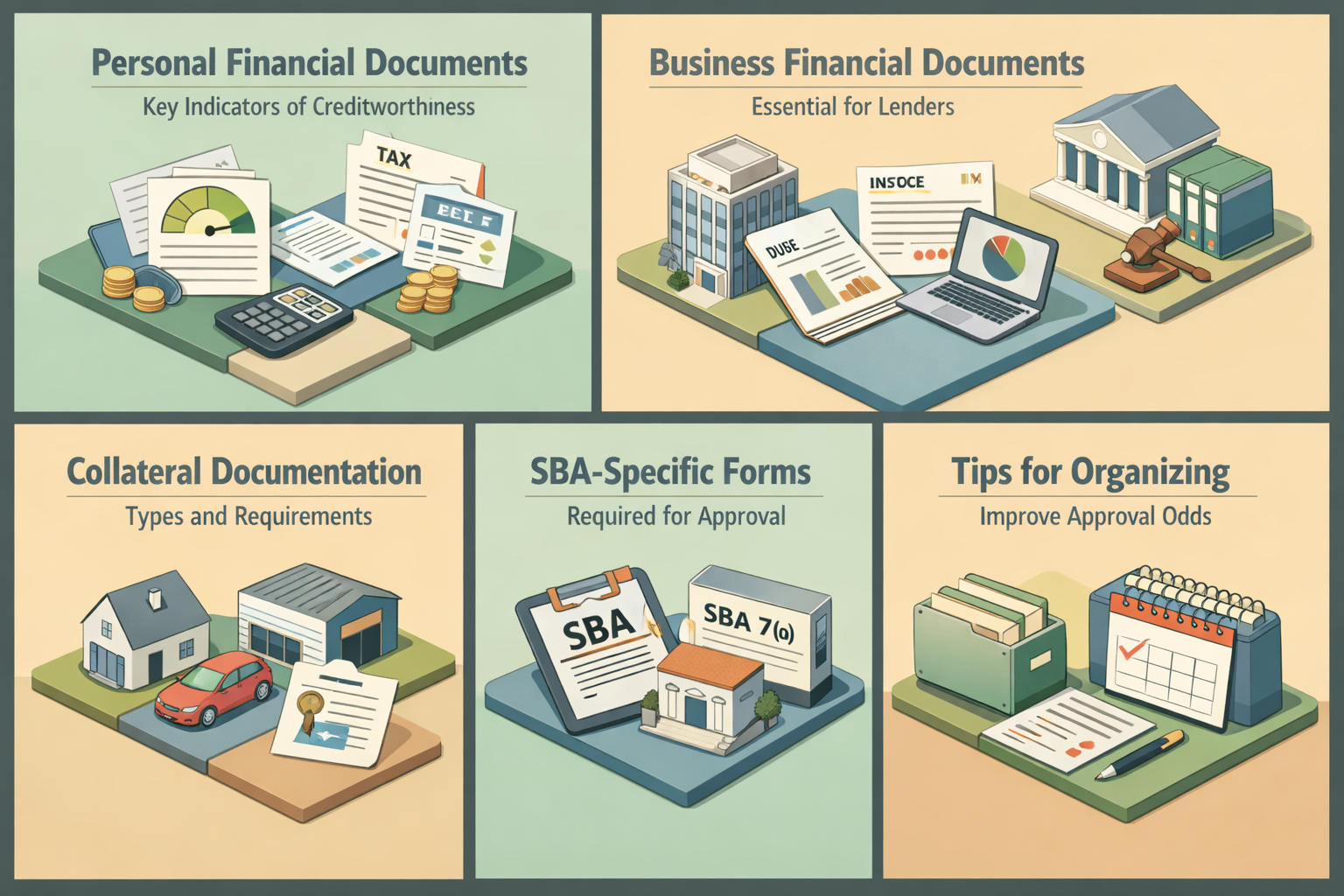
Even though your brewery is a new business, lenders will still evaluate your personal financial health as a key indicator of creditworthiness. Here's what you should expect to compile:
Personal Financial Documents
- Personal tax returns — Typically the last two to three years of federal returns for all owners with 20% or more ownership stake
- Personal financial statement — A detailed snapshot of your assets, liabilities, income, and net worth (SBA Form 413 is commonly required)
- Personal credit report authorization — Lenders will pull your credit, and a strong personal credit score may help offset the lack of business history
- Resume or biography — Demonstrating relevant experience in brewing, food and beverage, hospitality, or business management can strengthen your case
Business Financial Documents
- Business bank statements — If your brewery entity is already established, recent statements help show any initial capital activity
- Startup cost breakdown — A detailed list of how you plan to use the loan proceeds, including equipment, build-out, licenses, and reserves
- Evidence of equity injection — SBA loans typically require borrowers to contribute some of their own capital; documentation of this contribution is usually required
The equity injection requirement is worth noting. Most SBA lenders expect startup borrowers to put in a meaningful percentage of the total project cost from their own funds or other approved sources. The exact amount may vary by lender and loan program, so it's worth clarifying early in the process.
Legal and Organizational Documents for Your Brewery Entity
Lenders need to verify that your brewery is a legitimate, properly formed business entity. This means assembling a set of legal and organizational documents that confirm ownership, structure, and compliance.
- Business formation documents — Articles of incorporation, articles of organization, or a partnership agreement depending on your business structure (LLC, corporation, partnership, etc.)
- Operating agreement or bylaws — Internal governance documents that outline ownership percentages, decision-making authority, and member or shareholder rights
- Employer Identification Number (EIN) — Your federal tax ID, issued by the IRS, is required for virtually all business loan applications
- Business licenses and permits — For a brewery, this is particularly important. You'll likely need a Brewer's Notice from the Alcohol and Tobacco Tax and Trade Bureau (TTB), state liquor licensing, local business permits, and health or zoning approvals
- Lease agreement or real estate documents — If you're renting a space, lenders typically want to see the lease or at minimum a letter of intent from a landlord
- Franchise agreement (if applicable) — If your brewery is affiliated with a franchise or licensed brand, include that agreement
Brewery-specific licensing can be one of the more time-consuming parts of the startup process. Some SBA lenders may want to see at least a pending application for your Brewer's Notice before finalizing approval, so it's wise to start that process early alongside your loan application.
Collateral Documentation and What Lenders May Expect from Startup Brewers
SBA loans are not typically unsecured. Lenders generally look for collateral to back the loan, and for a new brewery, this could take several forms. Understanding what collateral documentation you might need is an important part of knowing what documents are needed for SBA loan for a new brewery startup.
Common collateral types and related documents include:
- Equipment appraisals or quotes — Brewing equipment such as fermentation tanks, kettles, canning lines, and refrigeration systems can serve as collateral. Lenders may want purchase quotes or independent appraisals of major equipment
- Real estate documents — If you own or are purchasing property, a title report, appraisal, and legal description may be required
- Personal assets — When business collateral is insufficient, lenders may look at personal real estate or other assets owned by the principals
- UCC filings — Lenders may place a lien on business assets, which requires documentation of those assets
It's worth noting that the SBA generally requires lenders to take available collateral even if it doesn't fully cover the loan amount. This doesn't automatically disqualify you if you're short on collateral, but it does mean full transparency about your assets is essential throughout the application process.
SBA-Specific Forms and Additional Requirements for New Business Borrowers
Beyond the standard financial and legal documents, the SBA has its own set of required forms. These are standardized across all SBA-approved lenders and are a non-negotiable part of the SBA startup loan brewery documentation package.
- SBA Form 1919 — The borrower information form that captures details about the business, ownership, and purpose of the loan
- SBA Form 912 — A statement of personal history required if any owner has ever been involved in legal proceedings
- SBA Form 413 — The personal financial statement mentioned earlier, covering assets and liabilities for each owner
- Statement of use of proceeds — A clear breakdown of exactly how you intend to use the loan funds
- Affiliations disclosure — If any owners have interests in other businesses, these relationships must be disclosed
Some lenders may also ask for a signed IRS Form 4506-C, which authorizes the lender to obtain tax transcripts directly from the IRS to verify the accuracy of the returns you've submitted. This is a standard fraud-prevention measure and shouldn't cause concern if your filings are in order.
It's also a good idea to include a cover letter with your application package. This letter can briefly introduce your brewery concept, summarize the loan request amount and purpose, and highlight the strongest aspects of your application. It gives the lender a human context for the numbers.
Tips for Organizing Your Brewery Loan Application Package
Presenting a clean, well-organized loan package can genuinely improve your odds of approval — or at least speed up the review process. Here are some practical strategies to consider:
- Start early. SBA loan processing can take several weeks or longer. Beginning your document gathering at least two to three months before you need funding gives you breathing room.
- Work with an SBA-preferred lender. Preferred lenders have delegated authority to approve loans without SBA review on every file, which can significantly shorten turnaround time.
- Use a checklist. Create a master list of every document required and check items off as you complete them. Missing a single form can delay your approval by weeks.
- Be consistent across documents. Make sure the business name, ownership percentages, and financial figures are consistent across every document in your package. Discrepancies raise red flags.
- Hire the right professionals. An accountant familiar with SBA lending can help you prepare financial projections and tax documents in the format lenders expect. A business attorney can ensure your formation documents are properly drafted.
- Be honest about your startup status. Lenders understand that new breweries don't have operating history. Trying to obscure weaknesses in your application is far more damaging than presenting them transparently alongside a credible plan to overcome them.
Your lender can also be a valuable resource. Don't hesitate to ask your loan officer for a pre-submission checklist or a preliminary review of your draft business plan. Many SBA lenders are genuinely invested in helping strong applicants succeed.
●Conclusion
Knowing what documents are needed for SBA loan for a new brewery startup is the first real step toward turning your brewing dream into a funded business. From your business plan and personal financial statements to SBA-specific forms and brewery licensing, each document plays a role in telling the story of your business and your ability to repay. The process may feel overwhelming at first, but with the right preparation, a clear vision, and a well-organized package, you can walk into a lender's office with confidence. At LoanWise, we're here to help small business owners and entrepreneurs navigate financing decisions — reach out today to connect with a lending professional who understands the unique needs of startup businesses.