Running a food truck is an exciting and rewarding venture, but if your operation is seasonal, the off-season can feel financially uncertain. Bills don't stop when the warm weather does, and many food truck owners find themselves searching for working capital to bridge the gap between busy seasons. That's where an SBA loan for seasonal businesses can make a real difference. The Small Business Administration offers loan programs designed to support small business owners, including those with fluctuating revenue cycles. However, getting approved starts with understanding what documents are needed for an SBA loan for a seasonal food truck during off-season. Knowing what to gather ahead of time could mean a smoother application and a faster path to funding.
Why the Off-Season Is Actually a Smart Time to Apply
It might seem counterintuitive to apply for a loan when your food truck isn't generating much revenue, but the off-season is often one of the best windows to do exactly that. Lenders who specialize in SBA loan for seasonal businesses understand that revenue dips are expected, not alarming. What they're looking for is a well-documented business with a clear plan to return to profitability when peak season resumes.
Applying during the off-season gives you something valuable — time. You're not scrambling to manage operations while also tracking down paperwork. You can focus entirely on building a strong, complete application. SBA lenders, including banks, credit unions, and SBA-approved non-bank lenders, tend to appreciate applicants who come prepared with thorough documentation, particularly for businesses with non-traditional income patterns like food trucks.
Additionally, some SBA loan programs, such as the SBA 7(a) loan, explicitly allow lenders to assess seasonal businesses based on their peak-season performance rather than a single low-revenue snapshot. This means your slow months won't necessarily doom your application — as long as you can document your earning potential accurately.
Core Business Documents Every Applicant Needs
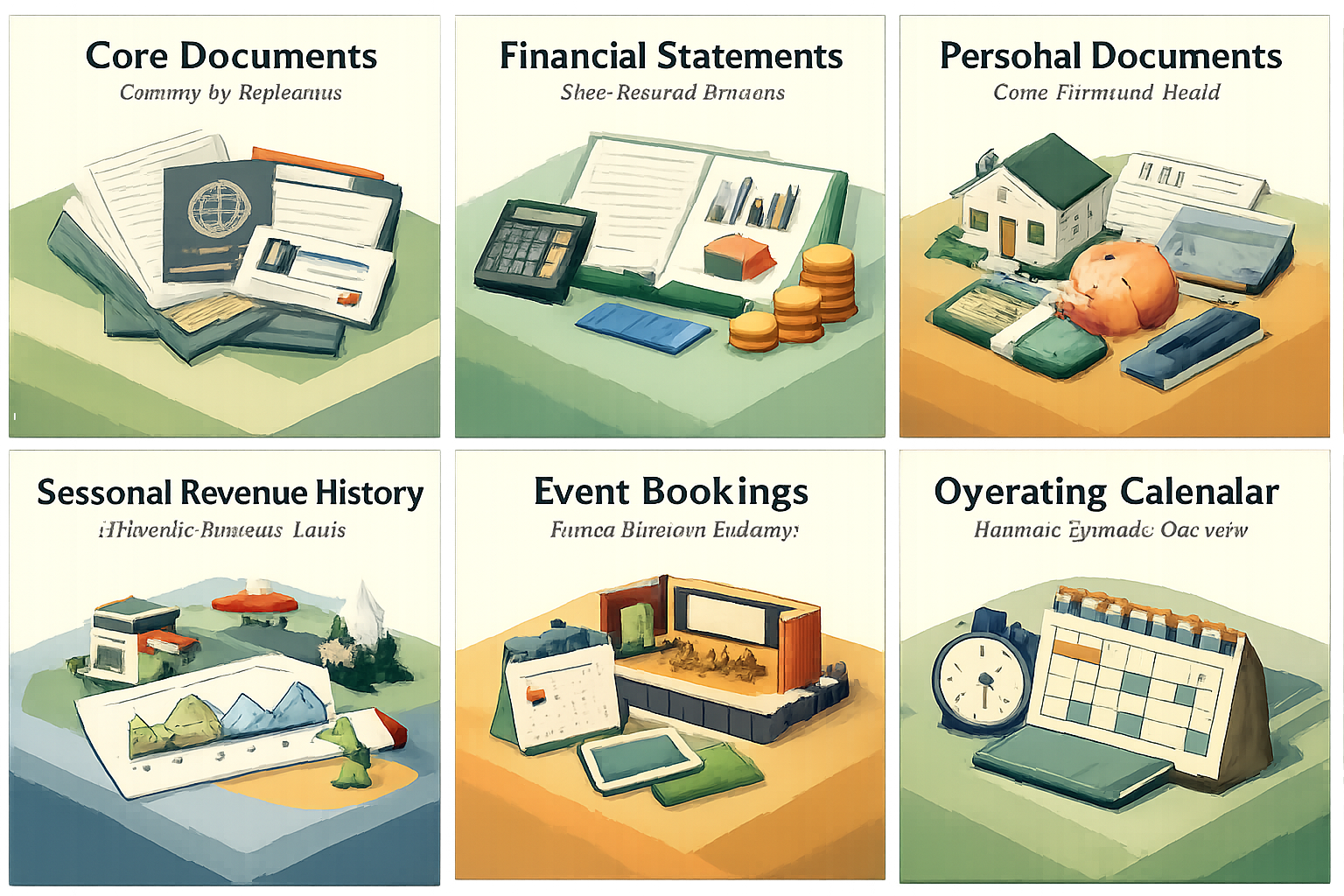
Regardless of whether your food truck is seasonal or year-round, every SBA loan application starts with a foundational set of business documents. These establish who you are as a business owner, what your business does, and how it's legally structured. Here's what you'll typically need to gather:
- Business license and permits: Your food truck likely requires a health permit, a mobile vendor license, and possibly city or county operating permits. Lenders will want to see that you're fully licensed to operate.
- Business formation documents: If your food truck is registered as an LLC, sole proprietorship, or corporation, include your articles of organization or incorporation, along with any operating agreements.
- Employer Identification Number (EIN): This is your business's tax identification number issued by the IRS. If you don't have one, you can apply for it online at no cost.
- Business bank statements: Most lenders request the past 12 months of business bank statements, though some may want to see up to 24 months. For seasonal operations, this helps show your full revenue cycle, including both peak and off-peak periods.
- Proof of business ownership: This could include your business registration certificate or a document showing your ownership percentage, especially if the business has multiple partners.
Having these documents organized and ready to submit demonstrates professionalism and can help speed up the underwriting process considerably.
Financial Statements That Show Your Seasonal Earning Pattern
One of the most critical parts of an SBA loan application for a seasonal food truck is demonstrating your financial performance — specifically in a way that accounts for your unique revenue cycle. Off-season low income doesn't tell the full story, and it's your job to make sure the lender sees the complete picture.
Here are the financial documents you'll typically need to provide:
- Profit and loss statements (P&L): These should cover at least two years of operations if possible. For seasonal businesses, lenders will often look at your P&L broken down by month so they can see exactly when revenue peaks and when it dips.
- Balance sheet: A current balance sheet shows your business's assets, liabilities, and equity. It gives lenders insight into how financially stable your business is, even during slow months.
- Cash flow projections: This is especially important for seasonal food truck owners. A forward-looking cash flow statement — ideally for the next 12 months — helps lenders understand how you'll generate revenue once peak season returns and how you plan to repay the loan.
- Business tax returns: Most SBA lenders require two to three years of business tax returns. If your food truck is newer, you may need to supplement with personal tax returns or detailed financial records from your first operating season.
If you work with a bookkeeper or accountant, now's a great time to ask them to help you compile and review these statements. Clean, well-organized financials can significantly strengthen your application.
Personal Financial Documents You'll Need to Include
SBA loans aren't just evaluated on business performance — your personal financial health matters too. Lenders often view the owner's personal finances as a reflection of how responsibly the business is managed. Here's what you'll typically need on the personal side:
- Personal tax returns: Most SBA lenders request two to three years of personal federal tax returns. These help verify your personal income and show how your business income flows into your overall financial picture.
- Personal financial statement: The SBA's Form 413 is a standard personal financial statement that lists your personal assets, liabilities, income, and expenses. This form is commonly required for all principal owners with a 20% or greater stake in the business.
- Government-issued photo ID: A driver's license or passport confirms your identity as part of the verification process.
- Personal credit report authorization: SBA lenders will pull your personal credit as part of their risk assessment. While there's no universal minimum credit score required, many lenders look for scores of 650 or higher, and a stronger score may improve your terms.
- Personal bank statements: Some lenders may also request recent personal bank statements to verify your financial stability outside of the business.
Being transparent and thorough with your personal financial documents can build trust with your lender and reduce the likelihood of delays during underwriting.
What Documents Are Needed for an SBA Loan for a Seasonal Food Truck During Off-Season: Seasonal-Specific Documentation
Beyond the standard application requirements, seasonal food truck owners may need to provide additional documentation that specifically addresses the nature of their business model. This is where your application can really stand out — or fall short.
Understanding what documents are needed for an SBA loan for a seasonal food truck during off-season means recognizing that your lender needs to feel confident your business will rebound. The following seasonal-specific documents can help make that case:
- Seasonal revenue history: If you've been operating for more than one season, compile a month-by-month revenue breakdown for each year. This clearly illustrates your business cycle and can help counter concerns about low off-season income.
- Event bookings or contracts: If you've already secured bookings for festivals, farmers markets, or private events in the upcoming season, include those contracts. They serve as forward-looking evidence of revenue potential.
- Operating calendar: A simple document outlining which months your truck operates, where you typically operate, and what events or venues you participate in can provide context that raw numbers alone can't convey.
- Explanation letter: Many seasonal business owners include a brief narrative letter explaining their business model, why they're applying during the off-season, and how the loan will be used to prepare for the next busy season — whether that means equipment upgrades, restocking inventory, or covering fixed operating costs.
- Vendor agreements or supplier contracts: If you have ongoing relationships with food suppliers, these documents can show that your supply chain is stable and your business is prepared to scale back up quickly.
How to Use Your Loan Purpose to Strengthen Your Application
SBA lenders want to know exactly how you plan to use the funds. Vague answers don't inspire confidence. For a seasonal food truck, there are several legitimate and well-recognized uses of SBA loan proceeds that lenders tend to view favorably:
- Working capital: Covering operating expenses during the off-season — such as insurance, vehicle maintenance, storage fees, and loan repayments — is a common and accepted use of SBA funds.
- Equipment purchases or upgrades: If your truck needs a new generator, cooking equipment, or refrigeration unit before the next season, this is a tangible use of funds that adds value to your business.
- Inventory preparation: Purchasing supplies, packaging, or non-perishable ingredients in advance of the busy season may also be an eligible use depending on your loan type.
- Marketing and branding: Investing in a new website, social media campaigns, or updated signage to attract customers for the next season could be included in your loan purpose as well.
When you draft your business plan or loan application narrative, be specific. Break down how each dollar will be allocated. A well-defined purpose shows lenders that you've thought carefully about your business needs and that the funds will be used productively — not just to stay afloat without a plan.
Tips for a Smoother SBA Loan Application Process
Even with all the right documents in hand, the SBA loan process can take time. Here are some practical tips that may help seasonal food truck owners navigate the process more effectively:
- Start early: Don't wait until you're financially stressed to apply. Beginning the process during the early part of your off-season gives you adequate time to gather documents, make corrections, and respond to lender requests without pressure.
- Work with an SBA-approved lender: Not all lenders are familiar with seasonal business models. Look for SBA Preferred Lenders or lenders with experience in the food service or mobile vendor industries.
- Consider an SBA microloan: If your funding needs are smaller — say, under $50,000 — an SBA microloan might be a better fit than a full 7(a) loan. These are often easier to qualify for and may have a simpler documentation process.
- Keep your books clean year-round: One of the biggest obstacles seasonal business owners face is disorganized or incomplete financial records. Using accounting software consistently throughout the year can make a huge difference when it's time to apply.
- Consult a SCORE mentor or SBDC advisor: The SBA partners with free resources like SCORE and Small Business Development Centers (SBDCs) that can review your application materials and offer guidance at no cost to you.
The more prepared you are, the more confident your lender will feel about approving your application. Preparation isn't just about paperwork — it's about showing that you run a serious, well-managed business.
●Conclusion
Securing financing as a seasonal food truck owner is absolutely possible, and the off-season can actually be one of the best times to pursue it. By understanding what documents are needed for an SBA loan for a seasonal food truck during off-season, you can walk into the application process with confidence rather than uncertainty. From business licenses and financial statements to seasonal revenue history and event contracts, each document tells part of your story — and together, they paint a picture of a resilient, forward-thinking business worth investing in. At LoanWise, we're committed to helping small business owners like you find the right financing solutions. Whether you're exploring an SBA 7(a) loan, a microloan, or another funding option, our team is here to guide you every step of the way. Don't let the off-season slow you down — let it be the season you set your business up for its best year yet.