
Running a bakery that thrives during the holidays or summer months is a rewarding venture — but it also comes with a financial challenge that many small business owners know all too well: uneven cash flow. When revenue spikes in December and slows down in February, keeping up with rent, payroll, and ingredient costs can feel like a juggling act. That's where a seasonal business line of credit can make a real difference. But before you apply, it helps to understand exactly what are the requirements for a business line of credit for a seasonal bakery. Lenders look at a specific set of factors when evaluating seasonal businesses, and knowing what to expect can put you in a much stronger position when it's time to apply.
How a Business Line of Credit Works for a Seasonal Bakery
A business line of credit is a flexible financing tool that allows small business owners to borrow up to a set limit and repay what they use — similar to a credit card, but typically with lower interest rates and higher limits. For a seasonal bakery, this type of funding can be especially useful because it gives you access to working capital when you need it most, without forcing you to take on a lump-sum loan you may not need year-round.
Unlike a traditional term loan, a business line of credit is revolving. That means once you repay what you've borrowed, those funds become available again. This structure suits the natural rhythm of a bakery that sees heavy sales during key seasons and quieter months in between. You might draw on the credit line in early fall to stock up on supplies and packaging before the holiday rush, then repay the balance once seasonal revenue comes in.
Lenders that offer lines of credit to seasonal businesses often understand that income isn't evenly distributed throughout the year. However, they still want to see that your bakery has the financial habits and history to manage borrowed funds responsibly. That's why understanding the qualification criteria ahead of time is so important.
What Are the Requirements for a Business Line of Credit for a Seasonal Bakery
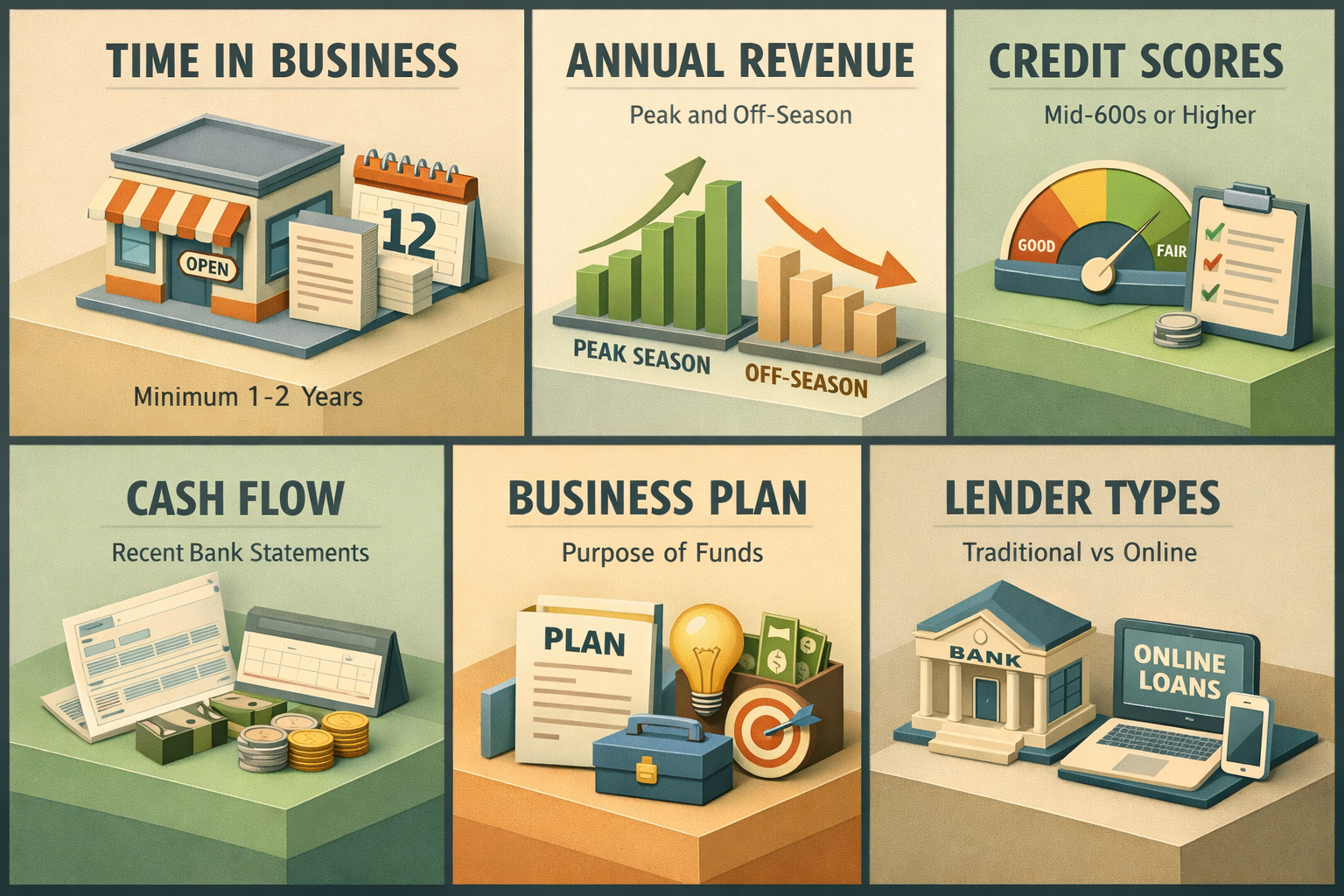
Understanding what are the requirements for a business line of credit for a seasonal bakery starts with recognizing that lenders evaluate both the business itself and the owner behind it. Requirements can vary depending on the lender — whether it's a traditional bank, a credit union, or an online lender — but there are several common factors most institutions will assess.
Time in Business
Most lenders want to see that your bakery has been operating for at least one to two years. This track record helps demonstrate that your business is stable enough to take on debt and repay it. Newer bakeries may still find options through certain online lenders or microloan programs, though the terms may be less favorable.
Annual Revenue and Seasonal Income Patterns
Lenders will typically review your annual revenue to determine how much credit to extend. For a seasonal bakery, this means you'll likely need to provide documentation that shows both your peak-season earnings and your off-season figures. Some lenders may calculate an average monthly revenue figure across the year, while others may place more weight on your highest-earning months. Having organized financial records — including profit and loss statements, bank statements, and tax returns — will strengthen your application considerably.
Personal and Business Credit Scores
Your personal credit score is often a key factor, especially for small or newer businesses that haven't yet built a strong business credit profile. Many lenders look for a personal credit score in the mid-600s or higher, though some online lenders may work with lower scores at higher interest rates. Building a separate business credit profile by opening a business bank account and paying vendors on time can also improve your chances of approval over time.
Cash Flow Documentation
Because seasonal businesses experience natural fluctuations, lenders may pay close attention to your cash flow patterns. Bank statements from the past three to twelve months are commonly requested. These help lenders verify that your bakery brings in enough revenue during peak periods to service any debt taken on. If you can show a consistent pattern of strong seasonal earnings followed by responsible financial management during slower months, that's a positive signal.
Business Plan and Purpose of Funds
Some lenders — particularly traditional banks and SBA-affiliated programs — may ask for a brief business plan or a clear explanation of how you intend to use the line of credit. For a bakery, common uses might include purchasing ingredients in bulk before a busy season, hiring temporary staff, or investing in equipment repairs. Being specific about your intended use can demonstrate financial discipline and increase lender confidence.
Types of Lenders That Offer Seasonal Business Lines of Credit
Not every lender is the same, and the right fit for your bakery will depend on your credit profile, how long you've been in business, and how quickly you need funding. Here's a look at some of the most common options available to seasonal small business owners.
Traditional Banks and Credit Unions
Established banks and credit unions often offer the most competitive interest rates on business lines of credit. However, they also tend to have stricter qualification requirements, including higher credit scores, more years in business, and stronger annual revenue. If your bakery has a solid financial history and you're not in a hurry, a traditional lender could offer the best long-term value.
Online Business Lenders
Online lenders have grown significantly in popularity among small business owners because they offer faster approvals and more flexible requirements. Some specialize in working with seasonal businesses and may weigh your peak-season revenue more heavily than your off-season numbers. The tradeoff is often a higher interest rate or additional fees, so it's important to compare the full cost of borrowing before committing.
SBA-Backed Programs
The U.S. Small Business Administration offers programs that can support seasonal businesses, including the SBA CAPLines program, which includes a seasonal business line of credit option specifically designed for businesses that build up inventory or labor costs ahead of a busy period. These programs may offer more favorable terms but can involve a longer application process and more documentation requirements.
Community Development Financial Institutions (CDFIs)
CDFIs are mission-driven lenders that often serve small businesses and entrepreneurs in underserved communities. They may offer more flexible lending criteria and can be a good option for newer bakeries or those with less-than-perfect credit histories.
How to Strengthen Your Application Before Applying
Even if you meet the basic requirements, taking steps to improve your financial profile before applying can make a meaningful difference in the terms you receive. Here are some practical strategies for seasonal bakery owners to consider.
- Organize your financial records: Gather at least twelve months of bank statements, your most recent tax returns, and current profit and loss statements. Lenders want to see a clear picture of your finances, so having these documents ready can speed up the process and demonstrate professionalism.
- Separate personal and business finances: If you haven't already, open a dedicated business checking account and use it exclusively for bakery-related transactions. This makes it easier to document your revenue and expenses and helps build a business banking history that lenders can review.
- Pay down existing debt where possible: A lower debt-to-income ratio is generally viewed more favorably by lenders. If you have outstanding personal or business debt, reducing those balances before applying may improve your approval odds and the terms you're offered.
- Check your credit reports: Review both your personal and business credit reports for errors or outdated information. Disputing inaccuracies before applying can potentially improve your scores and remove any red flags that might raise questions during underwriting.
- Time your application strategically: Applying just after your peak season — when your bank account reflects strong revenue — can present your bakery in the best possible light. Lenders reviewing recent statements during this window will see your business at its financial strongest.
Common Pitfalls Seasonal Bakery Owners Should Avoid
Getting approved for a seasonal business line of credit is only part of the journey. Using it wisely is equally important. Some common mistakes can create financial strain and make it harder to access credit in the future.
Borrowing More Than You Need
It can be tempting to draw the full amount available on your credit line, but borrowing more than your business actually needs increases your interest costs and repayment obligations. A better approach is to borrow in amounts that align with specific, planned expenses — like a bulk ingredient order or a piece of equipment — so that repayment is manageable once the season ends.
Neglecting the Off-Season Repayment Plan
One of the most important aspects of managing a seasonal line of credit is having a clear plan for repayment during your slower months. Lenders want to see that your business can handle its financial obligations year-round, not just during peak periods. Before drawing on your credit line, consider how your off-season revenue and any reserve funds will support timely repayments.
Missing Payments During Slow Months
Late or missed payments can damage both your personal and business credit scores, making future financing more difficult and expensive to obtain. If you anticipate a cash flow shortfall during slow months, it's worth speaking with your lender proactively to explore options such as adjusted payment schedules or temporary hardship programs.
What Lenders May Ask for During Underwriting
Once you submit your application, lenders will typically conduct an underwriting review to verify the information provided and assess the overall risk of lending to your business. For a seasonal bakery, this process may involve a closer look at your income patterns and how your business manage cash flow during lower-revenue periods.
Commonly requested documents during underwriting may include:
- Two years of personal and business tax returns
- Three to twelve months of business bank statements
- A current profit and loss statement
- A balance sheet reflecting your business assets and liabilities
- Proof of business registration and licensing
- A voided business check for direct deposit or payment setup
Some lenders may also request a personal guarantee, which means you as the business owner agree to be personally responsible for repaying the debt if the business cannot. This is common for small business credit products and is worth reviewing carefully before signing any agreement.
Being organized and responsive during the underwriting process can help move things along more efficiently. If a lender requests additional documentation, providing it promptly signals that you're a reliable borrower and helps avoid unnecessary delays.
●Conclusion
A business line of credit can be a powerful financial tool for a seasonal bakery — helping you bridge the gap between slow months and your busiest selling periods. Understanding what are the requirements for a business line of credit for a seasonal bakery puts you in a much stronger position to approach lenders with confidence. From building your credit profile and organizing financial records to choosing the right type of lender for your situation, preparation is the key to a successful application. Whether you're gearing up for a holiday rush or planning ahead for next summer's farmers market season, taking the time now to get your finances in order could open the door to the flexible funding your bakery needs to grow. If you're ready to explore your options, speaking with a small business lending advisor can help you find the right fit for your bakery's unique needs.