Buying a home is one of the biggest financial decisions most people will ever make. And while most homebuyers focus on saving for a down payment, closing costs can catch you off guard if you're not prepared. If you've been asking yourself what are the closing costs for conventional loan purchase, you're not alone. These fees can add up to a meaningful sum, and knowing what to expect ahead of time could save you stress — and money — on closing day. This guide walks you through everything you need to know, from the most common fees to smart strategies for reducing your out-of-pocket expenses.
Understanding Closing Costs on a Conventional Mortgage
Closing costs are the fees and expenses you pay to finalize your home loan. They're separate from your down payment and are typically due on the day you close on the property. For a conventional loan — which is a mortgage not backed by a government agency like the FHA or VA — these costs can vary based on your lender, your location, and the specifics of your purchase.
On average, closing costs for a conventional mortgage tend to fall somewhere between 2% and 5% of the loan amount. So if you're borrowing $350,000, you might expect to pay anywhere from $7,000 to $17,500 at closing. That's a wide range, which is why it's so important to understand exactly what you're being charged for and why.
It's worth noting that closing costs are made up of two broad categories: lender fees and third-party fees. Lender fees are charged directly by your mortgage company, while third-party fees cover services required to complete the transaction — things like appraisals, title searches, and government recording charges. Both types will appear on your official Loan Estimate and Closing Disclosure documents.
A Full Conventional Loan Fees Breakdown
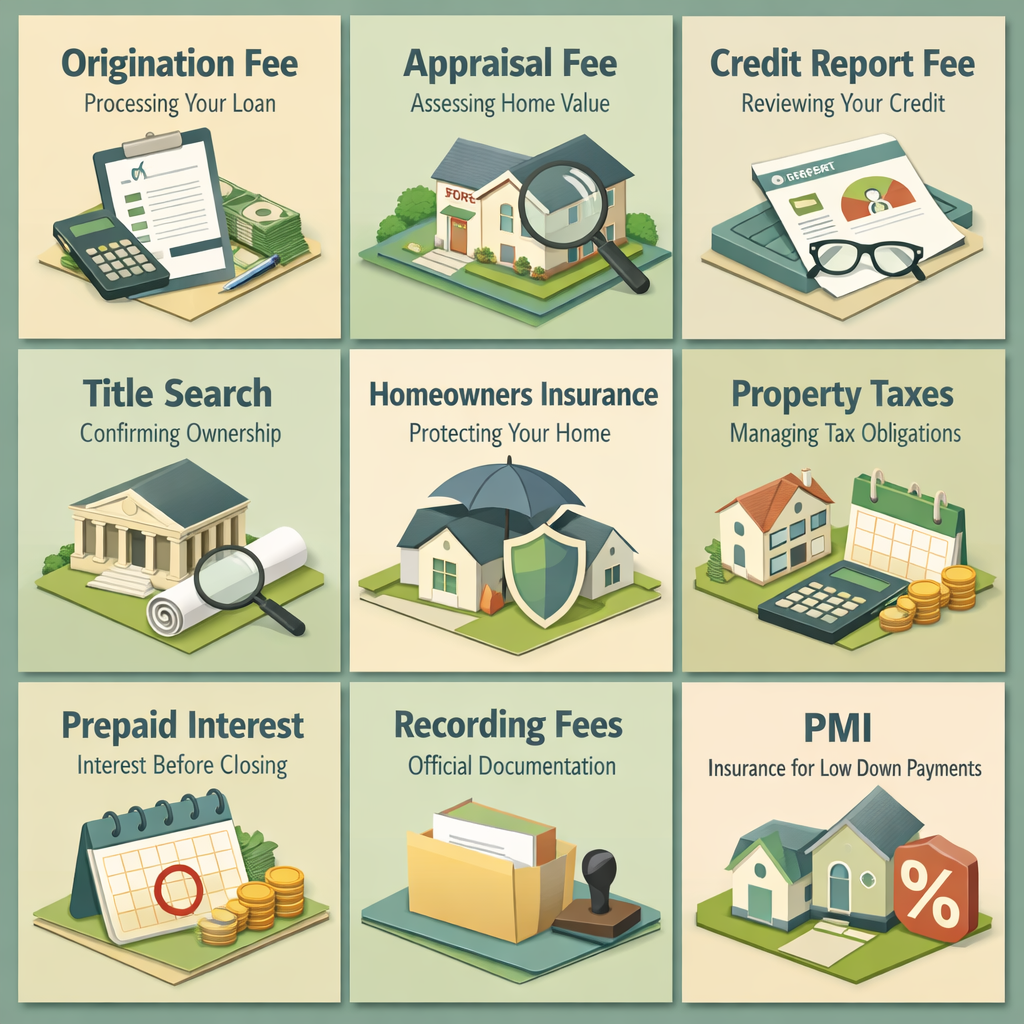
Getting clarity on each individual charge is one of the best ways to feel confident going into closing. Here's a closer look at the fees you're likely to see on your settlement statement:
- Origination Fee: This is what the lender charges for processing your loan. It may be expressed as a flat fee or as a percentage of the loan amount — often around 0.5% to 1%. Some lenders bundle this into what they call "points," while others list it separately.
- Appraisal Fee: Before approving your loan, lenders typically require a licensed appraiser to assess the home's market value. This fee commonly ranges from a few hundred dollars to over a thousand, depending on the property type and location.
- Credit Report Fee: Lenders pull your credit report during the application process, and this cost is usually passed along to you. It's typically a smaller charge, but it does appear on the Loan Estimate.
- Title Search and Title Insurance: A title search confirms the seller has the legal right to sell the property. Title insurance protects both you and your lender in case any ownership disputes arise later. Together, these fees can represent a notable portion of your total closing costs.
- Homeowners Insurance: Most lenders require you to prepay your first year of homeowners insurance at closing. You may also need to fund an escrow account to cover future premiums.
- Property Taxes: Depending on where you're buying and when in the tax year you close, you may need to prepay a portion of property taxes. These funds often go into an escrow account managed by your lender.
- Prepaid Interest: Interest accrues from the day you close until the end of that calendar month. Lenders typically collect this upfront.
- Recording Fees: Your local government charges a fee to officially record the new deed and mortgage. These amounts vary by county or municipality.
- Private Mortgage Insurance (PMI): If your down payment is less than 20%, your lender will likely require PMI. You may need to prepay the first month's premium at closing.
This conventional loan fees breakdown isn't exhaustive — some transactions may include additional charges, such as flood determination fees, attorney fees in certain states, or homeowners association transfer fees. Always review your Loan Estimate carefully within the first few days of your application.
Understanding Lender Fees on a Conventional Loan
When it comes to understanding lender fees on a conventional loan, it helps to separate what the lender controls from what's set by outside parties. Lender-specific fees are the ones most open to negotiation, and they deserve a closer look.
Common lender fees may include:
- Application Fee: Some lenders charge a fee just to apply for a mortgage. Not all do, so this is worth asking about upfront.
- Underwriting Fee: This covers the cost of reviewing your financial profile and assessing your eligibility. It's one of the more significant lender fees you might encounter.
- Rate Lock Fee: Locking in your interest rate protects you from market fluctuations while your loan is being processed. Some lenders offer this at no cost; others charge a fee, especially for extended lock periods.
- Discount Points: These are optional prepaid interest payments that allow you to "buy down" your mortgage rate. Each point typically equals 1% of the loan amount. Whether they're worth it depends on how long you plan to stay in the home.
One of the most important tools for understanding lender fees is the Loan Estimate. Under federal law, lenders are required to provide this document within three business days of receiving your application. It outlines all expected costs in a standardized format, making it easier to compare offers from multiple lenders side by side. Don't skip this step — even small differences in fees can translate to thousands of dollars over the life of your loan.
What to Expect for Closing Costs Based on Your Loan Scenario
Knowing what to expect for closing costs can vary quite a bit depending on your individual situation. A few key factors tend to influence what you'll ultimately pay:
Loan Amount: Many fees are calculated as a percentage of the loan, so larger loans typically come with higher closing costs in dollar terms. However, some fixed fees — like recording charges — stay the same regardless of loan size.
Property Location: State and local taxes, attorney requirements, and recording fees differ significantly from one area to another. Some states have higher transfer taxes than others, which can push total costs toward the upper end of the range.
Down Payment Size: Putting less than 20% down often means you'll need PMI, which adds a prepaid cost at closing. It could also affect how your escrow account is structured.
Credit Profile: Borrowers with stronger credit scores may qualify for better rates and potentially lower origination costs. Lenders view lower-risk borrowers more favorably when pricing their fees.
Lender Choice: This is perhaps the most controllable variable. Different lenders charge different fees for similar services. Shopping around and comparing Loan Estimates from at least two or three lenders could reveal meaningful savings opportunities.
First-time homebuyers, in particular, should budget conservatively and assume they may fall toward the higher end of the 2%–5% range. Building this buffer into your savings plan early gives you more flexibility as closing day approaches.
Smart Ways to Reduce Your Out-of-Pocket Closing Expenses
The good news is that closing costs aren't entirely fixed. There are several legitimate strategies that homebuyers and refinancers can explore to keep these expenses more manageable.
Negotiate Seller Concessions
In many purchase transactions, sellers may be willing to contribute toward your closing costs as part of the negotiation. These are known as seller concessions or seller credits. Conventional loan guidelines do place limits on how much the seller can contribute, typically based on your loan-to-value ratio, but even a modest concession can offset a meaningful share of your costs.
Ask About Lender Credits
Some lenders offer what's called a lender credit, where they cover some or all of your closing costs in exchange for a slightly higher interest rate. This can be a useful option if you're short on cash at closing but plan to refinance or sell within a few years before the higher rate costs you more in the long run.
Shop Third-Party Services
For certain services — like title insurance and settlement agents — lenders are often required to allow you to shop for your own provider. Comparing prices for these services can sometimes result in lower fees without affecting your loan terms.
Review the Closing Disclosure Carefully
Before your closing day, you'll receive a Closing Disclosure at least three business days in advance. Compare it line by line with your original Loan Estimate. If fees have increased significantly without explanation, don't hesitate to ask your lender for clarification. Some charges are not allowed to increase beyond certain limits set by federal regulations.
Rolling Closing Costs Into Your Conventional Loan
In some cases, homebuyers wonder whether they can simply roll their closing costs into the loan itself to avoid paying them out of pocket. With a conventional purchase loan, this option is generally not available in the traditional sense — your loan amount is typically capped at the purchase price or appraised value, whichever is lower.
However, there are a couple of indirect approaches worth understanding:
- Requesting a higher loan amount through an increased purchase price: In rare cases and with lender approval, some buyers and sellers structure the transaction so that the seller agrees to a higher purchase price and simultaneously provides a credit back to the buyer to cover closing costs. This approach must be disclosed and approved by the lender, and the property still needs to appraise at the higher value.
- Refinancing later to recoup costs: Some homeowners choose to take on closing costs upfront and then refinance within a few years to adjust their rate or pull out equity. This isn't a direct way to roll in costs, but it's part of a broader financial strategy some borrowers use.
For refinance transactions, the dynamic is different — in a rate-and-term refinance, rolling closing costs into the new loan balance is often possible, though it does increase the total amount owed. If you're refinancing and want to explore this route, it's worth running the numbers carefully to ensure the long-term cost makes sense.
●Conclusion
So, what are the closing costs for conventional loan purchase? They're a collection of lender fees, third-party charges, and prepaid expenses that typically total between 2% and 5% of your loan amount. While that might seem like a lot on top of your down payment, knowing what you're paying for — and why — puts you in a much stronger position as a buyer. Take the time to compare Loan Estimates, ask questions, and explore options like seller concessions or lender credits. Being informed is one of the most powerful tools you have at the closing table. If you're ready to take the next step, our team at LoanWise is here to help you navigate your conventional mortgage with confidence.