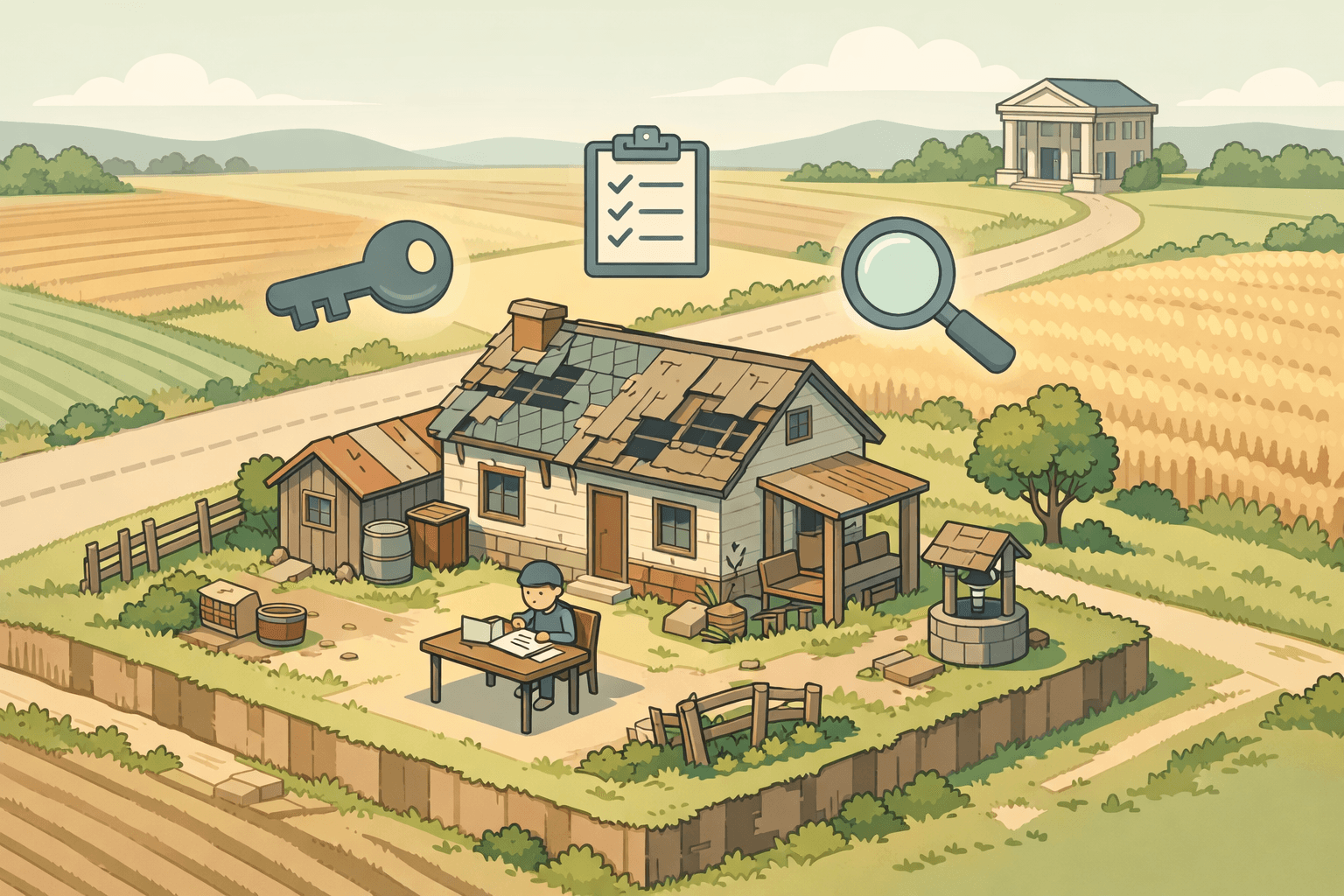
Buying a home in a rural community with little or no down payment is one of the most appealing features of the USDA loan program. But even when you sidestep the down payment, you'll still need to plan for closing costs. If you're targeting a fixer-upper in an eligible rural area, understanding what are the closing costs for a USDA loan on a fixer-upper in a rural area is an essential first step before you make an offer. This guide breaks down every fee you're likely to encounter, explains what makes USDA closings unique, and shares practical strategies to keep your out-of-pocket costs as low as possible.
How USDA Loans Work for Rural Home Purchases
The U.S. Department of Agriculture's Single Family Housing Guaranteed Loan Program is designed to help low-to-moderate-income borrowers purchase homes in eligible rural and suburban communities. The program's biggest draw is its zero down payment requirement, which makes homeownership accessible to buyers who haven't had the chance to build a large savings cushion.
USDA loans are issued by approved private lenders — such as banks, credit unions, and mortgage companies — and are backed by the federal government. That guarantee reduces the lender's risk, which typically translates into competitive interest rates for qualifying borrowers. However, the loan does come with two mortgage insurance components: an upfront guarantee fee and an annual fee, both of which influence the total cost of financing.
When it comes to fixer-uppers specifically, USDA guidelines generally require that the home meet minimum property standards at the time of closing. That said, the USDA Section 504 Repair and Rehabilitation program and certain state-level options may help eligible buyers address repairs. It's worth confirming with your lender which renovation-related paths are available in your situation, since program eligibility and property requirements can vary.
Breaking Down USDA Fixer-Upper Rural Closing Costs
When people ask what are the closing costs for a USDA loan on a fixer-upper in a rural area, the honest answer is that costs vary based on the home's purchase price, the lender you choose, your location, and the condition of the property. That said, most borrowers can expect total closing costs for a USDA loan to range somewhere between 2% and 5% of the loan amount, though rural properties and fixer-uppers may introduce additional line items.
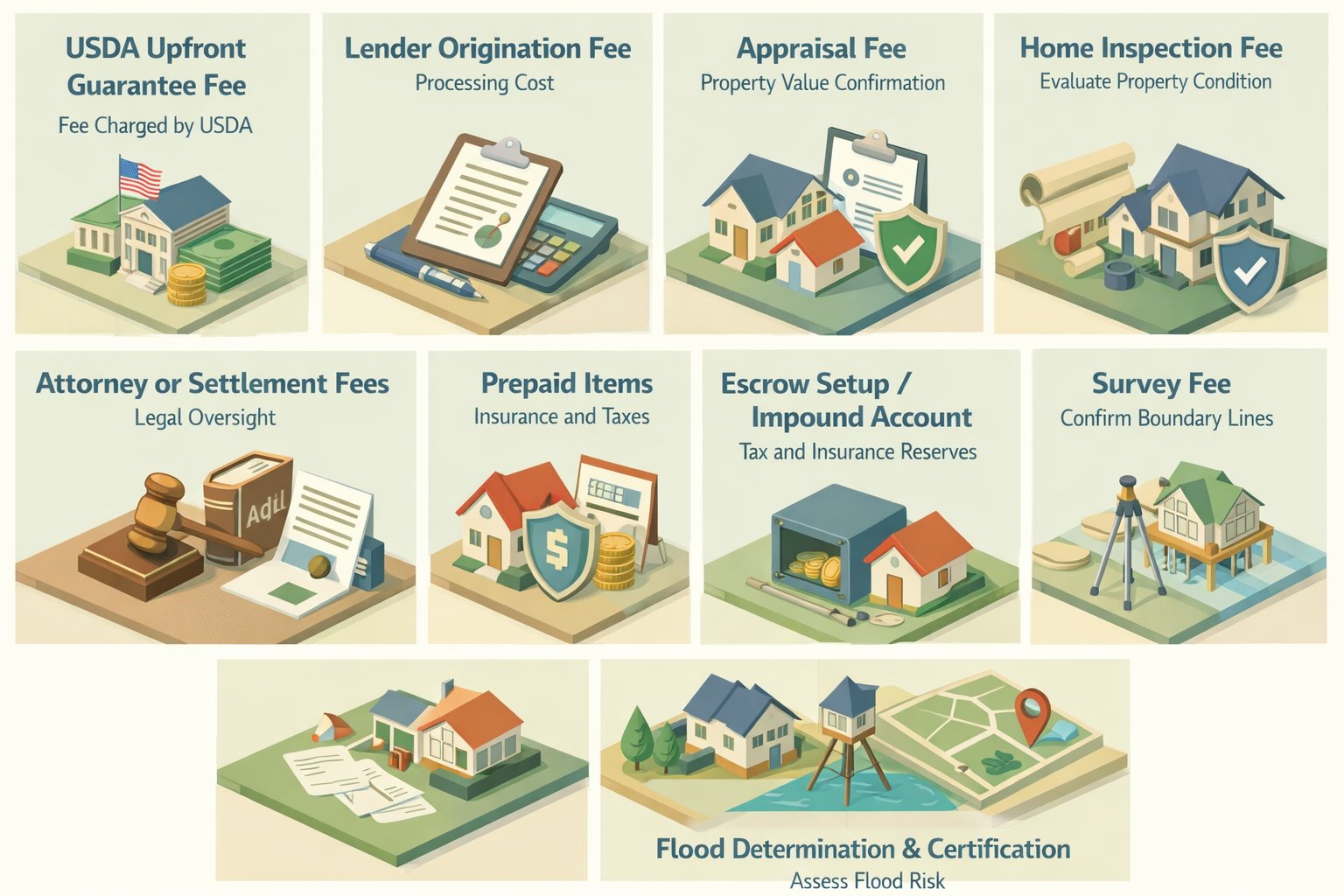
Here's a look at the most common fees you'll likely see on your Loan Estimate and Closing Disclosure:
- USDA Upfront Guarantee Fee: This is a fee charged by the USDA to guarantee the loan. It's currently a percentage of the loan amount and may be rolled into the loan balance rather than paid at closing — a significant benefit for cash-strapped buyers.
- Lender Origination Fee: Covers the lender's cost of processing and underwriting your application. This fee varies by lender and is often negotiable.
- Appraisal Fee: USDA loans require a property appraisal to confirm the home's market value and ensure it meets minimum property condition standards. For rural or remote properties, appraisal fees can sometimes run higher due to limited local comparable sales.
- Home Inspection Fee: While not always required by the lender, a home inspection is strongly recommended — especially for a fixer-upper. Inspectors evaluate structural integrity, plumbing, electrical systems, roofing, and more.
- Title Search and Title Insurance: A title search confirms the seller has the legal right to sell the property. Title insurance protects both you and your lender if ownership disputes arise later. Fixer-uppers with long ownership histories may carry more title complexity.
- Attorney or Settlement Fees: Some states require a real estate attorney to oversee the closing. Fees vary by location and firm.
- Prepaid Items: These include prepaid homeowner's insurance, prepaid property taxes, and prepaid mortgage interest. They're not fees per se, but they contribute to the total cash needed at closing.
- Escrow Setup / Impound Account: Most USDA lenders require an escrow account for taxes and insurance. You'll typically fund initial escrow reserves at closing.
- Survey Fee: In rural areas, property surveys may be required or recommended to confirm boundary lines — especially on larger lots common with rural fixer-uppers.
- Flood Determination and Certification: Rural properties can fall within or near flood zones. A flood determination fee is standard, and flood insurance may be required if the home is in a designated flood zone.
Unique Cost Considerations for Fixer-Uppers in Rural Communities
Buying a fixer-upper in a rural area introduces a few layers of complexity that don't always apply to turnkey homes in suburban neighborhoods. Understanding these nuances can help you budget more accurately and avoid surprises late in the process.
Property Condition and USDA Eligibility
The USDA program generally requires that a home be livable at the time of closing. This means the property must have functional heating, adequate roofing, safe electrical and plumbing systems, and no significant structural defects. If a fixer-upper doesn't meet these standards, the loan could be denied — or the seller may be required to make repairs before closing.
This requirement can affect your costs in a couple of ways. First, if the appraiser flags repairs as required conditions for loan approval, those repairs must typically be completed before the loan closes. Depending on who pays for them, this could add to your closing costs or reduce the seller's net proceeds. Second, it may be worth paying for a pre-inspection before you even apply for the loan, so you know what condition issues exist upfront.
Well and Septic Testing
Many rural fixer-uppers rely on private wells and septic systems rather than municipal utilities. USDA lenders commonly require well water tests to confirm the water is safe for drinking and that the well meets minimum flow rate requirements. Septic system inspections may also be required. These tests add to your closing costs but are genuinely valuable — especially on older rural properties where systems may not have been serviced recently.
Pest and Termite Inspections
In certain regions, USDA lenders require a pest inspection — sometimes called a WDO (wood-destroying organism) report. Older rural homes, especially those that have been vacant or poorly maintained, may be more vulnerable to termite damage or other pest activity. If issues are found, treatment and repair costs could factor into your overall transaction.
The USDA Guarantee Fee Explained
One of the most important and USDA-specific costs to understand is the guarantee fee structure. Unlike FHA loans, which charge a mortgage insurance premium both upfront and annually, the USDA program uses a guarantee fee system that tends to be more affordable over time for many borrowers.
Upfront Guarantee Fee
At closing, USDA loans carry an upfront guarantee fee. The good news is that this fee can typically be financed into the loan balance rather than paid out of pocket at closing. This is one of the reasons USDA loans remain attractive even when a borrower has limited savings. Your lender can walk you through exactly how this affects your total loan amount and monthly payment.
Annual Guarantee Fee
In addition to the upfront fee, there's an annual fee that's divided into monthly installments and included in your mortgage payment. While it does add to your monthly cost, the USDA's annual fee is generally considered lower than FHA's ongoing mortgage insurance premium, which makes it a competitive option for eligible rural buyers.
It's worth noting that guarantee fee rates can be adjusted by the USDA over time, so confirm the current rates with your lender before finalizing your budget.
How Seller Concessions and Lender Credits Can Lower Your Cash to Close
One of the most powerful tools available to USDA borrowers is the ability to use seller concessions to cover a portion of closing costs. USDA guidelines allow sellers to contribute toward the buyer's closing costs, which can significantly reduce the amount of cash you need at the closing table. In competitive rural markets where sellers are motivated, this strategy can be very effective.
Here are a few options worth exploring with your real estate agent and loan officer:
- Seller-Paid Closing Costs: You may be able to negotiate with the seller to pay some or all of your closing costs as part of the purchase agreement. This is especially common in slower markets or when a seller is eager to move quickly.
- Lender Credits: Some lenders offer credits in exchange for accepting a slightly higher interest rate. While this increases your monthly payment, it can reduce or eliminate your upfront closing costs — a worthwhile trade-off for buyers who are short on cash now but expect their income to grow.
- Closing Cost Assistance Programs: Several state housing finance agencies and nonprofit organizations offer grants or low-interest second loans to help cover USDA fixer-upper rural closing costs. Availability varies by state and income level, so it pays to research what's offered in your area.
Keep in mind that USDA loans also allow borrowers to finance closing costs into the loan if the appraised value exceeds the purchase price — a scenario that sometimes occurs with underpriced fixer-uppers. Your loan officer can explain when and how this option applies.
How to Compare Lenders and Minimize Fees
Not all lenders charge the same fees, and shopping around could save you a meaningful amount of money. When you apply with multiple USDA-approved lenders, each one is required to provide you with a Loan Estimate within three business days. This standardized document makes it easier to compare origination fees, third-party service costs, and prepaid items side by side.
What to Look For When Comparing Estimates
Focus on Section A of the Loan Estimate, which covers lender-controlled fees like origination charges and discount points. These are the fees most open to negotiation. Section B covers required third-party services — such as appraisals and title work — where you may have limited ability to shop but should still confirm the fees are reasonable for your area.
Ask About USDA-Specific Experience
Because USDA loans involve a federal guarantee process, the timeline and documentation requirements differ from conventional loans. Lenders with strong USDA experience tend to handle these nuances more efficiently, which can prevent delays and reduce the risk of last-minute surprises that could affect your closing costs or timeline. When interviewing lenders, ask specifically how many USDA loans they close per year and whether they have experience with rural fixer-upper transactions.
Budgeting Smart for Your Rural Fixer-Upper Purchase
Knowing what are the closing costs for a USDA loan on a fixer-upper in a rural area is only part of the financial picture. To set yourself up for long-term success, it's important to budget holistically — factoring in not just the closing costs to expect, but the ongoing expenses of owning and improving a property that needs work.
Create a Repair Cost Estimate Before You Commit
Before finalizing your offer, get contractor estimates for the repairs you plan to make. Even rough numbers can help you understand whether the purchase price leaves you enough margin to complete the improvements. Fixer-uppers can be excellent investments, but unexpected repair costs have a way of growing once work begins — especially on older rural properties.
Keep an Emergency Reserve
Even if you're financing your closing costs, try to maintain a cash reserve after closing. Rural properties often come with maintenance responsibilities that urban homes don't — larger lots, septic systems, private wells, outbuildings, and aging infrastructure. Having three to six months of reserves gives you a financial buffer to handle surprises without derailing your renovation plans.
Work with a HUD-Approved Housing Counselor
If you're a first-time homebuyer or feel uncertain about navigating the USDA process, consider working with a HUD-approved housing counselor. These counselors offer free or low-cost guidance on budgeting, loan programs, and home purchase planning. They can help you understand your options and avoid common pitfalls when buying a rural fixer-upper with government-backed financing.
●Conclusion
Understanding USDA fixer-upper rural closing costs in full detail before you start house hunting puts you in a much stronger position as a buyer. From the upfront guarantee fee and appraisal to well tests, pest inspections, and title work, the fees add up — but there are also meaningful ways to reduce what you pay out of pocket. Seller concessions, lender credits, and state assistance programs can all help bridge the gap. The key is to start the conversation early with a knowledgeable USDA-approved lender, ask the right questions, and build a realistic budget that accounts for both closing and post-closing needs. If you're ready to explore your options, LoanWise can connect you with experienced loan officers who specialize in USDA rural home financing and can guide you through every step of the process.