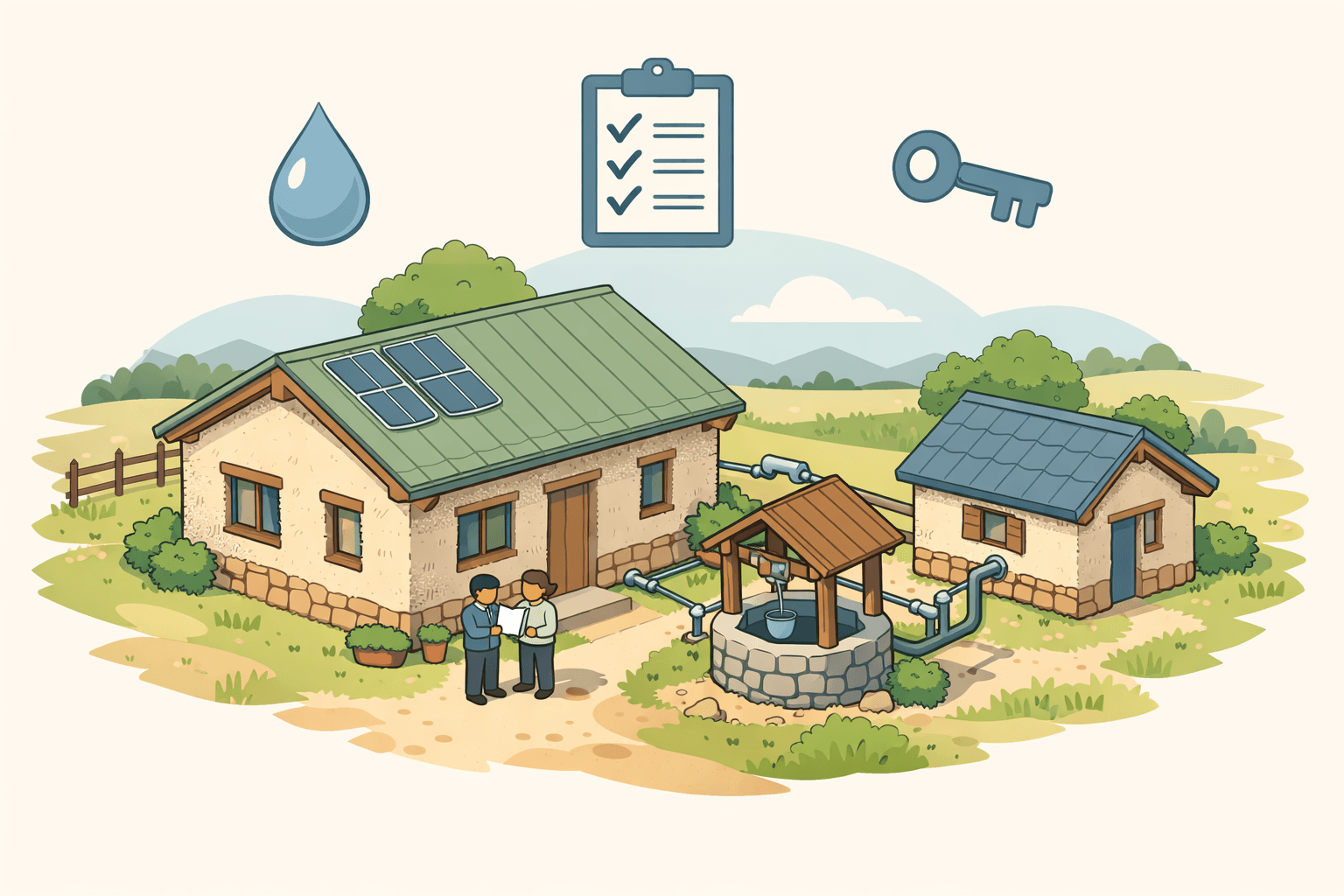
Buying a straw bale home is an exciting choice for eco-conscious homebuyers who value sustainable construction, natural insulation, and a smaller environmental footprint. But when it comes to financing, these properties can raise questions that traditional lenders aren't always prepared to answer quickly. Add a shared well into the picture, and the path to approval may feel even more uncertain. The good news is that learning how to get a conventional loan for a straw bale home with shared well is absolutely possible — it just requires the right preparation, the right lender, and a clear understanding of what underwriters are looking for. This guide walks you through every key step.
Why Straw Bale Homes Present Unique Lending Challenges
Straw bale construction uses tightly packed bales of straw as the primary building material, typically finished with plaster or stucco on both the interior and exterior. This method has been used for well over a century, especially in dry climates, and it's celebrated for its excellent thermal performance and low embodied energy. However, from a lender's perspective, non-traditional construction types can introduce appraisal and marketability concerns that standard underwriting guidelines aren't always designed to address.
Conventional loans — those backed by Fannie Mae or Freddie Mac — require that a property meet certain minimum standards related to safety, soundness, and structural integrity. A straw bale home must demonstrate that it's comparable to other homes in the area, that it has a functional and durable structure, and that a qualified appraiser can identify similar sales nearby. This last point is often the hardest hurdle. In many markets, straw bale homes are rare enough that finding true comparable sales — or "comps" — can be difficult, which may affect the appraised value and the lender's willingness to proceed.
That said, straw bale homes aren't automatically disqualified from conventional financing. Many have been successfully financed with standard mortgage products, particularly when they're located in areas where alternative construction is more common and when the borrower works with an experienced, lender-approved appraiser who understands how to document these properties properly.
Understanding Shared Well Requirements for Conventional Mortgages
A shared well — sometimes called a community well or a jointly owned well — supplies water to two or more properties from a single source. In rural and semi-rural areas, this arrangement is fairly common, and it doesn't automatically disqualify a home from conventional financing. However, lenders do have specific requirements that must be met before they'll approve a shared well property loan.
Fannie Mae and Freddie Mac guidelines generally require that any shared well be covered by a recorded, legally binding well-sharing agreement. This agreement typically needs to address several key points:
- Maintenance responsibilities: The agreement should clearly define who is responsible for upkeep, repairs, and associated costs.
- Access rights: Each property's right to access and use the well must be legally protected, typically through an easement recorded with the county.
- Dispute resolution: Many lenders want to see language that outlines how disagreements between parties will be handled.
- Continuity of service: The agreement should confirm that no single party can unilaterally cut off another property's water supply.
In addition to the legal agreement, many lenders will require a water quality test to confirm the well meets local health department standards. This is especially true for properties in areas without municipal water access. It's worth noting that lender-specific overlays — additional requirements beyond Fannie Mae or Freddie Mac guidelines — can vary, so it's important to confirm requirements directly with your loan officer early in the process.
How to Get a Conventional Loan for a Straw Bale Home With Shared Well: Step-by-Step
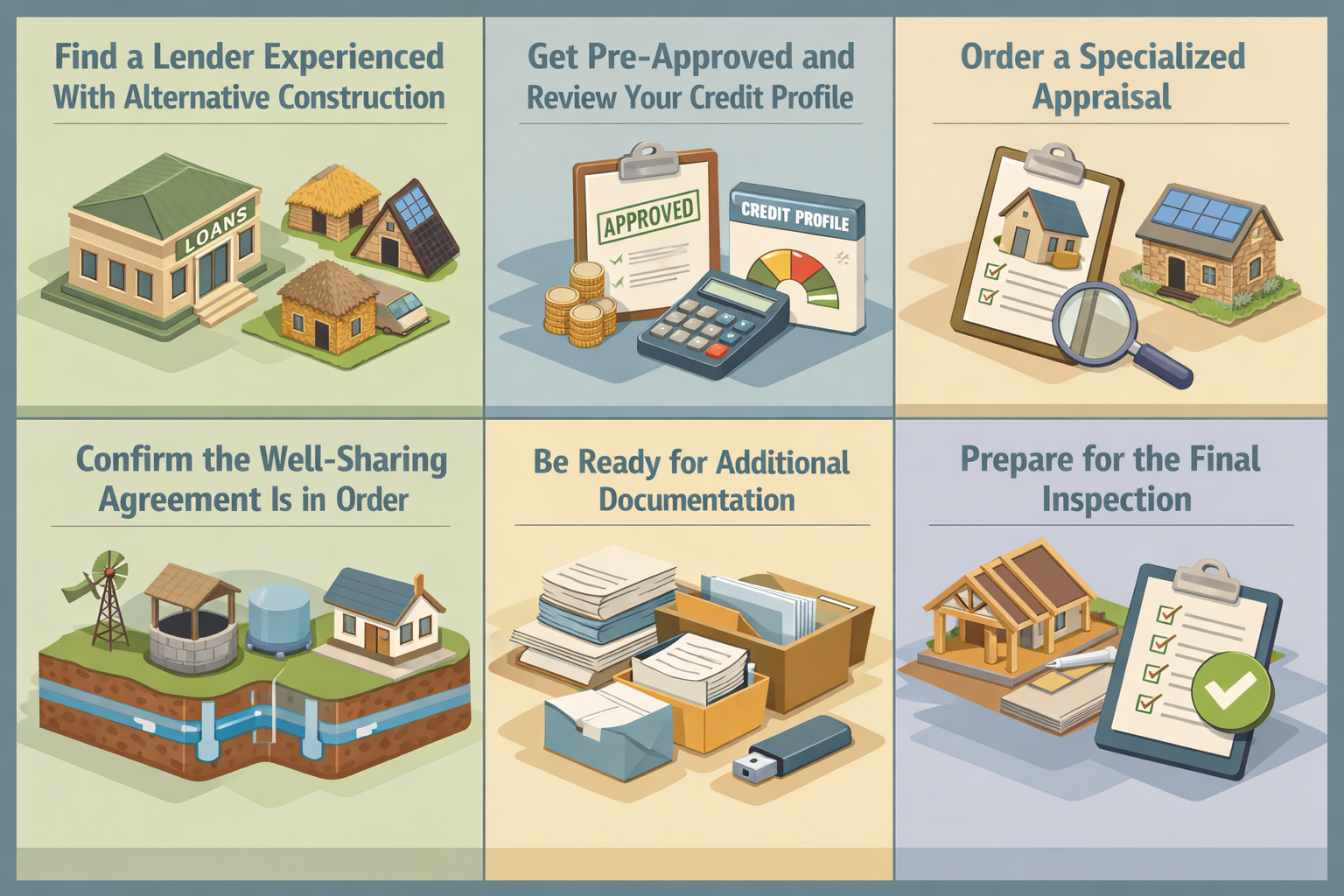
Understanding how to get a conventional loan for a straw bale home with shared well really comes down to preparation and working with the right professionals. Here's a practical breakdown of the process:
Step 1: Find a Lender Experienced With Alternative Construction
Not every mortgage lender has experience with straw bale homes, and some may decline to finance them outright based on internal policies. It's worth calling ahead and asking whether the lender has previously closed loans on straw bale or other alternative construction properties. Portfolio lenders — those who keep loans in-house rather than selling them to the secondary market — may offer more flexibility, though their rates and terms could differ from conventional products.
Step 2: Get Pre-Approved and Review Your Credit Profile
Conventional loans typically require a minimum credit score of 620, though many lenders prefer scores of 680 or higher for properties that present additional risk factors. Your debt-to-income ratio, employment history, and down payment amount will all play a role. A stronger credit profile may help offset some of the uncertainty lenders feel about non-standard property types.
Step 3: Order a Specialized Appraisal
The appraisal is often the most critical step when financing a straw bale home. You'll want an appraiser who has specific experience with alternative or owner-built construction and who knows how to document the property's unique features without undermining its value. The appraiser may use the cost approach — estimating value based on the cost to rebuild — rather than relying solely on comparable sales, especially if comps are limited in your area.
Step 4: Confirm the Well-Sharing Agreement Is in Order
Before submitting a full loan application, make sure a recorded well-sharing agreement is in place and that it meets your lender's requirements. If one doesn't exist or needs to be updated, work with a real estate attorney to draft or revise it before proceeding. This step alone can prevent significant delays at closing.
Step 5: Be Ready for Additional Documentation
Your lender may request building permits, certificates of occupancy, engineering reports, or pest and moisture inspections specific to straw bale construction. Having these documents organized and ready to submit promptly can keep your file moving through underwriting efficiently.
Appraisal Strategies That Can Strengthen Your Case
Because straw bale homes are considered non-traditional by most appraisers and lenders, a well-prepared appraisal can make or break your loan approval. There are several strategies that may improve your outcome.
First, consider providing the appraiser with as much documentation as possible about the construction quality, materials used, and any energy efficiency certifications the home may carry. Straw bale homes often have exceptional insulation properties, which can translate to lower utility costs — a genuine value-add that a knowledgeable appraiser might factor into their analysis.
Second, if the immediate area doesn't have straw bale comparable sales, the appraiser may need to expand the search radius or use homes of similar size, age, and condition as proxies. This is acceptable under conventional appraisal guidelines as long as the appraiser explains and justifies their adjustments clearly.
Third, if the home is owner-built or recently constructed, having a licensed structural engineer's report on file can help reassure both the appraiser and the underwriter that the building meets safety and durability standards. This is especially valuable for straw bale homes, where lenders may be unfamiliar with the structural system.
Finally, working with your real estate agent to pull any available sales data on straw bale or earth-sheltered homes in the broader region — even if they're not identical — can give the appraiser supporting material to work with. The more context provided, the more confident the appraiser can be in their value conclusion.
Alternative Financing Options If Conventional Approval Is Difficult
Even with thorough preparation, some borrowers may find that conventional financing isn't available for their specific straw bale property — particularly if the appraiser can't support a value that meets the lender's loan-to-value requirements, or if the shared well agreement doesn't fully satisfy underwriting guidelines. In those cases, it's worth exploring alternative financing paths.
USDA Rural Development Loans
If the property is located in a USDA-eligible rural area, a USDA loan might be worth exploring. USDA loans can be more flexible with non-traditional property types in some cases, and they offer competitive terms for qualified borrowers. However, they still have property condition and appraisal requirements, so the same documentation principles apply.
FHA Loans
FHA loans are government-backed mortgages with more lenient credit requirements, but they also have strict property standards. A straw bale home would need to pass an FHA appraisal and meet HUD's minimum property standards. Whether a specific straw bale home qualifies will depend heavily on the appraiser's findings and the lender's experience with alternative construction.
Portfolio Loans and Local Credit Unions
Local banks, credit unions, and community lenders that hold loans in their own portfolio may be willing to underwrite a straw bale home with a shared well even when secondary market guidelines make it difficult. These lenders set their own criteria and often have more room to evaluate a property on its individual merits. Rates and terms may vary, but flexibility can be worth it for the right property.
Construction-to-Permanent Loans
If the straw bale home is being built rather than purchased, a construction-to-permanent loan might be a workable path. These loans finance the building process and then convert to a standard mortgage upon completion. Working with a lender from the start of construction allows you to address any appraisal or property condition issues before they become closing-day surprises.
Tips for Improving Your Approval Odds as a Borrower
While the property itself plays a major role in conventional loan approval, your personal financial profile matters just as much. Here are some practical ways to strengthen your position as a borrower when financing a non-traditional home.
- Improve your credit score: Pay down revolving balances, avoid new credit inquiries, and resolve any derogatory marks on your report before applying. Even a modest improvement in your score could open more lender options.
- Increase your down payment: A larger down payment reduces the lender's risk exposure. For properties with unusual characteristics, coming in with 20% or more — rather than the minimum — may make lenders more comfortable proceeding.
- Lower your debt-to-income ratio: Paying off smaller debts before applying can improve your DTI ratio, which is one of the primary factors underwriters evaluate.
- Gather thorough documentation early: Building permits, certificates of occupancy, engineering reports, water quality test results, and the well-sharing agreement should all be in hand before you begin the application process.
- Work with a mortgage broker: Brokers have access to multiple lenders and may be able to identify institutions with experience in conventional mortgage for alternative housing that you wouldn't find on your own.
It's also worth being patient. Financing a straw bale home may take longer than a standard transaction, simply because it requires more research, more documentation, and sometimes multiple rounds of lender outreach before finding the right fit.
●Conclusion
Financing an alternative property doesn't have to feel like an impossible task. While learning how to get a conventional loan for a straw bale home with shared well does require extra preparation compared to a standard home purchase, thousands of borrowers have successfully navigated this process. The key is working with knowledgeable professionals — from an experienced loan officer to a specialized appraiser and a real estate attorney who can help structure the well-sharing agreement properly. With the right team, a solid financial profile, and thorough documentation, your dream of owning a sustainable straw bale home could be much closer than you think. Ready to explore your financing options? Connect with a LoanWise mortgage specialist today to start your journey with confidence.