
For eligible veterans, active-duty service members, and surviving spouses, a VA loan can be one of the most powerful home financing tools available. But when the property in question is a manufactured home situated on its own parcel of land, the process and the associated costs can look a little different from a traditional home purchase. One of the most common questions buyers ask is: what are closing costs for VA loan on manufactured home with land? Understanding those costs upfront can help you budget wisely, avoid surprises at the closing table, and make the most of your hard-earned VA benefit. This guide breaks it all down in plain language so you can move forward with confidence.
How VA Loans Work for Manufactured Homes on Land
The VA loan program, backed by the U.S. Department of Veterans Affairs, offers eligible borrowers the ability to purchase a home with no down payment, no private mortgage insurance, and competitive interest rates. These benefits extend to manufactured homes, but there are specific requirements that must be met before a lender can approve the transaction.
To qualify for VA financing, the manufactured home generally must be built after June 15, 1976, comply with HUD safety standards, be affixed to a permanent foundation, and be classified as real property — meaning it must be titled as real estate rather than personal property. When a manufactured home is purchased together with the land it sits on, it's far more likely to meet these criteria, which is why bundling both the home and the acreage into a single loan tends to work in the borrower's favor.
Lenders who participate in the VA program will evaluate the property using their own guidelines alongside VA requirements. Not every lender offers manufactured home financing, so it may take a bit of searching to find one that does. Once you locate the right lender, the loan process flows similarly to a standard VA purchase — with a few additional steps related to the property type.
Breaking Down What Closing Costs Cover on a VA Loan
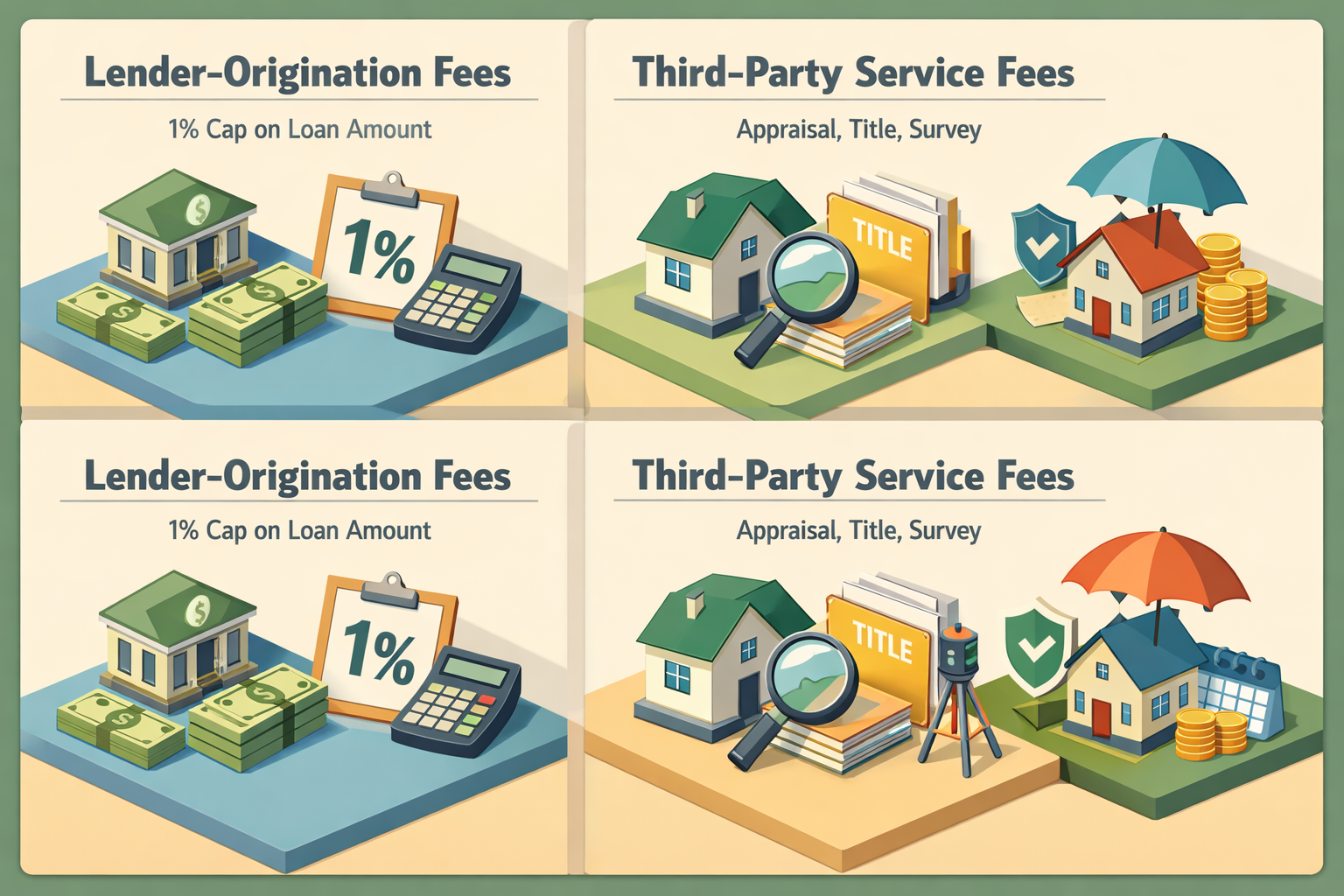
Closing costs are the collection of fees and charges paid when a real estate transaction is finalized. On a VA loan, these costs come from several different sources: the lender, third-party service providers, and government entities. Understanding each category helps you see exactly where your money is going.
Lender-Origination Fees
VA guidelines allow lenders to charge an origination fee, but it's capped at 1% of the loan amount. This fee covers the lender's cost of processing and underwriting the loan. Some lenders charge the full 1%, while others may charge less or bundle it differently. Always ask your lender to clarify how this fee is structured on your Loan Estimate.
Third-Party Service Fees
These are fees paid to outside providers involved in the transaction. Common examples include:
- Appraisal fee: VA-approved appraisers are required for all VA loans. Manufactured home appraisals may cost more than standard home appraisals due to the additional complexity involved.
- Title search and title insurance: These protect both you and the lender from ownership disputes or liens on the property.
- Survey fee: When land is part of the purchase, a property survey is often required to establish accurate boundary lines.
- Pest inspection: In many states, a termite or pest inspection is required for VA loans.
- Attorney or settlement fees: Depending on your state, either a real estate attorney or a title company will manage the closing.
Prepaid Items and Escrow Deposits
Borrowers are also typically asked to prepay certain ongoing costs at closing. These may include homeowner's insurance premiums, property taxes, and prepaid mortgage interest covering the days between closing and your first payment due date. Lenders often collect an initial escrow deposit to establish your escrow account for future tax and insurance payments.
The VA Funding Fee Explained for Manufactured Home Purchases
One of the most significant costs unique to VA loans is the VA funding fee. This is a one-time charge paid to the Department of Veterans Affairs to help sustain the program for future generations of eligible borrowers. Unlike other closing costs, the VA funding fee can be rolled into the loan amount rather than paid out of pocket at closing — which is a helpful option for buyers who want to preserve cash.
The amount of the funding fee depends on several factors, including whether it's your first time using a VA loan or a subsequent use, and whether you're making any down payment. For a first-time VA loan user with no down payment, the funding fee is currently set at 2.15% of the loan amount. For subsequent uses, that rate rises to 3.3%. Making a down payment of 5% or more can reduce the funding fee, which is worth considering if you have some savings available.
Importantly, certain borrowers are exempt from the VA funding fee entirely. Veterans who receive VA disability compensation, surviving spouses of veterans who died in service or from a service-connected disability, and active-duty service members who have received a Purple Heart prior to closing are among those who may not need to pay this fee. Always confirm your exemption status with your lender before assuming you owe it.
For manufactured home purchases that include land, the funding fee calculation is based on the full loan amount — so if you're financing both the structure and the acreage together, you'll want to factor that into your total cost estimate.
VA Loan Closing Costs on Manufactured Home with Acreage: What's Different
When you're purchasing a manufactured home bundled with a parcel of land, there are a few cost considerations that set this transaction apart from a standard home purchase. Understanding these differences upfront helps you avoid budget shortfalls later.
Land Survey and Acreage-Related Costs
When acreage is involved, a professional land survey is often required — and sometimes mandatory. Surveyors charge based on the size and complexity of the parcel, so larger or irregular lots may cost more to survey than smaller, clearly defined ones. This is a separate charge from your appraisal and may not always appear prominently on initial estimates, so ask your lender and title company about it early.
Appraisal Complexity
Appraising a manufactured home on land requires the VA-approved appraiser to assess both the dwelling and the real property together. Finding comparable sales — known in real estate as comps — can be more challenging in rural or semi-rural areas where manufactured homes on acreage are less common. This complexity can sometimes lead to higher appraisal fees or longer turnaround times, so it's smart to plan for both.
Zoning and Property Classification Checks
Some lenders may require documentation confirming the zoning classification of the land and that the manufactured home is permanently affixed and legally classified as real property in the county records. If the home hasn't been de-titled as personal property and converted to real estate, this step may need to happen before the loan can close — and it could involve attorney fees or recording costs.
Environmental and Well/Septic Inspections
Rural properties on acreage frequently rely on private wells and septic systems rather than municipal utilities. VA guidelines may require inspections of these systems to confirm they're functioning safely. Water quality tests, septic inspections, and related certifications are additional costs to budget for when financing VA loan closing costs manufactured home acreage scenarios.
Costs the Seller Can Pay on Your Behalf
One of the most borrower-friendly features of the VA loan program is the allowance for seller concessions. Under VA guidelines, sellers are permitted to pay up to 4% of the loan amount in concessions, which can cover a wide range of costs including the VA funding fee, prepaid expenses, and other closing charges. Negotiating seller concessions can dramatically reduce the amount of cash you need to bring to closing.
In a buyer's market or when sellers are motivated, requesting concessions is often a reasonable ask. Your real estate agent can help you structure the purchase offer in a way that factors in seller-paid costs without making the offer uncompetitive. Keep in mind that some sellers may be less willing to offer concessions in a hot market, but it's always worth negotiating.
In addition to seller concessions, lenders sometimes offer lender credits in exchange for a slightly higher interest rate. This arrangement allows you to offset closing costs at the expense of a marginally higher monthly payment. Whether this trade-off makes sense depends on how long you plan to stay in the home and your overall financial goals — so it's worth running the numbers with your loan officer.
Estimating Your Total Closing Costs: A Practical Overview
While every transaction is unique, VA loan closing costs on a manufactured home with land might typically range anywhere from 2% to 5% of the loan amount, excluding the VA funding fee if it's rolled in. For a loan of $200,000, that could mean between $4,000 and $10,000 in closing expenses before the funding fee is factored in. Adding a first-time funding fee of 2.15% would bring the total funded cost to roughly $4,300 on top of the purchase price if financed separately.
Here's a general breakdown of what you might expect:
- Origination fee: Up to 1% of the loan amount
- VA appraisal: Varies by region, often $500–$900 or more for manufactured homes
- Title insurance and search: Typically $500–$1,500 depending on location and loan size
- Survey fee: Can range from $300 to $1,000 or more for acreage
- Prepaid interest, taxes, and insurance: Varies by closing date and property tax rate
- Pest inspection: Usually $50–$150
- Well and septic inspections (if applicable): $200–$600 or more
- Recording fees and government charges: Typically $50–$250
These are estimates meant to guide your planning. Your lender is required to provide a Loan Estimate within three business days of receiving your application, which will give you a detailed, itemized view of anticipated closing costs for your specific transaction.
Smart Steps to Reduce Your Out-of-Pocket Costs at Closing
Knowing what are closing costs for VA loan on manufactured home with land is only half the battle — the other half is finding smart ways to manage them. Here are several strategies worth exploring:
- Roll the funding fee into the loan: If cash is limited, financing the VA funding fee means you don't need to pay it at closing. You'll pay a bit more interest over the life of the loan, but you preserve cash now.
- Negotiate seller concessions: As discussed, sellers can contribute up to 4% of the loan amount toward your closing costs. Don't leave this tool unused.
- Shop for third-party services: VA guidelines allow you to shop for certain services like title insurance and pest inspections. Comparing quotes can save you hundreds of dollars.
- Time your closing date strategically: Closing at the end of the month reduces the amount of prepaid interest you owe, since fewer days remain before your first payment.
- Confirm your funding fee exemption: If you have a VA disability rating, make sure your lender has the documentation to apply your exemption before the loan closes.
- Work with an experienced VA lender: A lender who regularly closes VA manufactured home loans will anticipate costs specific to this property type and help you avoid surprises.
Taking a proactive approach from the start — asking questions, comparing offers, and working with knowledgeable professionals — can meaningfully reduce what you pay to close on your home.
●Conclusion
Buying a manufactured home on land with a VA loan is an achievable goal for many eligible veterans and service members, and it comes with some of the most favorable financing terms in the market. Closing costs on this type of transaction may involve a few extra layers compared to a standard purchase, particularly when acreage, surveys, and utility inspections come into the picture. But with careful planning and the right lending partner, those costs are very manageable.
If you're ready to explore your VA loan options for a manufactured home with land, the team at LoanWise is here to help. We'll walk you through your personalized Loan Estimate, explain every line item, and help you find the most cost-effective path to closing. Reach out today and put your VA benefit to work.