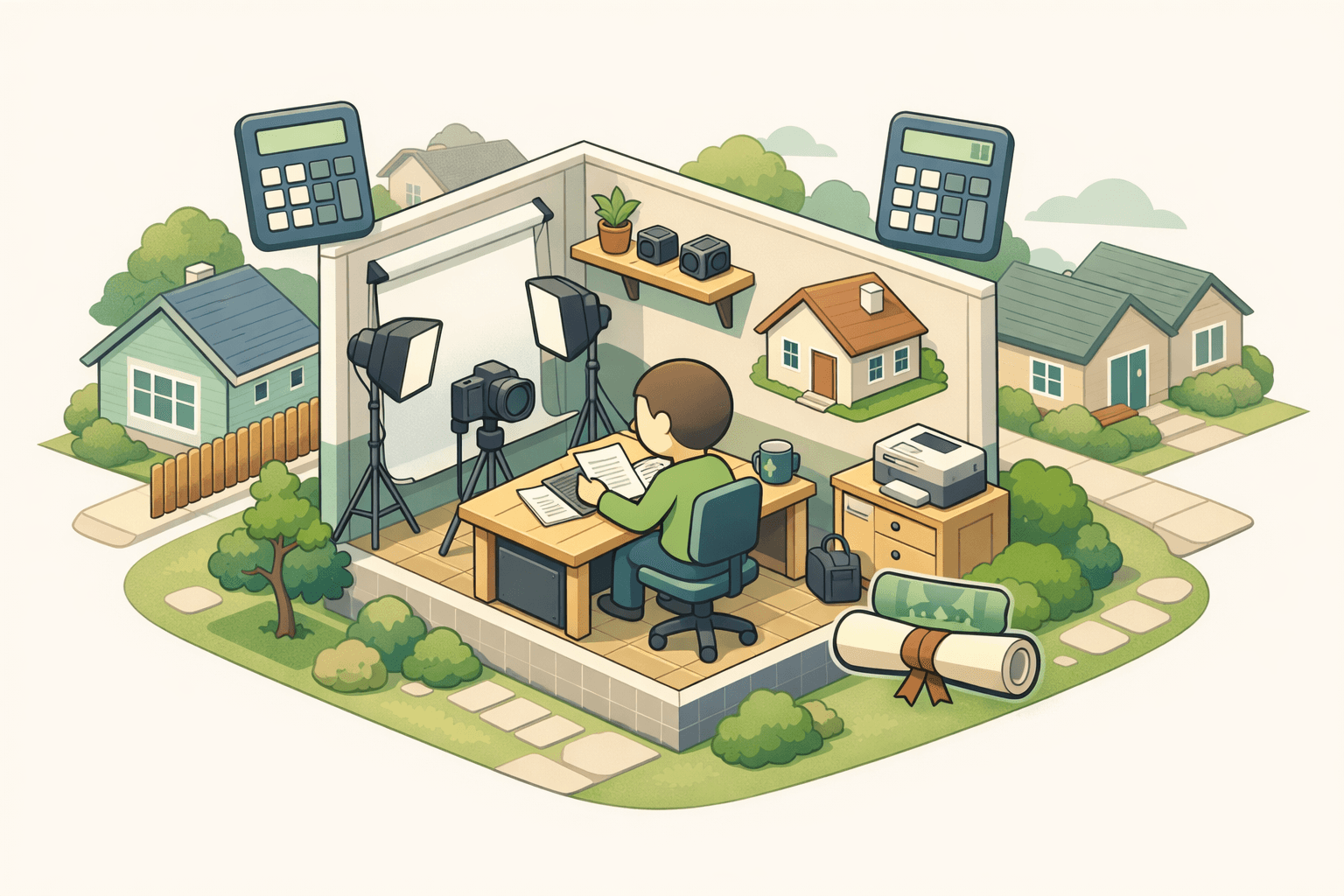
Buying a home as a freelance photographer sounds exciting — and it absolutely can be. But if you're also carrying student loan payments, the path to mortgage approval may feel a little more complicated than it does for a traditional salaried borrower. The good news is that lenders have well-established methods for evaluating self-employed income, and understanding those methods puts you in a much stronger position. Knowing how to calculate mortgage affordability with freelance photography income and student loan payments is the first step toward making homeownership a real, achievable goal.
Why Freelance Income Is Treated Differently by Mortgage Lenders
When you work for an employer, your income is predictable and easy to verify with a pay stub or W-2 form. Mortgage lenders love consistency, and a steady paycheck provides exactly that. Freelance photography income, however, tends to fluctuate month to month depending on client bookings, seasonal demand, and project availability. Because of this variability, lenders typically require more documentation and apply a more detailed analysis before counting your earnings toward your borrowing capacity.
Most lenders will want to see two full years of self-employment income, documented through your federal tax returns, including your Schedule C, which reports profit and loss from your photography business. They generally average your net income over those two years to arrive at a monthly qualifying figure. If your income has been rising over that period, some lenders may give you credit for the more recent, higher figure — but if it's been declining, that trend could raise concerns.
It's also worth noting that many freelancers take advantage of legitimate tax deductions — things like camera equipment, editing software, travel, and studio rental — which reduce taxable income. While this is smart tax planning, it can reduce the income figure that lenders use to qualify you. You may find yourself in the position of reporting less income on paper than you actually earn, which can limit your mortgage affordability. Working with a tax professional and a knowledgeable mortgage advisor early in the process can help you plan ahead.
Understanding Your Debt-to-Income Ratio as a Self-Employed Borrower
One of the most important numbers in any mortgage application is your debt-to-income ratio, or DTI. This ratio compares your total monthly debt obligations to your gross monthly income. Lenders use it to gauge whether you can comfortably manage a new mortgage payment alongside your existing financial responsibilities. For most conventional loan programs, lenders typically prefer a DTI at or below 43%, though some programs may allow higher ratios with compensating factors like strong credit or significant cash reserves.
As a freelance photographer, your DTI calculation starts with your qualifying income — that averaged, documented net figure from your tax returns. Your monthly debts then include your proposed mortgage payment (principal, interest, taxes, and insurance), plus any existing obligations such as student loans, car loans, or credit card minimums.
Student loan payments deserve special attention here. Even if you're on an income-driven repayment plan with a low or temporarily deferred monthly payment, many lenders are required to count a calculated percentage of your total student loan balance as a monthly obligation. Under conventional loan guidelines, lenders may use 1% of the outstanding student loan balance as the assumed monthly payment if no payment is currently required. FHA loans have had similar rules, though guidelines can shift, so it's worth confirming current requirements with your lender. This means a large student loan balance can significantly raise your DTI even if your actual payment is modest.
How to Calculate Mortgage Affordability With Freelance Photography Income and Student Loan Payments Step by Step
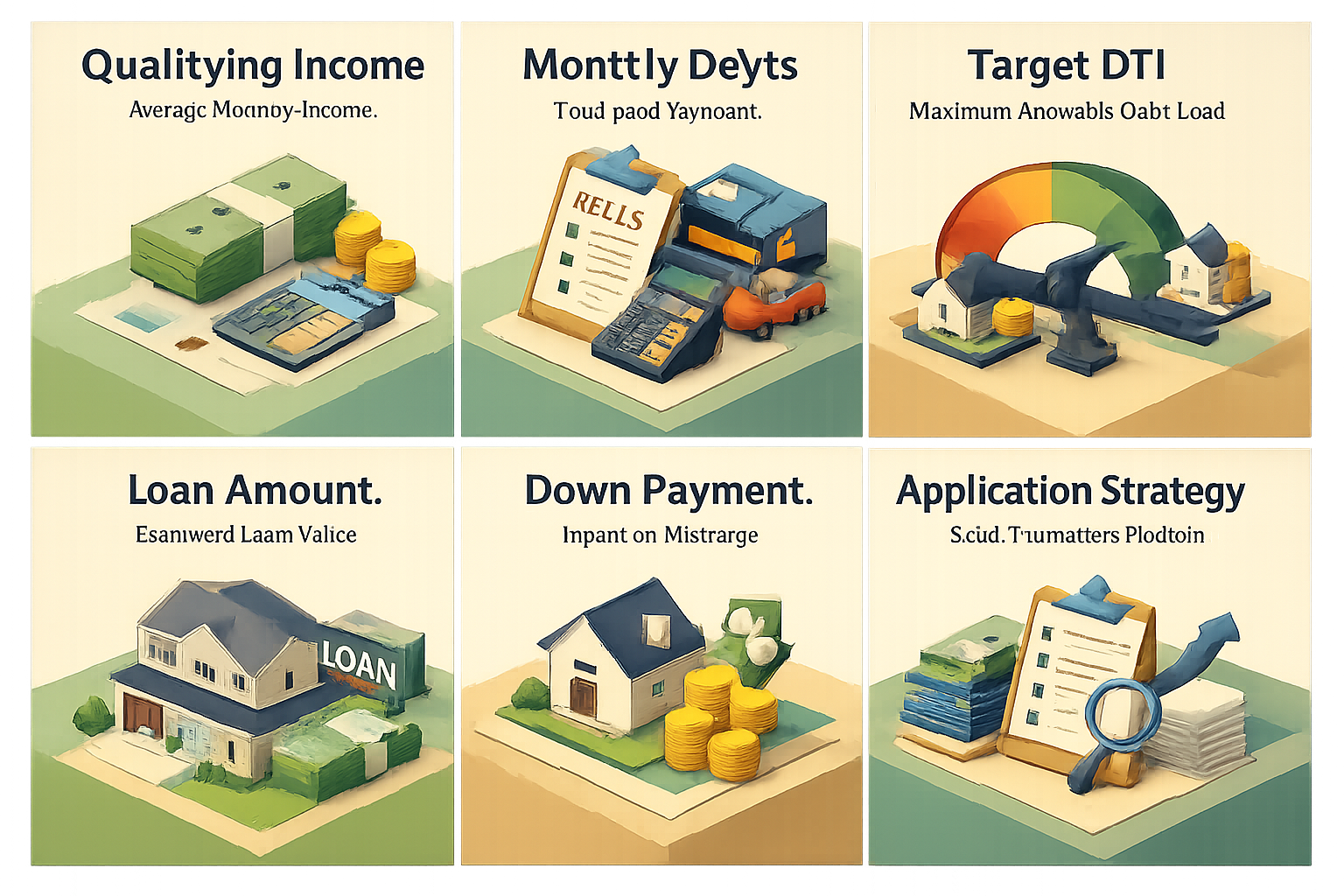
Working through an affordability estimate on your own can help you set realistic expectations before you ever speak with a lender. Here's a straightforward framework to follow:
- Step 1 — Determine your qualifying income: Add your net self-employment income from your two most recent federal tax returns and divide by 24 to get your average monthly income. If year two is significantly higher, ask a lender whether they can use a different calculation method.
- Step 2 — List all monthly debt payments: Include your student loan payment as reported on your credit report, or apply the 1% rule to your outstanding balance if you're in deferment. Add any other recurring debt obligations.
- Step 3 — Apply a target DTI: Multiply your monthly qualifying income by 0.43 (for a 43% DTI target) to get the maximum allowable monthly debt load. Subtract your non-housing debts from that figure. The remaining amount is the mortgage payment you may be able to afford.
- Step 4 — Estimate the loan amount: Use a mortgage affordability calculator for freelance income and student loans to convert your affordable monthly payment into an estimated loan amount, factoring in current interest rates, property taxes, and insurance costs.
- Step 5 — Factor in your down payment: Your down payment directly affects the loan amount needed, your monthly payment, and whether you'll need private mortgage insurance. A larger down payment can improve your DTI and your overall loan profile.
This process is an estimate, not a guarantee. Lenders may apply overlays or additional requirements that affect your final qualification. Still, going through these steps gives you a useful benchmark and helps you identify areas to improve before applying.
Loan Programs That May Work Well for Freelance Photographers
Not all mortgage programs treat self-employed borrowers the same way. It's worth exploring several options to find the best fit for your financial situation.
Conventional Loans
Conventional loans backed by Fannie Mae or Freddie Mac are widely available and often competitive on rates. They do require thorough income documentation, typically two years of tax returns and business financial statements. If your documented net income is strong and your DTI is manageable, a conventional loan could be an excellent choice.
FHA Loans
FHA loans are insured by the Federal Housing Administration and are often more accessible to borrowers with lower credit scores or smaller down payments. They also accept self-employed income with proper documentation. The trade-off is that FHA loans require mortgage insurance premiums for the life of the loan in many cases, which adds to your monthly costs.
Bank Statement Loans and Non-QM Programs
For freelance photographers whose tax deductions significantly reduce their reported net income, a bank statement loan may be worth exploring. These are non-qualified mortgage (Non-QM) products that allow lenders to use 12 to 24 months of bank deposits — rather than tax returns — to verify income. This can result in a higher qualifying income figure for borrowers with strong revenue but modest taxable income. Non-QM loans typically carry slightly higher interest rates to reflect the added flexibility, but they can open doors that conventional programs might not.
USDA and VA Loans
If you're purchasing in a rural or suburban area and meet income limits, a USDA loan offers zero-down financing with competitive rates. VA loans, available to eligible veterans and service members, also offer no-down-payment options and don't require private mortgage insurance. Both programs accept self-employed income with documentation.
Strategies to Strengthen Your Mortgage Application Before You Apply
The time you invest before submitting a mortgage application can make a meaningful difference in the outcome. Here are several steps that may improve your position as a freelance photographer with student loans:
- Build consistent income history: Lenders look for stability and, ideally, growth. If you're newer to freelancing, continuing to build your client base and documented income over the next year or two could significantly improve your qualifying income.
- Reduce high-interest consumer debt: Paying down credit card balances lowers your monthly obligations and improves your DTI. It may also boost your credit score, which affects your interest rate.
- Explore student loan repayment options: If your student loan balance is large and you're in deferment, consider enrolling in a standard repayment plan before applying. A known, documented monthly payment may be treated more favorably by some lenders than the calculated 1% assumption.
- Save a larger down payment: A down payment of 20% or more eliminates private mortgage insurance and reduces your loan amount, both of which lower your monthly payment and improve your DTI.
- Separate business and personal finances: Maintaining dedicated business bank accounts and clear financial records makes it much easier for lenders to analyze your income and reduces the chance of documentation delays.
- Work with a mortgage broker familiar with self-employed borrowers: Not all lenders have the same appetite for freelance income. A broker who regularly works with self-employed clients may know which lenders offer the most favorable guidelines for your situation.
Using Online Tools to Estimate Your Home Buying Power
A mortgage affordability calculator for freelance income and student loans can be a helpful starting point when you're trying to understand what home you can afford to purchase. Many of these tools let you enter your monthly income, existing debt payments, estimated interest rate, and down payment amount to generate a rough loan estimate.
Keep in mind, though, that most standard online calculators are designed with traditional W-2 employees in mind. They may not account for the nuances of averaged self-employment income or the way student loan deferment is handled under different loan programs. Use these tools for general orientation, but rely on a qualified mortgage professional to run precise numbers based on your actual tax returns and credit profile.
When using any calculator, try entering a few different scenarios. For example, see how to calculate mortgage affordability changes if you increase your down payment by $10,000, or if you pay off a specific debt before applying. Running these comparisons can help you prioritize your financial actions in the months leading up to your home purchase.
●Conclusion
Navigating the mortgage process as a freelance photographer with student loan payments takes preparation, but it's far from impossible. Understanding how to calculate mortgage affordability with freelance photography income and student loan payments gives you a clear framework for setting goals and making smart financial decisions. By documenting your income carefully, managing your debt-to-income ratio strategically, and exploring the right loan programs, you can build a strong case for homeownership. At LoanWise, we're here to help you connect the dots between your unique financial situation and the right mortgage solution. Take the first step today by speaking with one of our experienced lending specialists who understands the self-employed borrower's journey.