If you're a veteran or active-duty service member thinking about buying a brand-new condo using your VA home loan benefit, you're already making a smart financial move. VA loans offer some of the most borrower-friendly terms available — including no down payment and no private mortgage insurance. But before you sign on the dotted line, it's important to understand what are closing costs for VA loan on a new construction condo. These costs can catch buyers off guard if they're not prepared. This guide walks you through every key fee, what's allowed, what's not, and how to keep more money in your pocket at the closing table.
How VA Loan Closing Costs Differ From Conventional Financing
VA loans are backed by the U.S. Department of Veterans Affairs, and that backing comes with specific rules about which fees a borrower can and cannot pay. Unlike conventional mortgages, the VA limits what lenders are allowed to charge eligible borrowers. This is one of the most valuable — and often misunderstood — protections built into the program.
On a standard conventional loan, borrowers might face a long list of lender-imposed fees including processing charges, underwriting costs, and application fees. With a VA loan, lenders are restricted from charging many of these fees individually, though they may roll permitted costs into an origination fee. The VA allows lenders to charge an origination fee of up to 1% of the loan amount, which is meant to cover the lender's costs for processing and underwriting.
When you add a new construction condo into the mix, the complexity increases. You're dealing not only with standard purchase closing costs but also with construction-specific items and condo approval requirements. Understanding the full picture helps you plan ahead and avoid surprises.
What Are Closing Costs for VA Loan on a New Construction Condo: The Full Breakdown
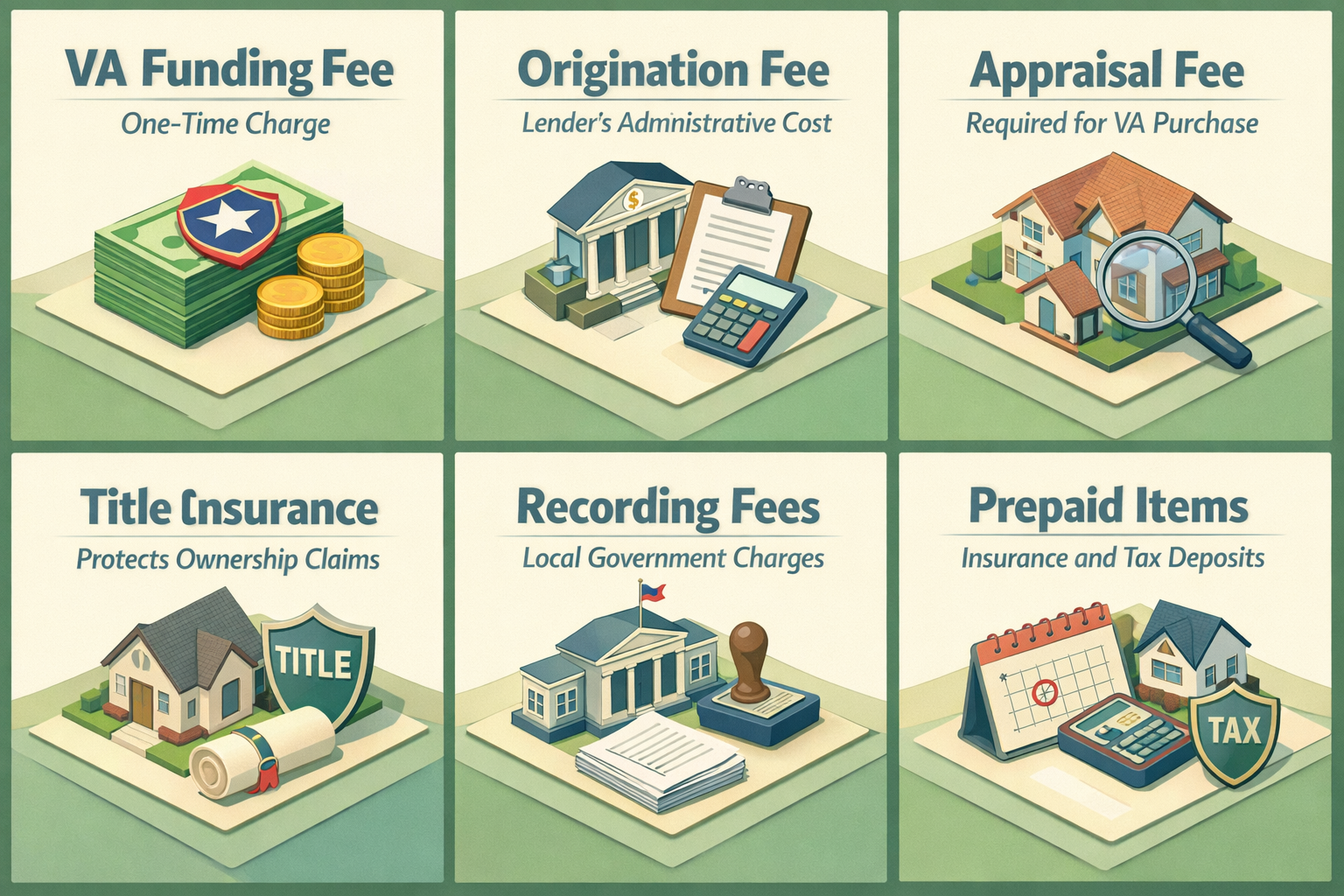
So, what are closing costs for VA loan on a new construction condo? They typically fall into several categories: VA-specific fees, standard third-party costs, and new construction-related charges. Here's a closer look at each one.
VA Funding Fee
The VA funding fee is a one-time charge paid directly to the Department of Veterans Affairs. It helps keep the loan program self-sustaining so future veterans can benefit from it. The amount depends on your military category, whether it's your first time using the benefit, and your down payment amount. For first-time use with no down payment, the fee is currently 2.3% of the loan amount for most borrowers, while subsequent use rises to 3.6%. Veterans with a service-connected disability rating may be exempt from this fee entirely. The funding fee can be financed into the loan rather than paid upfront.
Origination Fee
As mentioned, lenders may charge up to 1% of the loan amount as an origination fee. This covers their administrative and processing work. Some lenders charge less or even waive this fee to stay competitive, so it's worth comparing offers from multiple VA-approved lenders.
Appraisal Fee
A VA appraisal is required for all VA-backed purchases. For new construction condos, this appraisal may be more involved than a standard one because the appraiser must evaluate the property based on plans and specifications before the unit is complete. VA appraisal fees vary by location but typically range from a few hundred dollars to over five hundred dollars. The VA sets maximum appraisal fees by region, so your lender can tell you the specific cap in your area.
Title Insurance and Title Search
Title insurance protects both you and the lender against any claims on the property's ownership history. On a new construction condo, the title history is typically cleaner, but title insurance is still required. You'll likely pay for both a lender's title policy and, optionally, an owner's title policy. Costs vary by state and loan amount.
Recording Fees and Government Charges
Local governments charge fees to officially record the deed and mortgage documents. These fees differ by county and state but are generally modest. Transfer taxes, where applicable, may also apply depending on your location.
Prepaid Items and Escrow Deposits
Prepaid costs include homeowner's insurance premiums, prepaid interest for the days between closing and your first payment, and initial escrow deposits for property taxes and insurance. For condo buyers, you may also need to prepay a portion of HOA dues. These items aren't technically fees — they're funds you'd pay anyway — but they do contribute to your upfront cash requirements at closing.
Survey and Inspection Fees
While not always required by the lender, a survey or final inspection on a new construction unit may be recommended to confirm the property matches the builder's plans. Some buyers also hire an independent inspector before closing, which is a worthwhile added expense for peace of mind.
VA Condo Approval Requirements and How They Affect Your Closing Timeline
One of the biggest factors that sets a VA loan on a new construction condo apart from other purchase types is the condo approval requirement. The VA maintains its own list of approved condo projects, and a unit must be in an approved development before a VA loan can be used to purchase it.
For new construction, this can be a significant hurdle. Many newly built condo communities haven't yet obtained VA approval, which means the builder or the HOA must go through an approval process before you can close. This process involves submitting documentation such as the condo's legal documents, HOA financials, insurance certificates, and owner-occupancy ratios.
If the condo project isn't already VA-approved, the approval process could add several weeks to your timeline. It's important to ask your builder and your VA-approved lender about the approval status of the development early in the process. Some builders actively pursue VA approval because they want to market to veterans — but others may not have gone through the steps yet.
Additionally, new construction condos must meet VA Minimum Property Requirements (MPRs). These standards ensure the property is safe, structurally sound, and sanitary. A new build typically meets most MPRs, but the VA appraiser will still verify compliance before the loan can move forward.
Fees the VA Prohibits Lenders From Charging Veterans
One of the strongest protections in the VA loan program is its list of non-allowable fees. The VA specifically prohibits lenders from charging veterans certain costs that are common in conventional lending. Understanding these restrictions can help you identify if a lender is trying to overcharge you.
- Attorney fees (for the lender's attorney — you may still pay for your own representation)
- Loan application or processing fees charged separately from the origination fee
- Rate lock fees
- Document preparation fees
- Escrow or settlement fees that exceed what's customary in the area
- Prepayment penalty fees
It's worth noting that while lenders can't charge these fees directly, some costs may still be covered indirectly through the 1% origination fee. If a lender presents you with a Loan Estimate that includes fees you don't recognize, ask for a clear explanation of each line item and compare it against VA guidelines. A knowledgeable VA loan specialist can help you identify any questionable charges before they become a problem.
Smart Strategies to Reduce VA Loan Costs on a New Condo Purchase
Even though VA loans are already structured to limit borrower costs, there are additional strategies that may help you further reduce your VA loan costs on a new condo purchase. A little planning can make a meaningful difference in your upfront cash requirements.
Negotiate Seller Concessions
The VA allows sellers to pay up to 4% of the loan amount in concessions, which can cover the VA funding fee, prepaid costs, and other closing expenses. With new construction, the builder effectively acts as the seller. Many builders offer incentive packages — especially in a slower market — that might include covering some or all of your closing costs. It's worth negotiating this before finalizing your purchase agreement.
Finance the Funding Fee
If you'd rather not pay the VA funding fee out of pocket, you can roll it into your loan balance. While this does increase the total amount you borrow, it reduces your cash needed at closing and may be the right choice depending on your financial situation.
Shop Multiple VA Lenders
Lender fees can vary significantly from one institution to another. Getting Loan Estimates from at least two or three VA-approved lenders gives you the ability to compare total closing costs side by side and choose the most competitive offer. Don't focus only on the interest rate — look at the full cost picture.
Ask About Lender Credits
Some lenders offer credits in exchange for a slightly higher interest rate. These credits can offset some or all of your closing costs. Whether this trade-off makes sense depends on how long you plan to stay in the home. A mortgage professional can help you run the numbers to find the break-even point.
What to Expect During the New Construction Closing Process
Closing on a new construction condo with a VA loan follows a similar process to any other mortgage closing, but with a few important distinctions tied to the construction timeline and VA requirements.
First, you'll typically sign a purchase agreement with the builder early in the process — often before construction is complete. VA financing can be more complex to apply early because the property must meet VA appraisal standards, which may require a phased or "as-completed" appraisal. Your lender will order this appraisal based on the builder's plans, specs, and comparable sales data in the area.
Once the unit is finished and receives a certificate of occupancy, the lender will typically order a final inspection or compliance inspection to confirm the home matches the appraised plans. After all conditions are satisfied, you'll receive a final Closing Disclosure — a document that outlines all your closing costs in detail. You have the right to review this document at least three business days before closing, giving you time to ask questions and confirm everything looks correct.
At the closing table, you'll sign the loan documents, pay any remaining out-of-pocket closing costs, and receive the keys to your new home. The process can take anywhere from 45 to 90 days depending on construction completion and condo approval status, so patience and proactive communication with your lender and builder are key.
●Conclusion
Understanding what are closing costs for VA loan on a new construction condo is one of the most important steps you can take as a veteran homebuyer. From the VA funding fee and appraisal costs to non-allowable fees and condo approval requirements, there's a lot to navigate — but the good news is that the VA loan program is built with your best interests in mind. With the right lender, a little negotiation with the builder, and a clear picture of what to expect, you can move into your new condo with confidence and minimal financial stress. If you're ready to take the next step, connect with a VA-approved mortgage specialist at LoanWise today and let us help you make the most of your hard-earned benefit.