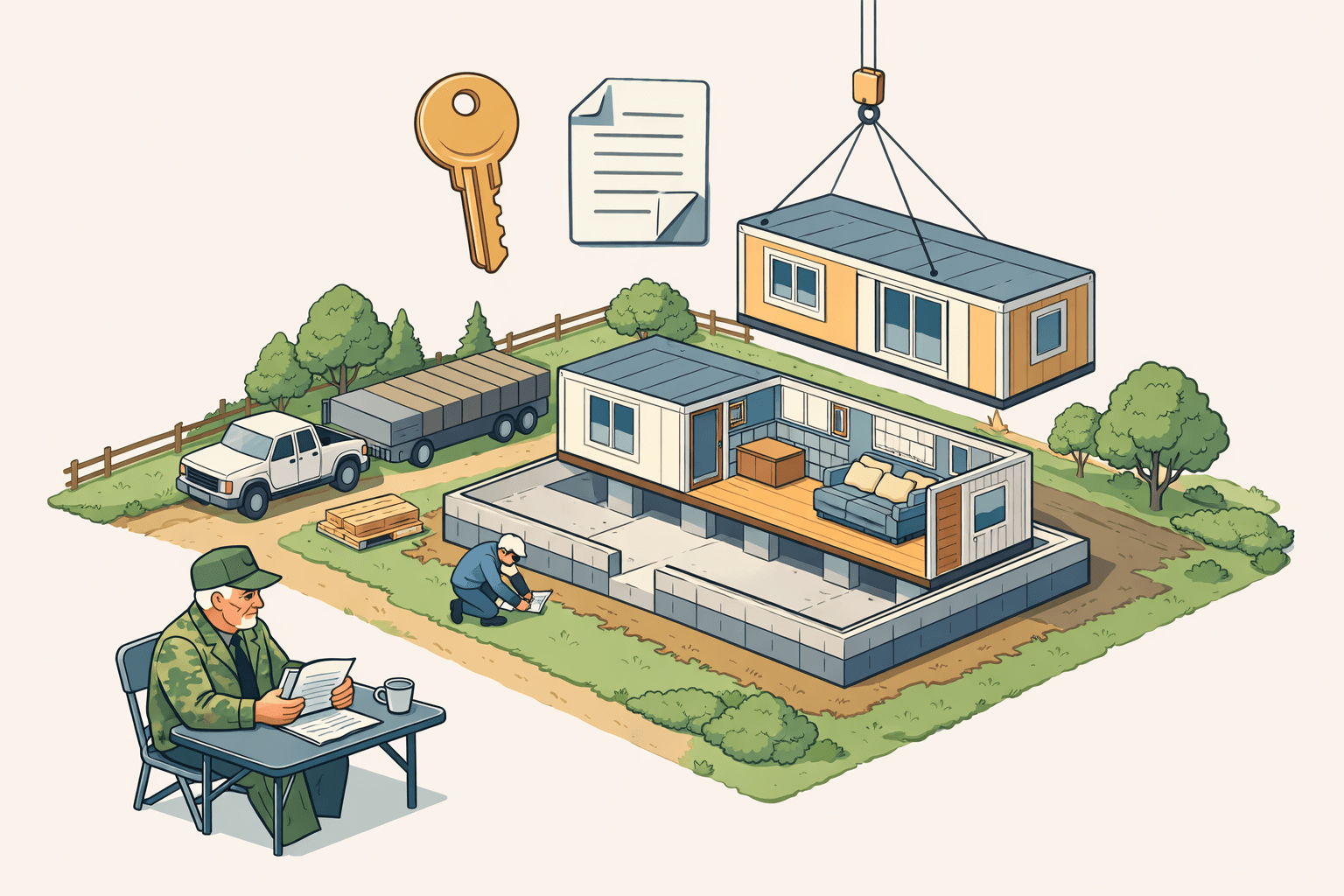
For eligible veterans and active-duty service members, the VA loan program offers a powerful path to homeownership — including the purchase of a modular home with land. But one question that often comes up during the planning stage is: what are closing costs for VA loan on a modular home with land? The answer involves a mix of standard mortgage fees, VA-specific rules, and a few costs that are unique to modular and land transactions. Understanding these expenses upfront can help you budget accurately, avoid surprises at the closing table, and take full advantage of your hard-earned VA benefits.
How VA Loans Apply to Modular Homes with Land
Before diving into the fee breakdown, it's important to understand how the VA views modular homes. Unlike manufactured homes — which are built on a permanent steel chassis and governed by HUD codes — modular homes are constructed in sections at a factory and then assembled on a permanent foundation at the building site. They must meet local and state building codes, just like a site-built home.
The VA may approve financing for a modular home when it meets specific standards, including being permanently affixed to a foundation and classified as real property. When you combine that modular home with a land purchase, the transaction becomes more complex. The VA loan must cover both the structure and the land together, and the property must meet the VA's Minimum Property Requirements (MPRs) to qualify.
This distinction matters greatly for VA loan closing costs because lenders often treat modular-plus-land transactions similarly to traditional home purchases — but with some additional steps, such as foundation inspections and title work for the land parcel, that can add to the overall fee structure.
Breaking Down VA Loan Closing Costs for a Modular Home and Land Purchase
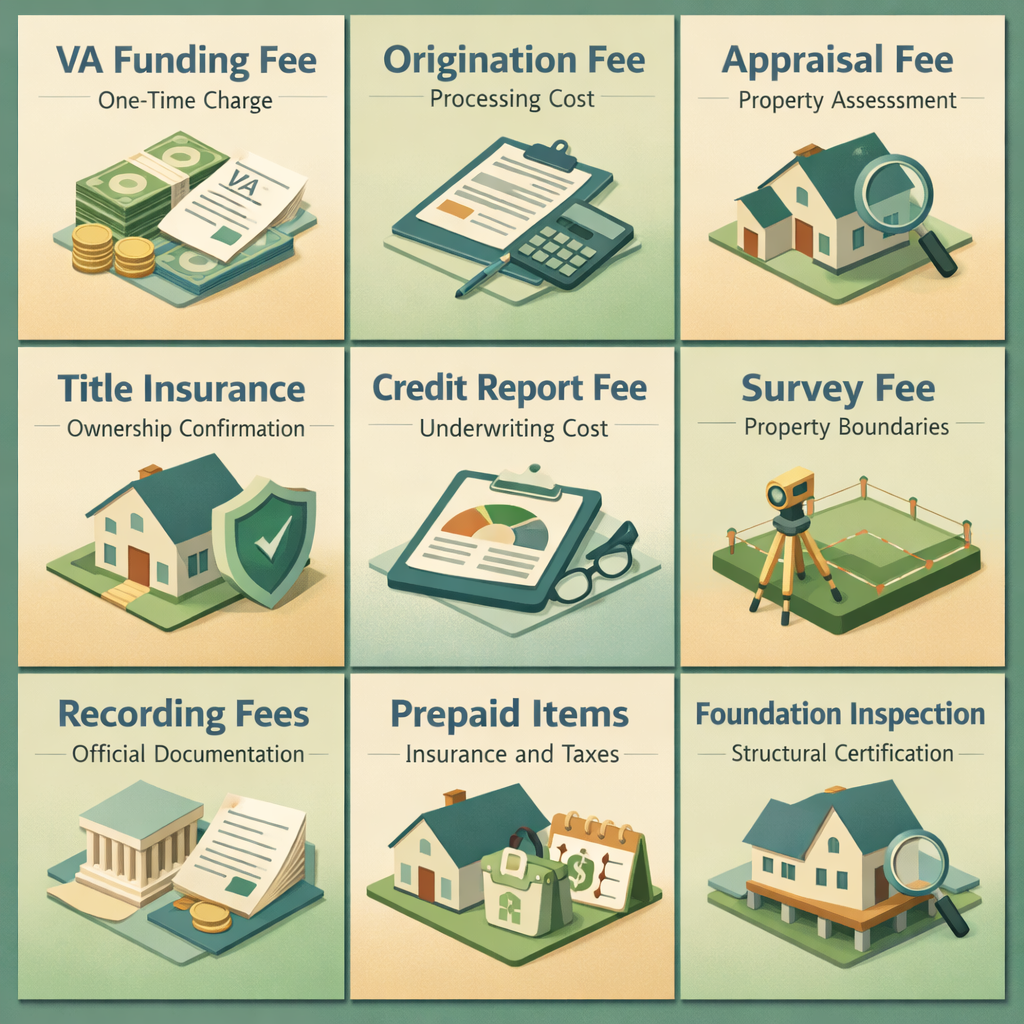
So, what are closing costs for VA loan on a modular home with land? They typically fall into several categories. While the exact amounts vary by lender, location, loan size, and transaction type, here's a general overview of what you can expect:
- VA Funding Fee: This is one of the most significant upfront costs associated with any VA loan. The funding fee is a one-time charge paid to the Department of Veterans Affairs. It helps sustain the program for future borrowers. The percentage varies based on your down payment amount, whether it's your first VA loan or a subsequent use, and your military category. Veterans with a service-connected disability rating may be exempt from this fee entirely.
- Origination Fee: Lenders may charge an origination fee to cover the cost of processing your loan. The VA limits this fee to no more than 1% of the loan amount, which helps protect borrowers from excessive lender charges.
- Appraisal Fee: The VA requires a VA-certified appraiser to assess the property. For a modular home with land, this appraisal may be more involved — and potentially more costly — than a standard home appraisal, since the appraiser must evaluate both the structure and the land together.
- Title Insurance and Title Search: Because you're purchasing land alongside a modular home, there may be additional title work required. Lenders typically require both a lender's title insurance policy and a title search to confirm clear ownership.
- Credit Report Fee: Lenders routinely pull your credit report as part of the underwriting process, and this cost is generally passed on to the borrower.
- Survey Fee: When land is involved in the purchase, lenders often require a land survey to confirm property boundaries. This can add a notable expense depending on the size and location of the parcel.
- Recording Fees: Local government offices charge fees to officially record the deed and mortgage documents. These vary by county and state.
- Prepaid Items: These include prepaid homeowners insurance, prepaid property taxes, and prepaid mortgage interest. While not technically closing costs, they're collected at closing and can add significantly to the total funds needed.
- Foundation Inspection: For modular homes, lenders may require a structural engineer to certify that the home is permanently affixed to the foundation. This is especially common in VA transactions.
In total, closing costs on a VA loan — including for modular-plus-land purchases — might range from 2% to 5% of the total loan amount, though this can shift based on transaction specifics. Always request a Loan Estimate early in the process so you know what to expect.
VA Non-Allowable Fees: What You Won't Have to Pay
One of the most borrower-friendly features of VA loans is the list of non-allowable fees — charges that the VA explicitly prohibits lenders from passing on to the veteran borrower. This protects service members from being overcharged during the closing process.
Common non-allowable fees in VA lending may include:
- Attorney fees charged by the lender's attorney (not the borrower's chosen attorney)
- Prepayment penalties
- Loan application fees beyond what's permitted
- Broker commissions or finder's fees
- HUD/FHA inspection fees (unless required by state law)
- Certain processing and underwriting fees charged separately from the origination fee
It's worth noting that some of these non-allowable fees may be paid by the seller as part of a negotiated concession. Sellers can contribute up to 4% of the loan amount in concessions under VA guidelines, which could help cover the funding fee, prepaid items, or other approved costs. This makes seller negotiation a smart strategy in a modular home with land purchase.
The VA Funding Fee in Detail: Rates and Exemptions
The VA funding fee deserves its own discussion because it's typically the largest single closing cost in a VA loan transaction. It's charged as a percentage of the loan amount and is paid either upfront at closing or rolled into the loan balance — which means you could finance it rather than pay it out of pocket.
The fee percentage depends on several factors:
- First-time use vs. subsequent use: Borrowers using their VA benefit for the first time generally pay a lower funding fee than those who have used it before.
- Down payment amount: Making a down payment of 5% or more — or 10% or more — can reduce the funding fee percentage.
- Loan type: Purchase loans, refinance loans, and certain specialty loan types carry different fee structures.
Veterans who receive VA disability compensation, surviving spouses of veterans who died in service or from a service-connected disability, and certain active-duty personnel with qualifying Purple Heart recipients may be exempt from the VA funding fee entirely. If you believe you qualify for an exemption, confirm this with your lender and provide supporting documentation early in the process.
Rolling the funding fee into the loan is a popular option, but keep in mind that doing so increases your overall loan balance and the total interest you'll pay over time. Weigh both options carefully with your loan officer.
Land-Specific Costs That Could Affect Your Closing Budget
When you're purchasing a modular home with land, the land component introduces a separate set of potential costs that might not appear in a standard home purchase transaction. These can include:
- Environmental assessments: If the land has any history of commercial use or is in a flood zone, lenders may require environmental testing or flood zone determinations.
- Septic and well inspections: Rural land parcels often rely on private septic systems and wells. VA guidelines may require inspections of these systems to ensure they meet minimum property standards.
- Zoning verification: Lenders and title companies may need to verify that the land is properly zoned for residential use and that placing a modular home on it is legally permitted.
- Utility connection fees: If the land doesn't already have utilities connected, there may be costs to hook up water, sewer, electric, and gas services — though these are often pre-closing development costs rather than closing costs per se.
These land-specific items can add hundreds or even thousands of dollars to your total transaction costs. Working with a lender and real estate agent who have experience with VA modular-plus-land deals can help you plan your budget well in advance.
Smart Strategies to Reduce Your Out-of-Pocket Closing Costs
The good news is that there are several ways eligible borrowers might reduce the cash needed at closing when using a VA loan for a modular home and land purchase. Consider these approaches:
- Negotiate seller concessions: As mentioned earlier, VA guidelines allow sellers to contribute up to 4% of the loan amount toward the buyer's closing costs and prepaid items. In a buyer-friendly market, this can be a meaningful offset.
- Roll the funding fee into the loan: Rather than paying this fee out of pocket at closing, you can finance it as part of your loan balance. This preserves your savings for other expenses.
- Shop for lenders and service providers: Not all lenders charge the same fees. Get multiple Loan Estimates and compare them side by side. You may also have the right to shop for certain third-party services, such as title insurance, to find more competitive pricing.
- Ask about lender credits: Some lenders offer lender credits — essentially, you accept a slightly higher interest rate in exchange for the lender covering some or all of your closing costs. This can be useful if you're short on cash at closing.
- Time your closing date strategically: Closing earlier in the month results in higher prepaid interest charges. Closing near the end of the month reduces this cost, which can help lower the total amount due at closing.
Each of these strategies has trade-offs, so it's wise to discuss them with a knowledgeable VA-approved lender who can help you evaluate what makes sense for your specific situation.
●Conclusion
Understanding what are closing costs for VA loan on a modular home with land is a critical step in preparing for a successful purchase. From the VA funding fee and origination charges to land-specific inspections and title work, these costs can add up — but with the right preparation and negotiation, they're very manageable. The VA loan program remains one of the most borrower-friendly financing options available, and eligible veterans and service members stand to benefit enormously from its protections and flexibilities. If you're ready to explore your options, connect with a VA-approved lender at LoanWise who has experience with modular home and land transactions. Getting expert guidance early can save you both time and money on your path to homeownership.