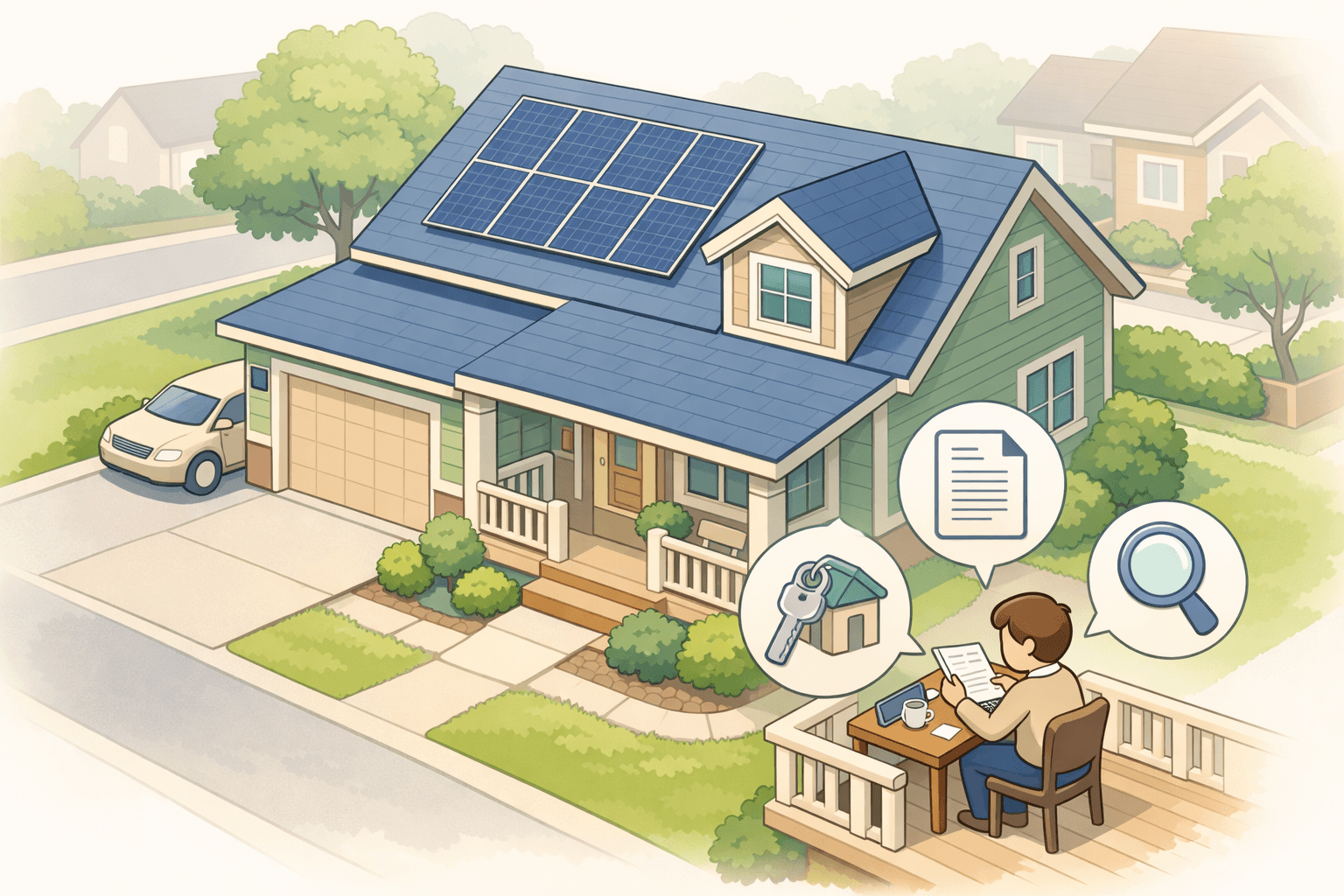
Solar panels have become a popular home upgrade across the country, and for good reason. They can lower energy bills, reduce a home's carbon footprint, and potentially add value to your property. But if you're a homeowner looking to tap into your home equity through a Home Equity Line of Credit — commonly known as a HELOC — solar panels can add a layer of complexity to the process. Understanding the requirements for HELOC on primary residence with solar panels is essential before you apply. From how lenders assess your equity to how an appraiser views your solar installation, there are several important factors to consider. This guide walks you through everything you need to know so you can approach the process with confidence.
What Is a HELOC and How Does It Work for Homeowners
A HELOC is a revolving line of credit that allows homeowners to borrow against the equity they've built in their primary residence. Think of it like a credit card, but secured by your home. Lenders typically allow you to borrow up to a certain percentage of your home's appraised value, minus what you still owe on your mortgage.
For example, if your home is appraised at $400,000 and you owe $250,000 on your mortgage, you may have up to $150,000 in equity. Most lenders won't let you borrow against all of it — they usually cap the combined loan-to-value (CLTV) ratio at around 80% to 90%, depending on their guidelines and your financial profile.
HELOCs typically come in two phases: a draw period, during which you can access funds, and a repayment period, during which you pay back what you borrowed. They're often used for home improvements, debt consolidation, education costs, or other significant expenses. Because they're secured by your home, interest rates are often lower than unsecured options like personal loans or credit cards.
Core Eligibility Requirements You'll Need to Meet
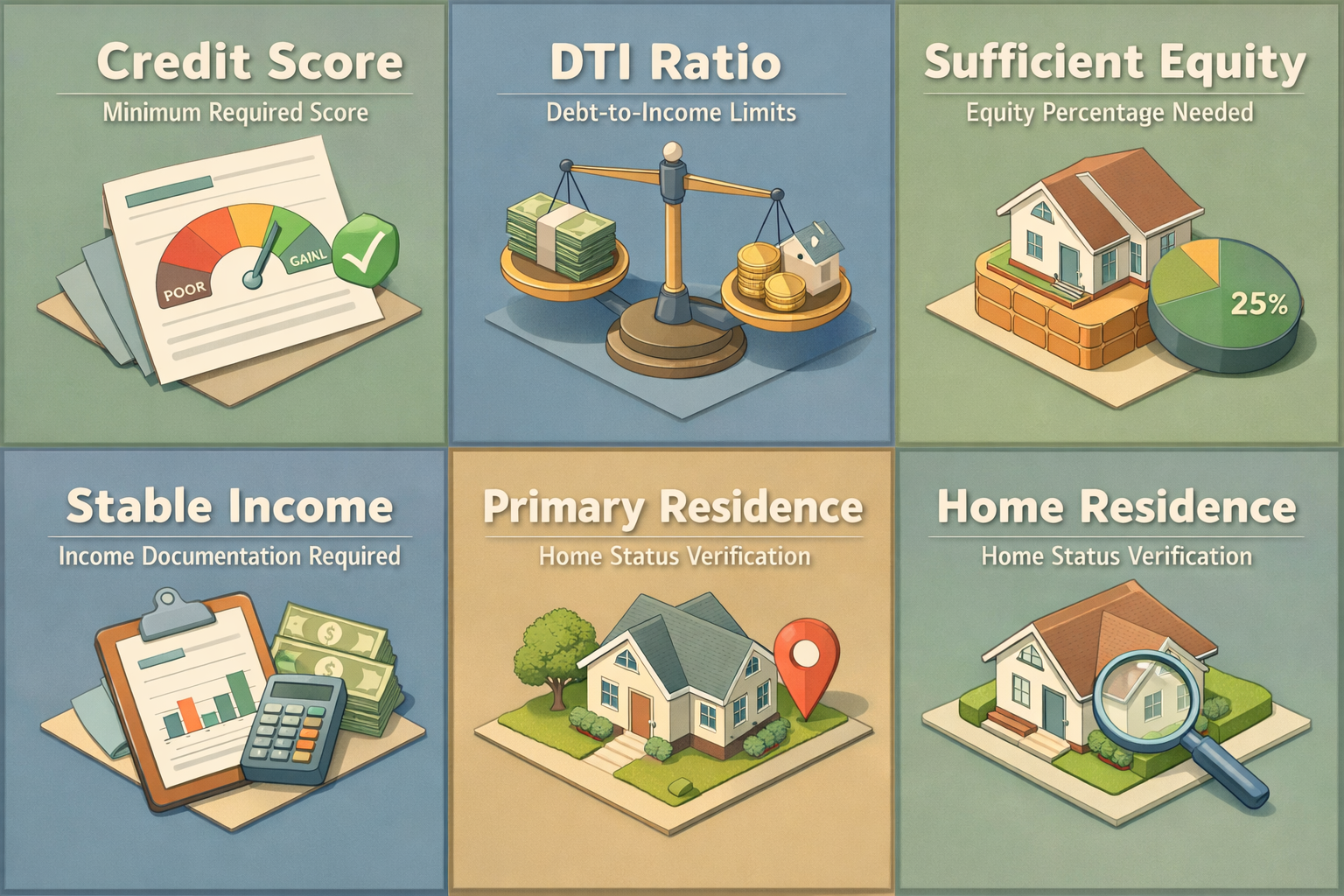
Before a lender even considers the solar panels on your roof, they'll evaluate your overall financial health. These baseline qualifications generally apply to any HELOC application on a primary residence:
- Credit score: Most lenders look for a credit score of at least 620, though some may require 680 or higher for better terms. A stronger credit score can lead to more favorable interest rates.
- Debt-to-income ratio (DTI): Lenders typically want your total monthly debt payments — including the new HELOC — to stay below 43% of your gross monthly income, though this can vary by lender.
- Sufficient equity: You generally need at least 15% to 20% equity remaining in your home after the HELOC is factored in.
- Stable income and employment: Lenders want assurance that you can repay what you borrow. Consistent income documentation, such as pay stubs, W-2s, or tax returns, is typically required.
- Primary residence status: The property must be your primary home. Investment properties and second homes may be subject to stricter guidelines or may not qualify at all under certain programs.
Meeting these requirements is the foundation. But when solar panels are part of the picture, additional considerations come into play.
How Solar Panels Can Influence Your Home's Appraised Value
One of the most significant factors in the requirements for HELOC on primary residence with solar panels is how those panels affect your home's appraised value. The appraisal is critical because it determines how much home equity you actually have — and therefore how much you may be able to borrow.
Whether solar panels add value, and how much, can depend on several variables. Appraisers typically look at comparable sales in your area, also known as comps, to determine whether nearby homes with solar have sold for more than those without. In markets where solar is common and buyers are familiar with its benefits, solar may meaningfully boost appraised value. In markets where solar is less common, appraisers may have fewer comps to work with, which can make valuation less predictable.
The HELOC solar panel appraisal process may also consider the age, condition, and brand of the panels, as well as how much energy they actually produce. A well-maintained, high-output system installed in recent years is more likely to be viewed favorably than an older system nearing the end of its useful life.
Appraisers who are experienced with solar properties may use an income approach — estimating the value based on energy savings the panels generate over time — or a cost approach, which considers what it would cost to replace the system. Not all appraisers are equally familiar with solar valuation, so it's worth asking your lender whether they work with appraisers who have solar experience.
Owned vs. Leased Solar Panels: A Crucial Distinction
This is one of the most important factors that can affect your HELOC application — and it's one that many homeowners overlook. Whether you own your solar panels outright or are leasing them through a solar company makes a significant difference in how lenders and appraisers treat them.
If you own the panels: Solar panels that are paid off and permanently attached to your home are typically considered part of the real property. In this case, they may contribute positively to your home's appraised value and could support a larger equity calculation.
If you're leasing the panels: This is where things can get complicated. If your solar panels are leased from a third-party company, they may not be considered part of the real property at all. Instead, a lien or UCC-1 financing statement may have been filed against your home by the solar leasing company. Lenders will likely discover this during a title search, and it may need to be addressed before the HELOC can be approved. Some lenders may require the solar lien to be subordinated or even paid off before proceeding.
Similarly, if you financed your solar installation through a solar loan, there may be a lien on the property that affects how lenders assess your overall debt picture. Be prepared to provide full documentation of your solar agreement, whether it's a purchase contract, lease agreement, or financing statement.
What Lenders Look for Beyond the Solar Installation
Even with solar panels in the mix, lenders ultimately care most about risk. They want to know that you're likely to repay the HELOC and that the collateral — your home — adequately secures the loan. Here's what lenders may scrutinize more closely when solar is involved:
- Title review: As mentioned, lenders will conduct a title search. Any existing liens, including solar company UCC filings, will need to be resolved or subordinated.
- Homeowner's insurance: Your insurance policy should cover the solar installation. Some insurers may require a separate rider or endorsement for solar panels. Lenders may ask for proof of adequate coverage.
- HOA restrictions: If you live in a community governed by a homeowners association, your lender may want confirmation that the solar installation complies with HOA rules, since non-compliant improvements can potentially affect property value or marketability.
- Permit and installation documentation: Lenders may ask for records showing the solar system was properly permitted and installed. Unpermitted improvements can complicate appraisals and raise red flags during underwriting.
Being proactive about gathering this documentation before you apply can help streamline the underwriting process and reduce the chances of delays.
Tips for Strengthening Your HELOC Application as a Solar Homeowner
Understanding the requirements for HELOC on primary residence with solar panels is one thing — but putting yourself in the best possible position to get approved is another. Here are some practical steps you can take:
- Review your solar agreement carefully: Know whether you own, lease, or financed your panels, and gather all relevant paperwork before applying.
- Check your credit report: Pull your credit reports from all three major bureaus and address any errors or derogatory items before applying.
- Calculate your equity conservatively: Don't assume your solar panels will significantly boost your appraised value. Get a rough estimate from a local real estate professional to set realistic expectations.
- Work with a solar-savvy appraiser: Ask your lender whether they can order the appraisal from someone with solar valuation experience. This could lead to a more accurate — and potentially higher — appraised value.
- Shop multiple lenders: Not all lenders handle solar-related liens and appraisals the same way. Comparing offers from multiple lenders, including credit unions, banks, and online lenders, can help you find the most favorable terms.
- Consult a mortgage professional: A knowledgeable loan officer can walk you through lender-specific guidelines and help you anticipate any hurdles before they become problems.
●Conclusion
Tapping into your home's equity through a HELOC can be a smart financial move — and having solar panels doesn't have to stand in the way. It does, however, mean you'll want to go in prepared. From understanding how the HELOC solar panel appraisal process works to clarifying whether your panels are owned or leased, each step matters. By meeting the core eligibility requirements, getting your documentation in order, and working with experienced professionals, you can navigate this process with much greater confidence. If you're ready to explore your home equity options, consider reaching out to a LoanWise lending expert who can help you evaluate your situation and find the right path forward.