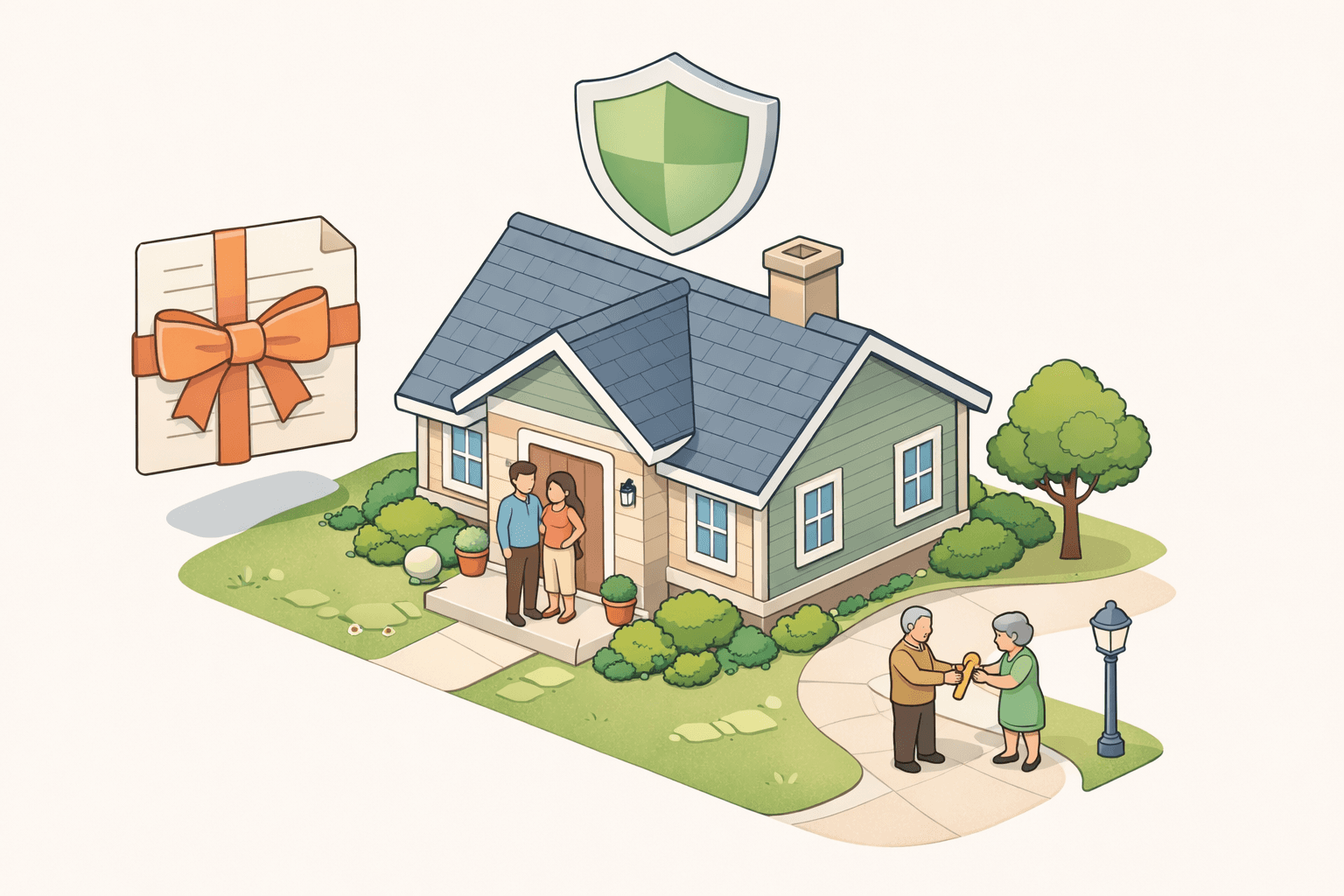
Buying a home is one of the biggest financial steps you'll ever take, and getting help from family can make it a lot more achievable. Many first-time homebuyers turn to their parents for down payment funds — and the good news is that conventional loan programs typically allow gifted money for this purpose. But if that gift covers only 10% of the purchase price, you'll likely be required to carry private mortgage insurance (PMI). Understanding the cost of PMI for a conventional loan with a 10% gifted down payment from parents can help you plan your budget, compare loan options, and make a confident decision. This article breaks it all down in plain language so you know exactly what to expect.
What Private Mortgage Insurance Actually Is and Why It Applies Here
Private mortgage insurance is a policy that protects the lender — not you — in case you stop making payments on your loan. It's typically required on conventional loans when a borrower puts down less than 20% of the home's purchase price. So if your parents gift you 10% and you're financing the remaining 90%, you fall into this category.
PMI doesn't mean you've done anything wrong. It's simply a risk management tool that lenders use when the loan-to-value (LTV) ratio is higher than 80%. The insurance gives your lender a safety net, which is part of why many lenders are willing to approve loans with smaller down payments in the first place.
When a down payment comes entirely or partially from a gift, lenders may look at the situation slightly differently than if you'd saved the funds yourself. That said, conventional loan guidelines from Fannie Mae and Freddie Mac do allow gifted funds from relatives — including parents — to be used toward a down payment. As long as the gift is properly documented with a signed gift letter and a paper trail showing the transfer of funds, it's typically an acceptable source.
The key takeaway: using a gifted down payment doesn't disqualify you from getting a conventional loan, but it does mean you'll need to account for PMI in your monthly housing costs if your down payment is below 20%.
How PMI Rates Are Calculated on a Conventional Loan with a 10% Down Payment
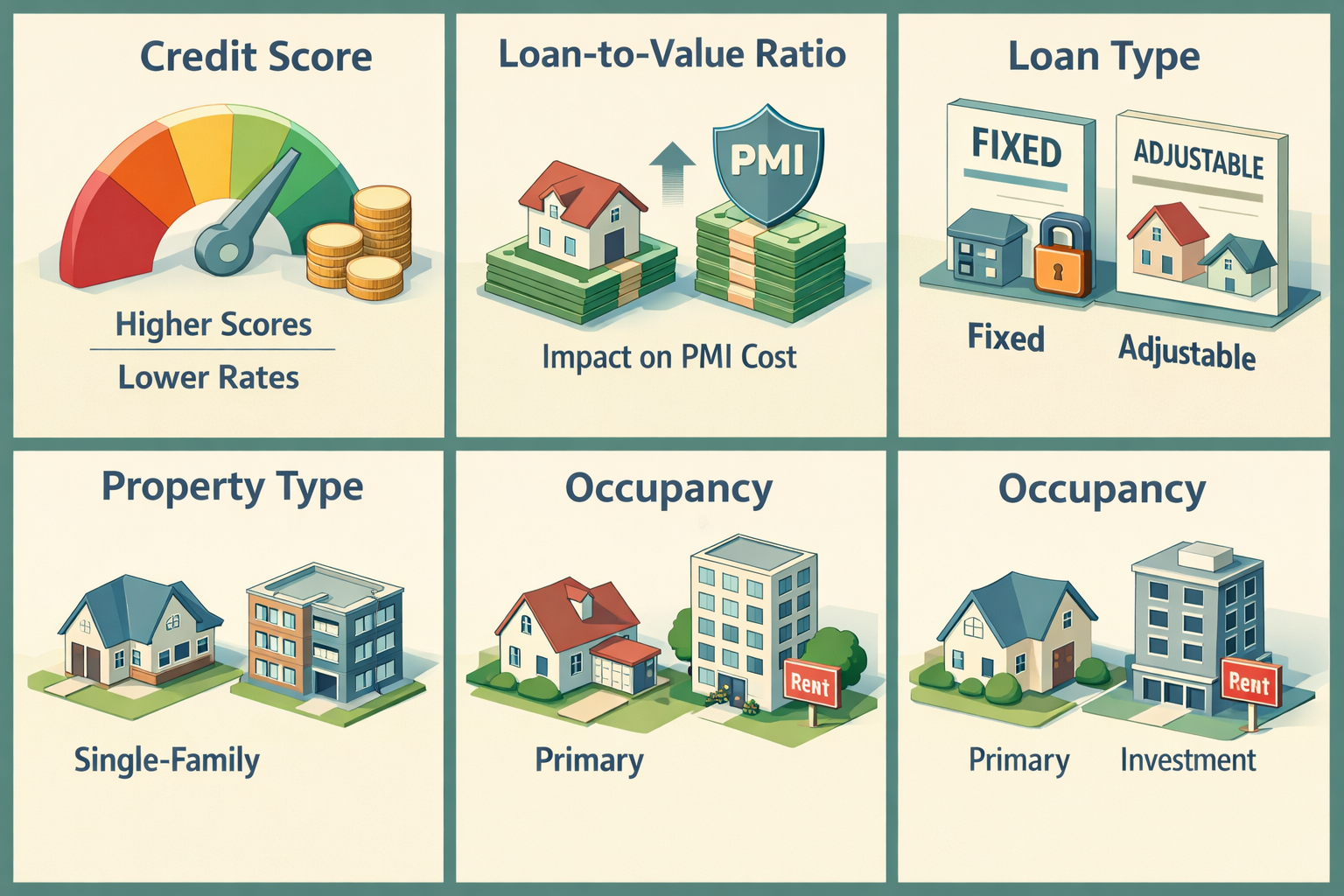
The PMI rates on a gifted down payment scenario are determined by several factors, and they can vary meaningfully from borrower to borrower. Lenders and PMI providers use a risk-based pricing model, which means your individual financial profile plays a big role in what you'll pay.
Here are the main factors that influence your PMI rate:
- Credit score: Borrowers with higher credit scores typically qualify for lower PMI rates. If your score is above 740, you may pay considerably less than someone with a score in the 620–659 range.
- Loan-to-value ratio: With 10% down, your LTV is 90%. The closer you are to 80% LTV, the lower your PMI cost tends to be.
- Loan type and term: Fixed-rate loans often have different PMI pricing than adjustable-rate mortgages. A 30-year term may carry a slightly different rate than a 15-year term.
- Property type: Single-family homes are generally viewed as lower risk than condos or multi-unit properties, which could affect your PMI rate.
- Occupancy: Primary residences typically receive more favorable PMI rates than second homes or investment properties.
PMI is generally expressed as an annual percentage of the original loan amount and is typically divided into monthly payments added to your mortgage bill. While specific rates can vary, PMI on a conventional loan with 10% down might commonly range somewhere between roughly 0.5% and 1.5% of the loan amount per year, depending on your credit profile and lender. Always request a Loan Estimate from your lender for the exact figure that applies to your situation.
A Practical Look at What PMI Might Cost You Each Month
To put this into perspective, let's walk through a general example. Suppose your parents gift you 10% — say $35,000 — toward the purchase of a $350,000 home. You finance the remaining $315,000 with a conventional loan. If your PMI rate comes in at around 0.8% annually, you'd be looking at roughly $210 per month added to your mortgage payment.
If your credit score is excellent and your rate lands closer to 0.5%, that same loan might only add around $131 per month. On the other hand, a borrower with a lower credit score might see a rate closer to 1.2% or higher, pushing the monthly cost above $300.
These figures are illustrative estimates and not guarantees. Your actual cost will depend on the specific PMI provider your lender works with and the unique details of your financial profile. The important thing is to factor this cost into your monthly housing budget before you finalize your purchase decision.
It's also worth noting that PMI is separate from homeowner's insurance and property taxes — all of which are commonly included in your total monthly payment if you escrow. So when budgeting, make sure you're looking at the full picture.
Does the Source of Your Down Payment Affect Your PMI Cost
This is one of the most common questions among buyers using family gifts. The short answer is: in most cases, the source of the down payment itself does not directly change your PMI rate. PMI pricing is primarily driven by your credit score, LTV ratio, and loan characteristics — not where the funds came from.
However, there's an important nuance. Some lenders may apply additional scrutiny or requirements when a down payment is fully gifted, especially if you have no personal contribution toward the purchase. This is because lenders may view a borrower who has no personal funds invested in the transaction as a slightly higher risk. While Fannie Mae and Freddie Mac guidelines generally allow 100% gifted funds for down payments on certain loan programs, individual lenders may have their own overlays or preferences that could affect approval or terms.
Additionally, if the gift is used to meet the minimum down payment requirement but you have little to no reserves afterward, that could affect your overall loan approval — even if it doesn't directly change the PMI rate. Lenders often want to see that you have some savings left over after closing to cover emergencies or unexpected costs.
The bottom line: a properly documented gift from your parents can be a great tool, but it's wise to also demonstrate financial responsibility through a solid credit history and, ideally, some personal savings reserves.
Smart Ways to Reduce or Remove PMI on Your Conventional Loan
PMI doesn't have to be a permanent part of your monthly payment. There are several strategies that homeowners and homebuyers can use to reduce or eventually eliminate this cost.
- Improve your credit score before applying: Even a modest jump in your credit score — say, from 680 to 720 — could result in a meaningfully lower PMI rate. Taking a few months to pay down debt, correct errors on your credit report, and avoid new credit inquiries can pay off significantly.
- Make extra principal payments: As you pay down your loan balance and your home's value potentially increases, your LTV ratio improves. Under federal law (the Homeowners Protection Act), you have the right to request PMI cancellation once your LTV reaches 80% based on the original purchase price and payment schedule.
- Automatic cancellation at 78% LTV: Lenders are typically required to automatically cancel PMI when your loan balance drops to 78% of the original value, as long as you're current on payments.
- Request a new appraisal: If your home has appreciated significantly, you may be able to get a new appraisal showing your LTV is now below 80%, which could support a request to cancel PMI earlier than scheduled.
- Lender-paid PMI (LPMI): Some lenders offer to pay the PMI themselves in exchange for a slightly higher interest rate. This could make sense if you plan to stay in the home long-term and want to reduce upfront monthly costs, though it means you can't later cancel the PMI the way you could with borrower-paid PMI.
- Piggyback loan strategy: Another option some borrowers explore is an 80/10/10 structure — an 80% first mortgage, a 10% second mortgage (often a home equity line of credit), and your 10% down payment. This structure avoids PMI entirely, though it comes with its own set of costs and considerations.
Each of these approaches has trade-offs, so it's worth speaking with a mortgage professional to determine which path makes the most sense for your financial goals.
Documenting a Gifted Down Payment Correctly to Avoid Loan Delays
One of the most common stumbling blocks when using a parental gift is incomplete or incorrect documentation. Lenders have strict requirements about verifying where your down payment funds came from, and failing to meet these requirements can delay or derail your loan approval — even when the funds are completely legitimate.
Here's what's typically required for a gift to be properly documented on a conventional loan:
- Gift letter: A signed letter from the donor (your parents) stating the amount of the gift, the relationship to the borrower, the property address, and — critically — a statement confirming that the funds are a true gift and not a loan that must be repaid.
- Proof of transfer: Bank statements or wire transfer records showing the funds leaving your parents' account and entering yours.
- Your bank statements: Updated statements showing the gifted funds have been deposited into your account, often required for at least 30–60 days before closing, depending on the lender's seasoning requirements.
If the gift funds haven't been in your account long enough, the lender may require additional documentation or ask your parents to provide their own bank statements to confirm the source of the funds. Getting all of this organized early in the process can prevent last-minute surprises.
It's also important that your parents understand the gift must truly be a gift. If there's any agreement — even informal — that you'll repay the money, the lender could reclassify it as debt, which would affect your debt-to-income ratio and potentially your loan approval.
●Conclusion
Understanding the cost of PMI for a conventional loan with a 10% gifted down payment from parents is an important step toward making a well-informed home purchase. PMI adds to your monthly costs, but it's manageable — especially when you understand what drives your rate and how to plan for its eventual removal. A gifted down payment from your parents is a generous head start, and with the right documentation and financial preparation, it can serve as a solid foundation for your homeownership journey. If you're ready to explore your options, speaking with a knowledgeable mortgage professional can help you get a clearer picture of what your PMI rate might look like and how to structure your loan for the best long-term outcome.