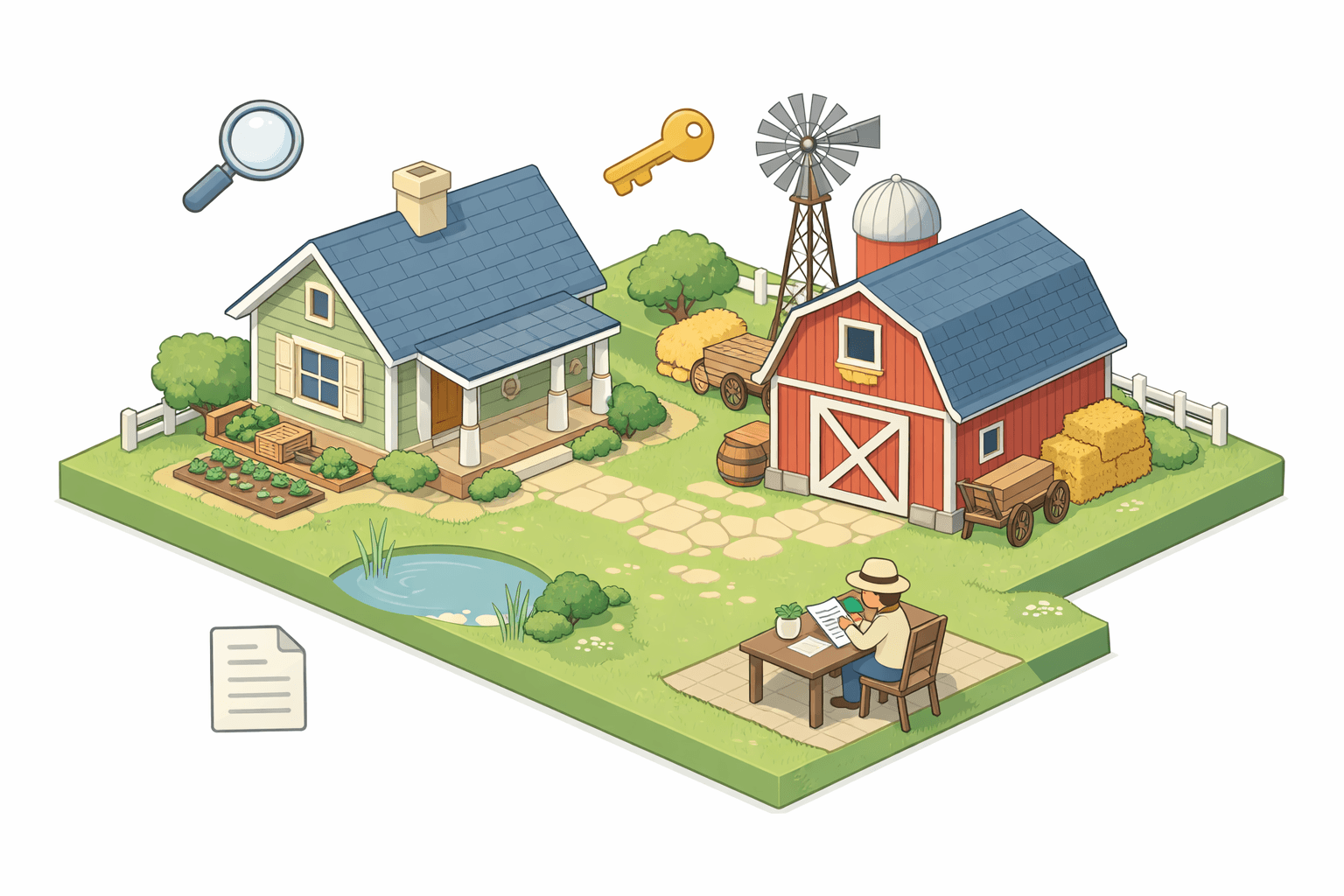
Purchasing a rural property with an existing barn is an exciting prospect for many homebuyers, hobby farmers, and real estate investors drawn to wide-open spaces and functional land. But when financing with a USDA loan, it's natural to wonder: what are closing costs for USDA loan on property with existing barn, and how does that barn affect the overall transaction? The USDA Single Family Housing Guaranteed Loan Program is one of the most accessible mortgage options available for eligible rural buyers, offering low or even no down payment requirements. Understanding the closing costs associated with this program — especially when a secondary structure like a barn is involved — can help you plan your finances more effectively and avoid surprises at the settlement table.
How USDA Loans Work for Rural Properties
The USDA loan program is backed by the U.S. Department of Agriculture and is designed to promote homeownership in eligible rural and suburban areas. Unlike conventional mortgages, USDA loans typically require no down payment, making them particularly attractive for buyers who may not have substantial savings but meet income and location eligibility requirements.
To qualify, the property must be located in a USDA-designated rural area, and the borrower must fall within specific income limits based on household size and region. The home must also be used as a primary residence — it cannot be purchased as a vacation property or investment rental.
When a property includes a barn or other agricultural outbuilding, the USDA still may consider it eligible for financing, provided the property is primarily residential in nature. The barn itself cannot be income-producing in a commercial sense at the time of the loan, and the land value and use should align with residential rather than agricultural commerce. Lenders and USDA underwriters will assess the property holistically to confirm it meets program guidelines before approving the loan.
What Are Closing Costs for USDA Loan on Property with Existing Barn
So, what are closing costs for USDA loan on property with existing barn? In general, USDA loan closing costs tend to mirror those of other government-backed mortgage programs, typically ranging somewhere between 2% and 5% of the loan amount — though your actual costs will depend on the lender, the state, the property, and several transaction-specific factors.
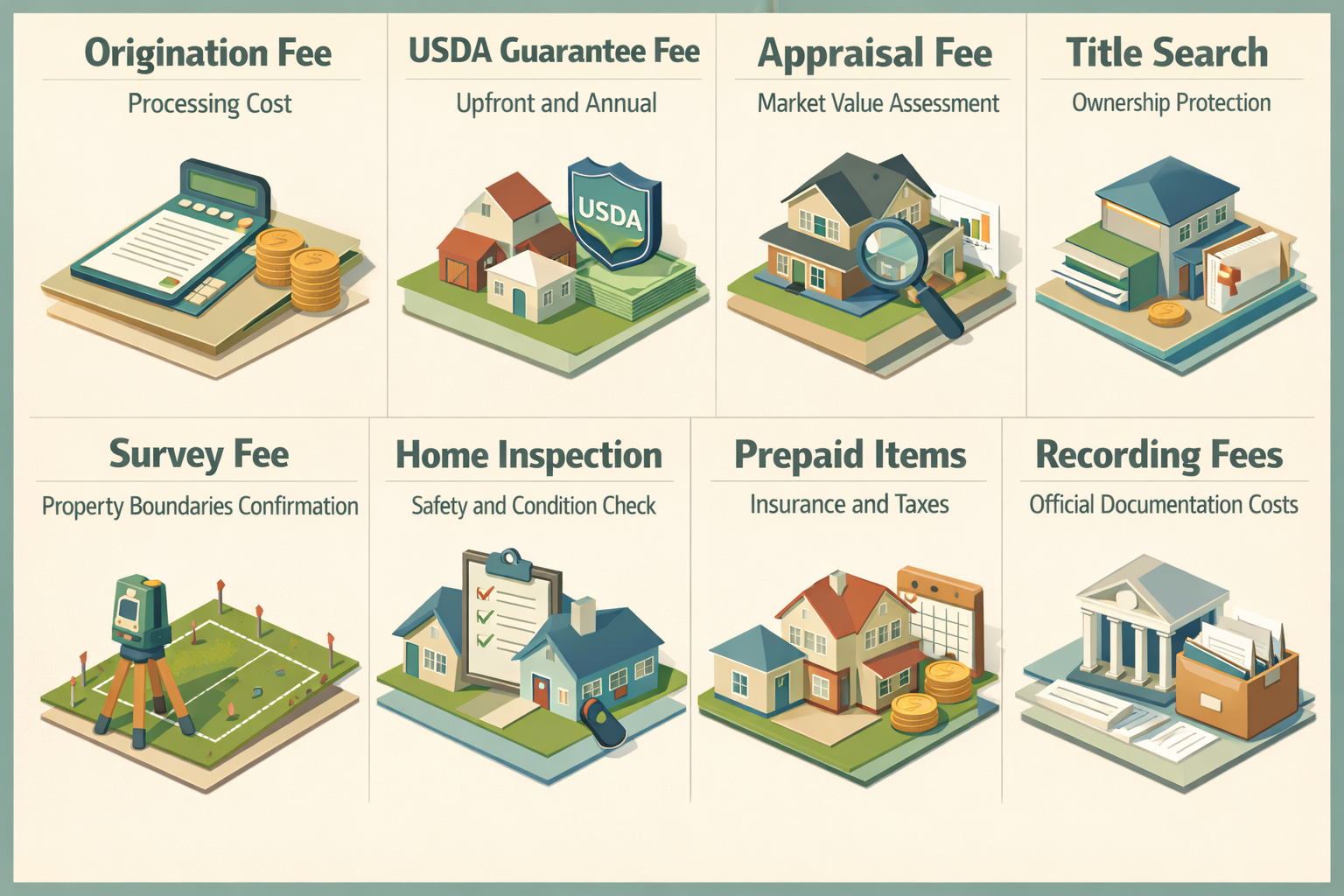
Here are the most common closing cost components you can expect with a USDA loan:
- Origination Fee: Charged by the lender to process the loan, this fee may be a flat amount or a percentage of the loan total.
- USDA Guarantee Fee: The USDA charges an upfront guarantee fee — currently set at 1% of the loan amount — which can often be rolled into the loan balance. There is also an annual fee, typically around 0.35% of the remaining balance, paid monthly as part of your mortgage payment.
- Appraisal Fee: A USDA-approved appraiser must assess the property's market value and condition. Properties with barns may require additional consideration during appraisal, which could affect timelines or fee structures.
- Title Search and Title Insurance: These fees protect both the lender and potentially the buyer from any title defects or ownership disputes on the property.
- Survey Fee: For rural land parcels that include outbuildings like barns, a land survey may be required or strongly recommended to confirm property boundaries and acreage.
- Home Inspection Fee: While not always mandatory, a home inspection is highly advisable — especially when a barn or secondary structure is present, as inspectors can flag structural or safety concerns.
- Prepaid Items: These include prepaid homeowners insurance, property taxes, and mortgage interest for the days between closing and the first payment due date.
- Recording Fees: Local government fees charged to officially record the mortgage and deed.
- Attorney or Settlement Fees: Depending on your state, a real estate attorney may be required at closing, adding to your total costs.
When a barn is present on the property, a few of these line items — particularly the appraisal, survey, and inspection — may carry slightly higher fees due to the added complexity of evaluating an outbuilding and potentially larger land area. However, the core USDA loan fee structure remains consistent regardless of outbuildings.
How a Barn Can Influence Property Eligibility and Appraisal
One of the most important things to understand when using a USDA loan to purchase a property with a barn is how that structure factors into the appraisal and eligibility determination. USDA guidelines specify that the loan must finance a primary residential dwelling, and any additional structures on the property — including barns, stables, or equipment sheds — must be secondary and non-commercial in nature.
During the appraisal process, the USDA-approved appraiser will assess the value of the entire property, including the barn. However, the barn's contributory value is typically considered separately from the residential dwelling. The appraiser will likely use comparable sales of similar rural properties in the area to establish fair market value. If barns are common in the region, finding solid comps may be straightforward. In more suburban fringe markets, comps with agricultural outbuildings can be harder to identify, which may extend the appraisal timeline.
It's also worth noting that the USDA places limits on the total acreage it will finance in some instances. While there is no strict acreage cap written universally into USDA guidelines, the agency generally expects that the land size is typical for the area and consistent with residential use. A small hobby farm with a barn on a few acres is likely more palatable to underwriters than a sprawling agricultural operation with commercial-grade facilities.
If the barn shows signs of disrepair or poses safety hazards, the USDA appraiser may require those issues to be addressed before the loan can close — potentially adding repair costs or negotiation with the seller to your closing equation.
Strategies to Reduce Your Out-of-Pocket Closing Expenses
One of the significant advantages of the USDA loan program is the flexibility it offers around closing costs. Here are several approaches that may help reduce your out-of-pocket expenses at settlement:
- Roll Costs into the Loan: If the appraised value of the property exceeds the purchase price, you may be able to roll some or all of your closing costs into the loan amount. This is a unique feature that the USDA program sometimes allows, subject to lender and program guidelines.
- Seller Concessions: You can negotiate with the seller to pay a portion of your closing costs. USDA guidelines generally allow seller concessions up to 6% of the purchase price, which can meaningfully offset your out-of-pocket obligation.
- Lender Credits: Some lenders offer lender credits in exchange for a slightly higher interest rate. This trade-off can reduce upfront closing costs, though it does increase the long-term cost of the loan through a marginally elevated rate.
- Down Payment Assistance Programs: Many states and local housing agencies offer assistance programs that may be paired with a USDA loan to help cover closing costs. Eligibility requirements vary by program and location.
- Shop Multiple Lenders: Origination fees and certain third-party costs can vary between lenders. Comparing Loan Estimates from several USDA-approved lenders is a smart step to ensure you're getting competitive pricing.
Buyers purchasing farms or properties with barns should also discuss with their lender whether the barn's presence affects the appraised value favorably — in some rural markets, a functional outbuilding can add meaningful value that helps unlock the ability to roll closing costs into the financing.
Understanding the USDA Loan Guarantee Fee Structure
Unlike FHA loans, which require both an upfront mortgage insurance premium and annual mortgage insurance payments, USDA loans use a guarantee fee structure. This distinction is important for budgeting your total loan costs.
The upfront guarantee fee is typically 1% of the total loan amount. For example, on a $250,000 loan, this fee would be $2,500. The good news is that this fee can usually be financed into the loan rather than paid out of pocket at closing, easing the immediate financial burden on the buyer.
The annual guarantee fee — sometimes referred to as the annual fee — is currently around 0.35% of the average annual scheduled unpaid loan balance. This is divided into monthly installments and added to your mortgage payment, similar in concept to private mortgage insurance on a conventional loan. Unlike PMI, however, this fee is not automatically cancelable once you reach a certain equity threshold, though refinancing into a conventional loan later could eliminate it.
For buyers financing a USDA loan closing costs farm property transaction, understanding these guarantee fees upfront ensures there are no surprises when the Loan Estimate or Closing Disclosure arrives. These documents, which lenders are required to provide, break down all fees in detail and give you an opportunity to ask questions before signing.
Working with a USDA-Approved Lender for Farm Properties
Not every mortgage lender participates in the USDA Guaranteed Loan Program, and among those who do, not all have deep experience with rural properties that include agricultural outbuildings. When you're purchasing a home with an existing barn, working with a lender who understands both USDA guidelines and rural property nuances can make a meaningful difference in how smoothly your transaction proceeds.
A knowledgeable USDA lender will be able to help you:
- Confirm upfront whether the property and barn configuration meet USDA eligibility standards
- Order the correct type of appraisal and connect you with an appraiser experienced in rural properties
- Guide you on which closing costs may be financed into the loan versus paid at closing
- Identify any state or regional down payment assistance programs that pair with the USDA loan
- Navigate underwriting questions that arise specifically because of the barn or secondary structure
It's wise to ask potential lenders directly about their experience with USDA loan closing costs farm property transactions. A lender who has handled similar deals will be better equipped to anticipate challenges, communicate timelines accurately, and advocate for your file during underwriting. Rural real estate transactions can carry unique complexities, and having an experienced team in your corner is a strong advantage.
●Conclusion
Understanding what are closing costs for USDA loan on property with existing barn is an important step toward a confident and well-prepared home purchase. While the core closing cost structure for USDA loans remains broadly consistent with other mortgage programs, properties featuring barns may introduce added appraisal considerations, survey requirements, and inspection nuances that buyers should plan for. The good news is that the USDA loan program offers meaningful flexibility — including the potential to finance closing costs into the loan and accept seller concessions — that can significantly reduce your out-of-pocket burden at settlement. By working with a USDA-approved lender who understands rural and farm property transactions, you'll be in a strong position to navigate the process smoothly and secure the rural home you've been looking for. Ready to explore your options? Connect with a LoanWise lending specialist today to get started on your USDA loan journey.