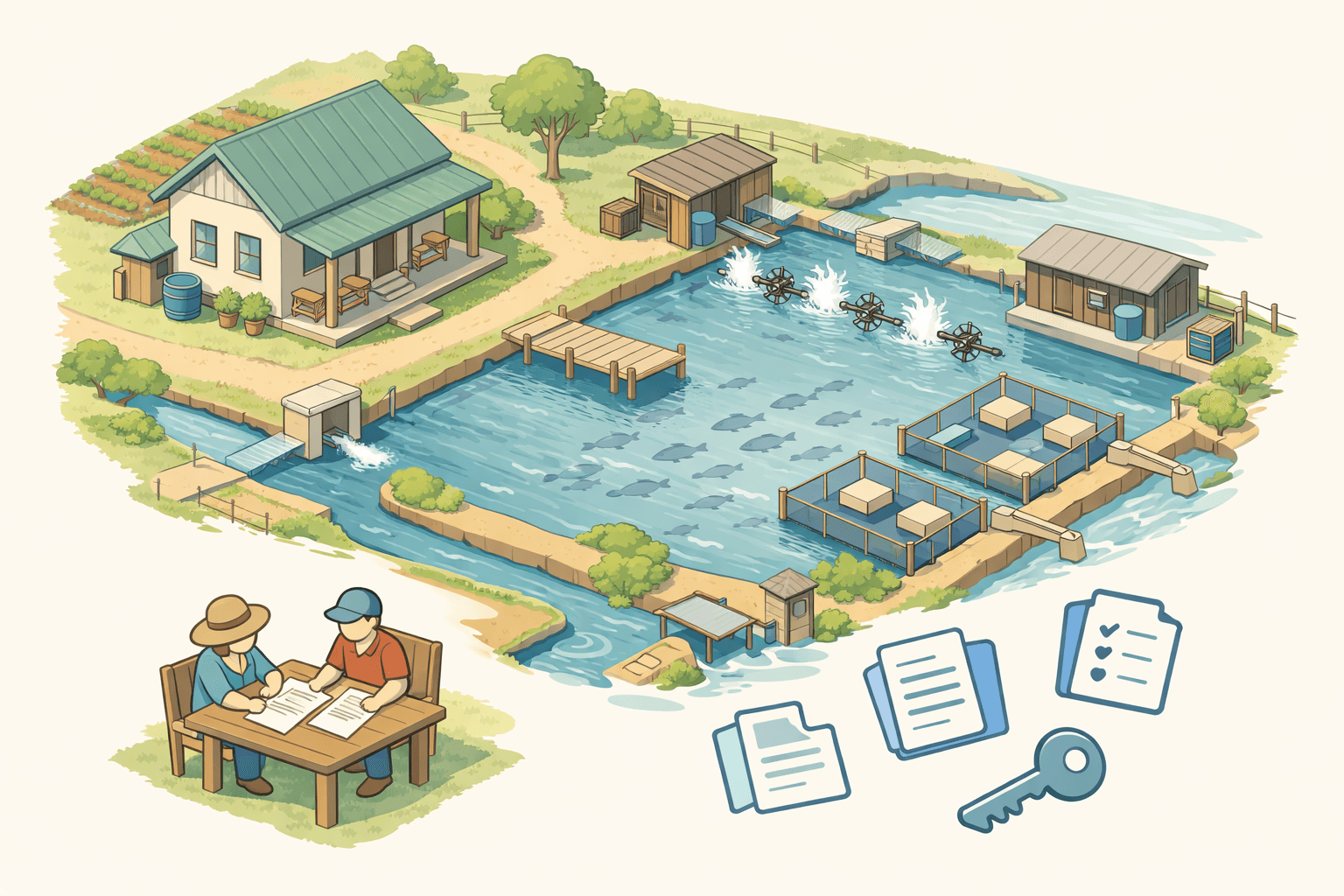
Purchasing a rural property that includes an aquaculture setup — such as fish ponds, oyster beds, or shrimp farming operations — is a genuinely exciting venture. But before you sign on the dotted line, it's essential to understand the full financial picture. One of the most common questions buyers in this niche ask is: what are closing costs for USDA loan on property with aquaculture setup? The answer involves more than a simple dollar figure. It includes program-specific fees, rural property appraisal considerations, and costs that may be unique to agricultural or aquatic operations. This guide breaks it all down so you can plan your purchase with confidence.
Understanding How USDA Loans Work for Rural Properties
The USDA Single Family Housing Guaranteed Loan Program is designed to help low-to-moderate income borrowers purchase homes in eligible rural areas. One of its standout benefits is the ability to finance a home with zero down payment, making it an appealing option for buyers who want to stretch their purchasing power in the countryside.
For a property to qualify under this program, it must be located in a USDA-designated rural property area and serve primarily as the borrower's primary residence. This is an important distinction when it comes to properties with aquaculture setups. The loan is intended to finance the residential portion of the property, not the commercial farming operation itself. So while the land and home may be eligible, any income-generating aquaculture infrastructure may be viewed differently by underwriters.
That said, many rural homesteads with small-scale aquaculture features — like private fish ponds used recreationally or for personal sustenance — may still qualify, depending on how the property is appraised and classified. Working with a lender experienced in USDA rural property financing is critical in these cases.
- Eligible property types may include single-family homes on rural land with modest farm features
- Income limits apply based on household size and the county in which the property is located
- Primary residence requirement means the home cannot be used solely as an investment or commercial operation
- Rural area designation must be confirmed through the USDA eligibility map before applying
What Are Closing Costs for USDA Loan on Property with Aquaculture Setup
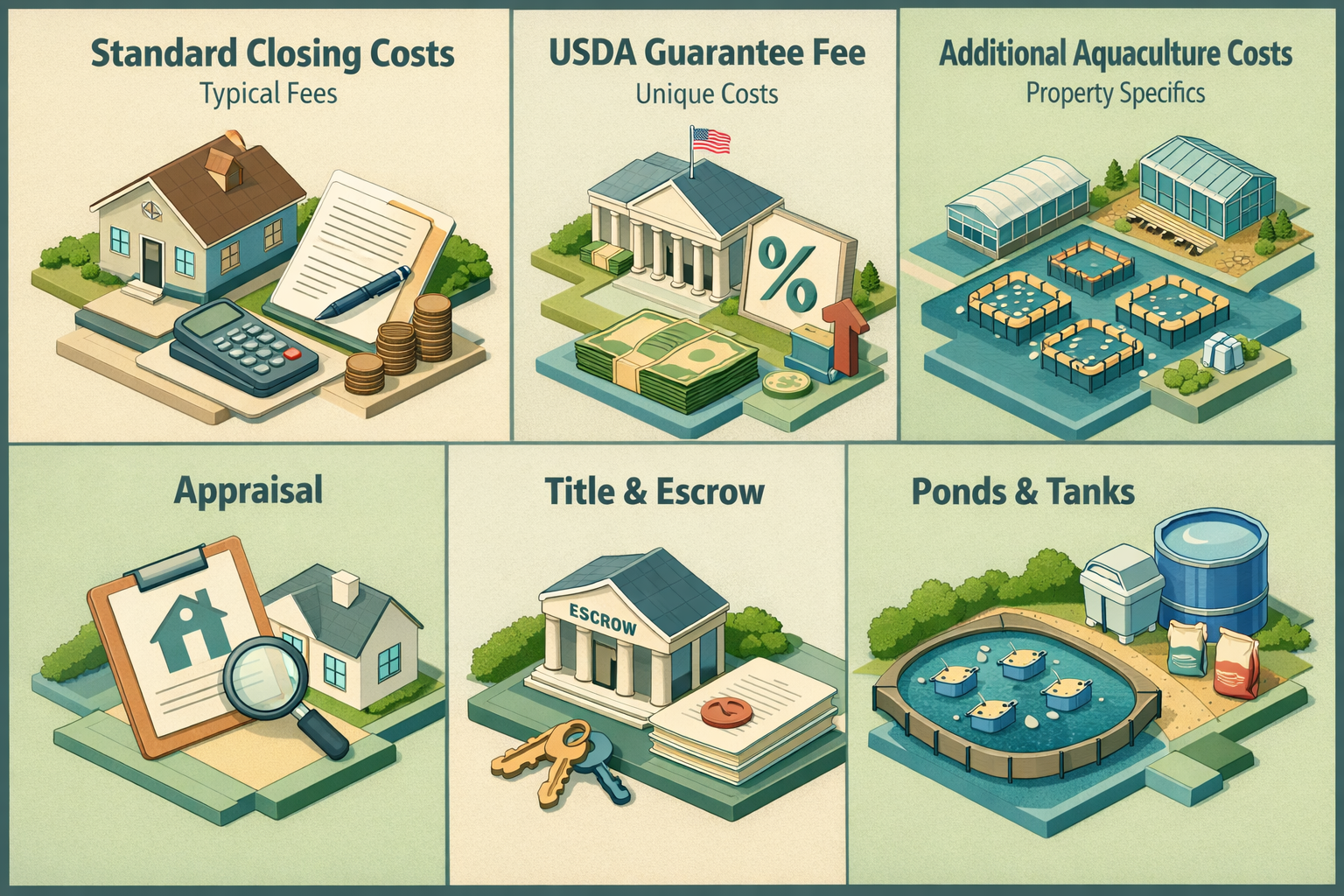
When people ask what are closing costs for USDA loan on property with aquaculture setup, the answer includes both standard USDA loan fees and property-specific costs that arise because of the agricultural and aquatic elements involved. Let's walk through each category.
Standard USDA Loan Closing Costs
Like any mortgage, a USDA loan comes with a set of standard closing costs. These typically represent a range of roughly 2% to 5% of the total loan amount, though the actual figure will vary based on the lender, location, and specifics of the transaction. Common line items include:
- Origination fee: Charged by the lender to process and underwrite the loan
- Credit report fee: A smaller charge to pull your credit history
- Title search and title insurance: Protects the lender — and optionally you — against title defects
- Recording fees: Charged by local government to officially record the property transfer
- Attorney or settlement fees: Vary by state; some require a closing attorney
- Homeowner's insurance (prepaid): The first year's premium is often collected at closing
- Prepaid interest: Interest that accrues between closing day and your first mortgage payment
- Escrow setup: Initial deposits into your escrow account for taxes and insurance
USDA-Specific Guarantee Fee
One cost unique to USDA loans is the guarantee fee, which functions similarly to mortgage insurance on FHA loans. There are two components:
- Upfront guarantee fee: Currently set at 1% of the loan amount, this can be rolled into the loan balance so you don't have to pay it out of pocket at closing
- Annual guarantee fee: Currently 0.35% of the outstanding loan balance annually, paid monthly as part of your mortgage payment
These fees help fund the USDA program and are generally lower than FHA mortgage insurance premiums, which is one reason USDA loans tend to be cost-effective for eligible buyers over the long term.
Additional Costs Tied to Aquaculture Properties
Properties with aquaculture setups introduce a layer of complexity that can generate additional closing-related expenses. These may include:
- Specialized appraisal: Standard residential appraisers may not be equipped to assess a property with fish ponds, water filtration systems, or aquatic farming equipment. A more specialized appraisal — potentially from an agricultural appraiser — may be required, and these can cost more than a typical home appraisal
- Environmental assessments: Lenders may require a Phase I or Phase II environmental site assessment if the property has water features or has been used for farming operations. These reports evaluate potential contamination or environmental liability
- Well and water quality testing: Rural properties often rely on private wells. If the aquaculture operation uses shared or separate water sources, additional water quality testing may be mandated
- Survey costs: Properties with ponds, streams, or water rights may require a new land survey to clearly define boundaries, especially if easements or water access rights are involved
- Legal review of water rights: In states where water rights are legally complex, an attorney may need to review or transfer these rights as part of the closing process
How Aquaculture Features Affect Property Eligibility and Appraisal
The USDA uses a specific set of appraisal guidelines rooted in Uniform Standards of Professional Appraisal Practice (USPAP) and USDA handbooks. When a property includes active aquaculture infrastructure, the appraiser must determine how much of the property's value is tied to its residential use versus its income-producing potential.
USDA guidelines generally require that the residential value of the home be the primary driver of the appraised value. If a significant portion of the home's market value comes from commercial aquaculture operations — like large-scale fish farming pens, processing facilities, or specialized water infrastructure — the loan could face eligibility challenges.
However, properties where aquaculture is a minor or hobby-level feature, such as a stocked recreational pond or a small home-based tilapia operation, may be treated more like a standard rural property with minor agricultural characteristics. In these situations, the appraiser would likely focus on the comparable sales of similar rural properties in the area.
It's worth noting that the USDA does offer separate loan programs through its Farm Service Agency (FSA) and Rural Development divisions that specifically target agricultural businesses and rural enterprise development. If your aquaculture setup is a core part of a farming business, exploring those programs alongside or instead of the standard housing loan may be a more appropriate fit.
Ways to Reduce Out-of-Pocket Closing Costs on a Rural Farm Property
One of the most appealing aspects of the USDA loan program is its flexibility when it comes to closing costs. There are several legitimate strategies buyers of rural property with farm setup can use to minimize what they pay out of pocket at closing.
Seller Concessions
USDA guidelines allow sellers to contribute toward the buyer's closing costs. Depending on negotiation and the local market, a motivated seller — especially one who has held the property for a long time — may be willing to cover some or all of the closing costs as part of the purchase agreement. This is often one of the most effective ways to reduce upfront expenses.
Lender Credits
Some lenders offer credits toward closing costs in exchange for a slightly higher interest rate. This is known as a no-closing-cost loan structure. While you'll pay more in interest over time, it can be a useful strategy if you're short on liquid funds at closing but expect to refinance or sell within a few years.
Rolling Costs into the Loan
The USDA program allows closing costs to be rolled into the loan amount if the appraised value of the property exceeds the purchase price. This is known as financing above the purchase price. In rural markets where there may be some flexibility in appraisal value, this option can meaningfully reduce what you need to bring to the table at closing.
Down Payment Assistance Programs
State housing finance agencies and nonprofit organizations sometimes offer grants or forgivable loans that can be applied toward closing costs on eligible USDA properties. Availability varies significantly by state and county, so it's worth researching local programs early in the process.
- Ask your lender about state-specific rural housing assistance programs
- Check with your county's agricultural extension office for any farm-linked homebuyer programs
- Inquire with HUD-approved housing counselors who may be aware of local grant opportunities
Important Questions to Ask Your Lender Before Closing
Not every lender is experienced with USDA loans on properties with aquaculture or agricultural features. Before committing to a lender, it's smart to ask targeted questions that help you evaluate their expertise and protect your interests.
- Have you closed USDA loans on properties with agricultural or aquaculture features before? Experience matters when navigating the gray areas of property eligibility and appraisal.
- What specific closing costs should I anticipate for this type of property? A knowledgeable lender should be able to outline both standard and property-specific fees upfront.
- Will you require an environmental assessment for this property? This question can reveal potential delays or unexpected costs before you're too deep in the process.
- Can you provide a Loan Estimate within three business days of my application? Federal law requires this document, which itemizes all expected closing costs.
- Are there any portions of the property that may not be included in the appraised value? Understanding what the appraiser will and won't count can help you avoid surprises.
- Is the property located in a USDA-eligible rural zone? Always confirm this early, especially for properties on the fringes of eligible areas.
Getting clear answers to these questions upfront can save you time, money, and stress as your closing date approaches.
Preparing Your Finances for a Smooth USDA Loan Closing
Even with zero down payment required, closing on a USDA loan — especially one involving a rural property with farm setup — still requires careful financial preparation. Here are some key steps to get ready:
Review Your Credit Profile Early
Most USDA lenders look for a credit score of at least 640 for streamlined processing, though some lenders may consider lower scores with additional documentation. Reviewing your credit report well in advance gives you time to dispute errors or address any derogatory marks that could affect your approval or interest rate.
Document Your Income Thoroughly
USDA income limits are based on household income, not just the borrower's. If any household members generate income — including from small-scale aquaculture sales — that income may need to be documented and factored into the eligibility calculation. Be prepared with tax returns, pay stubs, and bank statements.
Build a Closing Cost Reserve
Even if you're hoping to negotiate seller concessions or lender credits, it's wise to have liquid funds available equal to at least 2% to 3% of the purchase price. This buffer covers any costs that can't be offset through other means and shows lenders you're financially prepared.
Get Pre-Approved Before Making an Offer
Pre-approval on a USDA loan for a rural property with aquaculture features may take longer than a standard home purchase. Starting the process early — before you fall in love with a specific property — gives your lender time to work through any eligibility nuances and gives you stronger negotiating power with sellers.
●Conclusion
Understanding what are closing costs for USDA loan on property with aquaculture setup requires looking beyond the standard fee schedule. While many of the costs are similar to any rural USDA purchase — origination fees, title insurance, prepaid taxes, and the USDA guarantee fee — properties with aquaculture features may also require specialized appraisals, environmental assessments, water testing, and legal review of water rights. These added costs can vary considerably depending on the scale of the aquaculture operation and the state where the property is located.
The good news is that the USDA loan program offers meaningful tools to reduce your out-of-pocket burden, including seller concessions, lender credits, and the ability to roll certain costs into the loan balance. With proper preparation, the right lender, and a clear understanding of what to expect, buying a rural property with a farm setup using a USDA loan is a very achievable goal. At LoanWise, we're here to help you navigate every step of the process — from eligibility questions to closing day.