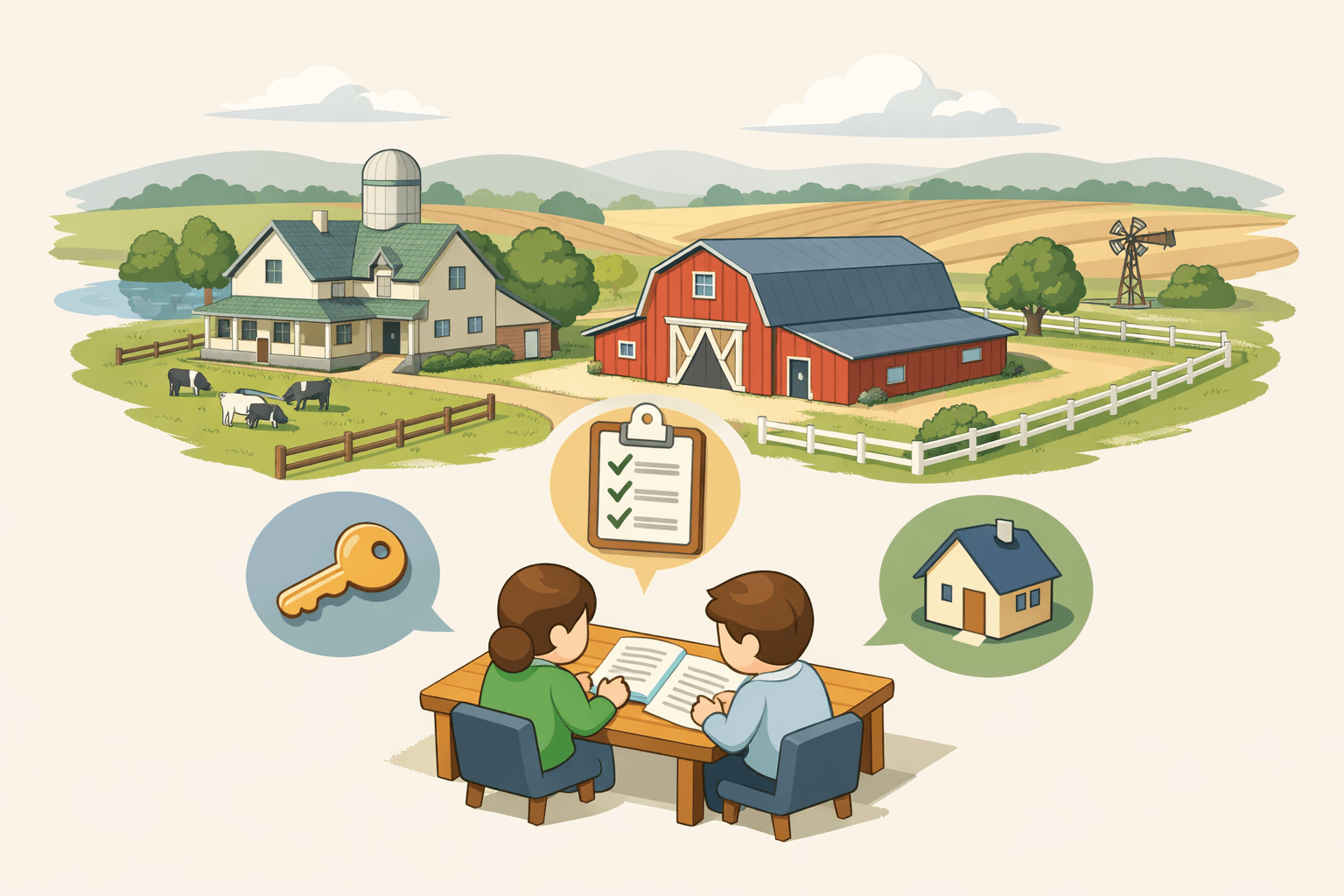
Buying a farm in a rural area is an exciting opportunity, and USDA loan programs can make that dream more affordable than you might expect. But before you sign on the dotted line, it's important to understand the full picture of what you'll owe at the closing table. Many homebuyers and real estate investors are surprised to discover that USDA loans come with their own unique set of fees and requirements — especially when the property has existing agricultural use. If you've been asking yourself what are closing costs for USDA loan on an existing farm, this guide is designed to give you clear, honest answers so you can plan with confidence.
How USDA Loan Programs Work for Rural Farm Properties
The U.S. Department of Agriculture offers several loan programs aimed at supporting rural homeownership and agricultural development. The two most commonly used for residential rural properties are the USDA Single Family Housing Guaranteed Loan Program and the USDA Direct Loan Program. Both programs are designed to help low-to-moderate income borrowers purchase homes in eligible rural areas — and in many cases, that includes properties with existing farmland or agricultural features.
It's worth noting that USDA programs are not purely agricultural lending tools. The primary purpose of the loan must still be for residential housing. However, a property may include barns, outbuildings, pastureland, or crop fields, as long as the home itself serves as the borrower's primary residence. The income produced by the farm operation may be considered differently depending on the specific USDA program and lender guidelines.
Understanding this distinction is critical before you apply. Lenders approved through the USDA Guaranteed program follow federal guidelines but may have their own overlapping requirements for farm properties. Speaking with a lender experienced in rural and agricultural financing can help you navigate these details early in the process.
Breaking Down What Are Closing Costs for USDA Loan on an Existing Farm
So, what are closing costs for USDA loan on an existing farm? Broadly speaking, closing costs on a USDA loan typically range from 2% to 5% of the loan amount, though the exact figure will depend on your lender, location, and the specifics of the property. Farm properties may carry slightly higher costs in some categories due to their size, complexity, and the additional inspections or appraisals they may require.
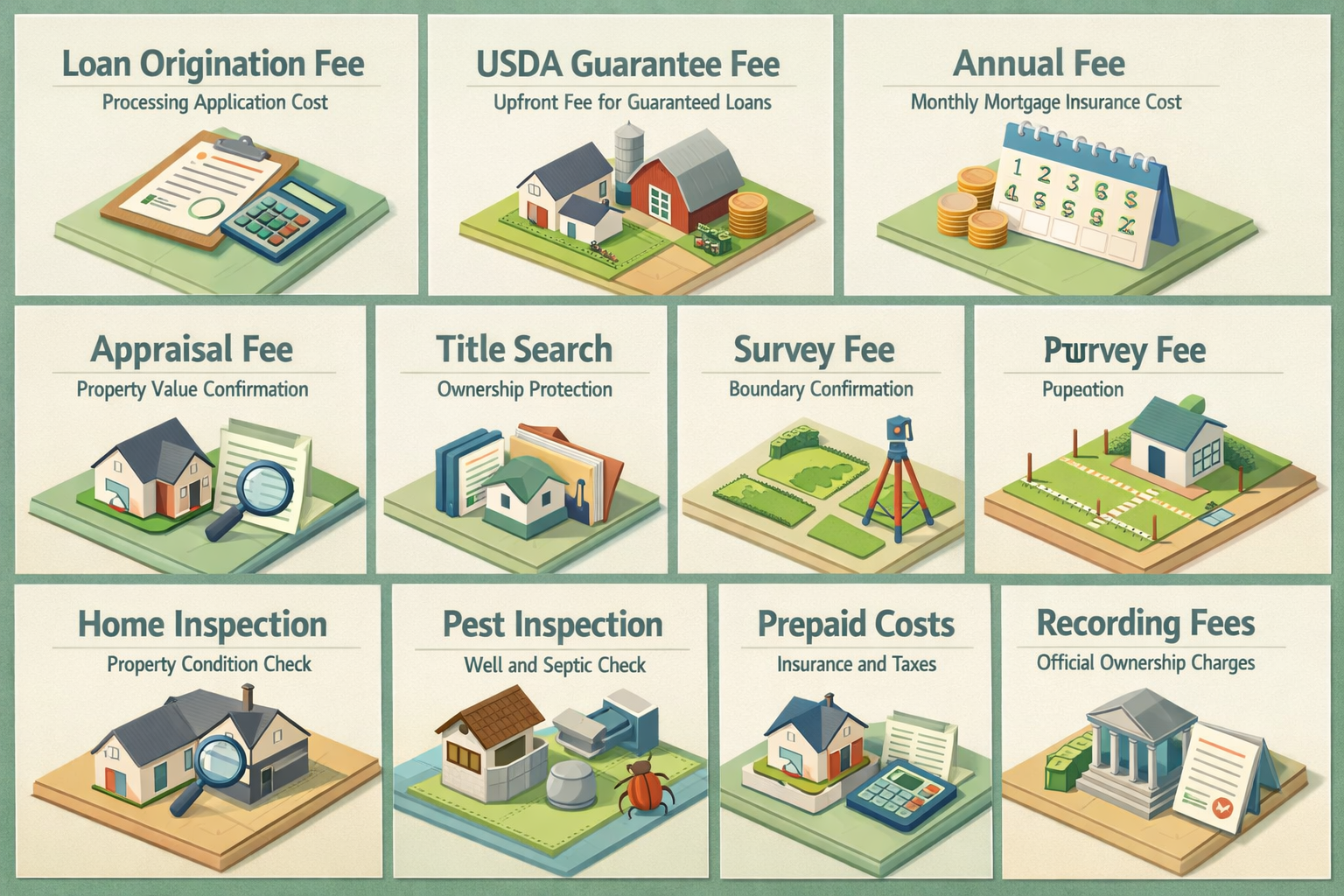
Here's a breakdown of the most common closing cost categories you can expect:
- Loan Origination Fee: Charged by the lender for processing your loan application, this fee is typically a percentage of the total loan amount.
- USDA Guarantee Fee: This is one of the most important fees specific to USDA loans. The upfront guarantee fee is currently set at 1% of the loan amount for Guaranteed loans. This fee may be rolled into the loan balance, which can reduce your out-of-pocket costs at closing.
- Annual Fee (Mortgage Insurance Equivalent): USDA loans also carry an annual fee of approximately 0.35% of the remaining loan balance, paid monthly. While not a closing cost in the traditional sense, it's important to budget for this ongoing expense.
- Appraisal Fee: USDA loans require a property appraisal to confirm the home's value and ensure it meets USDA property standards. Farm properties may require a more detailed appraisal given their size and agricultural components, which could mean a higher appraisal fee.
- Title Search and Title Insurance: These protect both you and the lender against any ownership disputes or liens on the property. Title work on farm properties can sometimes be more complex due to easements, water rights, or agricultural liens.
- Survey Fee: Lenders may require a land survey for farm properties to confirm boundaries, especially for parcels with significant acreage.
- Home Inspection Fee: While not always required by USDA, a home inspection is strongly advisable, particularly for older farmhouses or properties with outbuildings.
- Pest and Well/Septic Inspections: USDA often requires these inspections for rural properties, especially if the home relies on well water or a private septic system — both common on farms.
- Prepaid Costs: These include prepaid homeowner's insurance, property taxes held in escrow, and prepaid interest for the days between closing and your first mortgage payment.
- Recording Fees and Transfer Taxes: These government charges vary by county and state and are required to officially record the new ownership.
One significant advantage of USDA loans is that, unlike conventional financing, sellers are permitted to contribute toward the buyer's closing costs. This seller concession can meaningfully reduce how much cash you need to bring to closing. Lender credits are another option — your lender may offer to cover some costs in exchange for a slightly higher interest rate.
USDA Loan Eligibility for Rural Property With Agricultural Use
Understanding USDA loan eligibility for rural property with agricultural use is just as important as understanding the fee structure. USDA loans are not available for every property, and farm properties add an additional layer of review that buyers should be prepared for.
Here are the key eligibility factors lenders and USDA reviewers will assess:
- Location Eligibility: The property must be located in a USDA-designated rural area. You can check eligibility through the USDA's online eligibility map. Many rural communities with populations under 35,000 may qualify, though boundaries can shift as census data is updated.
- Primary Residence Requirement: As mentioned, the home must serve as your primary residence. Investment or rental properties do not qualify for USDA residential programs.
- Income Limits: USDA programs have household income limits that vary by region and family size. For the Guaranteed Loan Program, income generally may not exceed 115% of the area median income. For Direct Loans, the limits are lower and target very low-to-low income households.
- Farm Income Considerations: If the property generates agricultural income, lenders will typically assess that income carefully. It may or may not be counted as qualifying income depending on documentation, history, and program guidelines.
- Property Size and Use: USDA guidelines for the Guaranteed Loan program generally limit the property to a site that is typical for the area and does not have income-producing capacity that makes it primarily a commercial agricultural operation. In other words, a small hobby farm or a residence with some farmland may qualify, but a large-scale commercial farming operation would likely need to explore USDA Farm Service Agency (FSA) loans instead.
- Creditworthiness: Most USDA Guaranteed lenders look for a minimum credit score in the 640 range, though some lenders may work with borrowers below that threshold through manual underwriting.
- Debt-to-Income Ratio: USDA typically targets a debt-to-income ratio of no more than 41% on the back end, though compensating factors may allow for exceptions.
It's also worth knowing that the USDA Farm Service Agency (FSA) offers separate loan programs — such as the Farm Ownership Loan and the Farm Operating Loan — specifically designed for borrowers who want to purchase or operate a commercial farm. These programs have different structures and eligibility rules than the USDA loan eligibility requirements for residential programs described above.
How to Reduce Your Out-of-Pocket Costs at Closing
One of the standout advantages of USDA loans is the flexibility they offer around closing costs. There are several strategies that may help you reduce the amount of cash you need at settlement.
Rolling the Guarantee Fee Into the Loan
The USDA upfront guarantee fee — currently 1% of the loan amount — can typically be financed directly into your loan balance rather than paid at closing. This means you could potentially come to the table with less cash while still fulfilling the fee obligation. Keep in mind, rolling this fee in slightly increases your loan balance and total interest paid over time.
Negotiating Seller Concessions
USDA guidelines allow sellers to contribute toward a buyer's closing costs, and there is no strict cap on the seller contribution as long as the amount doesn't exceed the actual closing costs. This can be a powerful negotiating tool, especially in a buyer-friendly market or when purchasing a farm property that has been listed for a longer period of time.
Using Lender Credits
Some lenders may offer lender credits in exchange for accepting a slightly higher interest rate. This trades a lower monthly payment for reduced upfront costs. Whether this makes sense depends on how long you plan to hold the loan and your cash flow priorities at the time of purchase.
Down Payment Assistance and Grants
Some state housing finance agencies and nonprofit organizations offer down payment assistance or closing cost grants that may be compatible with USDA loans. These programs vary significantly by state and county, so it's worth researching what might be available in your area.
What to Expect During the USDA Loan Process for a Farm Property
The USDA loan process for an existing farm property may take longer than a standard home purchase due to additional review requirements. Borrowers should be prepared for a process that could take 30 to 60 days or more, depending on the complexity of the property and current USDA workload.
Here's a general overview of what to expect:
- Pre-Qualification: Work with a USDA-approved lender to review your income, credit, and the property's eligibility before making an offer.
- Loan Application: Submit a full application with documentation of income, assets, employment, and the property details.
- Property Appraisal: The lender orders a USDA-compliant appraisal to confirm value and condition. Farm properties may require additional time if the appraiser needs to assess outbuildings or land parcels.
- USDA Conditional Commitment: For Guaranteed loans, the lender submits the file to USDA for a conditional commitment, which can add time to the process.
- Underwriting and Approval: The lender's underwriting team reviews all documentation before issuing a final loan approval.
- Closing Disclosure: At least three business days before closing, you'll receive a Closing Disclosure outlining all final fees and costs.
- Closing Day: You'll sign documents, pay any remaining closing costs not covered by seller concessions or credits, and receive the keys to your new farm property.
Staying organized and responsive throughout this process can help avoid unnecessary delays. Keep all financial documents up to date and respond quickly to any lender requests for additional information.
Common Questions Buyers Have About USDA Farm Loan Costs
Can I use a USDA loan to buy land only?
Generally, no. USDA residential loan programs require that the property include a habitable home that will serve as your primary residence. If you're looking to purchase bare farmland without a home, USDA FSA loan programs or conventional agricultural lenders would be more appropriate options to explore.
Are closing costs the same for USDA Direct and Guaranteed loans?
Not necessarily. USDA Direct Loans are funded directly by the government and may have different fee structures than Guaranteed Loans, which are funded by private lenders with USDA backing. Direct Loan borrowers may have access to payment assistance that reduces their effective interest rate, which could affect total loan costs differently over time.
Does the farm's agricultural income affect my eligibility?
It can. Lenders may treat farm income differently than traditional employment income. Self-employment rules often apply, meaning you may need two years of documented farm income via tax returns. If the farm generates consistent, documented revenue, it could potentially strengthen your application, but it depends on the lender and the specific USDA program you're pursuing.
What if the property needs repairs?
USDA loans require properties to meet certain safety and habitability standards. If the existing farmhouse needs significant repairs, you may need to address those before or at closing. In some cases, a USDA repair escrow arrangement might be available, though this varies by lender.
●Conclusion
Understanding what are closing costs for USDA loan on an existing farm is one of the most important steps you can take before pursuing this type of financing. From the upfront guarantee fee and appraisal costs to title work and prepaid expenses, the fees add up — but USDA loans also offer meaningful tools to reduce your out-of-pocket burden, including seller concessions, rolled-in fees, and lender credits. At the same time, navigating USDA loan eligibility for rural property with agricultural use requires careful attention to property type, income limits, and program-specific guidelines. Whether you're a first-time rural homebuyer or an investor looking to add a working farm to your portfolio, working with a knowledgeable lender is the single best step you can take. At LoanWise, our team understands the nuances of rural and agricultural financing and is ready to help you evaluate your options with clarity and confidence. Reach out today to get started on your path to farm ownership.