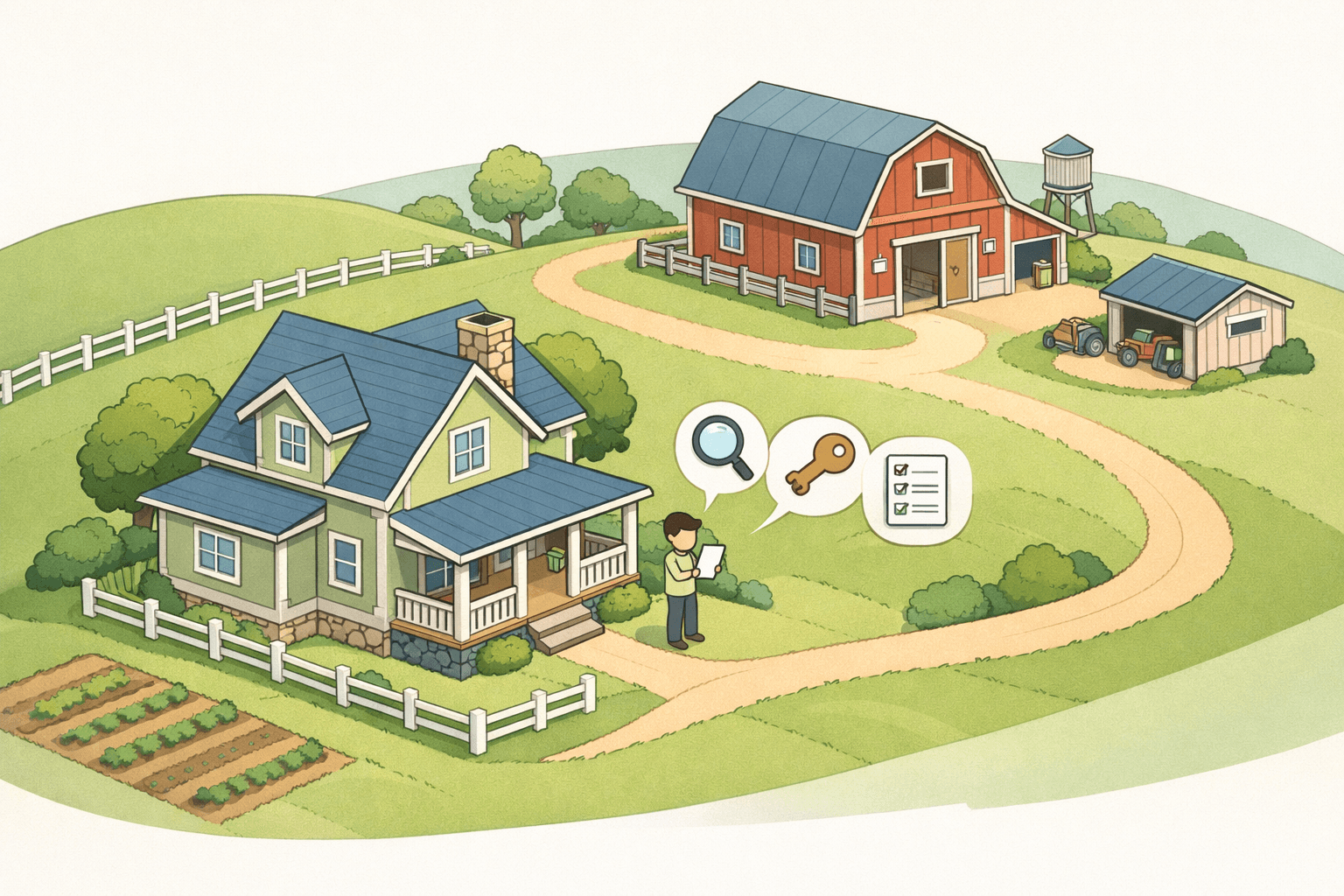
Purchasing a home in a rural area is an exciting milestone, especially when the property includes functional farm outbuildings like barns, sheds, or storage structures. But before you sign on the dotted line, it's important to understand the full picture of your financing costs. One of the most common questions buyers ask is: what are closing costs for USDA loan on a property with farm outbuildings? The answer involves a mix of standard mortgage fees, USDA-specific charges, and some unique considerations that come with rural and agricultural properties. This guide breaks it all down so you can approach your closing table with confidence.
How USDA Loans Work for Rural Properties
The USDA loan Single Family Housing Guaranteed Loan Program is designed to help low-to-moderate income borrowers purchase homes in eligible rural areas. One of its biggest advantages is the ability to finance a home with zero down payment, making it a highly attractive option for buyers who want to preserve their savings.
Properties with farm outbuildings — such as barns, machine sheds, grain bins, or small agricultural structures — can often qualify for USDA financing, provided the home itself is the primary purpose of the loan. The USDA does not intend for its guaranteed loan program to finance income-producing agricultural operations, so lenders and appraisers typically evaluate whether the outbuildings are incidental to the residential use of the property.
It's worth noting that the USDA may require that the value of outbuildings be treated separately or excluded from the appraised value used for lending purposes, depending on their size and nature. Working with a lender experienced in rural mortgage lending can help you navigate these nuances before you get too far into the process.
Breaking Down the Standard Closing Costs on a USDA Loan
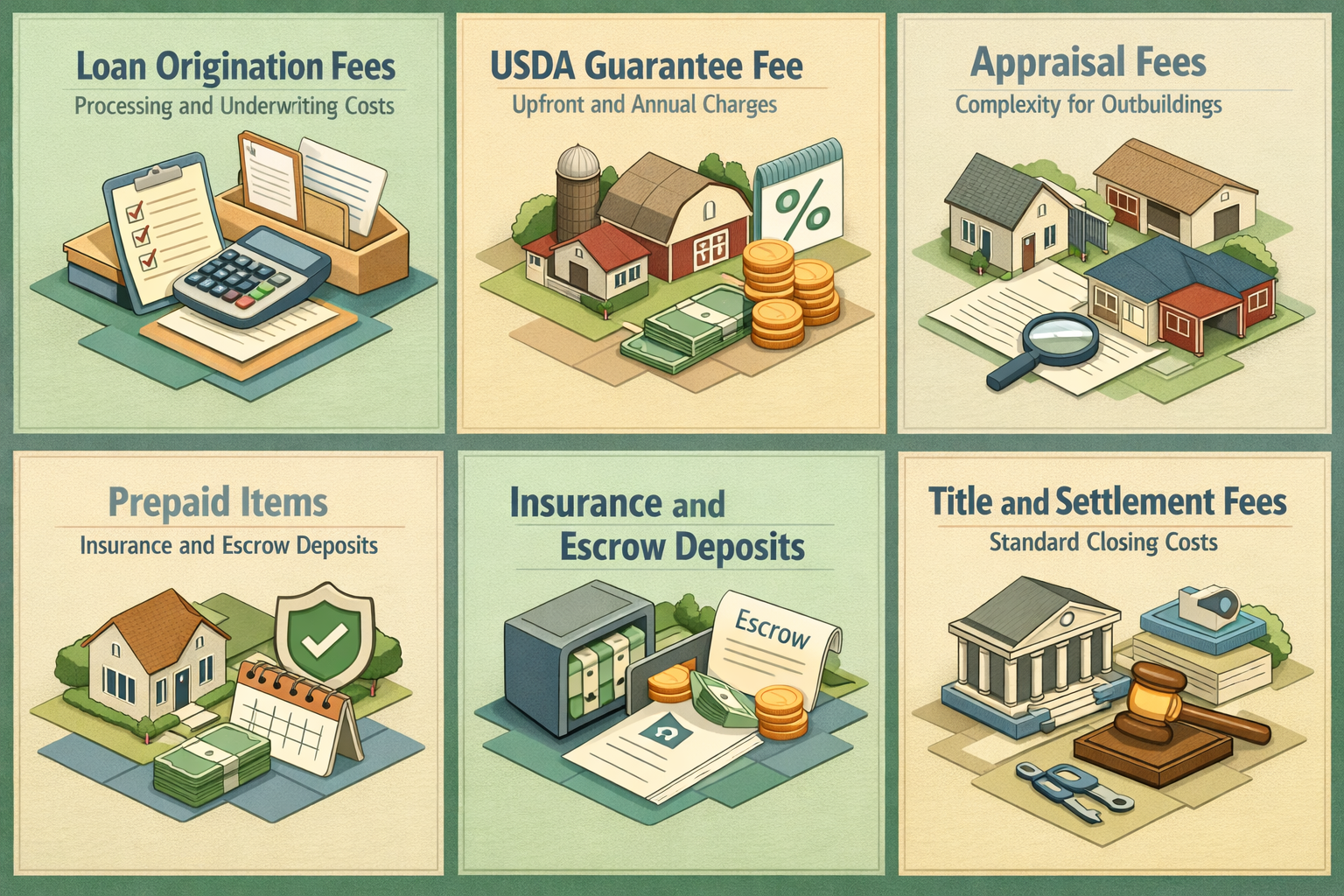
Understanding what are closing costs for USDA loan on a property with farm outbuildings starts with knowing the typical fees every USDA borrower encounters. These costs are broadly similar to those on conventional loans, but with a few USDA-specific additions.
Loan Origination and Lender Fees
Most lenders charge an origination fee for processing and underwriting your loan. This fee typically ranges from a fraction of a percent to about one percent of the loan amount, though it varies by lender. You may also see charges for credit reports, rate lock fees, and administrative processing.
USDA Guarantee Fee
One of the most distinctive costs of a USDA loan is the upfront guarantee fee, which is charged by the USDA to fund the program. This fee is currently set at a percentage of the loan amount and can be rolled into the loan balance, meaning you may not need to pay it out of pocket at closing. There's also an annual guarantee fee, similar to mortgage insurance, that's added to your monthly payment.
Appraisal and Inspection Fees
A USDA-approved appraisal is required for all guaranteed loans. For properties with farm outbuildings, the appraisal process can be more detailed and may take longer, as the appraiser must assess each structure's contribution — or lack thereof — to the residential value of the property. Home inspections, pest inspections, and well or septic evaluations are often required or strongly recommended for rural properties and add to your upfront costs.
Title and Settlement Fees
Title search, title insurance, and settlement agent or attorney fees are standard closing costs on any real estate transaction. For rural properties, title searches can sometimes be more complex due to easements, agricultural land records, or right-of-way issues, which may slightly increase these fees.
Prepaid Items and Escrow Deposits
Lenders typically require borrowers to prepay the first year of homeowner's insurance and fund an escrow account for future taxes and insurance. Rural properties with outbuildings may carry higher insurance premiums, so it's smart to get insurance quotes early in the process to estimate these costs accurately.
Farm Outbuildings and Their Impact on Appraisal and Closing Costs
Farm outbuildings can add real complexity to the USDA lending process, and that complexity can influence your closing costs in a few important ways.
Appraisal Complexity and Comparable Sales
Appraising a property with barns, machine sheds, or other agricultural structures requires finding appropriate comparable sales — often called comps — in the surrounding area. In some rural markets, finding comps with similar outbuildings can be difficult, which may lead the appraiser to spend more time on the assignment or charge a higher appraisal fee. Some lenders may also require a second review or a desk appraisal to satisfy USDA guidelines.
Environmental and Structural Inspections
Older farm outbuildings may raise questions about environmental hazards, structural integrity, or compliance with local building codes. Lenders or appraisers may flag certain conditions that require professional inspections or remediation before closing. These additional inspection costs are often the buyer's responsibility and can add several hundred dollars to your total closing expenses.
Property Eligibility Considerations
The USDA will evaluate whether the farm outbuildings are typical for the area and whether the property is primarily residential in nature. If the outbuildings are large or numerous enough to suggest active farming or commercial agricultural use, the property may face eligibility challenges. In some cases, the lender may need to document that the outbuildings do not generate income or that they are typical of residential rural properties in the region.
USDA Rural Property Closing Costs Farm Buildings: What Sellers Can Contribute
One of the more favorable features of USDA loans is that sellers are permitted to contribute to the buyer's closing costs. This is sometimes referred to as a seller concession and can be a powerful negotiating tool, particularly in rural markets where properties with farm buildings may sit longer on the market.
USDA guidelines generally allow seller concessions up to a certain percentage of the appraised value or purchase price, which could potentially cover a significant portion of your closing costs. Buyers should work with their real estate agent to negotiate seller contributions as part of the purchase offer, especially when buying properties with outbuildings that may require extra inspections or appraisal work.
Additionally, USDA loan guidelines allow lenders to roll eligible closing costs into the loan amount when the appraised value exceeds the purchase price, providing another path to reduce out-of-pocket expenses at closing. Not all lenders offer this, so it's worth asking your loan officer about this option early in the process.
Estimating Your Total Closing Costs: A Practical Range
While specific numbers depend heavily on your loan amount, location, and property details, USDA loan closing costs are generally estimated to fall somewhere in the range of two to five percent of the purchase price for most borrowers. For properties with farm outbuildings, additional inspection fees and a potentially higher appraisal fee may push your costs toward the upper end of that range.
Here's a general overview of cost categories to budget for:
- Loan origination and lender fees: Varies by lender; typically a small percentage of the loan amount
- USDA upfront guarantee fee: Financed into the loan in most cases; ask your lender for the current rate
- Appraisal fee: May be higher for complex rural properties with multiple outbuildings
- Home and specialty inspections: Well, septic, pest, and structural inspections are common for rural properties
- Title search and insurance: Standard on all real estate transactions; may be higher for rural properties with complex title histories
- Prepaid homeowner's insurance: Farm properties with outbuildings may carry higher premiums
- Property tax escrow: Based on local tax rates, which vary widely in rural areas
- Recording and government fees: Typically modest but required in all transactions
Getting a detailed Loan Estimate from your lender within three business days of submitting your application is the best way to understand your specific closing costs to expect before committing to the transaction.
Tips to Reduce Closing Costs on a USDA Rural Property Purchase
Knowing what you may owe is only half the battle — taking steps to reduce those costs can make a meaningful difference. Here are some practical strategies:
Negotiate Seller Concessions
As mentioned earlier, USDA guidelines allow sellers to contribute toward your closing costs. In rural markets, sellers of properties with farm outbuildings may be more willing to negotiate, especially if the property has been on the market for a while.
Compare Lender Fees
Not all lenders charge the same origination fees or third-party service costs. Shopping around and comparing Loan Estimates from multiple USDA-approved lenders can help you identify the most competitive offer. Even a small difference in lender fees can save you hundreds of dollars at closing.
Ask About Rolling Costs Into the Loan
If the appraised value of the property exceeds the purchase price, you may have the option to finance certain closing costs into your loan balance. This can reduce or even eliminate the cash you need to bring to closing, though it does increase your long-term loan balance and total interest paid.
Review the Loan Estimate Carefully
Errors and unnecessary fees do appear on closing disclosures from time to time. Review your Loan Estimate and Closing Disclosure carefully, and don't hesitate to ask your lender to explain any line item you don't recognize.
Explore Local and State Assistance Programs
Some states offer closing cost assistance grants or programs specifically for rural homebuyers. These may be available through your state's housing finance agency and could provide additional relief beyond what the USDA program itself offers. Applying these strategies together can help you keep your costs manageable throughout the purchase process.
●Conclusion
Understanding what are closing costs for USDA loan on a property with farm outbuildings requires looking at both the standard fees common to all mortgages and the unique factors that come with rural and agricultural properties. From appraisal complexity and specialty inspections to seller concessions and the USDA guarantee fee, there's quite a bit to consider — but none of it should feel overwhelming with the right preparation.
The good news is that USDA loans remain one of the most accessible mortgage programs available for rural homebuyers, offering zero down payment options and flexible closing cost rules that can significantly reduce your upfront expenses. If you're ready to explore your options, speaking with a USDA-experienced lender is the best first step. At LoanWise, our team can help you navigate the details of rural property financing and make sure your path to homeownership is as smooth as possible.