Purchasing a farm with a barn is a meaningful investment, and for many rural homebuyers, a USDA loan can make that dream far more attainable. But before you sign on the dotted line, it's important to understand one of the most overlooked parts of the buying process: closing costs. If you've been asking yourself what are closing costs for USDA loan on a farm with barn, you're not alone. These expenses can catch buyers off guard if they haven't planned ahead. The good news is that with the right information, you can navigate USDA rural property closing expenses with confidence and potentially reduce what you pay out of pocket on closing day.
Understanding USDA Loan Basics for Rural Farm Properties
The USDA loan program — formally known as the USDA Rural Development Guaranteed Housing Loan — is designed to help low-to-moderate income borrowers purchase homes in eligible rural areas. What many buyers don't realize is that certain farm properties with barns and outbuildings may qualify under this program, provided they meet specific criteria set by the U.S. Department of Agriculture.
To be eligible, the property must be located in a USDA-designated rural area, and the primary use of the land must be residential rather than commercial agricultural production. This distinction matters a great deal when you're buying a farm with a barn, because lenders and the USDA will evaluate whether the property is primarily a home with agricultural features, or an operating farm business.
USDA loans offer several appealing benefits for rural buyers, including:
- No down payment requirement for qualified borrowers
- Competitive fixed interest rates compared to some conventional options
- Flexible credit guidelines that may accommodate a broader range of financial profiles
- The ability to finance closing costs into the loan under certain conditions
These features make USDA financing especially attractive for first-time rural homebuyers and those looking to establish a lifestyle farm. However, it's essential to understand that closing costs still apply — and on a farm property with a barn, those costs may carry some unique considerations.
What Are Closing Costs for USDA Loan on a Farm with Barn
So, what are closing costs for USDA loan on a farm with barn? In general, USDA loan closing costs are similar in structure to those of other government-backed mortgage programs, but the specific amounts can vary based on the property type, location, loan amount, and lender. Closing costs typically range from about 2% to 5% of the total loan amount, though this can shift depending on the complexity of the transaction.
When a barn or other agricultural outbuilding is part of the purchase, additional costs may arise. For instance, appraisals on rural properties with multiple structures tend to be more involved and may cost more than a standard single-family home appraisal. Lenders may also require specific inspections related to well water, septic systems, or structural integrity of the barn itself.
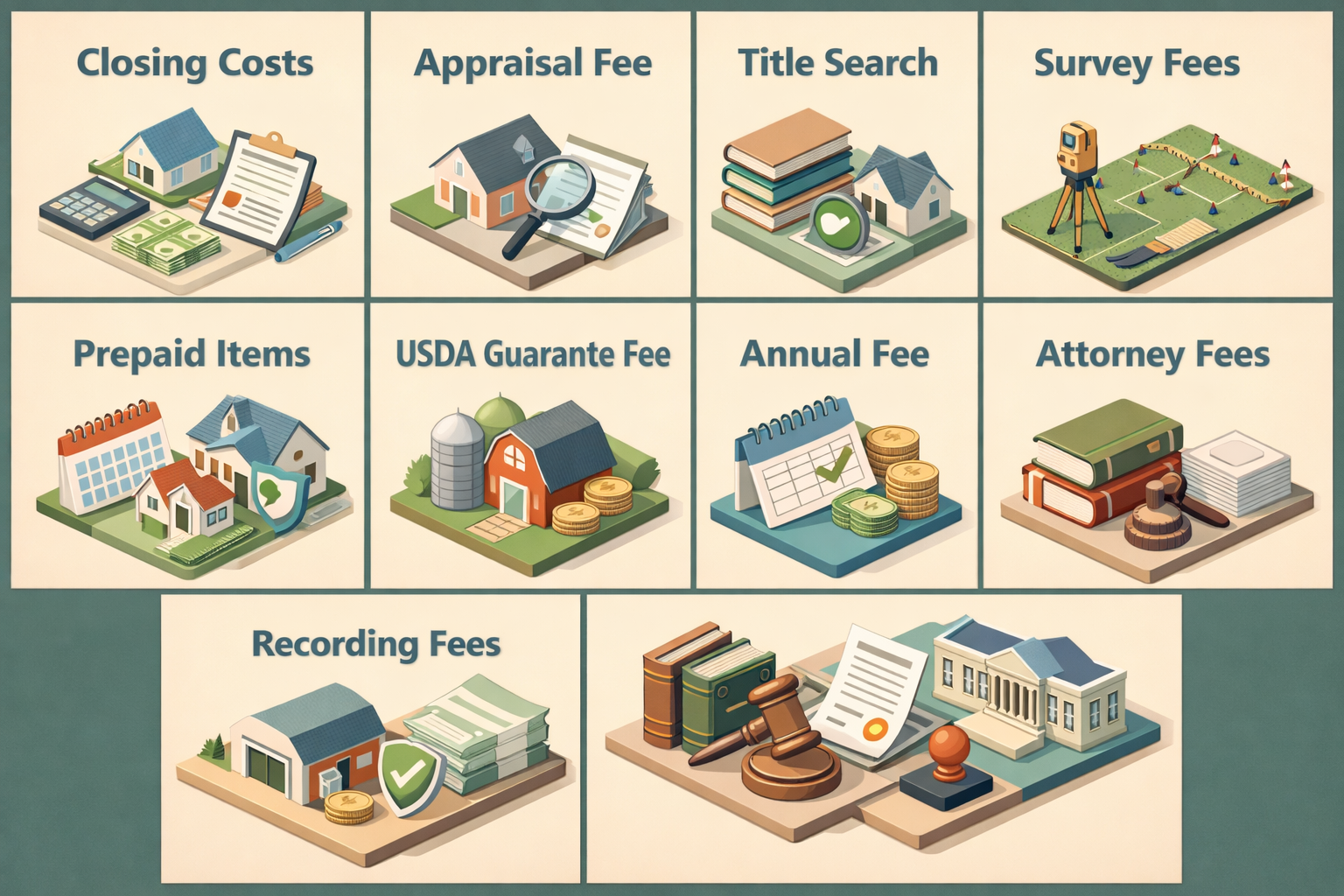
Here's a breakdown of common closing cost line items you might encounter with a USDA loan on a farm property:
- Loan origination fees: Charged by the lender to process and underwrite your loan, typically expressed as a percentage of the loan amount.
- Appraisal fee: Rural and farm properties often require specialized appraisers, which may result in higher fees than urban appraisals.
- Title search and title insurance: Ensures the property title is clear of liens or disputes — important on farm properties that may have complex ownership histories.
- Survey fees: Particularly relevant for farms, as lenders may require a land survey to confirm boundaries, especially when barns or other outbuildings are present near property lines.
- Credit report fees: A standard charge for pulling your credit history during the application process.
- Prepaid items: These include prepaid homeowners insurance, prepaid property taxes, and initial escrow deposits.
- USDA guarantee fee: USDA loans require an upfront guarantee fee, which is currently set at 1% of the loan amount. This can often be rolled into the loan balance rather than paid at closing.
- Annual fee: USDA also charges an ongoing annual fee (similar to mortgage insurance) that's typically 0.35% of the remaining loan balance, paid monthly.
- Attorney or settlement fees: In some states, an attorney must be present at closing, adding to your total costs.
- Recording fees: Charged by local government offices to officially record the deed and mortgage documents.
It's worth noting that the total USDA rural property closing expenses on a farm with a barn could be higher than a standard residential transaction due to the complexity of the property. Buyers should budget accordingly and request a detailed Loan Estimate from their lender early in the process.
How Rural Property Features Like Barns Affect the Appraisal Process
One of the most important — and sometimes surprising — aspects of buying a farm with a barn using a USDA loan is how the appraisal process works. USDA appraisals follow guidelines established by the agency, and appraisers must assess the property's market value while also confirming it meets minimum property standards.
When a barn is part of the transaction, the appraiser will evaluate whether the structure adds value to the property or presents potential risks. A well-maintained barn in good structural condition may contribute positively to the appraised value. On the other hand, a barn in poor condition could raise concerns about habitability standards or structural safety, which might lead to repair requirements before the loan can close.
Appraisers working on rural farm properties need to understand agricultural real estate markets, and not all appraisers have this specialization. As a result, finding a qualified rural property appraiser can sometimes take longer and cost more. It's not unusual for farm appraisals to run higher than those for standard suburban homes, especially when the property includes multiple outbuildings, significant acreage, or unique features like a working well and septic system.
Buyers should also be aware that USDA has acreage limitations for eligible properties. If the farmland exceeds what's considered typical for the area, or if the barn is clearly being used for commercial farming operations, the property may not qualify for USDA residential loan financing at all. This is an important eligibility check to confirm with your lender before investing time and money into the application process.
Inspections and Additional Costs Unique to Farm Properties
Beyond the appraisal, farm properties with barns often require additional inspections that can add to your overall USDA rural property closing expenses. These aren't always mandated by the USDA program itself, but lenders or local regulations may require them — and even when they're optional, skipping them could be a costly mistake.
Common inspections for farm properties include:
- Well water testing: Many rural farms rely on private well water rather than municipal water systems. USDA guidelines typically require that well water meet safe drinking water standards, and testing fees vary by location and lab.
- Septic system inspection: If the property uses a private septic system rather than public sewer, an inspection may be required to confirm it's functioning properly and meets local health codes.
- Structural inspection of the barn: While not always required by the lender, having a licensed inspector assess the barn for structural soundness is strongly advisable. Discovering major issues after closing can be extremely expensive.
- Pest and termite inspection: Older barns and rural structures can be particularly susceptible to pest damage. Some lenders require this inspection as a condition of financing.
- Environmental assessment: If the property has a history of agricultural chemical use, a lender may request an environmental review, especially if there's any concern about soil contamination near the barn or storage areas.
Each of these inspections carries its own fee, and together they can add several hundred to potentially over a thousand dollars to your closing costs. Budgeting for these upfront expenses gives you a clearer picture of your total investment and helps prevent surprises on closing day.
Strategies to Reduce Out-of-Pocket Closing Expenses on a USDA Farm Loan
One of the most attractive aspects of the USDA loan program is the flexibility it offers when it comes to managing closing costs. There are several legitimate strategies that may help reduce what you actually pay out of pocket at the closing table.
Roll Closing Costs Into the Loan
If the appraised value of the property is higher than the purchase price, USDA guidelines may allow you to finance your closing costs into the loan amount. This means you'd pay less upfront, though it does increase your overall loan balance and the amount of interest you'll pay over time. Your lender can help you determine whether this option is available based on the appraisal results.
Request Seller Concessions
In a buyer-friendly market, sellers may be willing to contribute toward your closing costs as part of the purchase agreement. USDA loans do permit seller concessions, and this can be a meaningful way to reduce your out-of-pocket expenses without increasing your loan balance. Negotiating seller-paid closing costs is worth exploring, particularly if the seller is motivated to close quickly.
Compare Lender Fees
Not all lenders charge the same origination fees or processing costs. Shopping around and comparing Loan Estimates from multiple USDA-approved lenders can reveal meaningful differences in what you'd pay at closing. Even small differences in lender fees can add up to significant savings on a farm property purchase.
Look Into USDA Grants and Assistance Programs
Depending on your income level and state of residence, there may be additional assistance programs — including USDA Rural Development grants — that can help cover closing costs or repair needs for eligible buyers. It's worth researching what programs are available in your specific area, as availability varies significantly by state and county.
USDA Loan Eligibility Checklist for Farm Properties with Outbuildings
Before diving deep into the closing cost planning process, it's wise to confirm that your target farm property actually qualifies for USDA financing. Here's a practical checklist to help guide your evaluation:
- Location eligibility: Use the USDA's official eligibility map to confirm the property falls within a designated rural area.
- Primary use is residential: The property must function primarily as a home, not as a commercial farm operation generating significant income.
- Acreage is typical for the area: The land size should be consistent with other comparable residential properties in the region.
- Barn and outbuildings are secondary structures: Barns and storage buildings should be considered ancillary to the home, not the primary purpose of the property.
- Property meets USDA minimum standards: The home and outbuildings must meet the agency's property condition requirements, or necessary repairs must be addressed before or at closing.
- Borrower meets income limits: USDA loans are income-restricted; your household income must fall within the program's limits for your area.
- Creditworthiness: While USDA doesn't mandate a specific minimum credit score in all cases, most approved lenders look for a score of at least 640 for streamlined processing.
Confirming eligibility early saves time and ensures that your closing cost planning is based on an accurate picture of what the transaction will actually involve.
Working with the Right Lender Makes All the Difference
Navigating the nuances of USDA rural property closing expenses — especially on a farm with a barn — is much easier when you're working with a lender who has real experience with rural and agricultural properties. Not all mortgage lenders are equally familiar with USDA guidelines as they apply to properties with outbuildings, acreage, and private utilities like wells and septic systems.
An experienced USDA lender will help you:
- Understand exactly what closing costs to expect on your specific property
- Identify opportunities to roll costs into the loan or negotiate seller contributions
- Navigate the appraisal and inspection process efficiently
- Avoid common pitfalls that can delay or derail rural property closings
- Confirm property eligibility before you invest time and money in an application
At LoanWise, our lending specialists understand that buying a farm is more than a financial transaction — it's a lifestyle decision. We're here to help you understand every line of your Loan Estimate, explore your options for minimizing closing costs, and move forward with confidence toward your rural property goals.
●Conclusion
Understanding what are closing costs for USDA loan on a farm with barn is a crucial step in preparing for your rural property purchase. From appraisal and inspection fees to the USDA guarantee fee and title costs, these expenses add up — but with the right planning and the right lender, they don't have to derail your journey. USDA rural property closing expenses are manageable when you know what to expect and take advantage of the program's flexibility. Whether you're buying your first lifestyle farm or expanding your rural footprint, LoanWise is ready to help you chart a clear, confident path to closing day. Reach out to a LoanWise mortgage specialist today to get started on your USDA farm loan journey.