
If you're thinking about refinancing your home loan, you've probably focused on the potential savings from a lower interest rate. But before you sign on the dotted line, it's important to understand one key question: what are closing costs for mortgage refinance? These upfront fees can add up quickly, and knowing what to expect will help you make a smarter financial decision. In this guide, we'll walk you through what's typically included, how much you might pay, and what you can do to keep those costs manageable.
Understanding the Basics of Refinance Closing Costs
When you refinance your mortgage, you're essentially replacing your existing home loan with a new one. Just like your original mortgage, this process involves a range of lender and third-party services — and those services come with fees. These fees are collectively known as closing costs, and they're due at the time you finalize your new loan.
Closing costs on a refinance typically cover a wide range of expenses, from lender origination charges to appraisal fees, title services, and government recording fees. While some costs are paid directly to your lender, others go to third-party service providers who play a role in the loan process.
It's worth noting that refinance closing costs are generally similar in structure to what you paid when you first purchased your home — though the amounts may differ. Understanding this upfront helps set realistic expectations and gives you a stronger foundation for comparing offers from multiple lenders.
Mortgage Refinance Fee Breakdown: What You're Actually Paying For
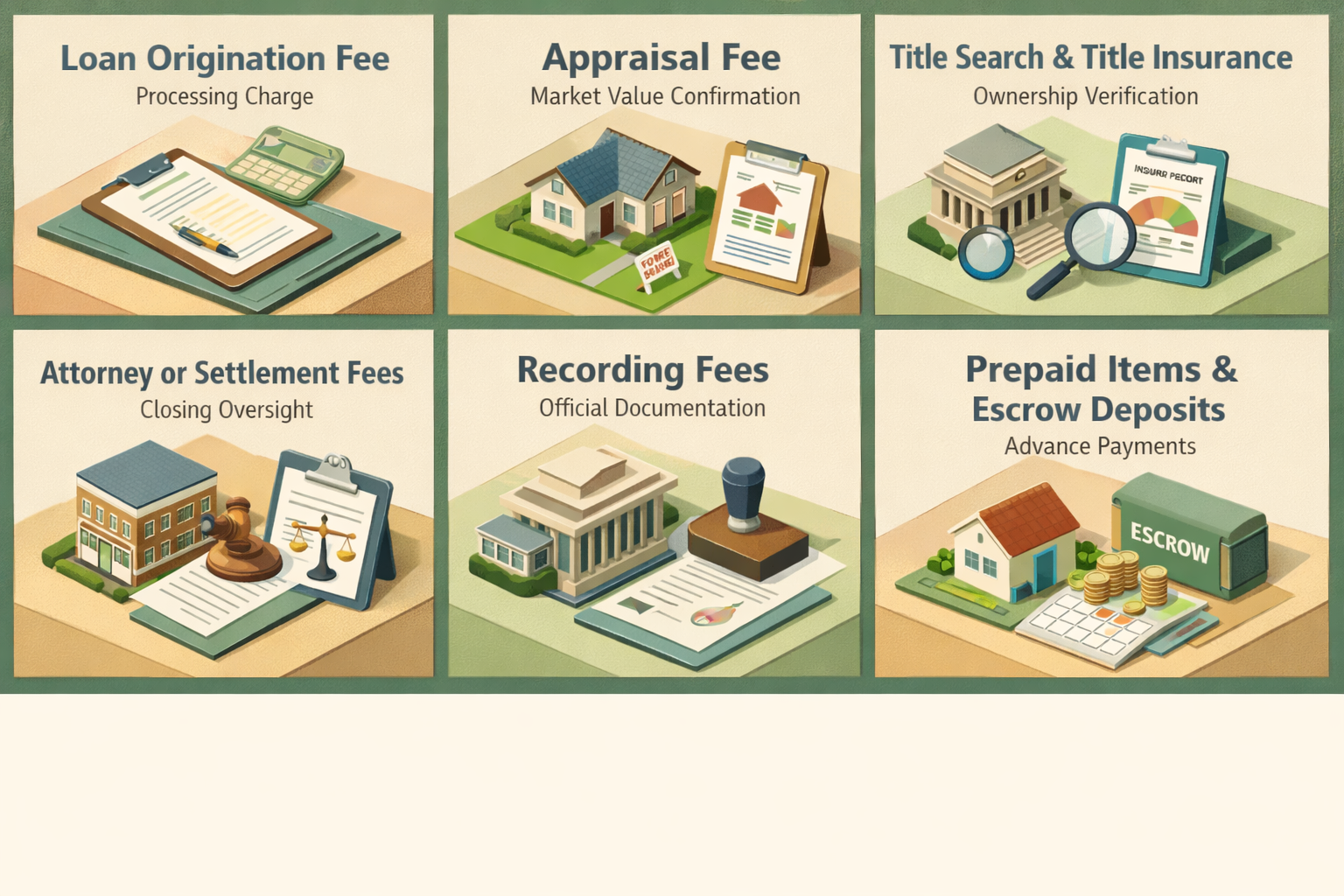
A mortgage refinance fee breakdown typically includes several distinct categories. Knowing what each fee covers can help you identify which ones are negotiable and which ones are fixed by third parties or government agencies.
- Loan Origination Fee: This is charged by the lender to process and underwrite your new loan. It's often expressed as a percentage of the loan amount, typically ranging from 0.5% to 1%, though this can vary by lender.
- Appraisal Fee: Most lenders require a fresh appraisal to confirm your home's current market value. This fee usually runs a few hundred dollars and is paid to a licensed appraiser.
- Title Search and Title Insurance: A title company reviews public records to verify ownership and checks for any liens on the property. Lender's title insurance is typically required, and you may also choose to purchase an owner's policy.
- Credit Report Fee: Lenders pull your credit report as part of the underwriting process. This is usually a modest charge but is generally non-refundable.
- Attorney or Settlement Fees: Depending on your state, a real estate attorney or settlement agent may be required to oversee the closing process.
- Recording Fees: Your local government charges a fee to officially record the new mortgage refinance in public records.
- Prepaid Items and Escrow Deposits: These may include prepaid homeowners insurance, property taxes, and mortgage interest owed between closing and your first payment due date.
Not every refinance will include all of these fees, and the amounts can vary significantly based on your location, loan size, and lender. Always review your Loan Estimate carefully when you receive it — this document is required by law and provides a standardized breakdown of all expected costs.
How Much Do Average Refinance Closing Costs Run?
One of the most common questions homeowners ask is: how much should I actually budget? While exact figures vary, average refinance closing costs often fall somewhere between 2% and 5% of the loan amount. For a $300,000 loan, that could mean anywhere from $6,000 to $15,000 in fees — a range wide enough to make comparison shopping essential.
Several factors influence where your costs land within that range:
- Loan size: Larger loans typically carry higher absolute costs, even if the percentage is similar.
- Location: State and local taxes, recording fees, and attorney requirements vary widely across the country.
- Lender policies: Different lenders charge different origination fees, and some may offer lower fees in exchange for a slightly higher interest rate.
- Property type: Investment properties and multi-unit homes may come with higher fees than a primary residence.
- Credit profile: Borrowers with stronger credit may qualify for better terms and potentially lower lender fees.
It's also worth knowing that some costs — like the appraisal, title insurance, and government fees — are largely outside your control. However, lender-specific fees such as origination charges, processing fees, and rate lock fees may be negotiable or vary from one lender to the next.
Do You Need to Pay Closing Costs When Refinancing?
This is a question many homeowners ask: do I need to pay closing costs when refinancing? The short answer is that closing costs are generally unavoidable — but how you pay them offers some flexibility.
Here are three common approaches:
- Pay out of pocket at closing: This is the most straightforward approach. You bring the full amount to the closing table, which means you start building equity in your new loan from day one.
- Roll costs into the loan balance: Many lenders allow you to add your closing costs to the new loan amount. This eliminates the need for upfront cash but increases your loan balance and the total interest you'll pay over time.
- No-closing-cost refinance: Some lenders offer this option, where closing costs are covered in exchange for a slightly higher interest rate. This can be appealing if you don't plan to stay in the home long-term, but it typically costs more over the life of the loan.
Each option has trade-offs, and the right choice depends on your financial goals, how long you plan to stay in the home, and your current cash position. A mortgage professional can help you run the numbers on each scenario so you can make a well-informed decision.
Smart Ways to Reduce Your Mortgage Closing Costs
If you're wondering how to reduce mortgage closing costs, there are several practical strategies worth exploring. While you may not be able to eliminate fees entirely, you might be able to lower them meaningfully with the right approach.
Shop Multiple Lenders
Lender fees can vary considerably from one institution to the next. Getting Loan Estimates from at least three lenders gives you a clear side-by-side comparison and negotiating leverage. Don't assume your current lender will automatically offer the best deal just because they already hold your loan.
Negotiate Lender Fees
Origination fees, processing fees, and underwriting charges are often negotiable, especially if you have a strong credit profile and a competitive offer from another lender. It doesn't hurt to ask — the worst a lender can do is say no.
Ask About Loyalty or Relationship Discounts
Some banks and credit unions offer fee discounts for existing customers. If you have a checking account, savings account, or other products with a lender, inquire about any relationship pricing that might apply to your refinance.
Time Your Closing Strategically
Closing at the end of the month can reduce the amount of prepaid interest you owe at closing, since you'll owe less interest for the days between closing and your first payment. It's a small but useful way to shave a bit off your upfront costs.
Review Your Loan Estimate Carefully
Always review the three-page Loan Estimate your lender is required to provide within three business days of your application. Look for any fees that seem unusual or inflated, and don't hesitate to ask for clarification or a revised estimate.
Breaking Even: How to Know If Refinancing Is Worth the Cost
Even after understanding what are closing costs for mortgage refinance, you'll want to know whether the refinance actually makes financial sense for your situation. That's where the break-even point becomes a valuable tool.
Your break-even point is the number of months it takes for your monthly savings to offset the closing costs you paid. Here's a simple way to calculate it:
- Determine your new monthly payment versus your current payment to find the monthly savings.
- Divide your total closing costs by the monthly savings amount.
- The result is approximately how many months it will take to recoup your costs.
For example, if your closing costs total $6,000 and your new loan saves you $200 per month, your break-even point would be around 30 months. If you plan to stay in the home longer than that, the refinance likely makes financial sense. If you expect to move sooner, you may end up paying more in fees than you save.
This calculation is a starting point. A qualified mortgage professional can help you factor in additional variables like tax implications, changes to your loan term, and the long-term cost of rolling fees into your loan balance.
●Conclusion
Refinancing your mortgage can be a smart financial move — but only when you go in with a clear picture of the costs involved. Understanding what are closing costs for mortgage refinance puts you in a better position to compare lenders, negotiate fees, and choose the payment structure that fits your goals. From the mortgage refinance fee breakdown to strategies on how to reduce mortgage closing costs, the more informed you are, the more confident you'll feel at the closing table. If you're ready to explore your refinance options, consider connecting with a LoanWise mortgage professional who can walk you through the numbers and help you find the most cost-effective path forward.