
If you're a first-time homebuyer or someone exploring more affordable financing options, an FHA loan can be a smart path toward homeownership. But when the property you've fallen in love with is a townhome governed by a homeowners association, the closing process can come with a few extra layers. Understanding what are closing costs for FHA loan on townhome with HOA is an essential step before you sign anything. From lender fees to HOA-specific charges, these costs can add up quickly — and being prepared makes all the difference.
Understanding FHA Loans and Why Townhomes Are a Popular Choice
FHA loans are government-backed mortgages insured by the Federal Housing Administration. They're especially popular among first-time homebuyers because they typically require a lower down payment — often as low as 3.5% for borrowers with qualifying credit scores — and offer more flexible credit requirements compared to conventional loans.
Townhomes have become an increasingly attractive option for buyers who want the feel of a single-family home but at a more manageable price point. They often fall within communities managed by a homeowners association, which maintains shared spaces and enforces community standards. While HOAs can add to your monthly expenses, they also tend to preserve property values and offer amenities that standalone homes may not provide.
When you combine an FHA loan with a townhome purchase in an HOA community, the financing process has some unique requirements. The FHA may need the HOA or the overall development to meet certain eligibility standards before the loan can be approved. This is worth knowing early in your home search so you don't fall in love with a property that may not qualify.
What Are Closing Costs for FHA Loan on Townhome With HOA: A Full Breakdown
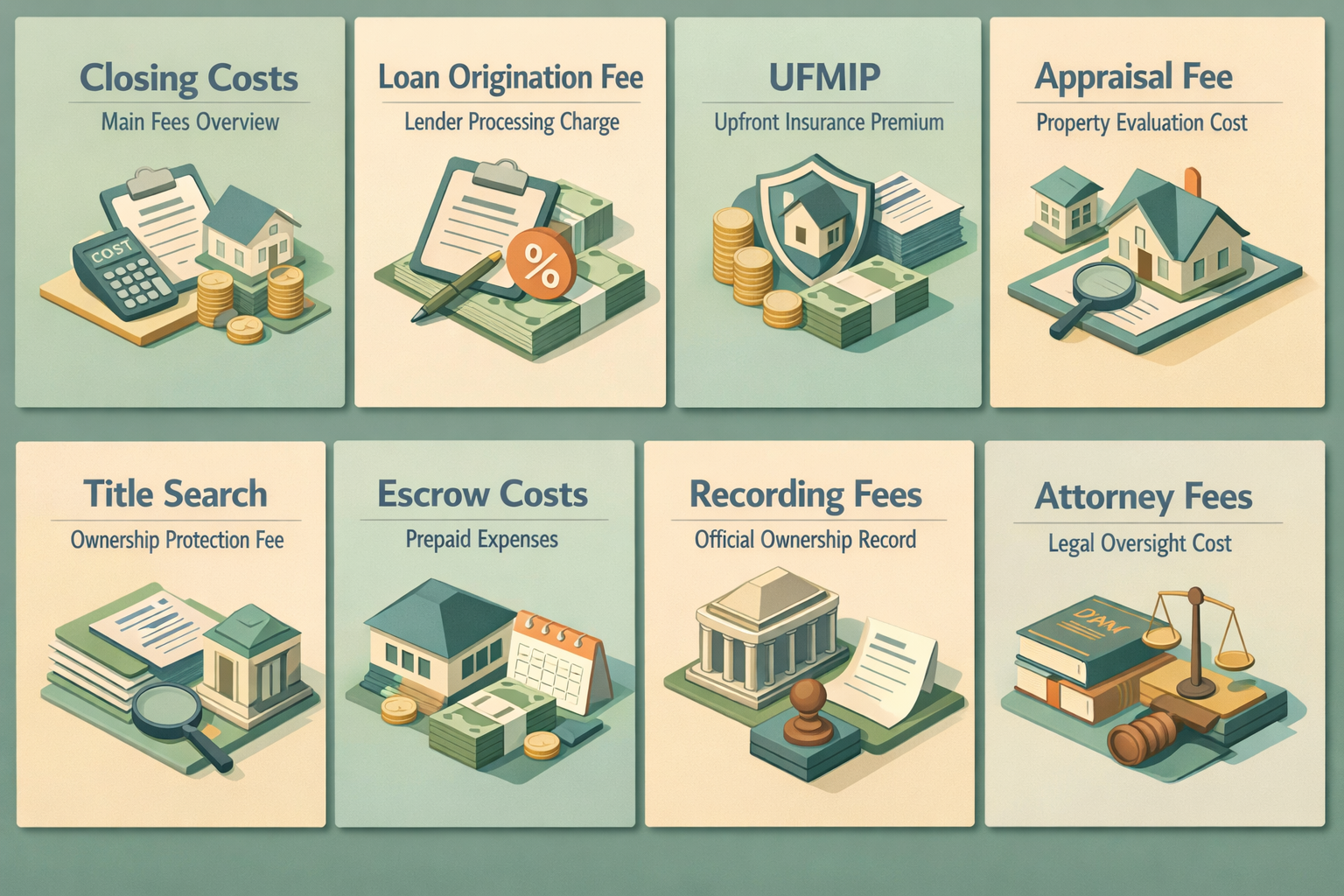
Closing costs are the fees and expenses you pay at the end of a real estate transaction, on top of your down payment. For an FHA loan on a townhome with an HOA, these closing costs for FHA loan situations typically range from about 2% to 6% of the loan amount, though the exact figure depends on your location, lender, loan size, and property specifics.
Here's a look at the main categories of closing costs you can generally expect:
- Loan Origination Fee: This is what the lender charges to process your loan application. It's often expressed as a percentage of the loan amount, typically around 0.5% to 1%, though it may vary by lender.
- FHA Upfront Mortgage Insurance Premium (UFMIP): FHA loans require an upfront mortgage insurance premium, which is currently set at 1.75% of the base loan amount. This can be rolled into the loan or paid at closing.
- Appraisal Fee: An FHA-approved appraiser must evaluate the property. FHA appraisals tend to be more thorough than conventional ones, and the fee may be slightly higher as a result.
- Credit Report Fee: Lenders pull your credit history as part of the underwriting process, and this fee is typically passed along to the borrower.
- Title Search and Title Insurance: These protect both you and the lender against potential disputes about property ownership. Title insurance is a one-time fee paid at closing.
- Escrow and Prepaid Costs: You'll likely need to prepay a portion of your homeowner's insurance, property taxes, and mortgage interest. These funds go into an escrow account managed by your lender.
- Recording Fees: Local governments charge fees to officially record the change of ownership in public records.
- Attorney or Settlement Fees: Depending on your state, you may need a real estate attorney to oversee the closing process.
Each of these costs applies whether you're buying a single-family home or a townhome. However, when an HOA is involved, there are additional line items that may appear on your Closing Disclosure.
HOA-Specific Fees That Can Appear at Closing
When purchasing a townhome in an HOA community, you may encounter a set of fees that are unique to that type of property. These FHA loan fees townhome HOA situations can catch buyers off guard if they haven't done their homework ahead of time.
- HOA Transfer Fee: This is charged by the HOA to transfer records and membership from the seller to the buyer. The amount varies widely by community but can range from a nominal fee to several hundred dollars.
- HOA Capital Contribution or Move-In Fee: Some associations require new owners to contribute to a reserve fund upon joining. This is separate from your ongoing monthly dues.
- HOA Disclosure Documents Fee: Before closing, you're entitled to receive documents that outline the HOA's rules, finances, and reserve status. The HOA or a management company may charge a fee to prepare and deliver these documents.
- Prorated HOA Dues: Depending on when in the month you close, you may owe a prorated portion of the monthly HOA dues. This is typically calculated from your closing date through the end of the month.
- HOA Certification Fee: For FHA loans specifically, lenders may require documentation confirming that the HOA meets FHA eligibility guidelines. Some HOAs or management companies charge a fee to prepare this certification.
It's worth requesting a full breakdown of HOA fees from the seller or listing agent early in the process. You'll also want to confirm that the townhome's HOA is on the FHA-approved list or can otherwise meet FHA standards, since this can affect whether your loan is approved at all.
FHA Approval Requirements for HOA Communities and Townhomes
One factor that distinguishes FHA financing for townhomes from single-family home purchases is the requirement that the HOA community may need to meet certain FHA standards. While the rules have evolved over the years — and lenders can sometimes obtain spot approvals for individual units — it's still important to verify eligibility before you get too far in the process.
Generally speaking, FHA may look at factors such as:
- The percentage of units in the development that are owner-occupied versus rented out
- Whether the HOA has adequate financial reserves
- Whether there are any pending or active lawsuits involving the HOA
- The concentration of ownership — meaning whether one entity owns too many units in the development
If the townhome community doesn't currently meet FHA guidelines, it's possible that the lender could pursue a single-unit approval, sometimes called a spot approval. However, this process adds time and could involve additional documentation fees. It's worth discussing this with your loan officer early so there are no last-minute surprises.
Working with an experienced FHA lender who is familiar with townhome and HOA transactions can make a significant difference. They'll know what to look for and how to structure the loan to keep things moving forward efficiently.
How to Estimate and Prepare for Your Total Closing Costs
One of the most practical things you can do as a homebuyer is request a Loan Estimate from your lender as early as possible. Under federal law, lenders are required to provide this document within three business days of receiving your loan application. The Loan Estimate breaks down all anticipated closing costs in a standardized format, making it easier to compare offers from multiple lenders.
Here are a few strategies that may help you manage or reduce your FHA closing costs on a townhome with an HOA:
- Negotiate seller concessions: In some markets, sellers may be willing to cover a portion of your closing costs. FHA guidelines typically allow sellers to contribute up to 6% of the sale price toward the buyer's closing costs, which could meaningfully reduce your out-of-pocket expenses.
- Ask about lender credits: Some lenders offer credits that offset closing costs in exchange for accepting a slightly higher interest rate. This can be useful if you're short on cash at closing but want to minimize upfront expenses.
- Shop around for third-party services: For certain fees — like title insurance and settlement services — you may have the right to shop around and choose your own provider. Your Loan Estimate will identify which services fall into this category.
- Look into down payment assistance programs: Some state and local programs designed to help first-time homebuyers may also cover a portion of closing costs. These programs vary widely by location, so it's worth checking what's available in your area.
Being proactive and asking questions can save you hundreds or even thousands of dollars at the closing table. To plan your budget effectively, make sure you account for all the closing costs involved well before signing day.
Reading Your Closing Disclosure Before Signing Day
Three business days before your scheduled closing, you should receive a Closing Disclosure. This document mirrors the format of your Loan Estimate and shows the final, actual figures for all fees and costs. It's critical that you review this document carefully and compare it to your original Loan Estimate.
Pay special attention to any fees that may have changed. While some costs are allowed to increase between the Loan Estimate and closing, others are subject to strict tolerance limits under federal rules. If you notice a charge that seems unexpected — especially any HOA-related fees or lender charges — don't hesitate to ask your loan officer for an explanation before you sign.
For townhome buyers with HOA communities, the Closing Disclosure may include line items you haven't encountered before. HOA transfer fees, capital contributions, and prorated dues can all appear here. Having already researched these costs beforehand means you won't be caught off guard when reviewing the final numbers.
●Conclusion
Understanding what are closing costs for FHA loan on townhome with HOA is one of the most important steps in preparing for a successful home purchase. From standard lender fees and FHA mortgage insurance premiums to HOA-specific charges and prorated dues, the total cost at closing can vary quite a bit depending on your property and community. The good news is that with the right preparation, transparency from your lender, and a clear understanding of what to expect, you can move forward with confidence. If you're ready to explore your FHA loan options for a townhome, connect with a knowledgeable loan advisor at LoanWise today and get the guidance you deserve.