Purchasing a manufactured home with land is an increasingly popular path to homeownership, especially for buyers looking for affordable alternatives to traditional site-built homes. If you're planning to finance this type of purchase with government-backed financing, you may be asking: what are closing costs for FHA loan on manufactured home with land? The answer involves several moving parts, including mortgage insurance premiums, title fees, and land-related charges that may differ from a standard home purchase. Understanding these costs upfront can help you plan your budget, avoid surprises at the closing table, and make the most of your FHA financing opportunity.
How FHA Loans Apply to Manufactured Homes with Land
The Federal Housing Administration (FHA) insures loans for manufactured homes through its Title II program, which allows buyers to finance both the home and the land it sits on as a single real property transaction. This is an important distinction. When a manufactured home is permanently affixed to a foundation and titled as real estate rather than personal property, it may qualify for the same type of FHA mortgage used for site-built homes.
To be eligible, the manufactured home must meet specific standards, including being built after June 15, 1976, and bearing a HUD certification label. The home must also be placed on a permanent foundation that meets FHA requirements, and the land must either be owned by the borrower or purchased as part of the transaction. When land is included in the purchase, the loan structure becomes more comprehensive, and so do the associated FHA loan fees for a manufactured home.
It's worth noting that FHA Title I loans also exist for manufactured homes, but they typically apply to homes on leased land or homes not yet classified as real property. For buyers who are purchasing land alongside the home, the Title II route is generally more common and offers longer loan terms and potentially lower interest rates.
Breaking Down the Closing Costs You Can Expect
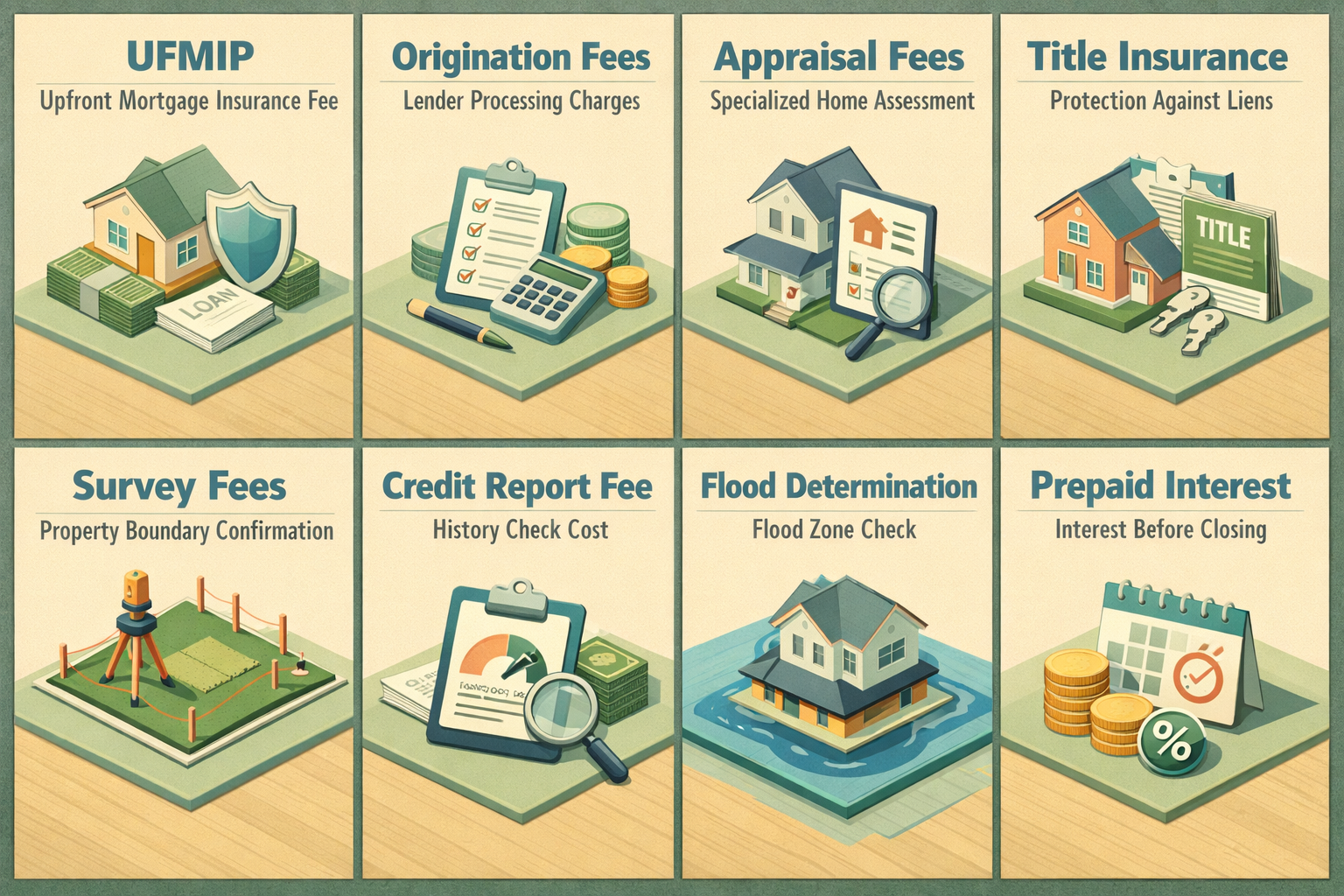
So, what are closing costs for FHA loan on manufactured home with land in practical terms? While the exact amounts will vary based on your lender, location, and loan size, there are several standard fee categories that most borrowers will encounter.
Upfront Mortgage Insurance Premium (UFMIP)
One of the most significant FHA-specific costs is the Upfront Mortgage Insurance Premium, commonly referred to as UFMIP. This fee is currently set at 1.75% of the base loan amount and is charged on virtually all FHA loans. It can be rolled into the loan balance rather than paid out of pocket at closing, which many borrowers choose to do. However, it does increase the total amount financed.
Origination and Lender Fees
Lenders typically charge an origination fee to process and underwrite your loan. This fee may be expressed as a flat dollar amount or as a percentage of the loan — often around 1% of the loan amount, though it can vary. On a manufactured home with land purchase, some lenders may charge slightly higher origination fees due to the added complexity of the transaction.
Appraisal Fees
FHA loans require a specialized appraisal performed by an FHA-approved appraiser. For manufactured homes, this appraisal must assess both the home and the land as a combined unit. These appraisals can cost more than a standard home appraisal, potentially ranging from a few hundred dollars to over a thousand, depending on the property's location and complexity.
Title Insurance and Title Search
Because land is involved in the purchase, title-related fees tend to be more involved. You'll typically need both a lender's title insurance policy and, optionally, an owner's title insurance policy. A title search must also confirm that the land is free of liens or encumbrances. These combined costs could range from several hundred to a few thousand dollars, depending on state regulations and property value.
Survey Fees
When purchasing land, lenders may require a land survey to confirm property boundaries and ensure there are no encroachments. Survey costs vary widely by region and lot size but should be factored into your overall closing cost estimate.
Additional FHA Loan Fees for Manufactured Homes You Should Know
Beyond the core fees described above, there are several other charges that commonly appear on a closing disclosure for a manufactured home with land purchase financed through an FHA loan fees.
- Credit report fee: Lenders pull your credit history as part of the underwriting process. This typically costs between $25 and $50 and is often charged at application.
- Flood determination fee: The lender must determine whether the property sits in a flood zone. This is a relatively minor cost but is almost always required.
- Recording fees: Local government offices charge fees to record the deed and mortgage documents. These vary by county and state.
- Prepaid interest: You'll likely owe interest from the closing date through the end of the month. This is a prepaid item, not a true fee, but it does affect the cash needed at closing.
- Homeowner's insurance: FHA loans require that you maintain homeowner's insurance, and lenders typically require proof of the first year's premium paid at or before closing.
- Property tax escrow: Lenders usually require an initial escrow deposit for property taxes. This can add several months' worth of taxes to your upfront costs at closing.
- Foundation certification: For manufactured homes, an engineer may need to certify that the permanent foundation meets FHA guidelines. This inspection and certification can cost several hundred dollars and is often required before the loan is approved.
Altogether, these costs can add up meaningfully. Borrowers should request a Loan Estimate from their lender early in the process, which provides an itemized breakdown of expected closing costs within three business days of submitting a loan application.
Understanding Land Purchase Costs Within an FHA Loan Transaction
When you're completing a land purchase with an FHA loan as part of a manufactured home transaction, the land itself introduces unique financial considerations. Unlike a standard home purchase where you're simply buying an existing structure on an already-established lot, a combined land-and-home transaction may involve additional due diligence requirements.
If the land was already owned by the borrower before the home was placed on it, the land's equity may sometimes be used to help satisfy the down payment requirement. This can be a significant advantage for buyers who acquired land separately. However, FHA has specific rules about how land equity is calculated and applied, so it's important to confirm the details with your lender.
If the land is being purchased at the same time as the home, the total transaction value — both home and land — will be used to calculate the loan amount. FHA loan limits apply to the combined value, and these limits vary by county. Buyers in higher-cost areas may find that the combined value of the manufactured home and land approaches or exceeds local FHA loan limits, which could affect eligibility.
It's also worth noting that raw or undeveloped land may require improvements such as well installation, septic systems, or utility connections before the home can be occupied. These infrastructure costs are typically not covered by the FHA mortgage itself and would need to be paid separately, although some construction loan products may accommodate them.
How Total Closing Costs Are Estimated and What to Expect
For most FHA loans, closing costs — excluding the UFMIP — typically range from roughly 2% to 5% of the loan amount, though this figure can vary based on location, loan size, and lender. On a manufactured home with land, costs could lean toward the higher end of that range due to the additional fees discussed, such as foundation certification, land survey, and more comprehensive title work.
To put this in practical terms, if you're financing a $150,000 manufactured home and land purchase, you might expect to pay anywhere from approximately $3,000 to $7,500 or more in closing costs, in addition to your down payment. Your FHA down payment requirement is typically 3.5% if your credit score is 580 or higher, or 10% if your score falls between 500 and 579.
One helpful strategy is to ask the seller to contribute toward closing costs. FHA guidelines allow sellers to contribute up to 6% of the purchase price toward the buyer's closing costs and prepaid items. This kind of seller concession can meaningfully reduce the amount of cash you need to bring to closing.
Another option is lender credits. In exchange for accepting a slightly higher interest rate, your lender may credit you a sum that offsets some or all of your closing costs. This approach reduces upfront expenses but increases your monthly payment and total interest paid over the life of the loan, so it's a trade-off worth evaluating carefully.
Tips to Reduce Out-of-Pocket Expenses at Closing
Managing closing costs doesn't have to be overwhelming. There are several practical strategies that homebuyers financing manufactured homes with land through FHA loans may find useful.
- Shop multiple lenders: Origination fees and lender-specific charges can vary significantly from one institution to another. Comparing Loan Estimates from at least two or three lenders can help you identify the most competitive offer.
- Ask about down payment assistance programs: Many state and local housing finance agencies offer grants or second mortgage programs that can help cover down payments and closing costs for eligible buyers. Some programs are specifically designed for manufactured housing.
- Negotiate with the seller: As mentioned, sellers can contribute up to 6% of the purchase price toward your closing costs. In a buyer-friendly market, this negotiation is often achievable.
- Roll the UFMIP into the loan: Rather than paying the 1.75% upfront mortgage insurance premium out of pocket, most borrowers choose to finance it into the loan balance. This reduces immediate cash outlay at closing.
- Review your Loan Estimate carefully: Comparing the Loan Estimate to the final Closing Disclosure allows you to catch any unexpected fee increases before you sign. Certain fees are not allowed to increase at all, while others may only increase within set tolerances.
Being proactive and informed throughout the process can make a meaningful difference in how much cash you ultimately need on closing day. Managing out-of-pocket expenses wisely is key to a smooth closing experience.
●Conclusion
Understanding what are closing costs for FHA loan on manufactured home with land is an essential step in planning a successful home purchase. From the upfront mortgage insurance premium and appraisal fees to foundation certification and land survey costs, the total amount due at closing can be significant — but it's manageable with the right preparation. By requesting a Loan Estimate early, comparing lenders, exploring assistance programs, and negotiating with the seller, you can take meaningful steps to reduce your out-of-pocket expenses. If you're ready to explore your FHA financing options for a manufactured home and land purchase, speaking with a knowledgeable mortgage professional is a great place to start. LoanWise is here to help you navigate every step of the process with confidence.