If you're considering purchasing a duplex, triplex, or four-unit property with government-backed financing, one of your first questions is likely: what are closing costs for FHA loan on a multi-family property? It's a smart question to ask early in the process, because these expenses can add up quickly and catch unprepared buyers off guard. FHA loans are well-known for their lower down payment requirements and flexible credit guidelines, making them a popular choice for first-time homebuyers and real estate investors alike. But understanding the full cost of closing — beyond the down payment — is essential to budgeting accurately and moving forward with confidence. This guide walks you through every major fee category, explains who typically pays what, and offers practical strategies to help keep your costs manageable.
Why FHA Loans Appeal to Multi-Family Buyers
FHA loans, backed by the Federal Housing Administration, are designed to make homeownership more accessible. One feature that makes them especially attractive for multi-family purchases is that buyers can use rental income from the other units to help qualify for the loan. This means a buyer purchasing a duplex could potentially offset a portion of their mortgage payment with tenant rent, making the investment more financially sustainable from day one.
FHA financing is available for one- to four-unit residential properties, provided the borrower occupies one of the units as their primary residence. This owner-occupancy requirement is a key distinction between FHA multi-family home loans and purely investment-focused commercial products. It opens the door for buyers who want to build wealth through real estate while still benefiting from favorable loan terms.
That said, it's important to understand that the benefits of FHA financing come alongside specific costs and requirements — and closing costs are a significant piece of that puzzle. Knowing what to expect helps you negotiate smarter, plan your finances better, and avoid surprises at the settlement table.
Breaking Down What Are Closing Costs for FHA Loan on a Multi-Family Property
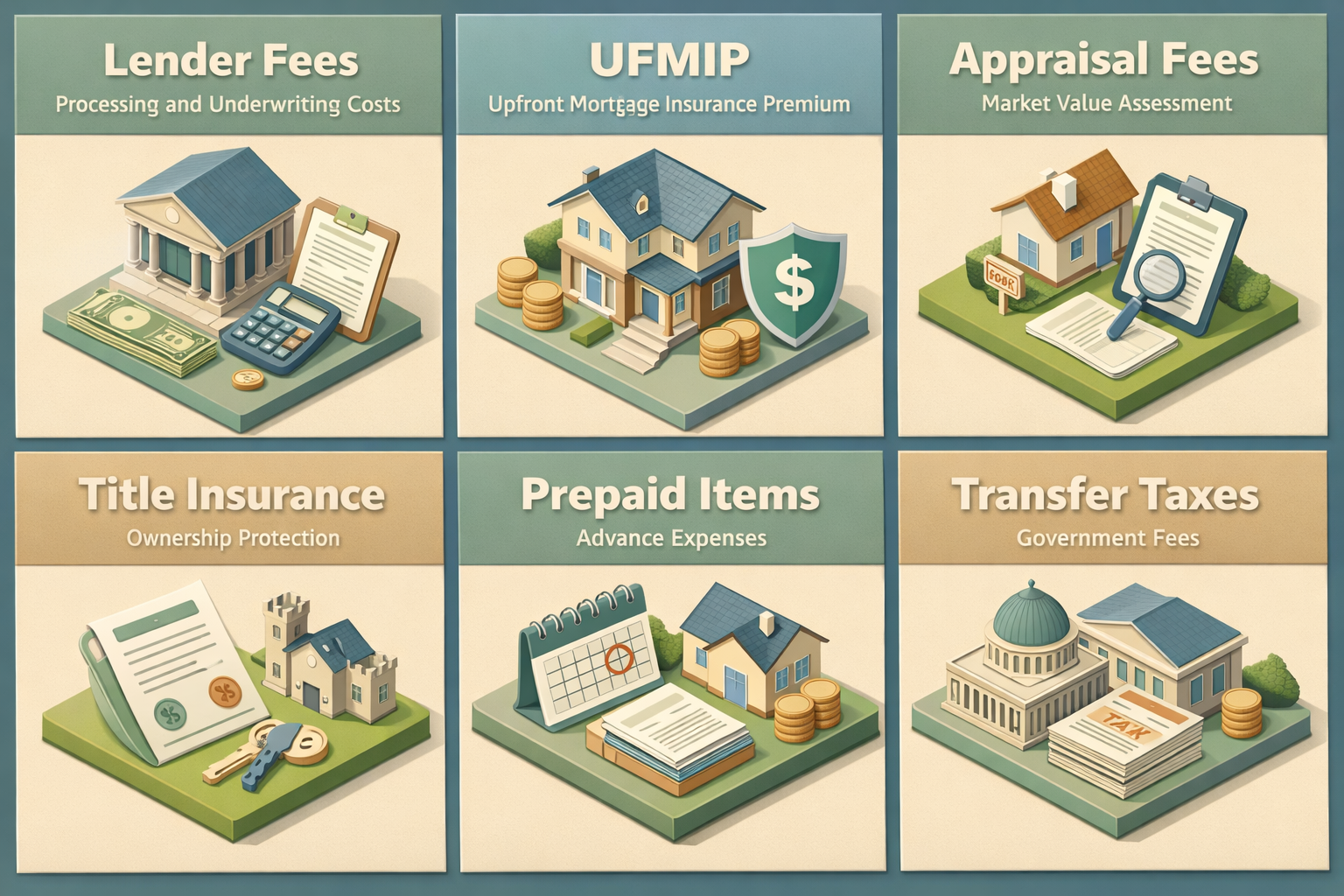
Closing costs on an FHA loan for a multi-family property typically include a mix of lender fees, third-party service charges, prepaid expenses, and government-mandated costs. While the exact amounts vary by lender, location, and purchase price, buyers can generally expect total closing costs to fall somewhere between 2% and 6% of the loan amount. On a larger multi-family purchase, that range can represent a substantial dollar figure, so breaking each component down is worthwhile.
Lender Origination and Processing Fees
Lenders charge fees to process, underwrite, and fund your loan. These may include an origination fee, an underwriting fee, and sometimes a processing fee. The origination fee is often expressed as a percentage of the loan amount. These fees compensate the lender for the administrative work involved in evaluating and approving your application. It's worth shopping multiple lenders and comparing Loan Estimates to understand how these fees differ from one institution to another.
FHA Upfront Mortgage Insurance Premium
One of the most notable costs specific to FHA loans is the Upfront Mortgage Insurance Premium (UFMIP). This is currently set at 1.75% of the base loan amount and is required on virtually all FHA loans regardless of the down payment size. For example, on a $400,000 loan, the UFMIP would be $7,000. Borrowers have the option to roll this cost into the loan rather than paying it out of pocket at closing, which can ease the immediate cash burden — though it does increase the total loan balance.
Appraisal and Inspection Fees
FHA loans require an FHA-approved appraisal, which evaluates both the market value and the physical condition of the property. For multi-family homes, this appraisal tends to be more involved than for single-family properties, as the appraiser must assess each unit and evaluate the income potential of the property. As a result, appraisal fees for multi-family properties are often higher than those for single-family homes. Buyers should also budget for home inspections, which, while not always required by the lender, are strongly recommended to identify any structural or mechanical issues before purchase.
Title Insurance and Settlement Fees
Title insurance protects both the lender and the buyer against claims or disputes over property ownership. Lender's title insurance is typically required on FHA loans, while owner's title insurance is optional but advisable. Settlement or closing fees are charged by the title company or escrow agent who coordinates the closing process. In multi-family transactions, these costs may be slightly elevated due to the additional complexity of the transaction.
Prepaid Items and Escrow Reserves
Prepaid costs are not technically fees — they're expenses you're paying in advance. These typically include prepaid homeowner's insurance, prepaid property taxes, and prepaid interest for the days between closing and your first mortgage payment. Lenders also require borrowers to fund an escrow account at closing to ensure future insurance and tax payments can be made. For multi-family properties, property taxes tend to be higher, which can increase the escrow reserves required at closing.
Government Recording and Transfer Taxes
When a property changes hands, state and local governments typically charge recording fees and transfer taxes to document the transaction in the public record. These costs vary significantly by location. In some states, transfer taxes are minimal; in others, they can represent a meaningful percentage of the purchase price. As a buyer, you'll want to research your specific state and county requirements early in the process so you're not caught off guard.
Some municipalities also charge separate deed recording fees. While these are generally modest, they add to the cumulative total of your FHA multi-family home purchase expenses. Your title company or real estate attorney can provide a detailed breakdown of what applies in your area.
Who Pays FHA Closing Costs on a Multi-Family Purchase
One of the more flexible aspects of FHA loan guidelines is that sellers are permitted to contribute toward the buyer's closing costs. These are known as seller concessions, and FHA guidelines allow sellers to contribute up to 6% of the sale price toward the buyer's closing costs and other financing costs. This can be a powerful negotiating tool, especially in a buyer's market where sellers may be more willing to offer concessions to close a deal.
Lenders may also offer what's called a lender credit, where they agree to cover some or all of your closing costs in exchange for a slightly higher interest rate. This can be a useful option if you're cash-constrained at closing, though it's important to evaluate the long-term trade-off between a higher rate and upfront savings.
Additionally, some state and local down payment assistance programs may also help cover closing costs for qualifying buyers. These programs vary widely by location and eligibility, so it's worth researching what's available in your area before assuming you'll need to cover everything out of pocket.
How Multi-Family Properties Differ from Single-Family FHA Closings
While the core structure of FHA closing costs is the same across property types, there are a few key differences buyers should anticipate when purchasing a multi-family home versus a single-family residence.
- Higher appraisal costs: As mentioned, FHA appraisals for multi-unit properties are more detailed and typically cost more than those for single-family homes.
- Larger escrow reserves: Higher property taxes and insurance premiums on multi-family homes mean you'll likely need to fund a larger escrow account at closing.
- Rental unit inspections: Some lenders may require additional inspections of individual units to verify habitability and compliance with FHA property standards.
- Higher loan amounts: FHA loan limits for multi-family properties are higher than for single-family homes. This means fees calculated as a percentage of the loan amount — such as the UFMIP — will result in larger absolute dollar figures.
- Complex title considerations: Multi-unit properties may have more complex title histories, potentially increasing title search and insurance costs.
Understanding these distinctions helps you build a more accurate closing cost estimate and avoid underestimating your total cash-to-close requirement.
Practical Strategies to Manage Your FHA Multi-Family Closing Costs
Fortunately, there are several approaches buyers can use to reduce or manage FHA closing costs on a multi-family property purchase. None of these are guaranteed solutions, but each one is worth exploring with your lender and real estate agent.
Shop Around for Lenders and Service Providers
Not all lenders charge the same fees, and the same is true for title companies, appraisers, and attorneys. Comparing Loan Estimates from multiple lenders can reveal meaningful differences in origination fees and other costs. Similarly, in states that allow buyers to choose their own title company, shopping for competitive rates can generate real savings.
Negotiate Seller Concessions
Including a seller concession request in your purchase offer is one of the most direct ways to reduce your out-of-pocket closing costs. Work with your real estate agent to structure a competitive offer that still leaves room for concessions, particularly if the property has been on the market for a while.
Roll the UFMIP Into the Loan
Rather than paying the 1.75% Upfront Mortgage Insurance Premium in cash at closing, most FHA borrowers choose to finance it as part of the loan balance. This preserves cash for other closing expenses and move-in costs without significantly impacting monthly payments in the short term.
Request a Lender Credit
If you're comfortable accepting a slightly higher interest rate, asking your lender for a credit toward closing costs may make sense — especially if you plan to refinance or sell within a few years before the rate difference adds up significantly.
Explore Local Assistance Programs
Many state housing finance agencies and local nonprofits offer grants or forgivable loans specifically designed to help buyers cover closing costs. Eligibility requirements vary, but these programs can provide meaningful relief for qualifying borrowers.
Reading Your Loan Estimate and Closing Disclosure
Once you apply for an FHA loan, your lender is required by law to provide a Loan Estimate within three business days. This standardized document outlines all projected closing costs, making it easier to compare offers from different lenders on an apples-to-apples basis. Pay close attention to Section A (origination charges), Section B (services you cannot shop for), and Section C (services you can shop for).
Before closing, you'll receive a Closing Disclosure at least three business days before your settlement date. This document shows the final, confirmed figures for all costs. Take time to compare it carefully against your Loan Estimate, and don't hesitate to ask your lender for clarification on any line item that seems unclear or has changed significantly.
For multi-family purchases, these documents are especially important because the higher loan amounts and additional property-specific costs can make the numbers more complex. Being an informed reader of these disclosures is one of the most valuable skills a homebuyer can develop.
●Conclusion
Understanding what are closing costs for FHA loan on a multi-family property is one of the most important steps you can take before making an offer. From the FHA Upfront Mortgage Insurance Premium and appraisal fees to prepaid expenses and title charges, FHA multi-family home purchase expenses can span several categories and vary based on your location and loan size. The good news is that with thoughtful planning, smart negotiation, and the right lending partner, many of these costs can be managed effectively. Whether you're a first-time homebuyer looking to house-hack or a seasoned investor expanding your portfolio, knowing your numbers in advance puts you in a much stronger position at the closing table. Ready to explore your FHA multi-family financing options? Connect with a LoanWise mortgage specialist today and get a personalized estimate of your total closing costs.