
If you own a home with an attached or detached in-law suite, you're sitting on a unique financial asset. Many homeowners in this situation wonder whether they can tap into their home's equity through a Home Equity Line of Credit — and the good news is that it's often very possible. However, understanding HELOC requirements for property with existing mother-in-law suite arrangements does come with some added layers of complexity. Lenders tend to look closely at how the suite is used, whether it generates rental income, and how the property is classified overall. This guide walks you through everything you need to know so you can approach the process with confidence.
What a HELOC Is and How It Works for Homeowners
A Home Equity Line of Credit, or HELOC, is a revolving line of credit secured by the equity you've built in your home. Think of it like a credit card, but backed by your property. During the draw period — which typically lasts around 10 years — you can borrow funds up to your approved limit, repay them, and borrow again. After that comes the repayment period, where you pay down the outstanding balance with interest.
HELOCs are popular among homeowners because they tend to offer lower interest rates compared to personal loans or credit cards, and the funds can be used for a wide variety of purposes. Common uses include home renovations, debt consolidation, education expenses, or even investment opportunities. For homeowners with a mother-in-law suite, a HELOC might fund upgrades to the suite itself or other improvements that boost the property's overall value.
The amount you can borrow through a HELOC typically depends on your home's equity, your outstanding mortgage balance, and the lender's combined loan-to-value (CLTV) ratio limits. Most lenders allow borrowers to access up to 80% to 85% of their home's appraised value, minus what they still owe on their first mortgage. The more equity you've built, the larger your potential credit line.
How a Mother-in-Law Suite Affects Your Property's Classification
One of the first things lenders will examine when you apply for a HELOC on a property with a mother-in-law suite is how the home is classified. This matters more than many homeowners realize. A property with a separate living unit — complete with its own kitchen, bathroom, and entrance — may be treated differently than a standard single-family home.
Lenders and appraisers may classify your home as a single-family residence with an accessory dwelling unit (ADU), or in some cases, as a two-family or multi-unit property. The distinction can affect the loan terms, the required equity percentage, and even which lenders are willing to work with you. Properties classified as multi-unit typically face stricter underwriting guidelines and may require a larger equity cushion.
It's worth noting that local zoning laws and permit status also play a role. If the mother-in-law suite was built with proper permits and is recognized by the municipality, lenders are generally more comfortable treating the property as a compliant single-family home with an ADU. Unpermitted units, on the other hand, could raise red flags during the appraisal process and may complicate approval.
- Permitted ADU: More likely to be treated as a standard single-family property with favorable HELOC terms.
- Unpermitted suite: May trigger additional scrutiny, adjusted appraisal values, or outright denial from some lenders.
- Two-unit classification: Could require meeting investment property guidelines, including higher equity requirements.
Key Qualification Criteria Lenders Typically Evaluate
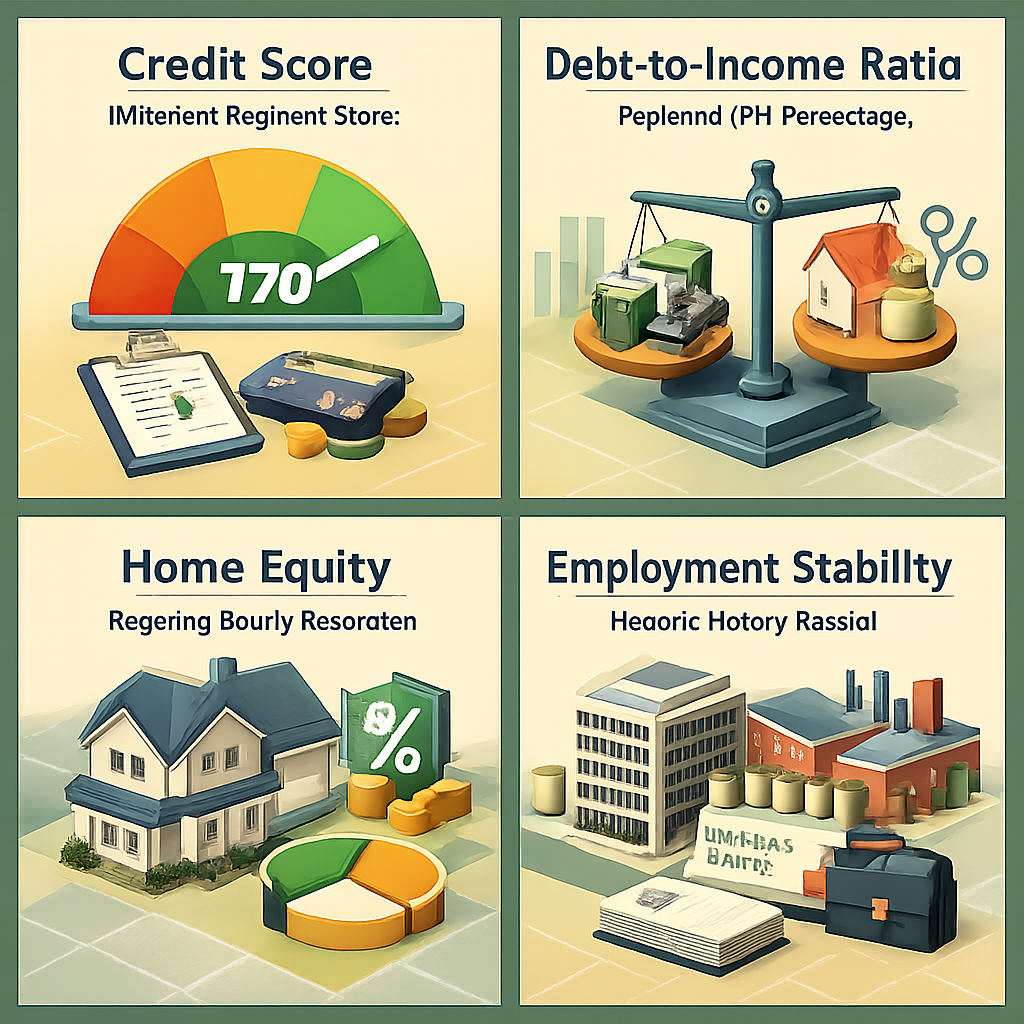
Fully understanding HELOC requirements for property with existing mother-in-law suite arrangements means knowing what lenders look at beyond just the property itself. Your personal financial profile carries just as much weight as the condition and classification of your home.
Credit Score
Most lenders require a minimum credit score of around 620 to qualify for a HELOC, though many prefer scores of 700 or higher for the most competitive rates and terms. A stronger credit score signals to lenders that you manage debt responsibly, which is especially important when you're borrowing against your home.
Debt-to-Income Ratio
Your debt-to-income (DTI) ratio compares your monthly debt obligations to your gross monthly income. Lenders typically prefer a DTI at or below 43%, though some may go higher depending on other compensating factors. If you're carrying significant debt, reducing it before applying could improve your HELOC approval odds.
Home Equity
As mentioned earlier, most lenders want you to retain at least 15% to 20% of your home's value in equity after the HELOC is established. Properties with mother-in-law suites can sometimes appraise higher due to the additional living space, which may actually work in your favor when calculating available equity.
Employment and Income Stability
Lenders want to see a consistent income history, typically at least two years of stable employment or self-employment documentation. Income from the mother-in-law suite rental may also factor in, depending on how the lender treats it.
HELOC Requirements In-Law Suite Rental Income: What Lenders Want to See
One question that comes up often is whether rental income from a mother-in-law suite can help you qualify for a larger HELOC. The answer is: it depends on the lender and how the income is documented. When it comes to HELOC requirements in-law suite rental income scenarios, lenders generally fall into a few different camps.
Some lenders will count rental income from an ADU toward your qualifying income, potentially lowering your effective DTI ratio and allowing you to borrow more. However, they'll typically want to see solid documentation to support this. Commonly requested documents may include:
- Signed lease agreements showing the rental terms and monthly rent
- Rent payment history, such as bank statements showing deposits
- Schedule E from your federal tax returns, which reports rental income and expenses
- A history of at least one to two years of consistent rental income
Other lenders may be more conservative and choose not to count rental income at all, particularly if the rental arrangement is informal or undocumented. In these cases, you'd need to qualify based solely on your primary income sources.
It's also worth knowing that if the rental income is counted, lenders may apply a vacancy factor — typically around 25% — meaning they'll only credit you for 75% of the gross rental income to account for periods when the unit might sit empty. This is standard practice in the industry and helps ensure borrowers aren't overextended if a tenant moves out.
The Appraisal Process and How Your Suite Influences Property Value
Getting an accurate home appraisal is a critical step in any HELOC application, and it's especially nuanced when a mother-in-law suite is involved. The appraiser's job is to determine the fair market value of your property, and that valuation directly affects how much equity you can access.
A well-maintained, permitted in-law suite can add meaningful value to your home. Appraisers will typically look at comparable properties — often called comps — in your area that also have accessory units or additional living spaces. If such comps are available, your property may appraise at a premium, giving you more equity to borrow against.
However, if comps are scarce or if the suite lacks standard amenities, the value contribution might be less significant than you'd hope. Appraisers are trained to be objective, and they won't assign speculative value to features the local market hasn't validated.
Before your appraisal, it may be helpful to:
- Ensure the suite is clean, functional, and in good repair
- Gather documentation of any permitted improvements or renovations
- Ask your real estate agent or lender about recent sales of comparable properties in your area
A higher appraised value can meaningfully expand your HELOC borrowing capacity, so it's worth investing time in preparing for this step.
Choosing the Right Lender for a Property with an Accessory Dwelling Unit
Not all lenders approach properties with mother-in-law suites the same way. Some large banks and credit unions have well-established guidelines for ADUs, while others may be less experienced with these property types and more hesitant to lend. Shopping around — and working with a knowledgeable mortgage professional — can make a significant difference in the terms you receive.
Here are a few things to consider when evaluating lenders:
- Experience with ADU properties: Ask lenders directly whether they have experience underwriting HELOCs on homes with accessory dwelling units. Their response will tell you a lot about how smoothly the process might go.
- Rental income policies: Find out upfront whether the lender will count in-law suite rental income toward your qualifying income and what documentation they'll require.
- CLTV limits: Compare combined loan-to-value caps across lenders, as these can vary and directly affect how much you can borrow.
- Rates and draw terms: HELOCs typically carry variable interest rates tied to the prime rate, so compare margins carefully. Some lenders also offer fixed-rate HELOC options for added predictability.
Working with a mortgage broker or a lender who specializes in non-traditional property types could help you find more flexible underwriting and better overall terms. Don't hesitate to get quotes from multiple sources before committing.
●Conclusion
Understanding HELOC requirements for property with existing mother-in-law suite arrangements doesn't have to be overwhelming. With the right preparation — solid credit, documented equity, verified rental income, and a properly permitted suite — many homeowners find they're well-positioned to qualify. The key is approaching the process with clear documentation, a realistic view of your property's classification, and a lender who understands the nuances of ADU properties. At LoanWise, we're here to help you navigate every step of the journey, from evaluating your equity position to finding the right lender for your unique situation. Ready to explore your options? Connect with a LoanWise mortgage advisor today and take the first step toward unlocking the value in your home.