If you're exploring affordable homeownership through a manufactured home purchase, an FHA loan can be one of the most accessible paths available. But before you sign on the dotted line, it's important to understand exactly what you'll owe at the closing table. Many buyers are surprised to find that closing costs can add up to a meaningful sum on top of their down payment. So, what are closing costs for FHA loan on a manufactured home with land? The short answer is that they typically include a mix of lender fees, government-required charges, third-party service costs, and prepaid items — and knowing each one ahead of time puts you in a much stronger position as a buyer.
How FHA Loans Work for Manufactured Homes with Land
The Federal Housing Administration insures loans for manufactured homes, but the specific program and eligibility rules differ slightly from a traditional site-built home mortgage. When a manufactured home is purchased together with the land it sits on, the transaction is generally treated more like a conventional real estate purchase, which may make it easier to qualify for standard FHA loan terms.
To be eligible under FHA guidelines, the manufactured home must have been built after June 15, 1976, and must meet the HUD Manufactured Home Construction and Safety Standards. It also needs to be classified and taxed as real property rather than personal property — meaning the home's title must be converted and the home permanently affixed to a foundation on the land you own or are purchasing.
When these conditions are met, borrowers may access FHA's competitive interest rates and its relatively low down payment requirement of 3.5% for those with a credit score of 580 or higher. This makes FHA financing an attractive route for first-time homebuyers and those with moderate incomes looking to purchase a manufactured home with land.
What Are Closing Costs for FHA Loan on a Manufactured Home with Land
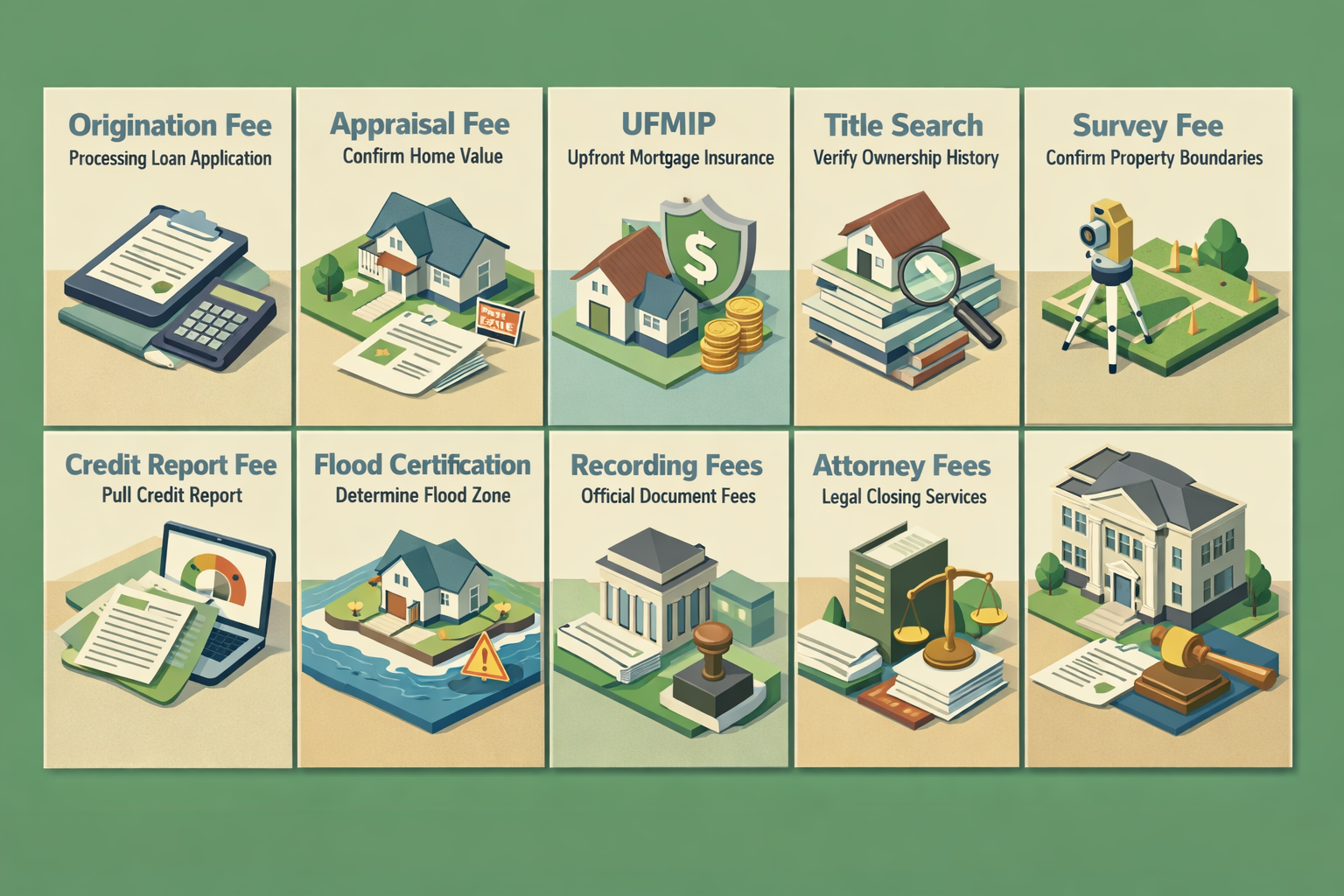
Understanding what are closing costs for FHA loan on a manufactured home with land starts with recognizing that these fees fall into several distinct categories. While the exact amounts vary by lender, location, loan size, and property details, most buyers can expect total closing costs to range somewhere between 2% and 6% of the loan amount. Here's a breakdown of the most common charges you're likely to encounter:
- Origination Fee: This is charged by the lender for processing your loan application. It's often expressed as a percentage of the loan amount and covers the lender's administrative costs.
- Appraisal Fee: FHA requires an appraisal by an FHA-approved appraiser to confirm the home's value and ensure it meets minimum property standards. Manufactured home appraisals may cost slightly more than those for site-built homes due to their specialized nature.
- FHA Upfront Mortgage Insurance Premium (UFMIP): FHA loans require an upfront mortgage insurance premium, which is currently set at 1.75% of the base loan amount. This fee can be paid at closing or rolled into the loan.
- Title Search and Title Insurance: A title search verifies ownership history, while title insurance protects both the lender and potentially the buyer from future title disputes. For manufactured homes with land, title work can be more involved if the home was previously titled as personal property.
- Survey Fee: A land survey may be required to confirm property boundaries, especially when land is being purchased alongside the home.
- Credit Report Fee: Lenders typically charge a small fee to pull your credit report during the application process.
- Flood Determination and Certification: This fee covers the cost of determining whether the property is located in a flood zone, which is required by FHA lenders.
- Recording Fees: These are government fees charged by the county or municipality to officially record the deed and mortgage documents.
- Attorney or Settlement Agent Fees: Depending on your state, a real estate attorney or title company may handle the closing, each of which may charge for their services.
It's worth noting that some of these fees are negotiable or vary significantly between service providers. Shopping around and comparing Loan Estimates from multiple lenders is one of the best ways to keep your total closing costs in check.
Prepaid Items and Escrow Deposits You Should Expect
Beyond the standard closing fees, FHA loans also require borrowers to prepay certain ongoing homeownership expenses at closing. These are not fees that go to the lender — they're funds set aside in advance to cover real costs you'll owe in the months ahead.
- Prepaid Homeowners Insurance: Most lenders require that you pay the first year's homeowners insurance premium upfront at closing, along with an initial deposit into your escrow account for future premium payments.
- Prepaid Property Taxes: You'll typically need to deposit several months' worth of property taxes into your escrow account so that the lender can make timely payments on your behalf.
- Prepaid Interest: This covers the mortgage interest that accrues between your closing date and the end of that calendar month. The later in the month you close, the smaller this charge will be.
- Initial Escrow Setup: FHA lenders generally require an escrow account to manage ongoing insurance and tax payments. At closing, you'll fund this account with an initial deposit, often covering two to three months of estimated payments.
Prepaids can add a noticeable amount to your upfront costs, sometimes several thousand dollars depending on your insurance premiums, local tax rates, and closing date. It's smart to ask your lender for an itemized estimate of these amounts early in the process so you're not caught off guard.
FHA Manufactured Home Closing Costs Land: How the Land Component Affects Fees
The land element of your purchase can directly influence several of your FHA manufactured home closing costs land-related line items. When land is included in the transaction, the overall loan amount tends to be higher than if you were financing a home in a park or on leased land — and some closing costs are calculated as a percentage of that loan amount.
Additionally, purchasing land introduces a few unique cost considerations:
- Survey and Boundary Verification: When land changes hands, lenders and title companies often want a current survey to confirm the legal description and boundaries of the parcel. Depending on the size and complexity of the land, this can be a modest or significant expense.
- Environmental Assessments: In some cases, particularly with rural land, a lender may require a basic environmental review or well and septic inspection. These may add to your third-party service costs.
- Title Conversion Costs: If the manufactured home was previously titled as personal property (chattel), converting it to real property so it qualifies for FHA financing may involve additional legal fees and filing costs at the state or county level.
- Higher Appraisal Complexity: Appraising a manufactured home combined with land requires the appraiser to evaluate both the structure and the real estate component. This can sometimes result in higher appraisal fees compared to a standalone home purchase.
These factors make it especially important to request a detailed Loan Estimate as early as possible. The more transparent your lender is upfront, the easier it is to budget accurately.
Strategies to Reduce What You Pay at Closing
The good news is that closing costs aren't entirely fixed — there are real strategies you can use to lower the amount you need to bring to closing. Here are some of the most effective approaches:
- Negotiate Seller Concessions: FHA guidelines allow sellers to contribute up to 6% of the home's sale price toward the buyer's closing costs. This is often negotiated as part of the purchase offer, and in a buyer's market, sellers may be willing to help cover a portion of your fees.
- Roll the UFMIP Into the Loan: The FHA upfront mortgage insurance premium doesn't have to be paid entirely out of pocket at closing. Most borrowers choose to finance it into the loan amount, which spreads that cost over the life of the loan rather than requiring a lump sum upfront.
- Shop for Third-Party Services: Your lender is required to provide you with a list of approved service providers for items like title insurance and settlement services. You're typically allowed to shop for your own providers from that list, which may give you access to lower rates.
- Ask About Lender Credits: Some lenders offer lender credits in exchange for a slightly higher interest rate. While this increases your monthly payment modestly, it can significantly reduce your out-of-pocket costs at closing — a worthwhile trade-off for buyers who are cash-constrained.
- Look Into Down Payment Assistance Programs: Some state and local programs offer grants or second mortgage assistance that can be applied toward both the down payment and closing costs. Eligibility requirements vary, so it's worth researching what's available in your area.
- Time Your Closing Date: Closing near the end of the month minimizes the prepaid interest you owe, since there are fewer days left in the billing cycle.
Reading Your Loan Estimate and Closing Disclosure
Federal law requires lenders to provide you with a Loan Estimate within three business days of receiving your loan application. This document outlines all projected closing costs in a standardized format, making it easier to compare offers from multiple lenders. When reviewing your Loan Estimate, pay close attention to the breakdown between lender fees and third-party service fees, since the former are often more negotiable than the latter.
Shortly before closing, your lender will issue a Closing Disclosure, which reflects the final, confirmed costs. It's important to compare this document carefully against your Loan Estimate. Certain fees — particularly lender fees and fees for services you didn't shop for — are not permitted to increase beyond what was originally disclosed. If you spot unexpected changes, ask your lender for a clear explanation before proceeding.
Understanding these two documents gives you a powerful tool for making informed decisions. If something looks unfamiliar or higher than expected, don't hesitate to ask questions. A reputable lender will always be willing to walk you through every line item.
●Conclusion
Purchasing a manufactured home with land through an FHA loan is a genuinely achievable goal for many buyers, and understanding your closing costs is a key part of making that journey smoother. From lender fees and mortgage insurance premiums to title work, prepaids, and land-specific charges, every line item on your Closing Disclosure has a purpose — and knowing what to expect helps you plan, negotiate, and close with confidence. If you're ready to explore your financing options or want a clearer picture of what your costs might look like, connecting with an experienced mortgage professional is a great next step. At LoanWise, we're here to help you navigate every stage of the FHA lending process with clarity and confidence.