Geodesic dome homes are one of the most distinctive and architecturally fascinating housing options available today. Their spherical design, energy efficiency, and structural strength have drawn a growing community of buyers who are ready to think outside the box — literally. But when it comes to financing one of these unique properties with an FHA loan, many buyers find themselves asking: what are closing costs for FHA loan on a geodesic dome home with land? The answer involves a blend of standard FHA closing cost guidelines and additional considerations that come specifically with non-traditional home types. This article walks you through what to expect, what makes dome homes different in the eyes of lenders, and how to navigate the financing process with confidence.
Why Geodesic Dome Homes Create Unique Lending Challenges
Before diving into the costs themselves, it helps to understand why lenders treat geodesic dome homes differently from conventional properties. FHA loans are backed by the Federal Housing Administration, and they come with specific property eligibility requirements. For a home to qualify, it generally must meet HUD's Minimum Property Standards, be appraised by an FHA-approved appraiser, and be considered a permanent residential dwelling.
Geodesic dome homes can meet all of these requirements, but they often require extra steps. Because dome homes are relatively rare in most real estate markets, appraisers may struggle to find comparable sales — commonly known as comps — nearby. Without strong comps, the appraisal process can take longer and may result in a more conservative valuation. This matters because FHA loans are tied to the appraised value of the property.
Additionally, when land is included in the purchase, the transaction becomes more complex. Lenders must evaluate the land value separately, confirm that the home is properly affixed to a permanent foundation, and ensure that zoning regulations support residential use. All of these factors can influence both the loan approval timeline and the closing costs you'll encounter.
Standard FHA Closing Costs Every Homebuyer Should Know
Regardless of the property type, FHA loans come with a set of closing costs that apply to most transactions. Understanding these baseline fees gives you a foundation to work from before factoring in dome-specific variables.
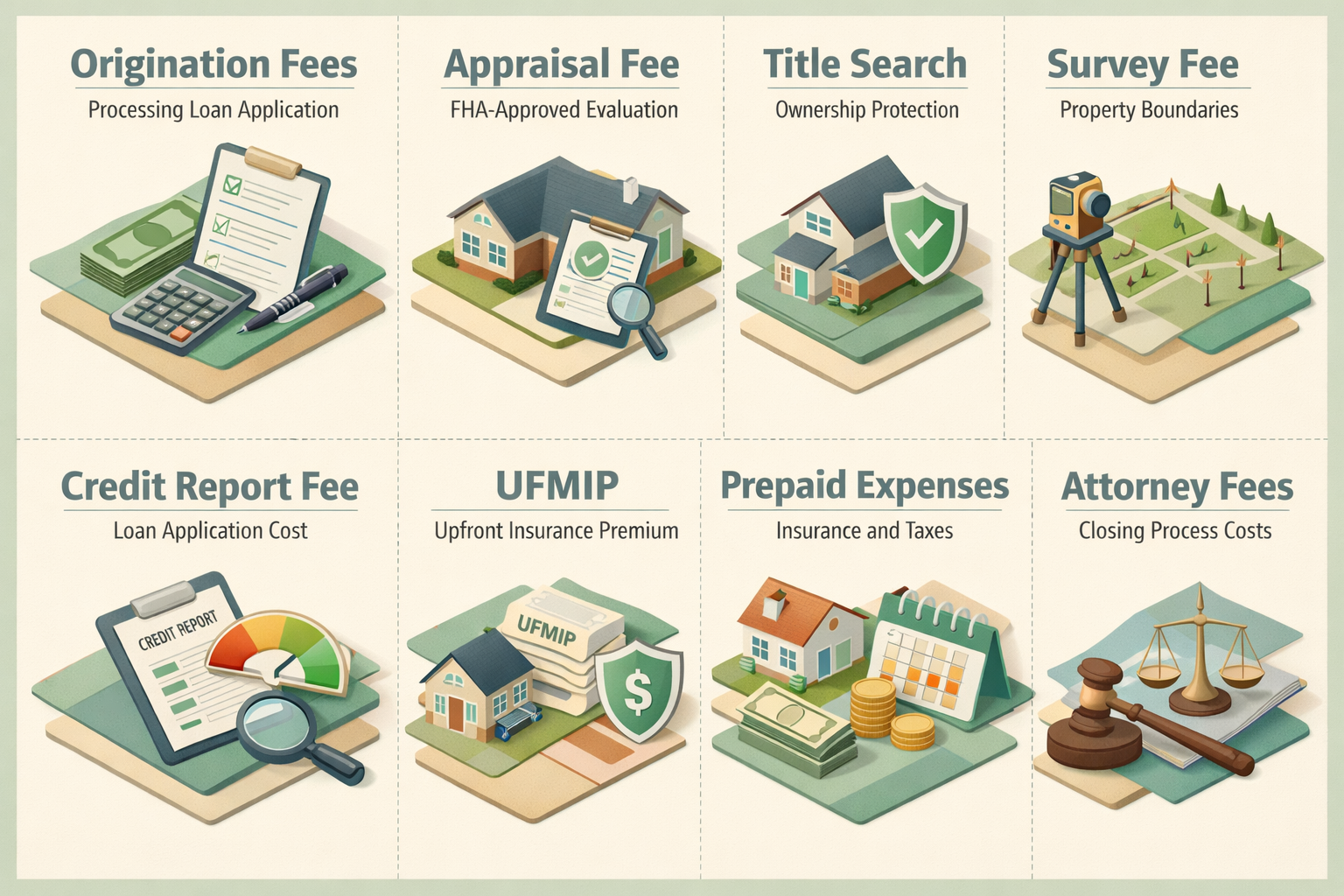
- Origination fees: Charged by the lender for processing your loan application, these fees may vary by lender and loan size.
- Appraisal fee: An FHA-approved appraiser must evaluate the property. Appraisal fees can run higher for unique or non-traditional homes due to the extra research involved.
- Title search and title insurance: These fees protect both you and your lender against any ownership disputes. When land is included in the sale, title searches may take longer and cost more.
- Survey fee: If land is part of the purchase, a land survey is often required to establish property boundaries. This is a cost that many standard home purchases skip but that geodesic dome with land transactions frequently include.
- Credit report fee: Lenders pull your credit report as part of the application process and may pass this cost on to you.
- FHA Upfront Mortgage Insurance Premium (UFMIP): This is one of the most significant FHA-specific costs. The UFMIP is typically set at 1.75% of the base loan amount and can be rolled into the loan rather than paid at closing.
- Prepaid expenses: These include homeowners insurance premiums, property taxes, and prepaid interest, which are collected at closing to fund your escrow account.
- Attorney or settlement fees: Some states require an attorney to handle closing, adding to your overall cost.
In total, FHA closing costs often fall somewhere between 2% and 5% of the loan amount, though this range can shift depending on your location, lender, and the specifics of your property.
Additional Costs Tied to FHA Loan Closing Costs for Unique Home Types
When it comes to FHA loan closing costs for unique home types like geodesic domes, buyers should budget for expenses that go beyond the standard list. These additional costs stem from the non-traditional nature of the structure and the inclusion of land.
Extended or Complex Appraisal Costs
As mentioned, appraising a geodesic dome home can be more involved than a standard single-family appraisal. Appraisers who specialize in unique properties may charge higher fees, and if the first appraisal comes in low, you might need a review appraisal or reconsideration of value — both of which add cost and time to the process.
Foundation Certification
FHA guidelines require that the home be on a permanent, approved foundation. For dome homes that may have been built as off-grid or semi-permanent structures, lenders might require a structural engineer's report or a foundation certification. This inspection confirms that the dome meets HUD's permanency standards, and engineering fees can vary meaningfully depending on your region.
Land-Specific Fees
When land is bundled with the home purchase, you may encounter additional costs such as a percolation test (if the property relies on a septic system), well water testing, and environmental assessments. These are often required by lenders to confirm the land is safe, usable, and meets health and safety guidelines for residential living.
Zoning and Use Verification
Some lenders may request documentation confirming that local zoning ordinances permit a geodesic dome home as a primary residence on the parcel of land. If zoning is mixed-use or rural, additional verification steps could be needed, which may involve fees from your county or municipality.
How the FHA Upfront Mortgage Insurance Premium Affects Your Total Closing Costs
One of the most talked-about features of FHA financing is mortgage insurance. Borrowers pay two types: the Upfront Mortgage Insurance Premium (UFMIP) and the Annual Mortgage Insurance Premium (MIP). The UFMIP directly impacts your closing costs, while the annual MIP is spread across your monthly payments.
The UFMIP is typically 1.75% of the base loan amount. For example, on a $250,000 loan, this would amount to $4,375. The good news is that FHA allows buyers to roll this premium into the loan balance rather than paying it out of pocket at closing. While this helps reduce the immediate cash burden, it does slightly increase your loan amount and therefore your monthly payment.
For geodesic dome buyers purchasing land along with the structure, the loan amount may be larger than a typical home-only purchase, which in turn increases the UFMIP dollar figure. It's worth running these numbers with your lender early in the process so there are no surprises on closing day.
Annual MIP rates may vary based on your loan term, loan-to-value ratio, and loan amount. Your lender can provide a Loan Estimate that breaks down all anticipated costs, including mortgage insurance projections, within three business days of receiving your application.
Can You Negotiate or Reduce Closing Costs on a Dome Home FHA Loan
Many homebuyers don't realize that some closing costs are negotiable or can be structured in ways that reduce out-of-pocket expenses at the time of settlement. Here are a few strategies that may help.
Seller Concessions
FHA guidelines allow sellers to contribute up to 6% of the sale price toward the buyer's closing costs. If you're purchasing a geodesic dome home and the seller is motivated to close, you might be able to negotiate for them to cover a portion of your closing expenses. This is sometimes called a seller credit and can meaningfully reduce how much cash you need at closing.
Lender Credits
Some lenders offer credits toward closing costs in exchange for accepting a slightly higher interest rate. This trade-off is sometimes called a no-closing-cost loan arrangement, though it's important to understand that you're not eliminating those costs — you're financing them into the rate instead. Whether this makes sense depends on how long you plan to stay in the home.
Shopping Multiple Lenders
Not all lenders charge the same origination fees or service costs. Shopping around and comparing Loan Estimates from at least two or three lenders could uncover meaningful savings. This is especially true for non-traditional properties, where lender experience with unique home types can vary widely.
Down Payment Assistance Programs
Some state and local housing agencies offer down payment or closing cost assistance programs for eligible buyers. These programs may apply to FHA loans and could help offset some of the upfront expenses you face when buying a geodesic dome home with land.
Finding the Right Lender for a Geodesic Dome FHA Purchase
Not every lender is experienced — or willing — to finance non-traditional home types. Finding one who understands both FHA guidelines and the unique characteristics of geodesic dome properties can make a significant difference in your experience and overall costs.
When evaluating lenders, consider asking the following questions:
- Have you financed a geodesic dome or other non-traditional home type before?
- Do you work with FHA-approved appraisers who have experience with unique properties?
- What additional documentation or inspections might be required for this property type?
- Can you provide a Loan Estimate that outlines all anticipated closing costs for this specific transaction?
A lender with experience in FHA loan closing costs for unique home types will be better equipped to anticipate potential roadblocks and help you prepare for them. They may also have existing relationships with appraisers and inspectors who are familiar with dome construction, which could streamline the process.
It's also worth noting that some lenders specialize in niche or specialty lending, including alternative home types and rural land purchases. Seeking out these professionals early in your search could save you both time and money.
Preparing Your Budget Before Closing Day
Knowing what are closing costs for FHA loan on a geodesic dome home with land is only part of the equation. Preparing your budget well in advance is equally important. Here's a practical approach to getting ready.
Request a Loan Estimate early. Once you've identified a lender and a property, ask for a Loan Estimate as soon as possible. This document outlines all expected closing costs and gives you a clear picture of what you'll owe at settlement.
Build in a buffer. Because dome homes and land purchases introduce variables that standard transactions don't, it's wise to set aside extra funds beyond your estimated closing costs. An additional cushion of a few hundred to a few thousand dollars could protect you if unexpected fees arise during the appraisal, inspection, or title search process.
Review the Closing Disclosure carefully. At least three business days before your closing date, your lender must provide a Closing Disclosure. This document finalizes all costs and should be compared carefully against your Loan Estimate to catch any discrepancies.
Understand what's included in your escrow account. Prepaid taxes and insurance collected at closing fund your escrow account, which your lender manages on your behalf. These amounts can vary based on your local tax rate and the cost of homeowners insurance for a dome structure, which may differ from a conventional home.
●Conclusion
Buying a geodesic dome home with land is an exciting and unconventional path to homeownership. While FHA financing can make it more accessible, it's important to go in fully informed about what to expect at the closing table. Understanding what are closing costs for FHA loan on a geodesic dome home with land means accounting for both standard FHA fees and the additional costs that come with a unique property type — from complex appraisals and foundation certifications to land surveys and zoning verification. With the right lender, a clear budget, and a proactive approach to preparation, you can navigate this process successfully and step confidently into your one-of-a-kind home. If you're ready to explore your FHA financing options, the team at LoanWise is here to help you every step of the way.