Buying a duplex is one of the smartest moves a first-time homebuyer or real estate investor can make. You get a place to live while your tenant helps cover the mortgage. But before you can hand over the keys, you'll need to get through one important financial milestone: closing. If you're using government-backed financing, understanding what are closing costs for FHA loan on a duplex with owner occupancy is essential to budgeting accurately and avoiding surprises on settlement day. This guide breaks it all down in plain language so you can walk into closing with confidence.
Why an FHA Loan Works Well for Duplex Buyers Who Plan to Live There
The Federal Housing Administration insures loans made by approved lenders, which allows borrowers to qualify with lower down payments and more flexible credit requirements than conventional financing typically allows. For a duplex purchase, this can be a significant advantage. As long as the borrower intends to occupy one of the two units as their primary residence, the property qualifies as an owner-occupied multifamily home under FHA guidelines.
This owner-occupancy requirement is actually a key feature, not a limitation. It's what makes FHA financing available for a two-unit property in the first place. Investors who do not plan to live in the property cannot use FHA loans. But for those who do plan to move in, FHA financing opens the door to competitive interest rates, low down payment options, and more lenient debt-to-income thresholds.
One additional benefit worth noting is that lenders may allow a portion of the projected rental income from the second unit to be counted toward qualifying income. This could help borrowers who might otherwise struggle to meet income requirements on their own. The specifics depend on the lender and how long the borrower has been a landlord, so it's worth asking your loan officer directly about this option.
Breaking Down What Are Closing Costs for FHA Loan on a Duplex with Owner Occupancy
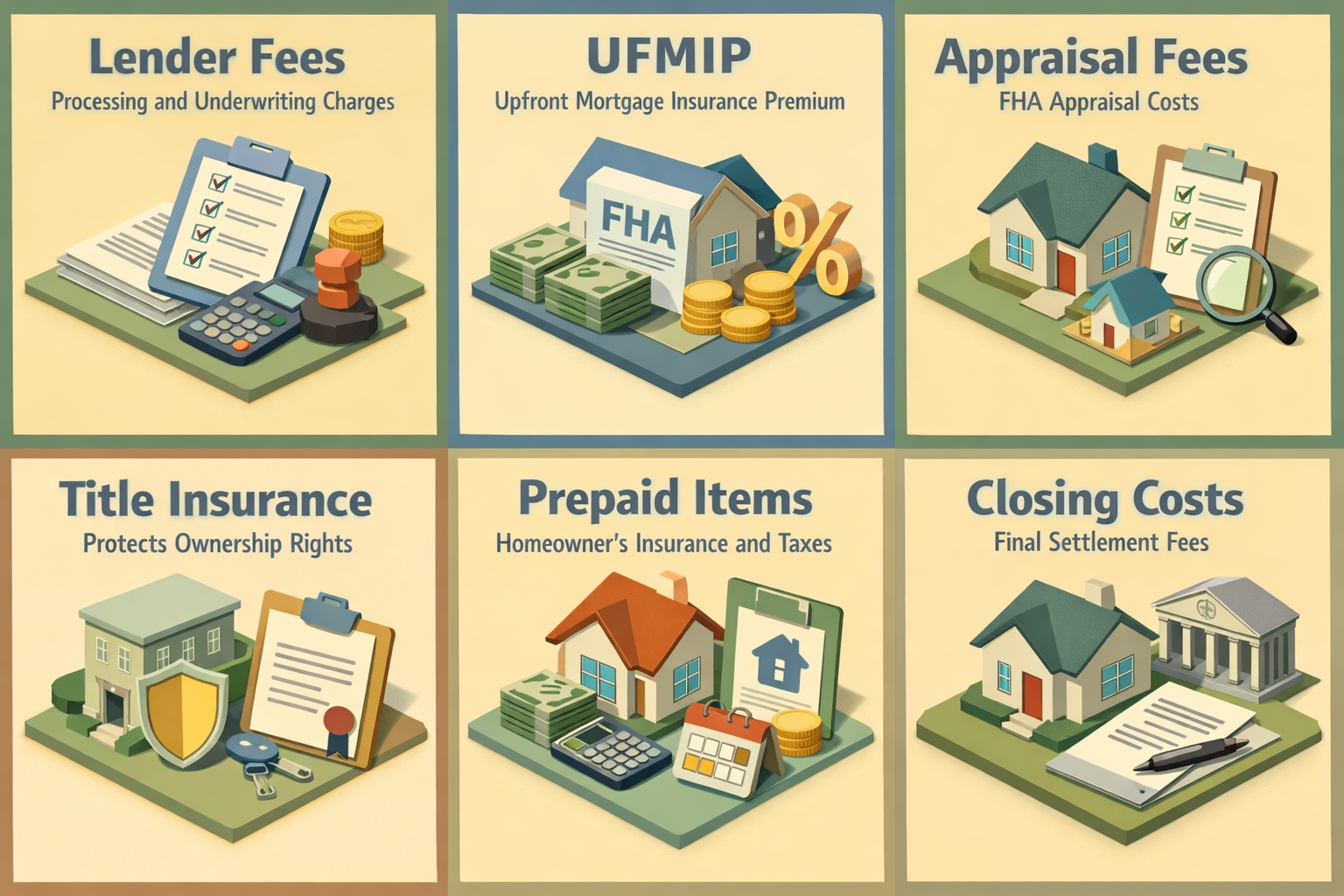
Closing costs are the fees and charges you pay at settlement to finalize your mortgage. They are separate from your down payment and are due at or near the time of closing. So, what are closing costs for FHA loan on a duplex with owner occupancy? In general, they tend to fall into several broad categories that borrowers should plan for well in advance.
Lender Origination and Processing Fees
Your lender charges fees for processing and underwriting your loan application. These can include an origination fee, which may be expressed as a percentage of the loan amount, along with administrative and processing charges. These fees vary by lender and loan size, so it's wise to compare Loan Estimates from multiple lenders before committing.
FHA Upfront Mortgage Insurance Premium
One of the most distinctive costs associated with FHA financing is the Upfront Mortgage Insurance Premium, commonly referred to as UFMIP. This is a one-time fee typically set at 1.75% of the base loan amount. For example, on a loan of $300,000, the UFMIP would be $5,250. Borrowers have the option to roll this cost into the loan balance rather than paying it out of pocket at closing, which can ease the immediate financial burden.
Appraisal and Inspection Fees
FHA loans require an appraisal conducted by an FHA-approved appraiser. For a duplex, the appraisal may cost more than it would for a single-family home because the appraiser must evaluate both units and ensure the property meets FHA minimum property standards. Home inspection fees, while technically optional, are strongly recommended and add to your upfront expenses.
Title Insurance and Settlement Charges
Title insurance protects both the lender and the buyer from potential disputes over property ownership. You'll typically need both a lender's title policy and an owner's title policy. Settlement or escrow fees are paid to the closing agent or title company that manages the transaction. These costs can vary significantly by location and property value.
Prepaid Items and Escrow Deposits
Prepaid items include expenses you pay in advance at closing, such as homeowner's insurance premiums, prepaid mortgage interest for the days remaining in the closing month, and initial deposits into your escrow account for property taxes and insurance. For a duplex, property taxes may be somewhat higher than for a single-family home, depending on the jurisdiction.
How Duplex Properties Can Affect Your Total Closing Cost Estimate
Purchasing a duplex rather than a single-family home can influence your closing costs in a few meaningful ways. The property's higher purchase price typically means a larger loan amount, which in turn increases percentage-based fees like the UFMIP and origination charges. Appraisal costs may be higher because of the added complexity of evaluating a two-unit structure.
Additionally, FHA requires that the property meet specific safety and habitability standards. If the duplex needs repairs to meet these standards, you may encounter required repairs as a condition of the loan, which adds to your pre-closing costs. Some buyers choose an FHA 203(k) loan if significant repairs are needed, though that product comes with its own fee structure.
It's also worth noting that some lenders charge slightly different fees for multifamily properties compared to single-family homes, so shopping your loan with multiple FHA-approved lenders is a smart strategy. Even modest differences in origination fees or title costs can add up when you're dealing with a larger loan balance.
Strategies for Reducing FHA Duplex Closing Costs Out of Pocket
The good news is that there are several legitimate ways to reduce how much cash you'll need to bring to the closing table. None of these strategies eliminates closing costs entirely, but they can meaningfully lighten the upfront financial load.
Negotiating Seller Concessions
FHA guidelines allow sellers to contribute toward the buyer's closing costs, typically up to 6% of the purchase price. This is often called a seller concession or seller credit. In a buyer-friendly market, negotiating for seller-paid closing costs can dramatically reduce what you need to pay out of pocket. Your real estate agent can help you structure an offer that includes this request.
Rolling the UFMIP Into the Loan
As mentioned earlier, the Upfront Mortgage Insurance Premium can be financed into your loan balance. While this means paying a slightly higher monthly payment and more interest over time, it does reduce the amount of cash needed at closing. For buyers who are cash-constrained, this option can make an buying a duplex purchase more accessible.
Comparing Lender Loan Estimates
Federal law requires lenders to provide a Loan Estimate within three business days of receiving your application. This document outlines all projected closing costs in a standardized format. Comparing Loan Estimates from at least two or three FHA-approved lenders allows you to identify differences in fees and choose the most competitive offer.
Exploring Down Payment Assistance Programs
Some state and local housing finance agencies offer down payment and closing cost assistance programs. These may come in the form of grants, forgivable loans, or deferred-payment second mortgages. Eligibility requirements vary widely, but owner-occupant duplex buyers may qualify in certain markets. Checking with your state's housing authority or a HUD-approved housing counselor is a practical first step.
Understanding Annual Mortgage Insurance and Its Long-Term Cost Impact
Beyond the upfront costs at closing, FHA borrowers also pay an Annual Mortgage Insurance Premium, known as annual MIP, which is added to the monthly mortgage payment. While this isn't technically a closing cost, it's an ongoing expense that affects your overall cost of ownership and should be factored into your financial planning.
The annual MIP rate depends on the loan term, loan amount, and loan-to-value ratio. For many borrowers, this premium remains in place for the life of the loan, which is one reason some homeowners eventually refinance into a conventional loan once they've built sufficient equity. Understanding this cost upfront helps you set realistic expectations about the total expense of FHA duplex financing.
For owner-occupants of a duplex, the rental income from the second unit may help offset this ongoing insurance cost. Even a modest monthly rental contribution can make the annual MIP feel much more manageable in the context of your overall housing expense.
What to Expect During the Closing Process for an FHA Duplex Purchase
The closing process for an FHA duplex loan follows a similar path to other residential mortgage closings, though there are a few extra steps worth knowing about. After your offer is accepted, your lender will order an FHA appraisal. This appraisal determines the property's market value and confirms that it meets FHA's Minimum Property Requirements. Any deficiencies identified in the appraisal may need to be corrected before the loan can close.
Once the appraisal is satisfactory and your loan is conditionally approved, your file moves into underwriting. The underwriter reviews all documentation — income, assets, credit history, and property details — before issuing a final loan approval. For a duplex, underwriters may also review lease agreements or rental market data to support any rental income used in qualification.
About three business days before closing, you'll receive a Closing Disclosure, which lists the final loan terms and a complete breakdown of all closing costs. Review this document carefully and compare it to your original Loan Estimate. If something looks different, ask your lender for an explanation before signing. On closing day, you'll sign the loan documents, pay any remaining closing costs due, and receive the keys to your new duplex.
●Conclusion
Understanding what are closing costs for FHA loan on a duplex with owner occupancy is the foundation of a smart home purchase strategy. From the Upfront Mortgage Insurance Premium to appraisal fees, title insurance, and prepaid escrow deposits, the costs add up quickly — but they're also manageable with the right planning. By comparing lenders, negotiating seller concessions, and exploring assistance programs, you can reduce your out-of-pocket expenses significantly. At LoanWise, our goal is to help you make informed decisions at every stage of the lending process. If you're ready to explore FHA duplex financing or want a personalized cost estimate, connect with a LoanWise mortgage specialist today and take the first step toward owning your owner-occupied investment property.