
Inheriting a property can feel like a meaningful gift, but it often comes with financial responsibilities that catch new owners off guard. When the home has been sitting without regular upkeep, those challenges multiply quickly. If you're planning to finance or retain an inherited home using a conventional loan, one of the first questions you'll likely ask is: what are closing costs for conventional loan on inherited property with deferred maintenance? The answer involves more than a simple percentage of the purchase price. It requires understanding how lenders evaluate distressed or neglected homes, what fees and requirements may be added to the transaction, and how deferred maintenance specifically affects the path to closing. This article breaks it all down so you can move forward with confidence.
Understanding Deferred Maintenance and Why It Matters to Lenders
Deferred maintenance refers to repairs and upkeep tasks that have been postponed over time. In an inherited property, this might mean an aging roof, outdated plumbing, cracked foundations, non-functional HVAC systems, or general wear that has accumulated over years of neglect. While these issues may seem manageable from a homeowner's perspective, they present very specific concerns for conventional loan lenders.
Conventional loans — those not backed by a government agency like the FHA or VA — are typically sold to investors through the secondary market, including Fannie Mae and Freddie Mac. These entities have strict property condition guidelines. A home must generally be in safe, sound, and structurally functional condition to qualify. When a property has significant deferred maintenance, it may fail to meet these standards during the appraisal process, which can delay or complicate closing.
Lenders care about deferred maintenance because it affects the collateral value of the loan. If the property's condition reduces its market value, it also reduces the lender's security. This is why the appraisal report plays such a central role in the conventional loan process for inherited homes — and why it can directly influence the closing costs and requirements you'll face.
Core Closing Costs You Can Expect on a Conventional Loan
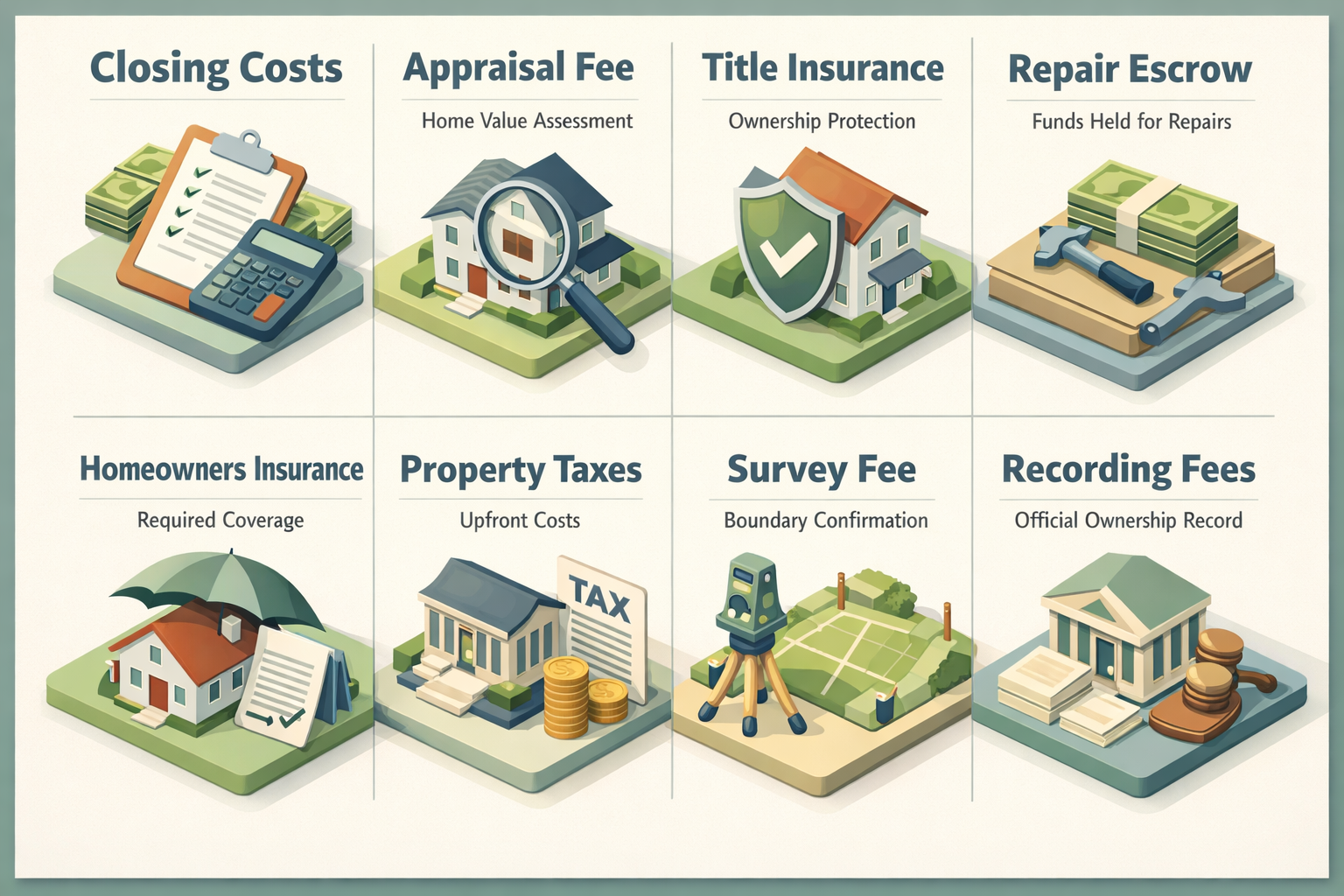
Before factoring in the complications of inherited status or deferred maintenance, it helps to understand the standard closing costs attached to any conventional loan. These fees typically fall into two broad categories: lender fees and third-party fees.
- Origination fees: Charged by the lender for processing and underwriting the loan. These may be expressed as a flat fee or a percentage of the loan amount.
- Appraisal fee: Covers the cost of a licensed appraiser evaluating the home's market value. This is especially significant for inherited homes with deferred maintenance, as a more detailed inspection may be required.
- Title search and title insurance: Protects the lender (and optionally the buyer) against ownership disputes or liens attached to the property. Inherited properties may carry unresolved title issues, making this cost particularly important.
- Survey fee: Confirms property boundaries, which may be needed if the inherited home's records are outdated or incomplete.
- Prepaid interest: Interest that accrues between the closing date and the first mortgage payment due date.
- Homeowners insurance: Lenders require proof of an active policy before closing. Insuring a home with deferred maintenance could be more costly or involve additional requirements from the insurer.
- Property taxes: Often collected upfront into an escrow account at closing.
- Recording fees: Charged by local government to officially record the change in ownership and new mortgage.
In total, conventional loan closing costs often range somewhere between 2% and 5% of the loan amount, though this can vary based on the lender, the loan size, and the state in which the property is located. For inherited properties with complications, borrowers should anticipate being on the higher end of that range or potentially beyond it.
How Inherited Property Status Adds Complexity to the Closing Process
Financing an inherited home introduces unique legal and financial layers that don't exist in a standard home purchase. Understanding these early can help you avoid costly surprises at the closing table.
Probate and title clarity: If the estate has not yet cleared probate, you may not have legal authority to encumber the property with a mortgage. Lenders will require clean title before proceeding. If there are multiple heirs, all parties may need to agree on the disposition of the property. Title companies often charge more for conducting a thorough search on inherited properties, particularly if there are decades of ownership history to untangle.
Outstanding liens or debts: Inherited homes sometimes carry unpaid property taxes, contractor liens, or old mortgages. These must be resolved before or at closing. If they're discovered during the title search, they'll either increase your closing costs or delay the transaction entirely.
Estate and gift tax considerations: Depending on the size of the estate, there may be federal or state tax implications tied to the property. While these aren't technically closing costs, they can affect the net proceeds available and should be accounted for in your financial planning.
Stepped-up basis: One financial advantage of inheriting a property is the stepped-up cost basis, which may reduce capital gains tax if you sell. However, this doesn't directly reduce closing costs — it's a longer-term tax benefit worth noting as you evaluate your overall financial strategy.
What Are Closing Costs for Conventional Loan on Inherited Property with Deferred Maintenance — The Hidden Additions
When deferred maintenance enters the picture, additional costs and conditions may be layered on top of standard closing fees. This is where many borrowers are surprised, and where careful preparation makes a real difference.
Repair escrow holdbacks: If the appraiser identifies deferred maintenance items that affect the property's livability or structural integrity, the lender may require a repair escrow holdback. This means a portion of the loan funds is held in escrow until specific repairs are completed after closing. Setting up and administering this escrow may involve additional lender fees.
Revised or second appraisal: If a home's condition is borderline, a lender might order a follow-up appraisal once repairs are completed, or require a more detailed appraisal upfront. These additional appraisal fees add to your closing cost total.
Higher homeowners insurance premiums: Insurers may charge more — or require riders — for homes with known deferred maintenance such as older roofs or aging electrical systems. These costs are due at closing and affect your prepaid escrow balance.
Pest and property inspections: While a general home inspection is typically not required by conventional lenders, some may request specific inspections (such as for pest damage or septic systems) when the appraisal reveals signs of deferred maintenance. These add to your out-of-pocket costs before and at closing.
Lender-required repairs before closing: In some cases, the lender may not allow the loan to close until certain repairs are made. This could mean paying for repairs out of pocket before you've even accessed the financing, which affects your upfront capital needs significantly.
Conventional Loan Appraisal Standards and Their Impact on Inherited Homes
The appraisal is one of the most pivotal steps in the conventional loan process for any property — but it carries extra weight for an inherited home with deferred maintenance. Fannie Mae and Freddie Mac guidelines require that the appraiser comment on any adverse conditions affecting the property, and they must determine whether the home meets minimum property standards.
Common deferred maintenance items that appraisers flag include missing or damaged roof shingles, broken windows, exposed wiring, non-functional plumbing or heating systems, and evidence of water damage or mold. When an appraiser notes these issues, the lender may require them to be addressed before funding the loan.
Appraisers also note whether repairs are needed to bring the property to a condition consistent with surrounding comparable sales. If the home's as-is value is significantly lower than what it would be in good condition, this could affect the loan-to-value ratio, potentially requiring a larger down payment or triggering private mortgage insurance (PMI) requirements. PMI is an additional monthly cost, but its setup at closing adds to your overall closing expenses.
It's worth working with a knowledgeable real estate agent or mortgage advisor who understands how inherited property mortgage closing costs interact with appraisal outcomes. Being proactive about addressing obvious deferred maintenance before the appraisal — even minor cosmetic repairs — can sometimes improve the appraiser's assessment and reduce lender-required conditions.
Financing Strategies That May Help Offset Closing Costs on Inherited Homes
Managing the financial burden of closing costs on a conventional loan for an inherited home with deferred maintenance requires strategic planning. Here are several approaches that may help reduce your out-of-pocket expenses at closing.
- Seller concessions: In a traditional sale scenario, sellers sometimes agree to cover a portion of the buyer's closing costs. Since inherited properties are often sold by the estate rather than an individual seller, there may be flexibility to negotiate similar concessions, depending on the situation.
- Lender credits: Some lenders offer credits toward closing costs in exchange for accepting a slightly higher interest rate. This can reduce upfront expenses, though it increases the long-term cost of the loan. For borrowers who plan to sell or refinance within a few years, this trade-off might make financial sense.
- Rolling costs into the loan: In certain refinance scenarios — if you're refinancing an inherited home you've already taken title to — it may be possible to roll closing costs into the loan balance. This depends on the available equity and the lender's guidelines.
- Renovation loans: If deferred maintenance is extensive, a conventional loan for inherited home purchases might not be the best fit. A Fannie Mae HomeStyle Renovation loan or similar product could allow you to financing such a property and the cost of repairs in a single loan, potentially simplifying the process and consolidating upfront costs.
- Shop multiple lenders: Lender fees vary significantly between institutions. Comparing Loan Estimates from at least two or three lenders can reveal meaningful differences in origination charges, third-party fees, and overall closing cost totals.
Steps to Take Before Applying for a Conventional Loan on an Inherited Property
Preparation is the most powerful tool available to borrowers navigating inherited property mortgage closing costs on a property with deferred maintenance. Taking the right steps before applying can smooth the path to closing and reduce unexpected expenses.
Confirm title and estate status: Work with a probate attorney to ensure the estate has been properly settled and that you have clear legal title to the property. This prevents title-related delays and additional legal fees during the loan process.
Order a pre-listing inspection: Hire a licensed home inspector to identify deferred maintenance issues before you meet with a lender or appraiser. Knowing what needs to be fixed allows you to prioritize repairs and budget accordingly.
Address health and safety items first: Lenders and appraisers pay particular attention to conditions that affect habitability — things like mold, exposed electrical, or non-functioning heat. Resolving these before the appraisal can prevent mandatory repair conditions from being placed on the loan.
Review your credit profile: Conventional loans have credit score requirements, and a stronger credit profile may open access to better rates and lower lender fees. If your credit needs improvement, taking time to address it before applying could save money at closing and over the loan's life.
Build a closing cost reserve: Given the added complexity of an inherited home with deferred maintenance, it's wise to set aside more than the minimum estimated closing costs. Having a financial cushion reduces stress and ensures you can cover unexpected fees that may arise during underwriting.
●Conclusion
Understanding what are closing costs for conventional loan on inherited property with deferred maintenance is a critical first step for anyone stepping into this unique financial situation. From standard lender and title fees to appraisal complications, repair escrows, and potential insurance surcharges, the costs involved can add up faster than expected. The good news is that with the right preparation — clear title, proactive repairs, a strong credit profile, and guidance from an experienced mortgage professional — navigating this process is absolutely achievable. At LoanWise, we're here to help you explore your financing options and understand every cost involved before you commit. Whether you're planning to move into the home, rent it out, or refinance it after taking ownership, the right conventional loan strategy can help you make the most of your inherited asset.