Purchasing a duplex is one of the most popular strategies for new and experienced real estate investors alike. You can live in one unit and rent out the other, or simply hold it as a pure investment property. But before you close the deal, you'll need to understand the full picture of your upfront costs. One of the most common questions buyers ask is: what are closing costs for conventional loan on a duplex with owner financing? The answer isn't always straightforward, because combining a conventional loan with seller-provided financing adds layers of complexity that affect how much you'll pay at the closing table. This guide breaks it all down so you can walk into your transaction fully informed.
Understanding How Conventional Loans Work for Duplex Properties
A conventional loan is a mortgage that's not backed by a government agency like the FHA or VA. It follows guidelines set by Fannie Mae and Freddie Mac, and it's one of the most widely used financing tools for purchasing two-unit residential properties like duplexes.
When you finance a duplex with a conventional loan, lenders typically treat it differently than a single-family home. Here's what that generally means for borrowers:
- Down payment requirements may be higher. For an investment duplex (non-owner-occupied), conventional guidelines often require a larger down payment compared to a primary residence purchase.
- Credit score thresholds are typically stricter. Lenders may require a minimum credit score in the mid-to-upper 600s range, and stronger credit could help you secure a more competitive rate.
- Debt-to-income (DTI) ratios are evaluated carefully. Rental income from the second unit may be considered in your DTI calculation, but lenders often apply a vacancy discount to that income.
- Reserve requirements may apply. Some lenders require several months of mortgage payments held in reserve when financing investment or multi-unit properties.
Understanding these baseline requirements is essential before you layer in any owner financing component, because doing so may affect how a lender views the overall transaction.
What Is Owner Financing and How Does It Fit Into a Duplex Purchase
Owner financing — sometimes called seller financing — is an arrangement where the property seller provides some or all of the financing directly to the buyer, instead of the buyer obtaining a traditional bank loan for the full purchase price. In a duplex transaction, this might mean the seller carries a second lien or seller-held note to help bridge a gap between the buyer's conventional loan and the full purchase price.
This structure can be appealing for several reasons:
- It may reduce the cash a buyer needs at closing. If the seller finances part of the purchase price, the buyer's conventional loan may only need to cover a portion of the property's value.
- It can make qualifying easier in some situations. When used properly and disclosed to the primary lender, seller financing can supplement a conventional loan without disqualifying the borrower.
- It may offer more flexible terms. Interest rates, repayment schedules, and balloon payment structures are often negotiable between buyer and seller.
However, it's critical to note that conventional loan guidelines — particularly those from Fannie Mae and Freddie Mac — have specific rules about seller financing. Any seller-held secondary financing must be disclosed to the primary lender and structured to meet agency guidelines. Failing to disclose seller financing could constitute mortgage fraud, so transparency with your lender is non-negotiable.
When structured correctly, owner financing on a duplex can work alongside a conventional first mortgage and still result in a clean, compliant closing.
What Are Closing Costs for Conventional Loan on a Duplex with Owner Financing
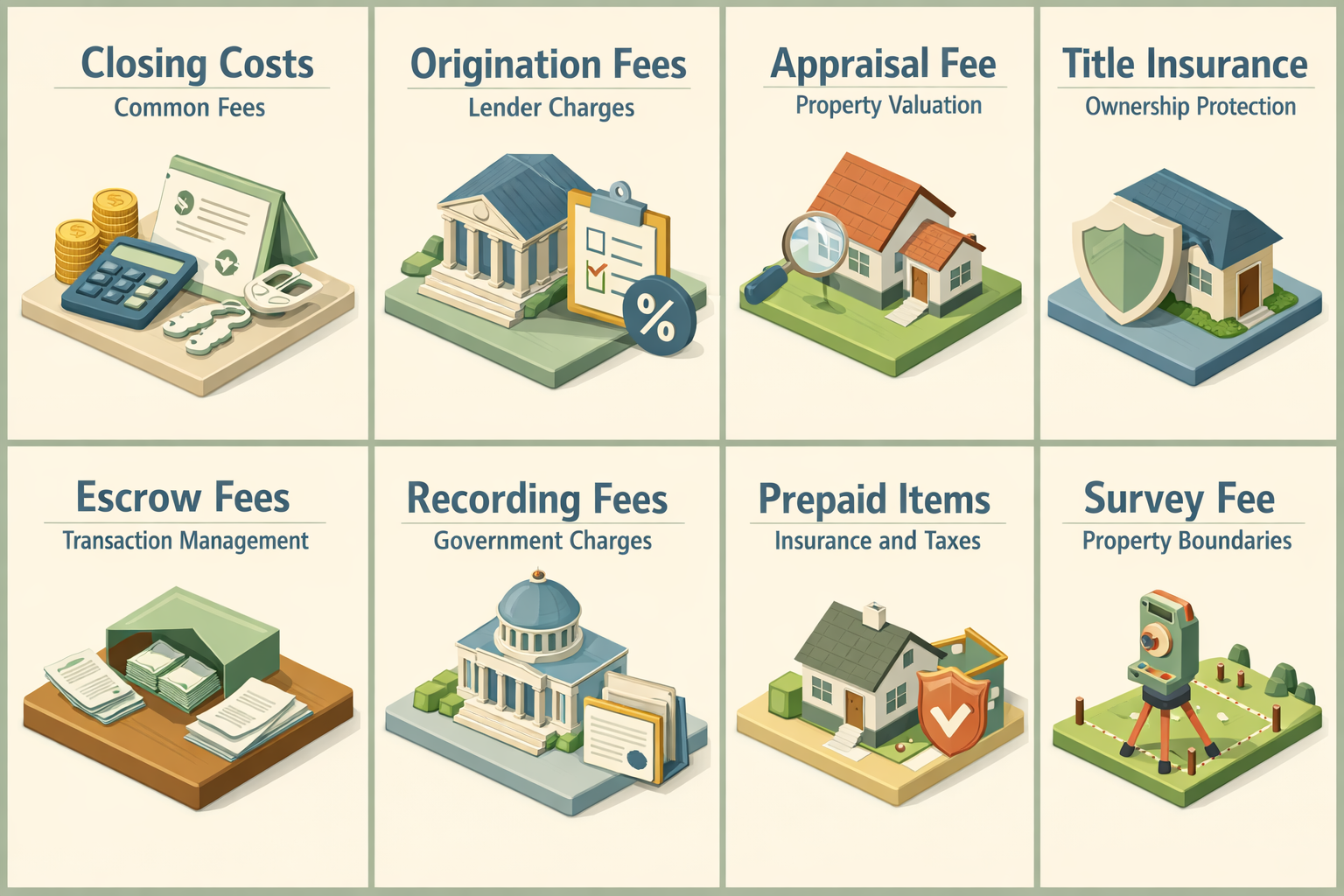
So, what are closing costs for conventional loan on a duplex with owner financing? The short answer is that you'll encounter many of the same fees as any conventional mortgage, but the dual-financing structure may add or adjust certain line items. Closing costs on a conventional loan typically range from roughly 2% to 5% of the loan amount, though this varies based on location, lender, loan size, and property type. For a duplex — especially an investment property — fees may lean toward the higher end of that range.
Here are the most common closing cost categories you can expect:
- Origination fees: Charged by the lender to process and underwrite your conventional loan. These may include points (prepaid interest) that can lower your rate.
- Appraisal fee: A professional appraisal is required for conventional loans. Duplexes may require a more detailed appraisal using comparable multi-unit properties, which could cost more than a single-family appraisal.
- Title search and title insurance: These fees cover the cost of researching the property's ownership history and insuring against any future title disputes. Both lender's and owner's title insurance policies are typically recommended.
- Escrow and settlement fees: Paid to the closing agent or escrow company that manages the transaction.
- Recording fees: Government fees for recording the new deed and mortgage documents with the county.
- Prepaid items: These include prepaid homeowner's insurance, prepaid mortgage interest, and initial escrow deposits for property taxes and insurance.
- Survey fee: Some lenders or title companies may require a property survey for a duplex, particularly if the lot has any boundary complexities.
When owner financing is part of the deal, there may be additional legal and documentation costs:
- Attorney or document preparation fees: The seller-held note and any secondary lien documents typically need to be drafted and reviewed by a real estate attorney, adding to your closing costs.
- Second lien recording fees: If the seller financing is structured as a second mortgage or deed of trust, there will be additional recording fees for that instrument.
- Subordination agreement costs: If the seller's lien is subordinate to the conventional loan, a formal subordination agreement may be required and may carry its own fee.
It's also worth noting that lenders will review the terms of the seller financing carefully. If the seller-held note requires monthly payments, those payments will be factored into your DTI, potentially affecting how much the lender will approve on the conventional first mortgage.
Investment Property Considerations That May Affect Your Total Costs
If you're purchasing the duplex purely as an investment — meaning you won't live in either unit — conventional loan pricing adjustments known as loan-level price adjustments (LLPAs) may apply. These are risk-based pricing factors set by Fannie Mae and Freddie Mac that can increase your interest rate or add to your upfront costs based on factors like your credit score, loan-to-value ratio, and property type.
For investment properties, LLPAs tend to be higher than for primary residences. This means:
- You might pay a higher interest rate, which could affect how much you choose to buy down in points at closing.
- Your lender may require a lower loan-to-value ratio, meaning you'll need to bring more equity or cash to the table.
- Reserve requirements may increase, meaning more liquid assets must be documented.
If you plan to live in one unit of the duplex, lenders may classify it as an owner-occupied property, which could improve your pricing and lower certain upfront fees. Be honest with your lender about your occupancy intent, as misrepresenting this is considered occupancy fraud.
Real estate investors should also account for property management costs, landlord insurance (which typically costs more than standard homeowner's insurance), and any needed repairs or renovations when budgeting for their total out-of-pocket expenses at and after closing.
How to Reduce or Negotiate Closing Costs on a Duplex Transaction
Closing costs aren't always fixed. There are several strategies that homebuyers and investors often use to manage or reduce these expenses:
- Shop multiple lenders. Different lenders charge different origination fees and may offer varying lender credits. Comparing loan estimates from at least three lenders can help you identify the most competitive offer.
- Negotiate seller concessions. In some markets or deal structures, the seller may agree to cover a portion of your closing costs. With owner financing already on the table, this may already be part of the negotiation conversation.
- Roll costs into the loan where possible. Some fees may be financeable, though this depends on your loan-to-value ratio and the lender's guidelines.
- Ask about lender credits. Accepting a slightly higher interest rate in exchange for lender credits can reduce your upfront cash at closing — a useful strategy if you're preserving capital for property improvements.
- Compare title and settlement providers. In most states, you have the right to shop for your own title company and settlement agent, which can result in meaningful savings.
When owner financing is involved, negotiating the terms of the seller-held note itself — interest rate, term length, and whether there's a balloon payment — can also affect your overall cost of financing the property. A lower seller note interest rate may partially offset higher conventional loan costs.
Working with the Right Professionals to Navigate a Complex Closing
A duplex purchase with both a conventional loan and owner financing is more complex than a standard single-family home transaction. Getting the right team in place early can help the process go smoothly and avoid costly mistakes.
Here's who you'll likely want on your side:
- An experienced mortgage lender or broker: Look for someone who has handled multi-unit and investment property financing before. They should be able to explain how the seller note will be evaluated and whether it complies with conventional guidelines.
- A real estate attorney: Particularly important when owner financing is involved. An attorney can draft or review the seller note, ensure the lien structure is legally sound, and protect your interests.
- A knowledgeable real estate agent: One who understands investment properties and duplex transactions can help you negotiate seller concessions and structure the deal appropriately.
- A title company with multi-unit experience: Title officers familiar with investment property closings will help ensure all documents — including the seller's lien — are properly recorded and insured.
Taking time to build this team before you make an offer can help you avoid surprises on your closing disclosure and ensure your transaction closes on time.
●Conclusion
Understanding what are closing costs for conventional loan on a duplex with owner financing is a critical step in planning a successful investment property purchase. Between standard lender fees, multi-unit appraisal costs, title work, and the additional legal documentation required for seller financing, buyers should budget carefully and work with experienced professionals throughout the process. The good news is that with the right team, proper disclosure, and smart negotiation, combining conventional and owner financing on a duplex can be a highly effective strategy for building long-term wealth through real estate. If you're ready to explore your financing options, LoanWise is here to help you find a path that fits your goals and your budget.