Buying a modular home on a permanent foundation with a parcel of land can be an affordable path to homeownership, and eligible veterans, active-duty service members, and surviving spouses may be able to finance it with a VA loan. However, before signing any paperwork, it's important to understand exactly what you'll owe at the closing table. What are closing costs for a VA loan on a modular home with land — and how are they different from a standard home purchase? The answer involves a mix of standard mortgage fees, VA-specific charges, and a few rules that work strongly in a borrower's favor. This guide breaks it all down so you can approach the process with confidence and clarity.
How VA Loans Apply to Modular Homes with Land
Before diving into costs, it helps to understand how the VA views modular homes. The Department of Veterans Affairs does allow VA loans for modular homes, but the property must meet specific requirements. The home must be built to local building codes, permanently affixed to a foundation, and treated as real property — meaning the land and structure are titled together. A modular home that sits on a rented lot or remains on wheels does not qualify.
When the modular home is permanently attached to land that the borrower also owns or is purchasing, the VA will typically treat it similarly to a traditional stick-built home. This distinction matters because it affects which loan terms, appraisal standards, and closing cost rules apply. Veterans purchasing both a modular home and the land it sits on in a single transaction may find the process closely resembles a conventional new home purchase in many respects — including the types of fees that appear at closing.
It's also worth noting that lenders may have additional overlay requirements beyond VA guidelines, such as minimum square footage or foundation inspection requirements. Always confirm with your lender early in the process to avoid surprises.
What Are Closing Costs for a VA Loan on a Modular Home with Land
Understanding what are closing costs for a VA loan on a modular home with land starts with recognizing that these costs fall into several categories: VA-specific fees, lender fees, third-party service fees, and prepaid items. Together, they typically range from 2% to 5% of the total loan amount, though the exact figure depends on the loan size, location, and lender.
The VA Funding Fee
The most significant VA-specific cost is the VA funding fee. This is a one-time charge paid to the Department of Veterans Affairs that helps sustain the program for future borrowers. The amount varies based on factors such as whether it's your first time using the benefit, your down payment amount, and your military service type. For first-time users with no down payment, the fee is typically around 2.15% of the loan amount, though it may be lower with a down payment of 5% or more. Veterans with a service-connected disability rating may be exempt from this fee entirely, which can result in meaningful savings.
The funding fee can be rolled into the loan balance rather than paid upfront, which is a common choice among borrowers who want to minimize out-of-pocket expenses at closing.
Lender Origination Fees
Lenders charge an origination fee to cover the cost of processing your application and underwriting the loan. VA guidelines limit the lender's origination charge to no more than 1% of the loan amount. This cap is an important protection for veterans and helps keep overall borrowing costs in check. Within that 1%, the lender may bundle several internal costs, so it's worth asking for a detailed breakdown.
Appraisal and Inspection Fees
A VA appraisal is required for all VA-backed loans, and it must be conducted by a VA-approved appraiser. For modular homes with land, the appraisal process may be more involved than for a standard home, potentially requiring a review of the foundation, utilities, and title documentation. Appraisal fees vary by region but commonly fall between $400 and $800 for residential properties, and could be higher for rural or complex modular home situations.
In addition to the appraisal, a separate home inspection is strongly recommended — and in some cases, a foundation inspection may be required by the lender. These are typically paid outside of closing but are part of the overall transaction cost veterans should budget for.
Allowable and Non-Allowable Fees Under VA Rules
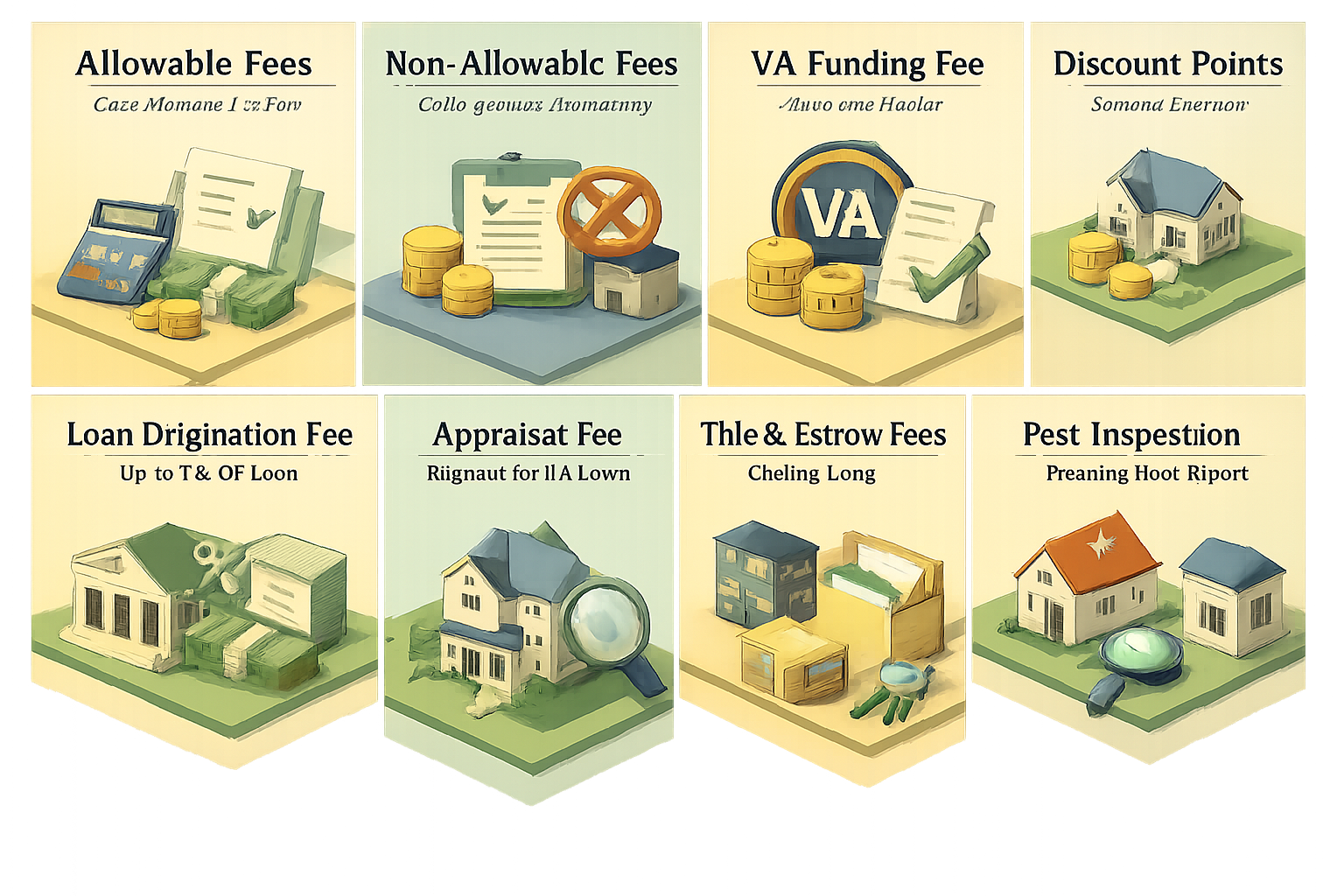
One of the most borrower-friendly aspects of VA financing is the distinction between allowable and non-allowable fees. The VA restricts which costs a veteran borrower can be charged, and this can meaningfully reduce what you owe at closing compared to conventional or FHA financing.
Fees Veterans Can Pay
- VA funding fee (unless exempt)
- Loan origination fee (up to 1% of the loan amount)
- VA appraisal fee
- Credit report fee
- Hazard insurance premiums
- Property taxes (prepaid at closing)
- Title insurance and title search fees
- Recording fees
- Survey fees (when required by the lender or local government)
- Flood determination fee
- Discount points (if the borrower chooses to buy down the rate)
Fees Veterans Cannot Be Charged
The VA prohibits lenders from charging veterans certain fees that are common in other loan types. These non-allowable fees include attorney fees charged by the lender, mortgage broker fees, prepayment penalties, and certain settlement or closing fees that exceed what's considered reasonable. If a seller or lender attempts to pass these costs to the veteran borrower, it's a red flag worth addressing with your loan officer.
In practice, sellers sometimes agree to pay the non-allowable fees on the veteran's behalf as part of negotiating the purchase contract. This is a common and accepted arrangement under VA guidelines, up to 4% of the loan amount in seller concessions.
Prepaid Costs and Escrow Reserves to Budget For
Beyond standard closing fees, veterans purchasing a modular home purchase with land will also encounter prepaid costs — expenses that aren't truly closing fees but are collected at closing to fund your escrow account and cover initial insurance and interest obligations.
- Homeowners insurance: Lenders typically require the first year's premium to be paid upfront at closing. For a modular home, insurance rates may vary depending on the construction type, location, and whether the home is newly built or existing.
- Prepaid interest: You'll owe interest for the days between your closing date and the end of that month. Closing earlier in the month means more prepaid interest; closing near the end of the month reduces this amount.
- Escrow reserves: Lenders typically collect two to three months of property taxes and homeowners insurance premiums to seed your escrow account. This ensures there are enough funds to cover future payments when they come due.
These prepaid items can add up to several thousand dollars depending on your loan amount, insurance premiums, and local property tax rates. It's important to factor them into your overall budget rather than treating them as separate from closing costs.
VA Loan Modular Home Fees Unique to Land Purchases
When land is included in the transaction, a few additional cost considerations may come into play. These VA loan modular home fees related to land can vary significantly by state, county, and lender.
Survey and Boundary Fees
If the land has not been recently surveyed, a licensed surveyor may need to establish or confirm property boundaries. This fee can range from a few hundred to over a thousand dollars depending on acreage and terrain complexity. In some states, a survey is legally required before title can transfer.
Title Search and Title Insurance
Because land transactions can carry a higher risk of title disputes — particularly in rural areas or with older parcels — a thorough title search is essential. Lender's title insurance is typically required, and purchasing an owner's title insurance policy is strongly advisable to protect your equity. Costs for both depend on the purchase price and state regulations.
Environmental and Well or Septic Inspections
Rural modular home purchases with land may involve private well and septic systems rather than municipal utilities. The VA may require a well water test and septic inspection to ensure the property meets minimum property requirements (MPRs). These inspections are generally modest in cost but should be included in your closing budget.
Manufactured or Modular Home Conversion Costs
If the modular home's title has not already been converted from personal property to real property (also called title elimination or title retirement), there may be additional filing and conversion fees. This step is typically required before a VA loan can close on the transaction, and it involves working with your state's department of motor vehicles or a title company.
Ways to Reduce Out-of-Pocket Closing Costs
The good news for veteran homebuyers is that there are several legitimate strategies to minimize what you pay out of pocket at closing on a modular home with land.
- Negotiate seller concessions: The VA allows sellers to contribute up to 4% of the loan amount toward the veteran's closing costs. This can cover the funding fee, prepaid taxes and insurance, and other allowable costs. In a buyer-friendly market, sellers may be willing to negotiate this as part of the purchase agreement.
- Roll the funding fee into the loan: Rather than paying the VA funding fee at closing, most borrowers choose to finance it within the loan balance. This eliminates one of the largest upfront costs, though it does slightly increase your monthly payment.
- Shop for competitive lender fees: Even within the VA's 1% origination cap, lenders structure fees differently. Getting Loan Estimates from multiple VA-approved lenders lets you compare and identify the most cost-effective option.
- Close near the end of the month: Reducing the number of days between your closing date and month-end minimizes prepaid interest at closing.
- Ask about lender credits: Some lenders offer credits that offset closing costs in exchange for a slightly higher interest rate. Whether this makes sense depends on how long you plan to keep the loan.
While none of these strategies eliminate closing costs entirely, combining several of them can meaningfully reduce the cash you need at closing.
●Conclusion
Understanding what are closing costs for a VA loan on a modular home with land is an essential step in planning your purchase with confidence. From the VA funding fee and origination charges to title insurance, appraisal fees, and land-specific costs, the total picture requires careful budgeting. Fortunately, the VA loan program includes meaningful consumer protections — including the non-allowable fee rules and the origination fee cap — that help keep costs manageable for eligible borrowers. By working with an experienced VA-approved lender, negotiating seller concessions, and planning your closing timeline strategically, you may be able to significantly reduce your out-of-pocket burden. If you're ready to explore your VA loan options for a modular home with land, speaking with a knowledgeable mortgage professional is the best next step toward making your homeownership goals a reality.