
Veterans and active-duty service members have earned access to one of the most powerful home financing tools available — the VA loan. But when your dream home happens to be a geodesic dome sitting on its own parcel of land, the path to closing gets a little more complex. Understanding what are closing costs for a VA loan on a geodesic dome home with land is essential before you make an offer or sign anything. This guide walks you through every layer of the cost structure, the VA's unique rules for non-traditional properties, and what you can do to keep more money in your pocket at the closing table.
Why Geodesic Dome Homes Present Unique Financing Challenges
Geodesic dome homes are admired for their structural efficiency, energy performance, and distinctive appearance. However, from a mortgage lender's perspective, they fall into a category often described as non-traditional or unique property types. This classification matters a great deal when you're applying for a VA loan.
The VA does not outright prohibit financing for geodesic dome homes, but it does require the property to meet its Minimum Property Requirements (MPRs). These standards ensure the home is safe, structurally sound, and sanitary. A dome home must pass a VA appraisal that specifically evaluates whether the structure meets those standards — and that's where things can get complicated.
When land is included in the purchase, the appraisal becomes even more involved. The appraiser must value both the structure and the acreage together, and they'll need to find comparable sales — often referred to in real estate as comps — for similar dome-style properties with land in the same area. In rural or less-populated markets, this can be genuinely difficult, potentially leading to a lower-than-expected appraised value or delays in the appraisal process.
It's also worth noting that not all VA-approved lenders are comfortable underwriting non-traditional property types. You may need to shop around to find a lender with experience in specialty or niche mortgage products before you can move forward.
Breaking Down VA Loan Closing Costs on a Dome Home Purchase
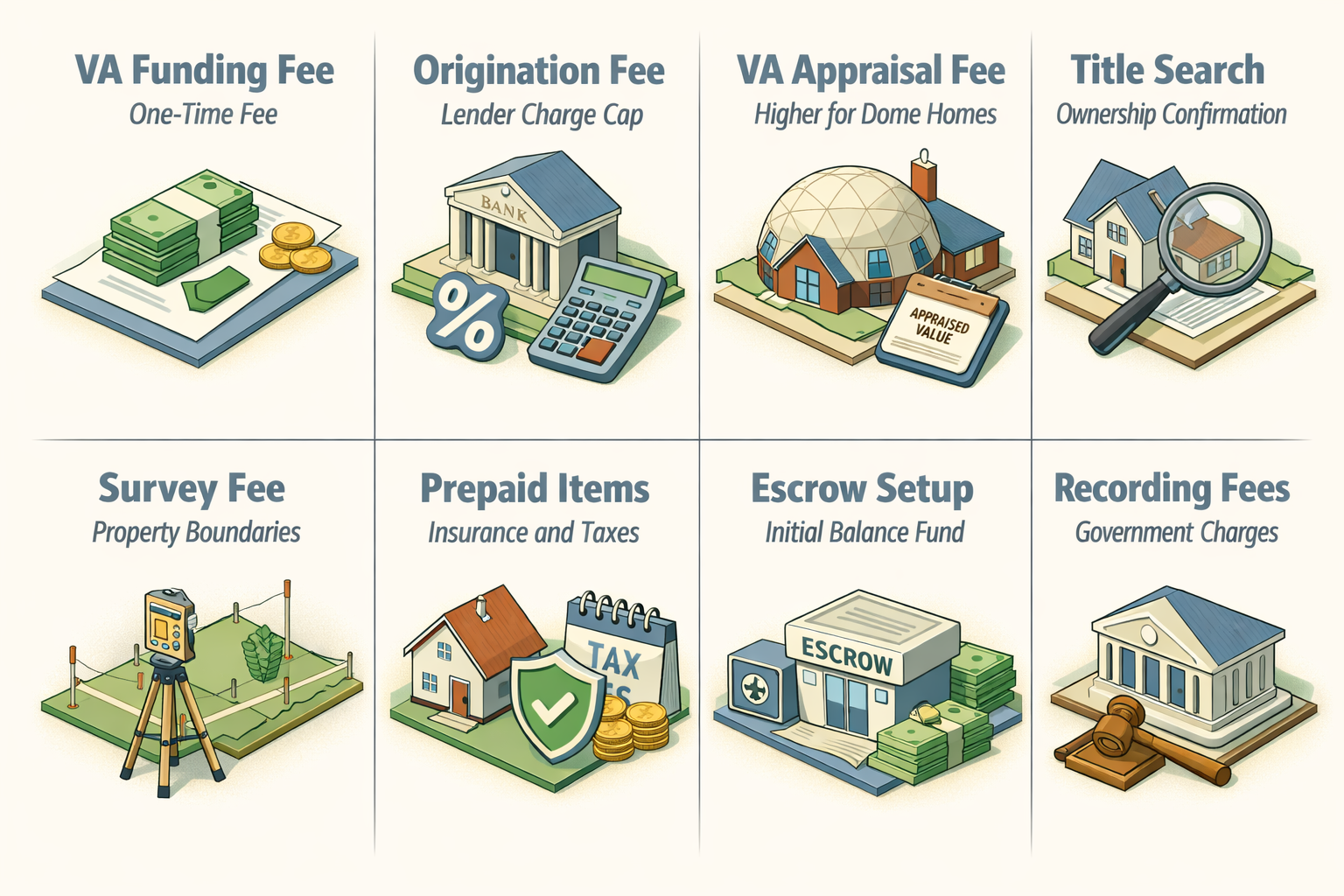
So, what are closing costs for a VA loan on a geodesic dome home with land? The short answer is that they follow the same general structure as any VA purchase loan, but several line items may be higher or more complex due to the property type. Here's a breakdown of what veterans can expect:
- VA Funding Fee: This is a one-time fee paid to the Department of Veterans Affairs to help sustain the loan program. The amount depends on your down payment and whether it's your first VA loan use. First-time users putting no money down typically pay around 2.15% of the loan amount, though this figure can vary and may be waived entirely for veterans with qualifying service-connected disabilities.
- Origination Fee: VA rules cap lender origination fees at 1% of the loan amount. This helps protect borrowers from excessive lender charges. However, this doesn't mean other fees disappear entirely.
- VA Appraisal Fee: For non-traditional properties like geodesic domes, the appraisal may cost more than a standard home appraisal. Fees vary by region, but you should budget for a potentially higher cost given the complexity of appraising a dome structure with land.
- Title Search and Title Insurance: When land is included, the title search must confirm clear ownership of both the structure and the parcel. This can add to the cost and time required to complete a thorough title review.
- Survey Fee: A land survey is often required or strongly recommended when raw or rural land is part of the transaction. This confirms property boundaries and can affect the final title insurance premium.
- Prepaid Items: These include prepaid homeowners insurance, prepaid property taxes, and mortgage interest for the remainder of the closing month. These are not negotiable in the traditional sense but are standard across most loan types.
- Escrow Setup (Impounds): Your lender will likely require an escrow account to collect property taxes and insurance monthly. At closing, you'll fund the initial escrow balance, typically covering two to three months of taxes and insurance.
- Recording Fees and Transfer Taxes: These are government charges for officially recording the deed and any applicable taxes on the property transfer. They vary by state and county.
In total, closing costs on a VA loan — including the funding fee — can range roughly between 3% and 6% of the loan amount, though the specific figure for a geodesic dome with land could be on the higher end depending on appraisal complexity, survey requirements, and local fee structures.
What the VA Allows Sellers to Pay on Your Behalf
One of the most veteran-friendly features of VA loans is the seller concession rule. The VA allows sellers to pay up to 4% of the loan amount in concessions toward the buyer's closing costs. This can be a powerful negotiating tool, especially in a buyer's market or when purchasing a property that has been sitting on the market for an extended period.
Seller concessions on a geodesic dome home with land may be easier to negotiate if the property has had limited buyer interest due to its unique nature. Sellers who are motivated may be willing to cover a meaningful portion of your closing costs to get the deal done.
It's important to understand that the 4% cap applies to certain costs, and some fees — like the VA funding fee — may or may not be covered depending on how the concession is structured. Your real estate agent and lender should work together to ensure any seller concession agreement is properly documented and falls within VA guidelines.
In addition to seller concessions, lenders sometimes offer lender credits, where the lender covers part of your closing costs in exchange for a slightly higher interest rate. This can reduce your out-of-pocket expenses at closing, though it increases your monthly payment over the life of the loan. Whether this trade-off makes sense depends on how long you plan to stay in the home.
How Land Inclusion Affects the Loan and Appraisal Process
When a geodesic dome home comes with land, lenders and appraisers must treat the entire package as a single unit. The VA requires that the land and dwelling be on the same deed and that the land amount be considered typical for the area. If the parcel is unusually large or includes income-producing features like agricultural operations, the VA may require additional review or could determine the property doesn't meet standard residential lending criteria.
For veterans purchasing a dome home on a larger rural parcel, it may be helpful to have the property appraised as a residential home with acreage rather than a farm or agricultural property. This distinction matters because VA loans are designed for residential use, not income-producing land. If the property is perceived primarily as farmland, you may need to explore alternative financing options for that portion of the purchase.
The appraisal process for a unique structure like a geodesic dome may also take longer than a standard home appraisal. VA appraisers must follow specific guidelines, and when comparable sales are scarce, the appraiser may need to expand their search radius or use alternative valuation methods. This can delay your closing timeline, so it's wise to account for extra time when planning your purchase.
Additionally, if the dome home is located in a rural area, your lender may need to confirm that utilities — including water, sewer or septic, and electricity — meet VA requirements. Well water must typically pass a water quality test, and septic systems must be in proper working condition. These inspections may add to your overall closing cost total.
Fees Veterans Cannot Be Charged Under VA Loan Rules
The VA loan program includes specific borrower protections that limit what lenders can charge veterans at closing. These non-allowable fees are one of the clearest advantages of VA loan closing costs, and knowing them can help you catch any errors on your Loan Estimate or Closing Disclosure.
Under VA guidelines, veterans generally cannot be charged the following fees:
- Attorney fees charged by the lender's attorney (unless the veteran chooses to hire their own attorney)
- Broker fees or commissions paid to the lender's mortgage broker
- Prepayment penalty fees
- Settlement, closing, or escrow fees charged by the lender beyond the 1% origination cap
- Document preparation fees charged by the lender
- Underwriting fees that exceed the 1% origination cap when combined with other lender charges
It's important to review your Loan Estimate carefully when buying a geodesic dome home with land, as some lenders — particularly those less experienced with VA loans — may inadvertently include non-allowable charges. If you spot something that doesn't look right, ask your loan officer to explain the fee and whether it complies with VA guidelines. A knowledgeable VA lender should be transparent and willing to walk you through every line item.
Tips for Reducing Out-of-Pocket Costs at Closing
Even with the protections built into the VA loan program, closing costs can still add up to a substantial sum — particularly for a unique property like a geodesic dome with land. Here are some practical strategies that may help reduce what you pay out of pocket:
- Negotiate seller concessions early: Make seller-paid closing costs a part of your initial offer. In markets where dome homes are harder to sell, sellers may be receptive to helping cover your costs.
- Finance the VA funding fee: Rather than paying the funding fee upfront, most veterans have the option to roll it into the loan amount. This keeps cash in your pocket at closing, though it does slightly increase your monthly payment.
- Shop for title and settlement services: Under federal law, you have the right to shop for certain closing services, including title insurance and settlement agents. Getting multiple quotes could save you a meaningful amount.
- Ask about lender credits: If you plan to sell or refinance within a few years, accepting a slightly higher rate in exchange for lender credits may make financial sense since you won't be paying the higher rate long enough for it to offset the savings at closing.
- Request a detailed Loan Estimate: Get your Loan Estimate as early as possible and review it line by line. Catching errors or non-allowable charges before closing is far easier than disputing them afterward.
- Work with a VA-experienced lender: A lender who regularly handles VA loans — especially those involving unique properties — is more likely to structure your loan efficiently and avoid costly mistakes.
●Conclusion
Purchasing a geodesic dome home with land using VA financing is absolutely possible, but it does require a bit more preparation and patience than a conventional purchase. Understanding what are closing costs for a VA loan on a geodesic dome home with land puts you in a much stronger position to budget accurately, negotiate confidently, and avoid surprises at the closing table. From the VA funding fee and appraisal costs to title searches, land surveys, and prepaid items, each expense plays a role in the total picture. By working with experienced professionals — including a VA-savvy lender and a real estate agent familiar with unique property types — you can navigate this process with confidence. Your service has earned you these benefits, and with the right guidance, your geodesic dome home could be closer than you think.