
Buying a home with a VA loan is one of the most powerful benefits available to eligible veterans, active-duty service members, and surviving spouses. But what happens when the home you want isn't a traditional single-family house? Geodesic dome homes are a growing choice for buyers who value energy efficiency, structural strength, and unique design. If you're wondering what are closing costs for a VA loan on a geodesic dome home, you're asking a very smart question — because this combination brings together two complex topics that deserve a thorough explanation. This guide walks you through everything you need to know about VA loan requirements, geodesic dome home financing, and the costs you should plan for before closing day.
Understanding the VA Loan Benefit and How It Works
The VA loan home loan program is backed by the U.S. Department of Veterans Affairs and is designed to help eligible borrowers purchase homes with favorable terms. One of the most notable advantages is that VA loans typically require no down payment, which can make homeownership far more accessible. They also tend to offer competitive interest rates and do not require private mortgage insurance, which saves borrowers money over time.
To use a VA loan, you'll need a Certificate of Eligibility (COE) that confirms you meet service requirements. Lenders will also review your credit score, income, and debt-to-income ratio. While the VA itself doesn't set a minimum credit score, most lenders prefer a score of at least 620. Income stability and residual income — the amount left over after paying your major monthly obligations — are also key factors in the approval process.
It's worth noting that VA loans can only be used for a primary residence. This means you can't use a VA loan to purchase an investment property or vacation home, even if it happens to be a geodesic dome. This is an important limitation to keep in mind as you explore your options.
What Is a Geodesic Dome Home and Why Financing It Can Be Tricky
A geodesic dome home is a structure built around a spherical framework of triangular panels. Popularized by architect Buckminster Fuller in the mid-20th century, these homes are celebrated for their energy efficiency, durability in extreme weather, and distinctive appearance. They can be permanent residences, and many owners find them to be cost-effective in terms of heating and cooling.
However, geodesic dome homes fall into what lenders often call non-traditional or unique property types. This classification can create real challenges when it comes to financing. Lenders — including those offering VA loans — may be cautious about approving financing for a geodesic dome because of concerns around appraisal accuracy, resale value, and marketability.
When a property is considered non-traditional, finding comparable sales (often called "comps") in the area can be very difficult. Appraisers rely on comps to determine a home's fair market value. If there aren't enough similar dome homes nearby that have sold recently, the appraiser may struggle to assign an accurate value — and this can slow down or even derail the loan approval process.
That said, financing a geodesic dome is not impossible. With the right lender who has experience in geodesic dome home financing and a property that meets VA minimum property requirements, it may absolutely be achievable.
VA Loan Requirements for Geodesic Dome Properties
When it comes to VA loan requirements geodesic dome homes must meet, the VA focuses heavily on the property's condition and livability rather than its architectural style. The VA loan requirements (MPRs) are a set of standards that ensure a home is safe, structurally sound, and sanitary. A geodesic dome that meets these standards could potentially qualify for a VA loan.
Here are some of the key property standards that a geodesic dome home would typically need to satisfy:
- Permanent foundation: The home must be built on a permanent foundation. A dome that sits on a temporary or non-standard base may not qualify.
- Adequate living space: The property must have sufficient space for living, sleeping, cooking, and sanitary facilities.
- Safe roofing and structure: The dome's triangular panel system must be in good condition with no signs of significant damage, leakage, or deterioration.
- Utilities and systems: Heating, plumbing, and electrical systems must be functional and meet local building codes.
- Access to the property: The home must have safe all-weather access from a public or private road.
A VA-approved appraiser will inspect the property and confirm whether it meets these requirements. Keep in mind that the appraiser's findings are not just about value — they also serve as a property condition review. If any issues are flagged, they may need to be resolved before the loan can move forward.
One additional consideration is zoning. Geodesic dome homes must be legally classified as residential properties in their jurisdiction. Some domes, particularly those built on rural or undeveloped land, may face zoning challenges that could affect eligibility for VA financing.
What Are Closing Costs for a VA Loan on a Geodesic Dome Home
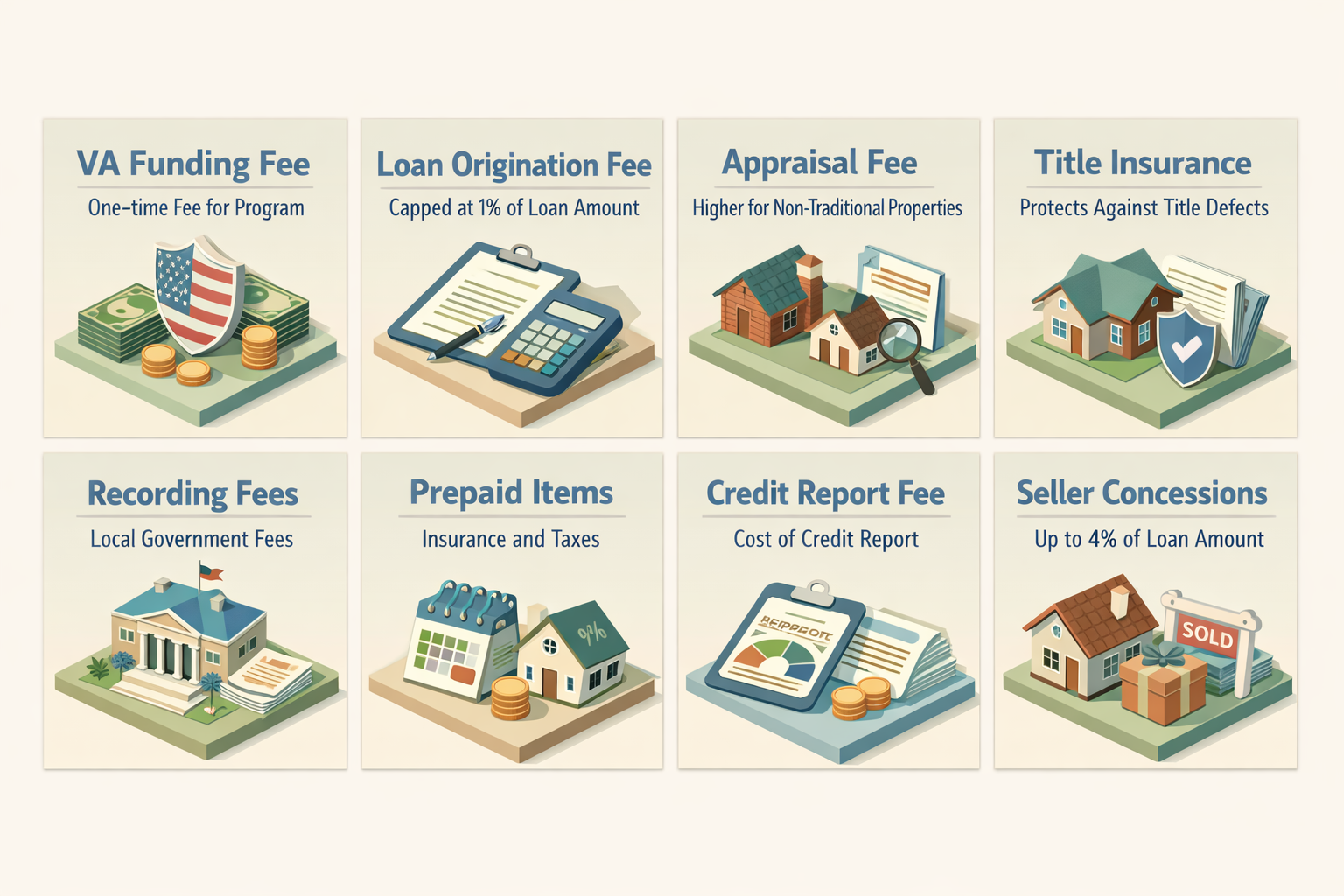
Now let's address the central question directly: what are closing costs for a VA loan on a geodesic dome home? The good news is that VA loans come with specific rules about which closing costs veterans can and cannot pay — and these rules apply regardless of whether the property is a traditional house or a geodesic dome.
Here's a breakdown of the typical closing costs you may encounter with a VA loan:
- VA Funding Fee: This is a one-time fee paid to the Department of Veterans Affairs. It helps sustain the loan program for future borrowers. The fee amount varies based on your down payment amount, whether it's your first VA loan use, and your military category. Some veterans, including those with service-connected disabilities, may be exempt from this fee.
- Loan Origination Fee: Lenders may charge an origination fee, which is capped at 1% of the loan amount under VA guidelines.
- Appraisal Fee: A VA-approved appraisal is required. For a geodesic dome, this fee might be slightly higher than average due to the complexity of appraising a non-traditional property type.
- Title Insurance and Search: This protects both you and the lender against any title defects or ownership disputes.
- Recording Fees: Local government fees for recording the deed and mortgage documents.
- Prepaid Items: These include prepaid homeowner's insurance, property taxes, and mortgage interest for the days remaining in the month of closing.
- Credit Report Fee: Lenders typically pass along the cost of pulling your credit report.
Under VA loan rules, there are certain fees that sellers — not buyers — are required to pay. These include real estate commissions, the brokerage fee, and any fees that exceed the VA's allowable amounts. This seller-paid structure can help reduce your out-of-pocket expenses at closing.
For a geodesic dome specifically, you may also encounter additional costs related to property inspections. Because dome homes have unique structural features, some lenders may require a specialized structural inspection in addition to the standard appraisal. This isn't universal, but it's worth budgeting for just in case.
Overall, closing costs on a VA loan typically range somewhere between 2% and 5% of the loan amount, though this can vary depending on your location, lender, and the specifics of the property transaction. For a geodesic dome, costs might trend toward the higher end of that range given the additional complexity involved.
How to Reduce Your Out-of-Pocket Closing Costs
One of the advantages of using a VA loan is that there are legitimate strategies to reduce how much cash you bring to the closing table. Here are a few worth considering:
- Ask for seller concessions: VA loan rules allow sellers to pay up to 4% of the loan amount in concessions, which can include the funding fee, prepaid costs, and other allowable expenses. Negotiating seller concessions into your purchase agreement can meaningfully reduce your costs.
- Roll the funding fee into the loan: Rather than paying the VA funding fee upfront, you may be able to finance it into your loan balance. This means you won't need that cash at closing, though it does slightly increase your monthly payment.
- Shop for lenders: Origination fees, discount points, and other lender-specific costs can vary. Comparing offers from multiple VA-approved lenders gives you leverage to negotiate better terms.
- Use a no-closing-cost loan option: Some lenders offer to cover closing costs in exchange for a slightly higher interest rate. This may make sense if you plan to sell or refinance within a few years before the higher rate adds up significantly.
For a geodesic dome purchase specifically, it's also wise to work with a real estate agent who has experience with non-traditional properties. They can help you structure your offer strategically, including negotiating seller-paid costs that make the deal more affordable.
Finding a VA-Approved Lender Experienced With Unique Property Types
Not all VA-approved lenders are equally comfortable with non-traditional homes. Because geodesic dome home financing falls outside the norm, you'll want to be intentional about choosing a lender who understands the nuances involved. Here are some tips for finding the right fit:
- Ask directly about experience with unique properties: When you contact lenders, ask whether they've previously financed geodesic dome homes or other non-traditional structures. A lender with relevant experience will be better equipped to navigate potential challenges.
- Look for portfolio lenders: Some lenders keep loans in-house rather than selling them to the secondary market. Portfolio lenders often have more flexibility when it comes to non-conforming property types.
- Check with VA-specialized mortgage brokers: Mortgage brokers who focus heavily on VA loans may have access to a wider network of lenders and can help match you with one that's open to dome home financing.
- Verify lender approval status: Make sure any lender you work with is VA-approved and in good standing. You can use the VA's lender search tool to confirm this.
The right lender won't just help you close the loan — they'll also help you anticipate potential appraisal issues, guide you through the VA's property eligibility process, and keep your timeline on track.
●Conclusion
Buying a geodesic dome home with a VA loan is an ambitious but potentially achievable goal for eligible veterans and service members. Understanding what are closing costs for a VA loan on a geodesic dome home is just one piece of the puzzle. You'll also need to confirm that the property meets VA minimum property requirements, work with a lender experienced in non-traditional home financing, and budget thoughtfully for any additional costs that may come with appraising a unique structure.
The path may require more patience and preparation than a conventional home purchase, but the rewards — including no down payment, competitive rates, and no private mortgage insurance — can make it well worth the effort. If you're ready to explore your options, LoanWise is here to help you connect with experienced VA loan professionals who understand the full picture of geodesic dome home financing. Reach out today and take the first step toward making your dome dream a reality.