
If you're exploring USDA financing for a farm purchase, you've probably already discovered how attractive the program's terms can be. Low interest rates, flexible credit guidelines, and even zero-down options make USDA loans a compelling choice for rural property buyers. But one question that frequently catches buyers off guard is: what are closing costs for a USDA loan on a multi-unit farm property? The answer isn't always straightforward, because farm properties come with unique characteristics that can affect the types and amounts of fees involved. This guide breaks down everything you need to know so you can plan ahead and avoid surprises at the closing table.
Understanding USDA Loan Programs and Farm Property Eligibility
Before diving into closing costs, it helps to understand which USDA loan programs apply to farm and multi-unit rural properties. The USDA offers several distinct financing options, and not all of them are designed for farm real estate with income-producing units.
- USDA Section 502 Direct Loans — Designed for low-to-very-low-income borrowers purchasing modest homes in eligible rural areas. These loans are typically limited to primary residences and may not accommodate large multi-unit farm operations.
- USDA Section 502 Guaranteed Loans — Offered through approved private lenders and backed by the USDA. These loans serve moderate-income borrowers and may have more flexibility for certain rural properties.
- USDA Farm Service Agency (FSA) Loans — Specifically designed for agricultural producers, including farm ownership loans and operating loans. These are often the most relevant option for buyers purchasing a working multi-unit farm property.
Multi-unit farm properties — think a primary farmhouse alongside tenant cottages, barns converted to living quarters, or agricultural worker housing — can add complexity to the loan approval process. Lenders will evaluate the income-producing potential of additional units, the land's agricultural use, and whether the property meets USDA's eligibility requirements for the specific loan type. It's worth confirming eligibility early with a USDA-approved lender or your local FSA office before assuming a property will qualify.
What Are Closing Costs for a USDA Loan on a Multi-Unit Farm Property
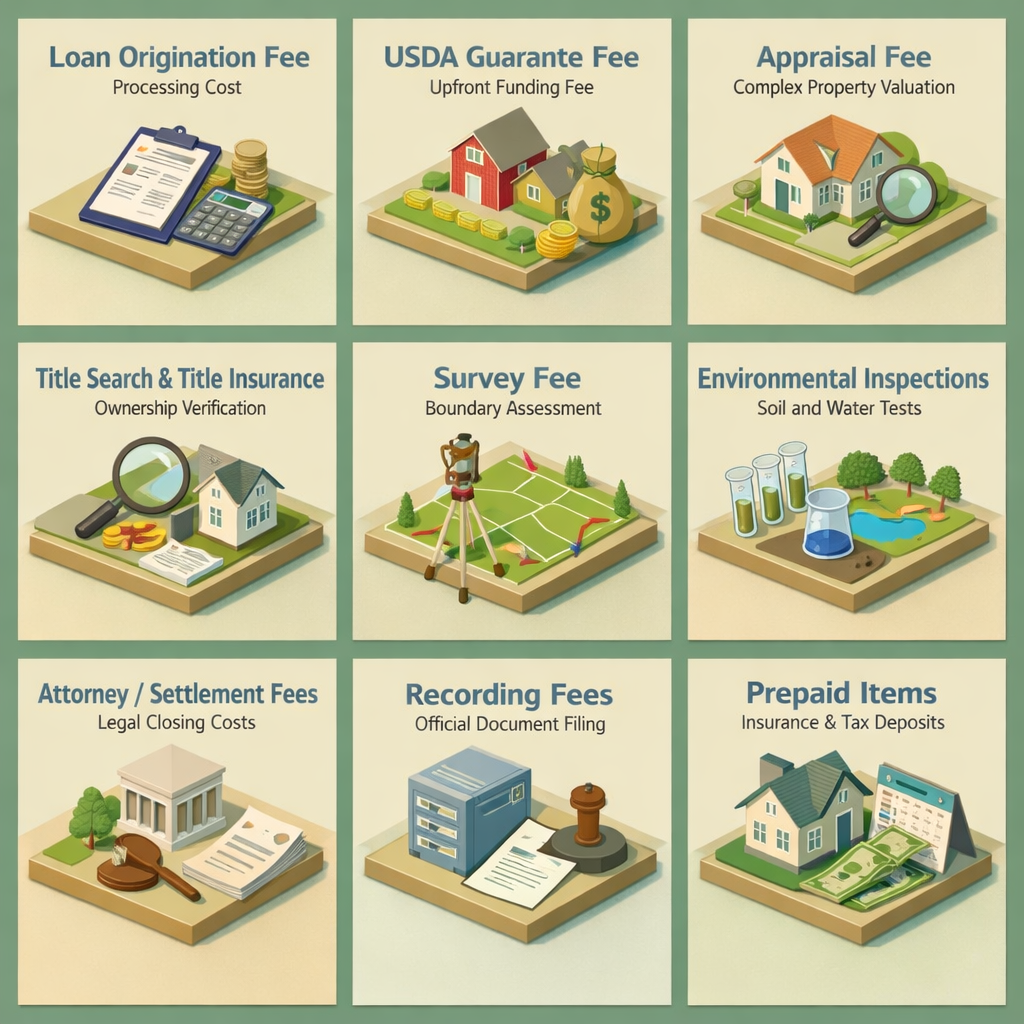
So, what are closing costs for a USDA loan on a multi-unit farm property? In general, USDA loan closing costs share many similarities with those on conventional or FHA loans, but there are program-specific fees and farm-related expenses that make them unique. Closing costs typically range from roughly 2% to 5% of the loan amount, though farm properties may push that range higher due to specialized appraisals and other agricultural assessments.
Here's a breakdown of the most common closing cost categories you can expect:
- Loan Origination Fee — Charged by the lender to process the loan. This is often expressed as a percentage of the loan amount, typically around 1%, though it may vary by lender.
- USDA Guarantee Fee — For USDA Guaranteed loans, borrowers pay an upfront guarantee fee (often referred to as a funding fee). This fee may be financed into the loan rather than paid at closing, which is a notable USDA benefit. There is also an annual fee that functions similarly to mortgage insurance.
- Appraisal Fee — Farm and multi-unit rural property appraisals are more complex than standard residential appraisals. Expect higher appraisal fees because the appraiser must evaluate agricultural land, outbuildings, multiple housing units, and income potential. Appraisal costs for farm properties could run significantly higher than residential-only appraisals.
- Title Search and Title Insurance — These fees cover verification of the property's ownership history and protection against future title disputes. Farm properties with long ownership histories or complex easement situations may result in higher title-related costs.
- Survey Fee — Multi-unit farm properties often require updated boundary surveys, especially if acreage is involved. This can add meaningful cost depending on the property's size and location.
- Environmental or Agricultural Inspections — Lenders may require soil tests, water quality reports (especially if the property uses a private well), septic inspections, and other environmental assessments. These are common on farm properties and can add several hundred dollars or more to closing costs.
- Attorney or Settlement Fees — Depending on your state, an attorney may be required to handle the closing. Settlement agent fees vary by location.
- Recording Fees — Charged by the local government to officially record the deed and mortgage documents.
- Prepaid Items — These include homeowner's insurance premiums, prepaid interest, and the initial escrow deposits for property taxes and insurance. Farm properties with multiple structures may require broader insurance coverage, potentially increasing prepaid costs.
USDA-Specific Fee Advantages That Benefit Farm Buyers
One of the most appealing features of USDA financing is its cost-saving structure. While farm property closing costs can be higher than standard home purchases, the USDA program provides several benefits that help offset out-of-pocket expenses.
No down payment requirement is perhaps the most significant advantage. Eligible borrowers using USDA Guaranteed loans may finance 100% of the purchase price, preserving cash that can then be directed toward closing costs or farm improvements.
Additionally, the upfront guarantee fee can often be rolled into the loan balance, meaning you don't have to bring that amount to the closing table. This is particularly helpful when purchasing a high-value farm property where the guarantee fee could be a substantial dollar amount.
USDA Direct Loans may also offer payment assistance to qualifying low-income borrowers, which can reduce the effective interest rate and overall loan cost over time. This doesn't directly reduce closing costs but improves long-term affordability.
It's also worth noting that USDA loans do not require private mortgage insurance (PMI) in the traditional sense. Instead, the guarantee fee and annual fee serve a similar purpose but are often less expensive than PMI on conventional loans, which can improve the overall cost profile of the loan.
Negotiating and Reducing Your Upfront Expenses
Closing costs on a multi-unit farm property can feel daunting, but there are several legitimate strategies that may help reduce what you pay out of pocket.
Seller Concessions
USDA guidelines typically allow sellers to contribute toward the buyer's closing costs. In a buyer-friendly market, negotiating seller concessions into the purchase agreement could cover a meaningful portion of your fees. The seller concession limits vary by loan type, so confirm the maximum allowed amount with your lender.
Lender Credits
Some lenders offer credits in exchange for a slightly higher interest rate. This can reduce upfront expenses if cash is tight, though it means paying more over the life of the loan. Weigh this tradeoff carefully with your mortgage advisor.
Shop Around for Third-Party Services
Fees for services like title insurance, settlement agents, and pest inspections are often negotiable or can be shopped. Your lender is required to provide a Loan Estimate that identifies which services you can shop for independently. Taking advantage of this can yield real savings.
Request Fee Waivers or Reductions
Depending on the lender and loan program, certain fees may be waivable or reduced for first-time buyers, veterans, or low-income borrowers. It never hurts to ask your lender directly about any available fee reductions.
Financing Eligible Costs Into the Loan
If the appraised value exceeds the purchase price, USDA guidelines may allow eligible closing costs to be financed into the loan balance. This is not always possible, but it's worth exploring if you expect a strong appraisal on the farm property.
Agricultural Appraisals and Their Impact on Total Loan Costs
One area where multi-unit farm property buyers often underestimate costs is the appraisal process. Agricultural appraisals are fundamentally different from standard home appraisals, and they're worth understanding in detail.
A farm property appraisal must account for several value-influencing factors, including:
- The market value of the agricultural land itself, including soil quality, water rights, and drainage
- The value of farm structures such as barns, silos, equipment sheds, and livestock facilities
- The value of any residential units on the property, including the primary home and any tenant or worker housing
- Income potential from leased farmland or rental units
- Local comparable sales, which can be harder to find in rural markets
Because of this complexity, agricultural appraisers typically charge more than residential appraisers, and the turnaround time may be longer. Budgeting appropriately for an agricultural appraisal is important — costs could range from several hundred to over a thousand dollars depending on property size and location. In some rural markets, the availability of qualified agricultural appraisers may also be limited, potentially causing delays in the closing timeline.
USDA-approved lenders will typically require an appraiser who meets USDA's competency standards for the property type. If you're working with an FSA loan, the appraisal process may follow slightly different guidelines than the Guaranteed loan program. Confirm the appraisal requirements upfront to avoid unexpected costs or timeline issues.
Loan Estimate and Closing Disclosure: Your Cost Transparency Tools
Federal law requires lenders to provide borrowers with a Loan Estimate within three business days of receiving a complete loan application. This document itemizes all estimated closing costs so you can review them before committing to a lender. For a multi-unit farm property purchase, the Loan Estimate is especially valuable because it will reflect the specialized fees associated with your property type.
Review the Loan Estimate carefully, paying close attention to:
- The origination charges section, which covers lender fees
- Services you can and cannot shop for
- Prepaids and escrow setup amounts
- The USDA guarantee fee and how it's being handled (financed or paid at closing)
Shortly before closing, you'll receive a Closing Disclosure, which shows the final, confirmed costs. Federal rules generally prohibit significant increases between the Loan Estimate and Closing Disclosure for most fee categories, so comparing both documents carefully can help you catch any discrepancies early.
If anything looks different from what you expected, don't hesitate to ask your lender for a clear explanation. Understanding every line item protects you as a borrower and ensures there are no unwelcome surprises on closing day.
●Conclusion
Purchasing a multi-unit farm property is an exciting opportunity, and USDA financing can make it significantly more accessible. But knowing what are closing costs for a USDA loan on a multi-unit farm property — and planning for the unique expenses that come with agricultural real estate — is essential for a smooth transaction. From agricultural appraisals and environmental inspections to the USDA guarantee fee and title-related costs, the fees add up faster on farm properties than on standard residential purchases. The good news is that there are real strategies to manage these costs, from seller concessions to financing eligible fees into your loan. Working with a USDA-experienced lender who understands farm property financing will be one of the most valuable steps you can take. At LoanWise, we're here to help you navigate USDA loan for farm property closing costs and every other detail of your rural property purchase. Connect with our team today to get a personalized Loan Estimate and start your journey toward farm ownership with confidence.