If you're getting ready to buy a home or refinance your current mortgage, you've probably heard the term "closing costs" come up more than once. But what exactly do they include, and how much should you expect to pay? Understanding what are closing costs for a conventional loan is one of the most important steps in preparing for a smooth home purchase. These fees can add thousands of dollars to your upfront expenses, and being caught off guard at the closing table is something every homebuyer wants to avoid. This guide will walk you through each major cost category, explain who charges what, and give you practical strategies to manage the financial impact.
The Basics: Defining Closing Costs on a Conventional Mortgage
Closing costs are the fees and expenses you pay to finalize your mortgage loan. They're separate from your down payment and typically due on the day you sign all of your loan documents — which is why that day is called "closing." On a conventional loan, these costs generally cover a wide range of services, from the lender's administrative work to third-party professionals like appraisers, title companies, and attorneys.
A conventional loan is any mortgage that isn't backed by a government agency like the FHA, VA, or USDA. Because of this, the fee structure may differ slightly from government-backed loans, though many costs are similar across loan types. Conventional loans typically follow guidelines set by Fannie Mae or Freddie Mac, and those guidelines include certain rules about what lenders can and cannot charge.
It's worth noting that closing costs aren't a single flat fee. They're a collection of individual charges bundled together at the end of your transaction. Some are fixed regardless of your loan size, while others are calculated as a percentage of your loan amount. Understanding this distinction can help you estimate your total costs more accurately before you get to the closing table.
Average Closing Costs on a Conventional Mortgage: What the Numbers Look Like
When homebuyers ask about average closing costs on a conventional mortgage, the answer is rarely simple. Costs can vary based on your location, loan amount, lender, and the complexity of your transaction. That said, closing costs on a conventional loan typically range from about 2% to 5% of the total loan amount. On a $300,000 mortgage, that could mean anywhere from $6,000 to $15,000 in closing expenses.
Some states tend to have higher closing costs than others, largely due to differences in local taxes, attorney requirements, and recording fees. Metropolitan areas may also carry higher costs than rural markets. Your lender is required to provide you with a Loan Estimate within three business days of receiving your application, which will give you a detailed breakdown of expected closing costs. Later, you'll receive a Closing Disclosure at least three business days before your closing date, which finalizes those numbers.
Keep in mind that these figures are estimates based on general lending knowledge. Actual costs will vary, and it's always a good idea to review your Loan Estimate carefully and ask your lender to explain any line item that isn't clear to you.
Conventional Loan Fees Breakdown: Who Charges What
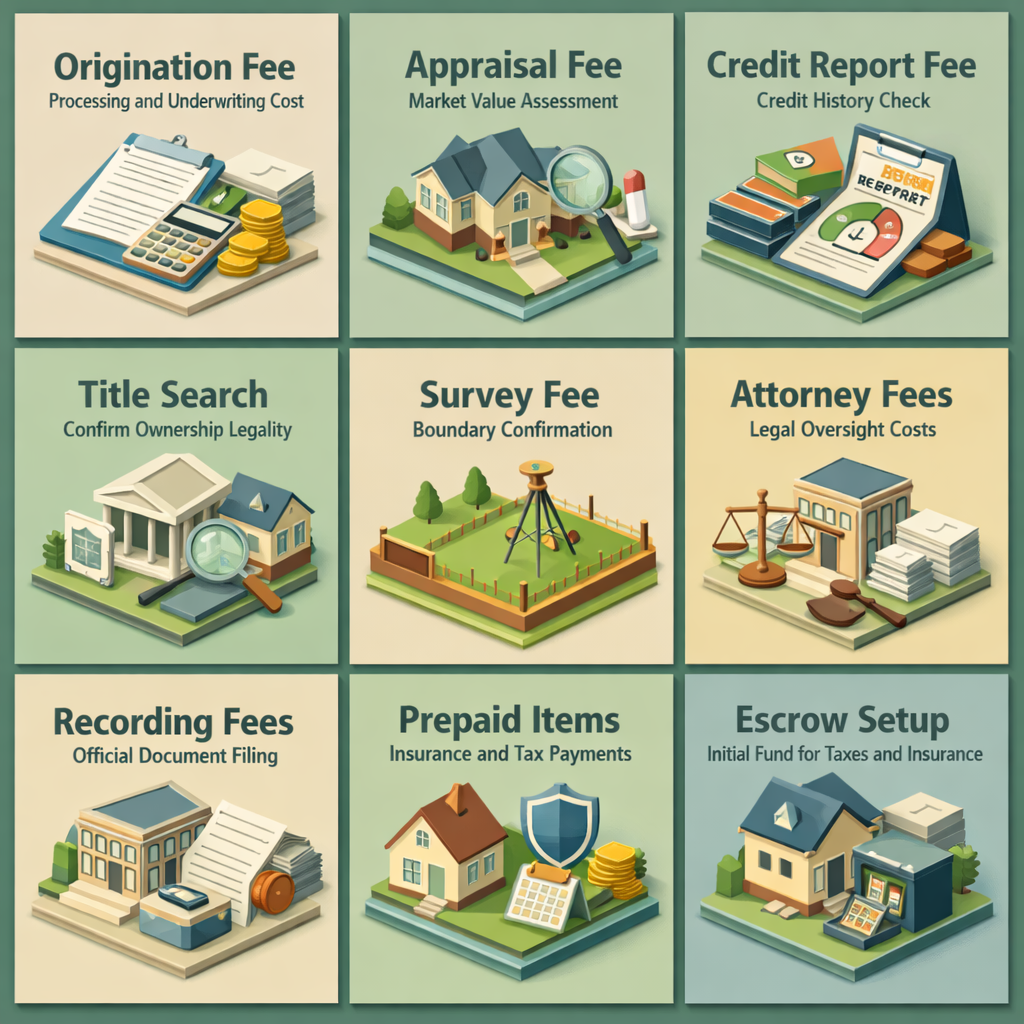
One of the most helpful things you can do when preparing for closing is to understand the different categories of fees and which parties charge them. Here's a closer look at the most common charges you're likely to see in a conventional loan fees breakdown:
- Origination Fee: This is charged by your lender and typically covers the cost of processing and underwriting your loan. It may be listed as a flat fee or as a percentage of the loan amount, often around 0.5% to 1%.
- Appraisal Fee: A licensed appraiser will assess the market value of the home to confirm it supports the loan amount. This fee generally ranges from a few hundred dollars to over $700 depending on the property type and location.
- Credit Report Fee: Lenders pull your credit history during the application process, and this small fee covers that cost. It's usually modest but will appear on your Loan Estimate.
- Title Search and Title Insurance: A title company reviews public records to confirm the seller legally owns the property and that there are no outstanding liens or claims. Both lender's title insurance and owner's title insurance may be required or recommended.
- Survey Fee: In some states or situations, a property survey may be required to confirm boundary lines and identify any encroachments.
- Attorney Fees: Several states require a real estate attorney to oversee or review the closing. If yours does, you'll need to budget for legal fees.
- Recording Fees: Your local government charges a fee to officially record the deed and mortgage in public records.
- Prepaid Items: These aren't technically fees, but they're collected at closing. They typically include prepaid homeowners insurance, prepaid property taxes, and prepaid mortgage interest covering the period between closing and your first payment due date.
- Escrow Account Setup: If your lender requires an escrow account for taxes and insurance, you may need to fund several months' worth of those expenses upfront at closing.
This breakdown highlights why closing costs can add up quickly — even before you account for state-specific charges or optional add-ons like owner's title insurance upgrades.
Understanding Lender Fees on a Conventional Loan
When it comes to understanding lender fees on a conventional loan, it helps to separate lender-controlled costs from third-party costs. Lender fees are the charges your mortgage company applies directly and may include the origination fee, underwriting fee, processing fee, and rate lock fee. These vary widely from one lender to another, which is one of the strongest reasons to compare Loan Estimates from multiple lenders before committing.
Some lenders advertise "no origination fee" loans or even "no closing cost" mortgages. While these options can reduce your upfront expenses, they often come with a tradeoff — typically a slightly higher interest rate over the life of the loan. This is known as using lender credits to offset closing costs. Whether this is a smart move depends on how long you plan to stay in the home and whether a lower rate over many years outweighs the savings on upfront fees.
Discount points are another lender fee worth understanding. Paying points means you're prepaying interest at closing in exchange for a lower ongoing interest rate. One point typically equals 1% of the loan amount. If you plan to keep the loan for a long time, buying down your rate this way might save you money over the long run — but it increases your upfront closing costs significantly.
Third-party fees, on the other hand, are paid to outside providers like appraisers, title companies, and inspectors. While your lender will suggest or require certain providers, you often have the right to shop around for some of these services. The Loan Estimate will indicate which fees are "shoppable," giving you the opportunity to compare and potentially save.
What to Expect for Closing Costs as a First-Time Homebuyer
If you're a first-time homebuyer, knowing what to expect for closing costs can feel overwhelming — especially when you're already focused on saving for a down payment. The good news is that there are ways to reduce or manage these costs, even if you can't eliminate them entirely.
One of the most common strategies is to negotiate seller concessions. In a buyer-friendly market, sellers may agree to cover a portion of your closing costs as part of the sale agreement. On a conventional loan, the amount a seller can contribute toward your closing costs is limited based on your down payment percentage. For example, if you're putting down less than 10%, seller contributions are typically capped at 3% of the purchase price. If you're putting down 10% to 25%, that cap may rise to 6%, and contributions over 25% down could be higher still.
Another option is to roll some of your closing costs into the loan itself. While this increases your loan balance and the amount of interest you'll pay over time, it can make homeownership accessible for buyers who are short on liquid cash. Additionally, some state and local housing agencies offer down payment and closing cost assistance programs for qualifying buyers — particularly first-time purchasers or those buying in targeted areas.
Working with an experienced mortgage advisor can help you explore all available options and find the approach that makes the most sense for your situation.
How to Reduce Closing Costs on a Conventional Loan
While you can't eliminate closing costs entirely, there are smart, proven ways to bring them down. Here are several strategies worth considering:
- Shop multiple lenders: Interest rates and lender fees can vary significantly. Comparing Loan Estimates from at least three different lenders gives you a clear picture of where you can save.
- Negotiate lender fees: Some fees, like origination and processing charges, may have room for negotiation, especially if you have strong credit and a solid financial profile.
- Shop third-party services: Your Loan Estimate will indicate which services you can shop for independently. Getting quotes from multiple title companies or settlement service providers could save you a meaningful amount.
- Ask about lender credits: If reducing upfront costs is your priority, ask your lender about credit options in exchange for a slightly higher rate. This works best for buyers who don't plan to stay long-term.
- Time your closing strategically: Closing near the end of the month reduces the amount of prepaid daily interest you'll owe at closing, since interest accrues from the closing date to the end of that month.
- Look into assistance programs: Many state housing finance agencies and nonprofits offer grants or forgivable loans to help cover closing costs, particularly for first-time buyers or moderate-income households.
Even saving a small percentage of your total closing costs can make a meaningful difference — especially for buyers working with a tight upfront budget.
●Conclusion
Understanding what are closing costs for a conventional loan is one of the most practical things you can do before beginning your homebuying journey. These fees are a normal part of the mortgage process, but that doesn't mean you have to accept them without question. By learning what each charge covers, comparing lenders, and exploring options like seller concessions or assistance programs, you can approach closing day with confidence rather than surprise. If you're ready to explore your conventional loan options or want a clearer picture of the costs involved, the team at LoanWise is here to help you navigate every step of the process.