
When it comes to VA home loans, most veterans are familiar with the zero-down-payment benefit and the absence of private mortgage insurance. But there's another requirement that often catches applicants off guard: VA loan residual income. Unlike conventional loans that lean heavily on debt-to-income ratios, VA loans place significant weight on how much money you have left over after paying your monthly obligations. Understanding how residual income works could be the difference between a smooth approval and an unexpected denial — even if your credit score looks strong on paper.
What VA Loan Residual Income Actually Means
Residual income refers to the amount of money a borrower has remaining each month after covering all major financial obligations. For VA loan purposes, these obligations typically include the proposed housing payment, installment debts, revolving debts, and certain other recurring expenses. What's left over is your residual income — and the VA has established minimum thresholds that borrowers must meet based on their family size and geographic region.
This requirement exists to ensure that veterans and active-duty service members can comfortably afford day-to-day living expenses — things like groceries, utilities, healthcare, and transportation — even after the mortgage is paid. It's a consumer-protection feature built into the VA loan program that reflects the Department of Veterans Affairs' commitment to long-term borrower stability, not just approval eligibility.
It's worth noting that VA loan residual income is not the same as disposable income or take-home pay. It's a calculated figure that follows a specific formula, and meeting the threshold matters a great deal to VA-approved lenders reviewing your file.
How Residual Income Is Calculated for VA Loans
The calculation starts with your gross monthly income — the total amount you earn before taxes. From that figure, lenders subtract federal, state, and local taxes, Social Security contributions, and any retirement fund deductions. The result is an approximation of your take-home pay.
Next, lenders subtract your proposed monthly housing payment, which includes principal, interest, taxes, homeowners insurance, and any applicable homeowners association fees. They also deduct other monthly debt obligations such as car loans, student loans, and minimum credit card payments.
The remaining figure must meet or exceed the VA's residual income guidelines. Those guidelines vary based on two factors:
- Loan amount: There are different thresholds for loans below and above $80,000.
- Family size and region: The VA divides the country into four regions — Northeast, Midwest, South, and West — and sets minimum residual income amounts for each based on family size, ranging from one person to five or more.
For example, a family of four purchasing a home in the South may face a different residual income requirement than a single veteran purchasing in the West. While the exact figures are published in VA lender guidelines and may change over time, the underlying logic remains consistent: larger families in higher cost-of-living regions generally need more residual income to qualify.
Why Residual Income Can Matter More Than Your Debt-to-Income Ratio
Most conventional and FHA loan programs place their greatest emphasis on the debt-to-income (DTI) ratio — the percentage of your gross monthly income consumed by debt payments. The VA loan program does consider DTI, and a ratio above 41% may trigger additional scrutiny. However, what makes VA loans unique is that strong residual income can actually offset a high DTI ratio in many cases.
This is a meaningful distinction for veterans who may carry significant debt but also earn strong incomes or receive tax-free military allowances. If your residual income comfortably exceeds the minimum threshold — sometimes by 20% or more — a lender may be willing to approve your loan even if your DTI edges higher than conventional benchmarks.
Conversely, a borrower with a low DTI but insufficient residual income could still face denial. This is why it's important not to assume that a good credit score or manageable debt load automatically translates to VA loan approval. The residual income test adds a layer of evaluation that's specifically designed to protect both the borrower and the lender over the life of the loan.
Income Sources That Count Toward Your Residual Income Calculation
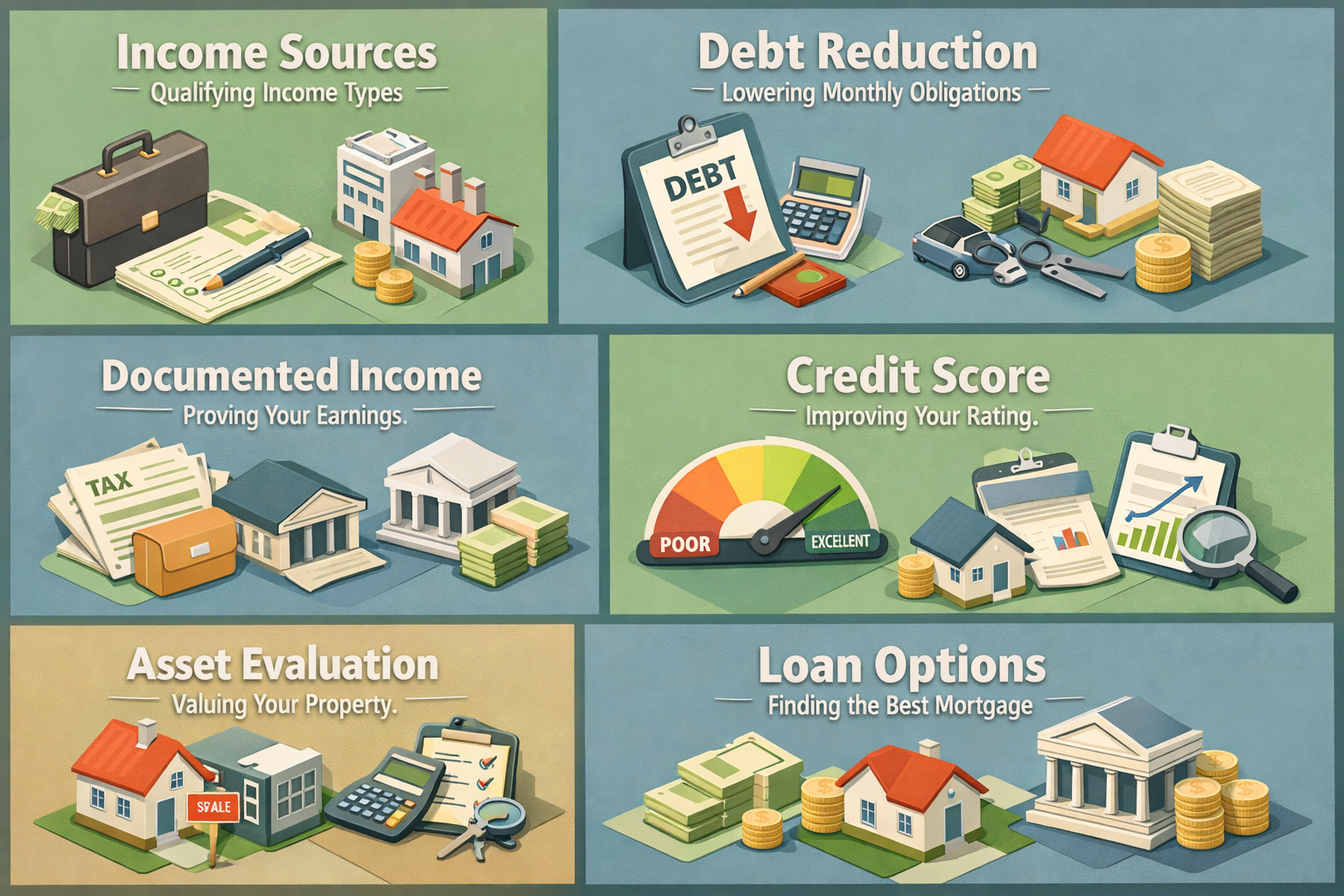
VA lenders are typically permitted to count a wide range of verifiable income sources when calculating your gross monthly income. Understanding what qualifies can help you present the strongest possible financial profile during the application process.
- Base salary or wages: Regular employment income supported by pay stubs and W-2s is the most straightforward qualifying source.
- Military allowances: Basic Allowance for Housing (BAH) and Basic Allowance for Subsistence (BAS) are generally non-taxable and may be grossed up, potentially increasing the income figure used in calculations.
- Self-employment income: Borrowers who are self-employed may qualify using two years of tax returns, though lenders will typically use the net income figure after business expenses.
- Rental income: If you own other properties, a portion of rental income may count, provided it's documented and has a consistent history.
- Retirement and pension income: Regular distributions from retirement accounts or pension plans are typically accepted when documented.
- Disability compensation: VA disability payments are non-taxable and may also be grossed up in some cases, which could meaningfully strengthen your residual income position.
It's always a good idea to work with a VA-experienced loan officer who understands how to properly document and present each income type, as lender overlays and internal policies can affect what's accepted.
Strategies to Strengthen Your Residual Income Before Applying
If your initial residual income calculation falls short of the required threshold, there are several steps you might take to improve your position before submitting a loan application.
Pay down existing debts. Reducing your outstanding installment or revolving debt balances lowers your required monthly obligations, which directly increases your residual income. Even eliminating one car payment or a small personal loan could meaningfully shift the calculation in your favor.
Increase your documented income. If you've recently received a raise, started a side business, or begun receiving additional allowances, make sure those income sources are fully documented. A year-end pay stub, a promotion letter, or updated tax returns may all help.
Consider the loan amount. Choosing a slightly less expensive home may reduce the proposed housing payment and, in turn, increase your residual income. It's not always the most appealing option, but it can be a practical path to homeownership if you're close to the threshold.
Reduce upfront costs through seller concessions. While this doesn't directly affect residual income, lowering out-of-pocket costs at closing can free up financial reserves that lenders look upon favorably.
Working with a lender who specializes in VA loans is often the most efficient approach. They can run a pre-qualification scenario before you formally apply, helping you identify potential gaps and address them with time to spare.
How Residual Income Applies to VA Refinance Loans
Residual income requirements don't disappear once you're already a homeowner. If you're pursuing a VA cash-out refinance, the full residual income analysis typically applies — just as it would for a purchase loan. Since a cash-out refinance results in a new loan with a new payment, lenders need to verify that your finances can support the updated obligation.
The VA Interest Rate Reduction Refinance Loan (IRRRL), sometimes called the VA streamline refinance, generally has a more relaxed set of requirements. In many cases, the IRRRL process allows lenders to waive certain income verification steps if the new payment is lower than the existing one. However, individual lenders may still apply residual income checks as part of their own underwriting overlays, so it's worth asking your lender exactly what documentation they'll require.
For homeowners looking to tap equity through a cash-out refinance, understanding VA loan residual income requirements ahead of time can help you plan the loan amount strategically and avoid surprises during underwriting.
●Conclusion
VA loans are among the most powerful financing tools available to eligible veterans, active-duty service members, and qualifying surviving spouses. The residual income requirement, while sometimes misunderstood, is actually one of the program's greatest strengths — it helps ensure that borrowers aren't stretched too thin after closing. By understanding how residual income is calculated, which income sources count, and what strategies can improve your standing, you're better positioned to navigate the VA loan process with confidence. If you're ready to explore your options, speaking with a VA-experienced mortgage professional is a smart first step toward turning your homeownership goals into reality.