For those who've served in the U.S. military, buying a home comes with a unique set of advantages that most civilians simply don't have access to. Understanding VA loan benefits for veterans is one of the most important steps any eligible service member, veteran, or surviving spouse can take when planning to purchase or refinance a home. These government-backed loans, provided through the U.S. Department of Veterans Affairs, were created to help veterans achieve homeownership with fewer financial barriers. Whether you're a first-time homebuyer or looking to refinance an existing mortgage, the VA loan program may offer you terms that are difficult to match anywhere else in the lending market.
What Makes VA Loans Different From Conventional Mortgages
At their core, VA loans are mortgage loans that are partially guaranteed by the federal government through the Department of Veterans Affairs. This guarantee reduces the risk for approved lenders, which in turn allows them to offer more favorable terms to eligible borrowers. Unlike conventional mortgages, VA loans are specifically designed with the needs of military families in mind.
One of the most immediately noticeable differences is that VA loans typically do not require private mortgage insurance, commonly known as PMI. With a conventional loan, if a borrower puts down less than 20% of the home's purchase price, they're usually required to pay PMI — an added monthly cost that can run into hundreds of dollars. VA loans eliminate this expense entirely, which can result in meaningful savings over the life of the loan.
Additionally, VA loans tend to come with more flexible credit and income requirements compared to conventional financing options. Lenders participating in the VA program often work with borrowers who may not qualify for traditional mortgages, making homeownership more accessible for a broader range of veterans and military families.
VA Loan Eligibility for Veterans: Who Qualifies
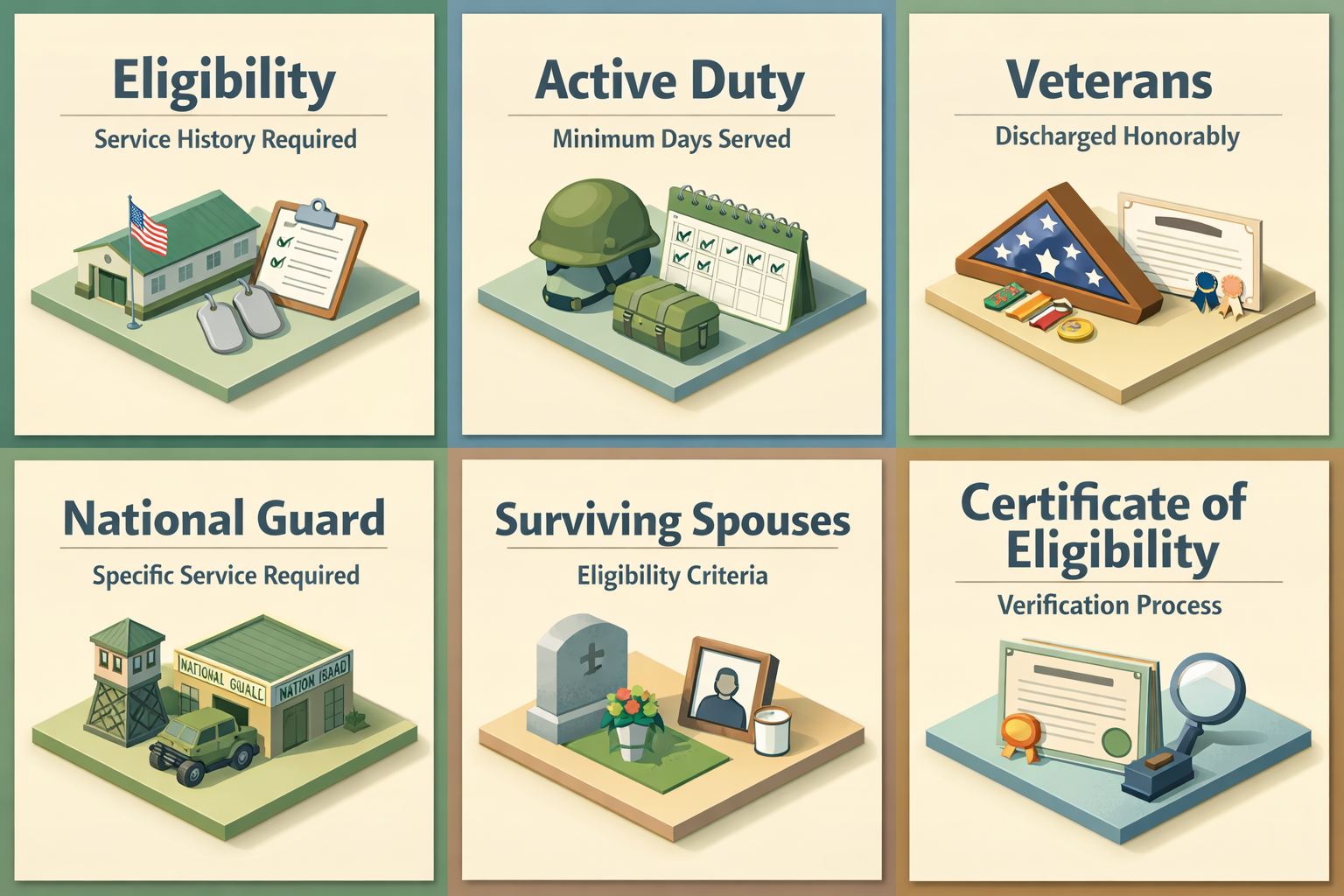
Before exploring the full range of benefits, it's important to understand who may qualify. VA loan eligibility for veterans is primarily based on military service history. Generally speaking, eligibility may extend to the following groups:
- Active-duty service members who have served a minimum number of continuous days
- Veterans who were discharged under conditions other than dishonorable
- National Guard and Reserve members who meet specific service requirements
- Surviving spouses of veterans who died in service or as a result of a service-connected disability
To confirm eligibility, veterans typically need to obtain a Certificate of Eligibility, or COE, from the VA. This document verifies to lenders that you meet the service requirements for the program. The process of obtaining a COE can often be completed online through the VA's eBenefits portal, or a VA-approved lender may be able to assist you in obtaining it as part of the loan application process.
It's worth noting that meeting basic service eligibility doesn't automatically mean you'll be approved for a specific loan amount. Lenders will still review your credit history, income stability, and overall financial picture. However, the minimum thresholds are often more flexible under VA guidelines than under conventional loan standards.
VA Loan No Down Payment: A Benefit Worth Thousands
Perhaps the most celebrated feature of the VA loan program is the ability to purchase a home with no down payment. This is a significant financial advantage that can make the difference between renting indefinitely and owning a home today. For most conventional loans, lenders expect a down payment of at least 3% to 20% of the purchase price. On a $350,000 home, that could mean coming up with anywhere from $10,500 to $70,000 upfront — a barrier that prevents many families from entering the housing market.
With a VA loan no down payment option, eligible veterans may be able to finance 100% of the home's purchase price, assuming the property appraises at or above that amount. This means you could potentially move into your new home without depleting your savings account or waiting years to accumulate a substantial no down payment.
It's important to mention that while no down payment is required, other costs such as closing fees and the VA funding fee — a one-time charge that helps sustain the program — may still apply. However, certain veterans with service-connected disabilities may be exempt from the funding fee, and closing costs can sometimes be negotiated with the seller.
Competitive VA Loan Interest Rates and Long-Term Savings
Another compelling reason to explore this program is the potential to secure competitive interest rates through the VA loan program. Because the federal government guarantees a portion of the loan, lenders face less risk in the event of default. This reduced risk often allows VA-approved lenders to offer interest rates that are comparable to — or in many cases lower than — those available on conventional mortgages.
Even a fraction of a percentage point difference in interest rate can translate to thousands of dollars in savings over a 30-year loan term. For example, a slightly lower rate on a $300,000 mortgage could potentially save a homeowner a significant amount in total interest paid across the life of the loan. When combined with the elimination of PMI, these savings can be substantial.
Keep in mind that VA loan interest rates are not set by the VA itself. Rates are determined by individual lenders based on market conditions, your credit profile, loan term, and other factors. This means it's worth shopping around and comparing offers from multiple VA-approved lenders to ensure you're getting the most favorable terms possible. A small amount of comparison shopping upfront could yield meaningful long-term financial benefits.
How to Use VA Loan Entitlement to Your Advantage
One concept that many veterans find confusing — but that's incredibly powerful once understood — is VA loan entitlement. Knowing how to use VA loan entitlement effectively could allow you to purchase multiple homes over your lifetime using VA financing, even simultaneously in some cases.
VA loan entitlement refers to the amount the VA will guarantee on your behalf. There are two types: basic entitlement and bonus (or second-tier) entitlement. Basic entitlement has traditionally been set at $36,000, while bonus entitlement applies to higher-priced homes and allows for larger loan amounts. Thanks to changes in VA loan limits that took effect in 2020, veterans with full entitlement may be able to borrow above the conforming loan limits without a down payment in many cases.
Here's how entitlement could work in your favor:
- First-time use: If you've never used your VA benefit, you likely have full entitlement available and may be able to purchase a home with no down payment up to a significant loan amount.
- Remaining entitlement: If you've used your VA benefit before and still have an outstanding VA loan, you may have remaining or partial entitlement that can be applied to a second property.
- Restoration of entitlement: Once you pay off a VA loan and sell the property, your entitlement is typically restored and can be reused on a future purchase.
It's advisable to work with an experienced VA-approved lender who can help you understand exactly how much entitlement you have available and how best to apply it to your home buying goals.
Refinancing Options Available Through the VA Program
The VA loan program isn't only for home purchases. Veterans and active-duty service members who already own a home may also have access to refinancing options that can help lower monthly payments or access home equity. Two primary refinance options exist under the VA umbrella:
Interest Rate Reduction Refinance Loan (IRRRL)
Often referred to as the VA Streamline Refinance, the IRRRL is designed for veterans who already have an existing VA loan and want to refinance into a lower interest rate. This option typically involves minimal paperwork, no appraisal in most cases, and a simplified process compared to a full refinance. It's a popular choice for veterans looking to take advantage of falling interest rates without the complexity of a traditional refinance.
VA Cash-Out Refinance
The VA cash-out refinance allows eligible veterans to refinance their existing mortgage — whether it's a VA loan or a conventional one — and tap into their home's equity at the same time. This can be a useful financial tool for consolidating debt, funding home improvements, covering education costs, or addressing other significant expenses. As with any refinance, it's important to carefully evaluate the long-term cost implications before proceeding.
Tips for Making the Most of Your VA Loan Benefit
Now that you have a broader picture of what the VA loan program offers, here are some practical tips to help you maximize its value:
- Get pre-approved early: Before you begin house hunting, consider getting pre-approved with a VA-approved lender. This gives you a clear sense of your budget and signals to sellers that you're a serious, qualified buyer.
- Review your credit report: While VA loans may offer more flexible credit guidelines, a stronger credit score could help you qualify for more competitive interest rates. It's wise to review your credit report for errors and address any issues before applying.
- Understand the VA appraisal process: VA loans require a property appraisal conducted by a VA-approved appraiser. This appraisal not only establishes value but also ensures the home meets minimum property requirements. Being aware of this upfront can help set realistic expectations during your home search.
- Work with a VA-experienced real estate agent: An agent familiar with VA transactions can help you navigate seller negotiations, understand which properties are likely to meet VA appraisal standards, and avoid common pitfalls.
- Compare multiple lenders: Rates and fees can vary from lender to lender, even within the VA program. Taking the time to compare offers may help you secure better overall terms.
Understanding VA loan benefits for veterans goes beyond simply knowing the program exists. It's about actively using the tools and resources available to you to make a confident, informed home financing decision.
●Conclusion
The VA loan program stands as one of the most generous and well-structured home financing benefits available in the United States. From the ability to purchase a home with no down payment to competitive interest rates and flexible qualification standards, these advantages reflect a genuine commitment to supporting those who've served the country. Whether you're buying your first home, upgrading to a larger property, or considering a refinance, taking the time to fully explore understanding VA loan benefits for veterans could put you in a significantly stronger financial position. If you're ready to take the next step, connecting with a VA-approved lender at LoanWise can help you determine your eligibility, review your entitlement, and find the financing solution that best fits your goals.