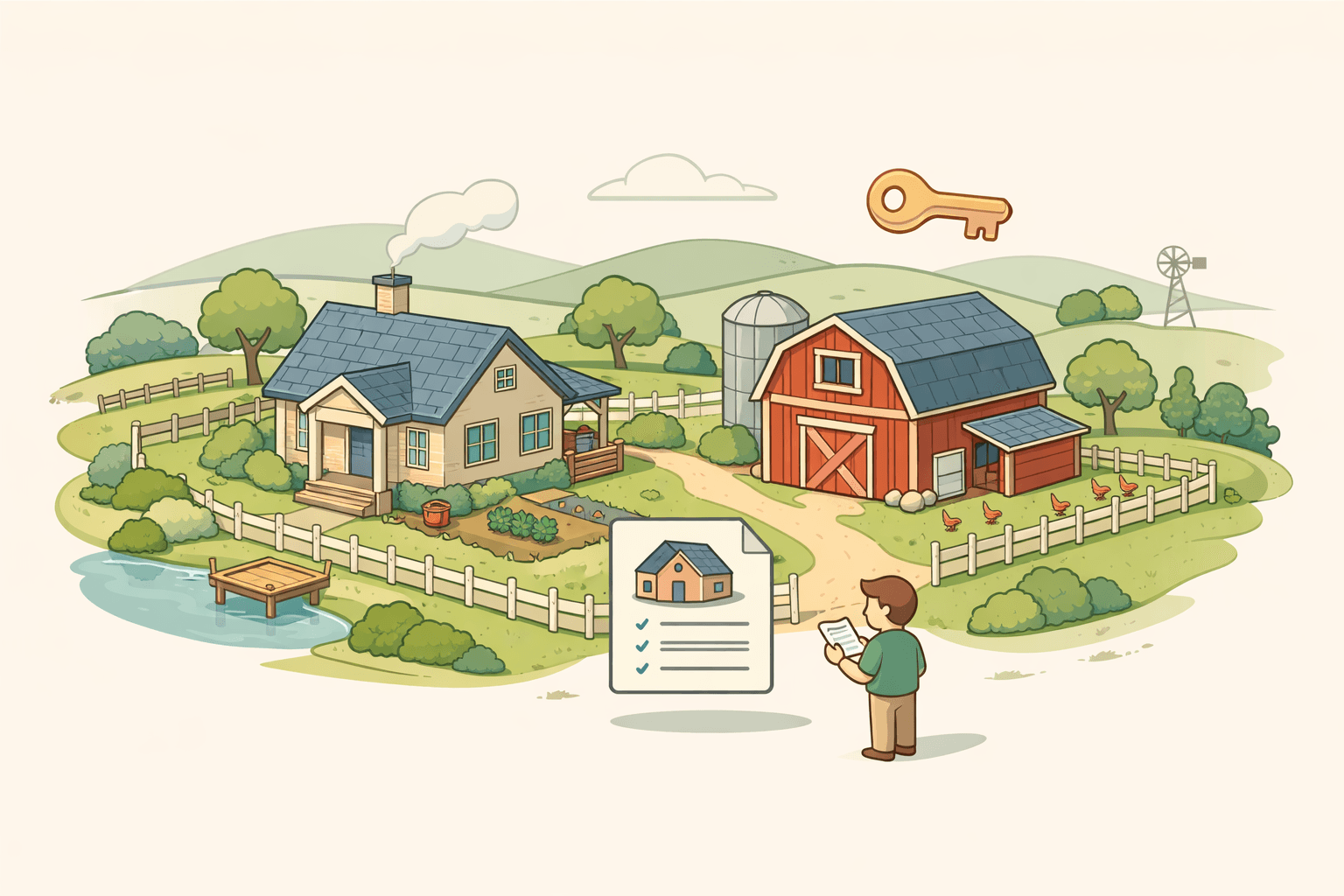
Buying a home in the countryside sounds like a dream for many people — fresh air, wide open spaces, and sometimes a charming barn on the land. But if you're planning to use a USDA loan to finance your purchase, there are some important rules you'll want to understand first. Understanding USDA loan requirements for a property with existing barn structures can save you time, money, and a lot of frustration during the loan process. USDA loans are a fantastic tool for eligible rural homebuyers, offering zero down payment and competitive interest rates. However, the program has specific guidelines around property eligibility that apply directly to outbuildings like barns. Let's walk through what you need to know before you fall in love with that property.
What Is a USDA Loan and Who Can Use One?
The USDA loan program is backed by the U.S. Department of Agriculture and is designed to help low-to-moderate income borrowers purchase homes in eligible rural and suburban areas. There are two main types: the USDA Guaranteed Loan, which is issued by approved private lenders and backed by the government, and the USDA Direct Loan, which is funded directly by the USDA for very low-income applicants.
To qualify, borrowers typically need to meet income limits based on their household size and the county they're buying in. Lenders also look at credit history, debt-to-income ratios, and stable employment. Many lenders prefer a credit score of at least 640 for the streamlined approval process, though lower scores may still be considered on a case-by-case basis.
The property itself must be located in a USDA-designated rural area, which covers a surprisingly large portion of the United States. The program is primarily intended for primary residences — not investment properties or vacation homes. This distinction becomes especially relevant when a property includes a barn or other agricultural structures.
How USDA Views Properties with Agricultural Structures
One of the most common questions rural homebuyers ask is whether a property with a barn, stable, or other outbuilding can qualify for USDA financing. The short answer is: it depends. The USDA does allow properties with existing barns, but the program's guidelines are careful about how those structures are classified and used.
The USDA's primary concern is that the loan is being used to finance a residential property, not a farm or agricultural operation. If a property appears to be primarily used for farming — generating income from crops, livestock, or commercial operations — it may not meet the program's eligibility standards. However, a home situated on rural land that happens to have a barn used for personal, non-commercial purposes is often a different story.
The key factor lenders and appraisers look at is whether the primary use of the property is residential. If the barn is simply a hobby structure, storage space, or a small personal stable, lenders may be more flexible. If the barn is tied to active agricultural income, the property could be reclassified as a farm, which would disqualify it from standard USDA residential loan programs.
Understanding USDA Loan Requirements for a Property with Existing Barn Structures
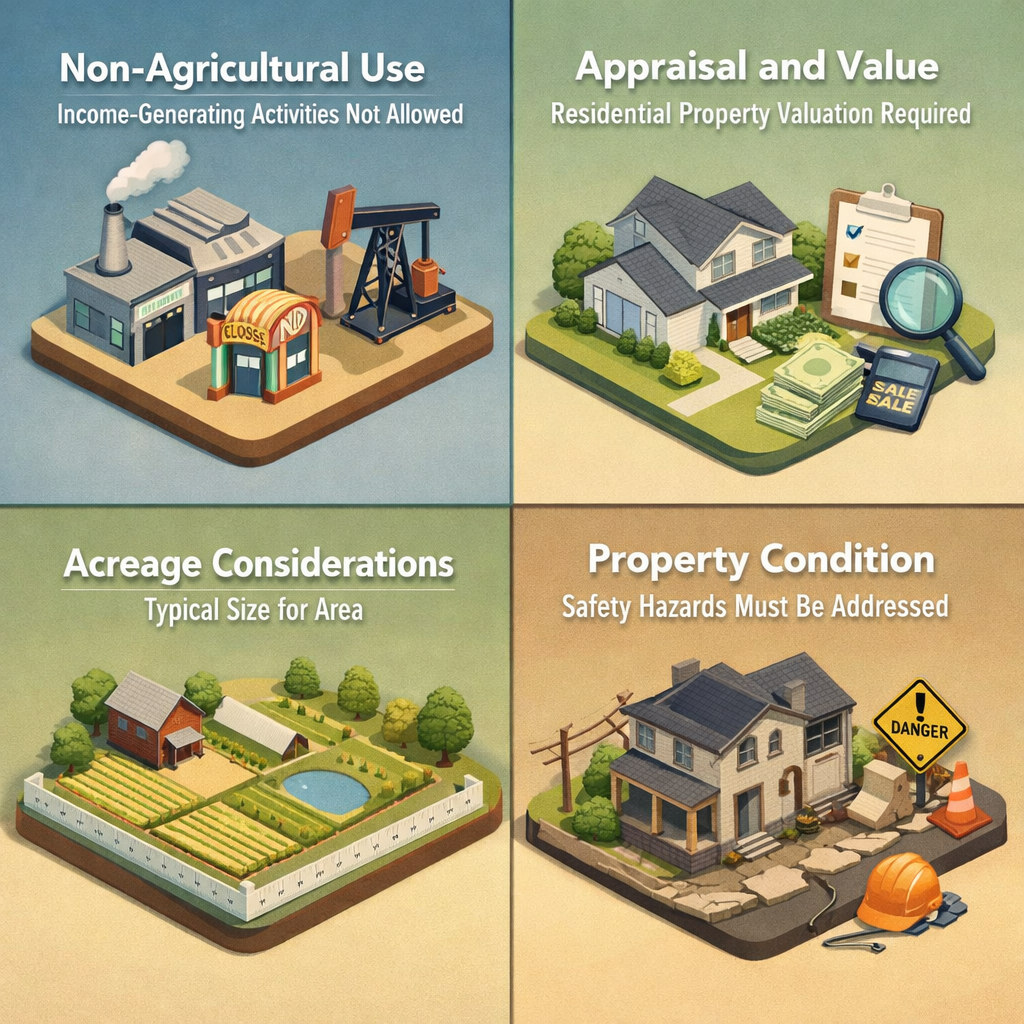
When it comes to understanding USDA loan requirements for a property with existing barn structures, several specific guidelines come into play. Here's what you should be aware of:
- Non-agricultural use requirement: The property must not be used for income-producing agricultural activity. A barn used to house a few personal horses or store tools is generally acceptable, but a barn tied to a working farm business may trigger additional scrutiny.
- Appraisal and value: The USDA requires that the home's appraised value be based on its value as a residential property. Barns and outbuildings may or may not contribute to the appraised value, depending on how the appraiser categorizes them. In some cases, structures with significant agricultural value could complicate the appraisal.
- Acreage considerations: USDA guidelines generally allow financing for modest amounts of land, but very large tracts of land tied to agricultural operations may raise flags. Lenders will look at whether the land size is typical for the area and consistent with residential use.
- Site value limits: The USDA typically requires that the value of the land and site improvements does not exceed a certain percentage of the total appraised property value. Large barns or multiple outbuildings could potentially affect this calculation.
- Property condition: Any existing structures on the property, including barns, must not pose a safety hazard to the occupants or the neighborhood. Severely deteriorated barns with structural issues could require repair or removal before loan approval.
It's worth noting that lender interpretations of these guidelines can vary. Some USDA-approved lenders may have additional overlays — internal policies stricter than the base USDA loan requirements — which could affect how they handle barn properties. Working with an experienced rural lending specialist is strongly recommended.
The Role of the USDA Appraisal in Property Evaluation
The appraisal process is a critical step in any USDA loan transaction, and it takes on extra importance when a property includes a barn or other outbuildings. A USDA-approved appraiser will assess the property's market value while also confirming that it meets the program's minimum property requirements.
During the appraisal, the inspector will evaluate the overall condition of the home and any additional structures. For barns specifically, the appraiser will consider whether the structure is in safe condition and whether it contributes positively or negatively to the property's residential character. A well-maintained barn that enhances the rural lifestyle appeal of the property may add modest value. A dilapidated barn with safety concerns, on the other hand, could trigger repair requirements.
USDA appraisals follow HUD Handbook 4000.1 guidelines in some respects and also adhere to USDA-specific standards. The appraiser must confirm that the property is modest in size and design, that it meets local building codes, and that it is free from environmental hazards. If a barn is found to have issues — such as deteriorating roofing, structural instability, or pest infestations — these may need to be addressed before the loan can close.
Buyers should budget for the possibility of repair requirements and work proactively with the seller to address any issues the appraisal may flag. Getting a pre-listing inspection before making an offer on a barn property can help avoid surprises later in the process.
Income Limits, Location Eligibility, and Borrower Qualifications
Beyond the property itself, borrowers must also meet the USDA's personal eligibility requirements. Here's a quick overview of what lenders typically look for:
- Income limits: Household income must fall within USDA-set limits for your area. These limits are updated periodically and vary by county and household size. Most USDA Guaranteed Loan borrowers must have household incomes at or below 115% of the area median income.
- Credit score: While the USDA does not set a strict minimum credit score, most approved lenders prefer scores of 640 or higher for automated underwriting. Borrowers with lower scores may still qualify but could face manual underwriting, which involves a more detailed review of their financial history.
- Debt-to-income ratio: Lenders typically look for a front-end DTI (housing expenses only) of around 29% and a back-end DTI (all monthly debts) of around 41%, though exceptions can sometimes be made with compensating factors.
- Stable employment: Borrowers generally need to demonstrate at least two years of consistent employment or income history. Self-employed buyers may need to provide additional documentation such as tax returns and profit-and-loss statements.
- U.S. citizenship or eligible residency: Borrowers must be U.S. citizens, non-citizen nationals, or qualified aliens to be eligible for the program.
Meeting these personal qualifications is just as important as finding an eligible property. Buyers are encouraged to get pre-qualified with a USDA-approved lender early in the process so they have a clear picture of their budget and loan eligibility before searching for rural properties with barns or outbuildings.
Tips for Buyers Pursuing a USDA Loan on a Barn Property
If you've found a rural property with a barn that you'd like to purchase using a USDA loan, here are some practical tips to help the process go smoothly:
- Work with a USDA-experienced lender: Not all mortgage lenders are equally familiar with USDA rural property guidelines. Choosing a lender with hands-on experience in USDA lending can make a significant difference in navigating the nuances of barn properties.
- Check property eligibility early: Use the USDA's online eligibility map to confirm the property address qualifies as a rural area before investing too much time or money in the purchase process.
- Understand how the barn will be valued: Ask your lender and appraiser upfront how they typically handle outbuildings in USDA transactions. Understanding this early can help set realistic expectations about the final appraised value.
- Document the non-commercial nature of the barn: If you plan to use the barn for personal hobbies like keeping horses or storing equipment, be prepared to explain this clearly to your lender. Any documentation showing that the property is not generating agricultural income could help support your case.
- Budget for potential repairs: Older barns may have condition issues that the USDA appraisal flags. Having a financial cushion for repairs — or negotiating seller concessions to cover them — is a smart strategy.
- Consider the land size: If the property includes a very large acreage, discuss this with your lender early. While USDA loans can accommodate modest rural land sizes, unusually large tracts tied to agricultural operations may complicate the loan process.
Being proactive and well-informed will give you the best chance of a successful closing on a property that includes a barn or other rural outbuildings.
●Conclusion
Buying a rural property with a barn is an exciting prospect, and a USDA loan can be an excellent way to make that dream a reality — especially with the benefit of zero down payment financing. However, understanding USDA loan requirements for a property with existing barn structures is essential before you move forward. The program welcomes rural homebuyers, but it does have specific guidelines around property use, appraisal standards, and site value that can affect how barn properties are evaluated. By working with a knowledgeable USDA-approved lender, getting early answers about property eligibility, and preparing for the appraisal process, you can navigate these requirements with confidence. At LoanWise, we're here to help you find the right loan for your unique situation — whether that includes a barn, a workshop, or wide open land. Reach out to one of our rural lending specialists today to get started.