
Buying a condo can be an exciting step toward homeownership, especially for first-time buyers who want a lower-maintenance lifestyle in a community setting. But if you're planning to use government-backed financing, understanding the process of buying a condo with FHA loan requirements is essential before you start your search. FHA loans are popular because they typically offer lower down payment options and more flexible credit standards compared to conventional mortgages. However, purchasing a condo with this type of financing comes with an extra layer of requirements that don't apply to single-family homes. This guide walks you through what you need to know, from FHA approved condo buildings to association rules and financing steps.
What Makes an FHA Loan a Good Fit for Condo Buyers
FHA loans are insured by the Federal Housing Administration and issued by approved private lenders. They're designed to help homebuyers who may not qualify for conventional financing due to a smaller down payment or a credit score that's still in the building stages. For condo buyers, these loans can be particularly appealing because they may allow a down payment as low as 3.5% for borrowers who meet certain credit thresholds.
That said, FHA loans come with specific rules about the types of properties they'll finance. Single-family homes, townhouses, and condominiums can all be eligible, but condos must meet additional criteria set by the FHA. This is where many buyers get caught off guard. You might find a condo you love, only to discover it doesn't qualify under FHA guidelines. Understanding these rules early in your search can save you time, stress, and money.
FHA loans also require mortgage insurance premiums, which include an upfront payment and an ongoing monthly cost. These premiums protect the lender if you default on the loan. While this adds to your overall cost, it's often the trade-off that makes homeownership accessible when a larger down payment isn't an option.
The Role of FHA Approved Condo Buildings in Your Search
One of the most important factors in FHA loan for condo financing is whether the condo project itself has received FHA approval. The FHA maintains a database of approved condo developments, and only units within those approved projects are typically eligible for FHA-backed financing. This is sometimes called project approval or spot approval, depending on the circumstances.
When a condo development is FHA approved, it means the entire project has been reviewed and certified to meet the agency's standards. These standards cover several areas, including the percentage of owner-occupied units versus rental units, the financial health of the homeowners association, adequate insurance coverage for the building, and limits on how many units a single investor can own within the project.
The FHA typically requires that a certain percentage of units be owner-occupied rather than rented out. Projects that are heavily investor-owned may not meet this threshold, which could disqualify them from FHA approval. Additionally, the condo association must not have too high a percentage of units that are delinquent on their dues, as this signals financial instability.
Buyers can search for FHA approved condo buildings directly on the U.S. Department of Housing and Urban Development's (HUD) website. It's wise to check this database before falling in love with a specific unit, since not every condo community will appear on the approved list.
How Condo Association Approval for an FHA Loan Works
The condo association approval FHA loan process is a step that surprises many buyers. Even if you personally qualify for an FHA mortgage, the condo association and the overall project must also meet the FHA's requirements. This dual-approval process is unique to condo purchases and doesn't apply when buying a standalone home.
Lenders will typically request documents from the condo association as part of the loan underwriting process. These documents often include the association's budget, reserve fund statements, master insurance policy, bylaws, and a completed questionnaire about the project's ownership mix and financial standing. If the association is uncooperative or unable to provide this information, it could delay or derail your financing.
It's a good idea to communicate early with the condo association or its management company to let them know you're pursuing FHA financing. Some associations are familiar with the process and have their documents readily available. Others may not have sought FHA approval and could be resistant to the added paperwork.
In some cases, a process called single-unit approval may allow you to purchase a condo in a non-FHA-approved project. HUD has periodically updated its guidelines to give lenders more flexibility here, but eligibility conditions still apply. Your lender can help you determine whether this route is available for a specific property.
Key Borrower Requirements You Should Know Before Applying
While property eligibility is critical, your personal financial profile also plays a major role in whether you'll qualify for an FHA loan to buy a condo. Lenders look at your credit score, debt-to-income ratio, employment history, and the source of your down payment funds when evaluating your application.
Generally speaking, borrowers with a credit score of 580 or higher may qualify for the minimum 3.5% down payment option under FHA guidelines. Those with scores between 500 and 579 might still be eligible but could be required to put down 10%. Keep in mind that individual lenders may set their own minimum score requirements, sometimes called lender overlays, which can be higher than the FHA's baseline.
Your debt-to-income ratio, or DTI, reflects how much of your monthly income goes toward debt payments. FHA guidelines typically allow for a higher DTI than conventional loans, which can be helpful for buyers who carry student loans or other debt. However, staying within a comfortable range tends to strengthen your application.
It's also worth noting that FHA loans require the property to be your primary residence. You can't use FHA financing to purchase a vacation condo or an investment property. This rule reinforces the program's purpose of supporting owner-occupied housing rather than speculative investment.
Buying Multi Unit Property with FHA: What Condo Buyers Should Understand
Some buyers are drawn to condos not just as a primary home but as a way to explore small-scale real estate investing. If you're interested in buying multi unit property with FHA financing, there are specific rules that apply. FHA does allow the purchase of multi-unit properties — up to four units — as long as you intend to live in one of the units as your primary residence.
This strategy, sometimes called house hacking, can be an appealing way to offset your mortgage costs by collecting rental income from the other units. A two-unit condo or a small multi-family building financed with an FHA loan could potentially help you build equity while covering part of your housing costs through rental revenue.
However, the same FHA property and project approval rules apply. Multi-unit condo projects must still meet the agency's eligibility standards, and the association must cooperate with the documentation process. Lenders may also factor potential rental income into your qualifying calculations, though guidelines around this can vary by lender and property type.
If you're considering this path, it's wise to work with a lender experienced in both FHA financing and multi-unit properties. They can help you navigate the overlap between investor considerations and owner-occupancy requirements, ensuring your strategy aligns with FHA guidelines from the start.
Step-by-Step Overview of the FHA Condo Purchase Process
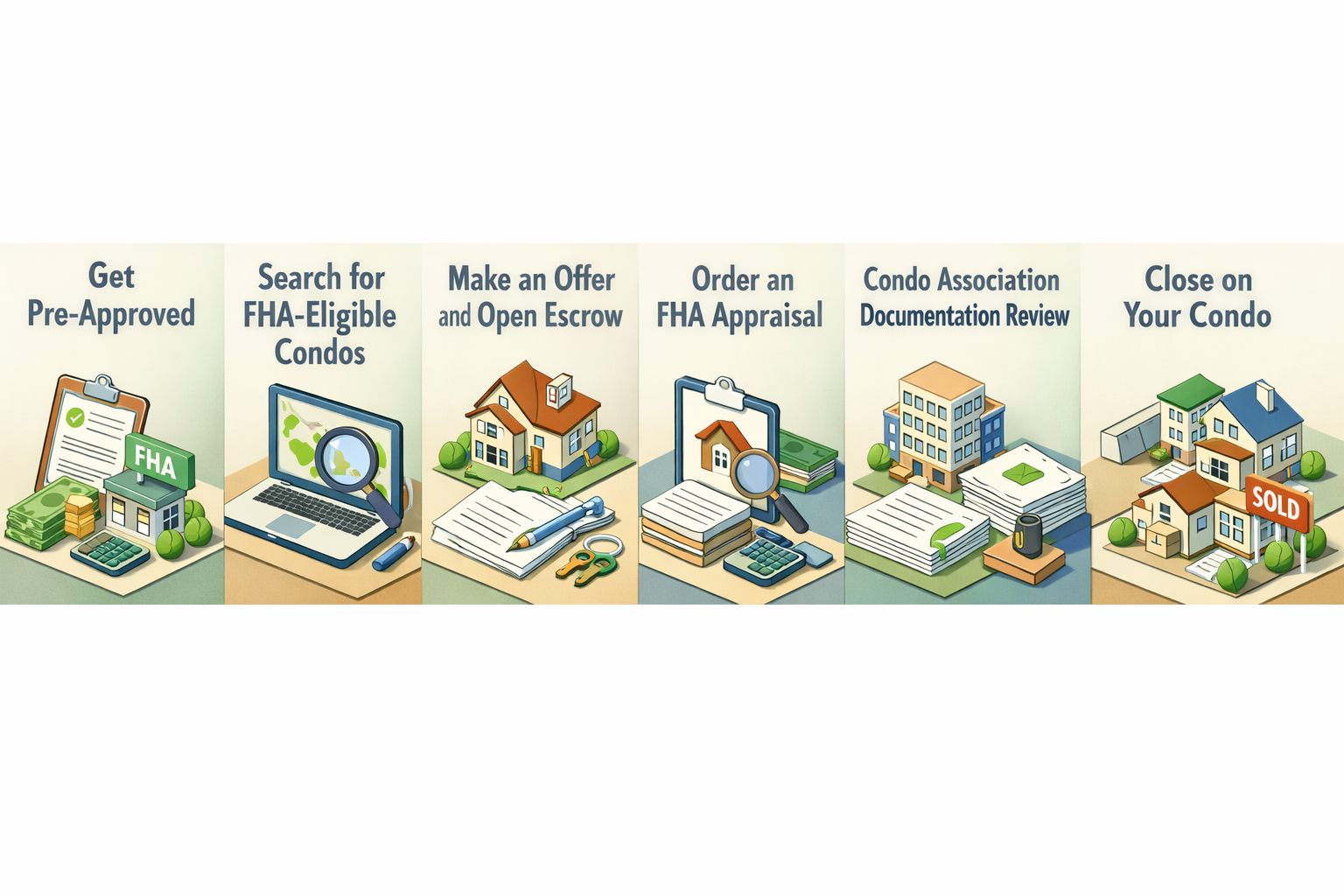
Understanding the process of buying a condo with FHA loan financing means knowing what to expect at each stage. While every transaction is unique, most buyers will move through the following general steps:
- Get pre-approved: Start by working with an FHA-approved lender who can assess your credit, income, and assets. Pre-approval gives you a realistic budget and strengthens your offer when you find a unit you like.
- Search for FHA-eligible condos: Use HUD's condo lookup tool to identify approved projects in your target area. You can also ask your real estate agent to help filter listings by FHA eligibility.
- Make an offer and open escrow: Once you've found an eligible unit and your offer is accepted, your lender will begin the formal loan application and underwriting process.
- Order an FHA appraisal: FHA loans require an appraisal by an FHA-approved appraiser. This appraisal assesses both the market value of the unit and whether it meets the FHA's minimum property standards.
- Condo association documentation review: Your lender will collect and review the required association documents. This step can take time if the association is slow to respond, so early communication is recommended.
- Underwriting and final approval: Your lender's underwriting team reviews all documents — yours and the property's — before issuing a final loan decision. Be ready to provide additional documentation if requested.
- Close on your condo: Once approved, you'll sign your closing documents, pay closing costs, and receive the keys to your new home.
Each of these steps may have sub-tasks, and timelines can vary depending on the market, the association's responsiveness, and your lender's workload. Building in extra time for the condo-specific steps is a smart move.
●Conclusion
Navigating the condo buying process with FHA financing takes a bit more preparation than purchasing a standard single-family home, but it's absolutely manageable with the right knowledge and team behind you. From confirming that a condo project is on the FHA approved list to working through condo association documentation and meeting personal borrower requirements, each step plays an important role in getting you to the closing table. Understanding the process of buying a condo with FHA loan requirements from the start can help you avoid costly surprises and focus your search on properties that are truly within reach. If you're ready to explore your FHA financing options, speaking with an experienced mortgage professional is a great first step toward making your condo ownership goals a reality.