
Buying a home is one of the biggest financial decisions most people will ever make — and for many buyers, a cooperative housing arrangement offers an affordable and community-focused path to ownership. But when shared equity is part of the picture, the financing process can look quite different from a traditional mortgage. Understanding mortgage options for co-ops with shared equity models is essential for anyone considering this type of housing, whether you're a first-time homebuyer, a community housing advocate, or a real estate investor exploring alternative ownership structures. This guide walks you through the key concepts, lender expectations, and practical steps to help you move forward with clarity and confidence.
What Makes Co-op Housing with Shared Equity Different
In a standard home purchase, the buyer takes full title to the property and builds equity freely over time. A cooperative housing arrangement works differently. Instead of buying a physical unit outright, you purchase shares in a corporation that owns the building or development. Those shares come with a proprietary lease, giving you the right to occupy a specific unit.
When shared equity is layered on top of this structure, things get even more nuanced. Shared equity models are designed to keep housing affordable across generations. They typically place resale restrictions on the property, meaning that when you sell your shares, the amount of profit you can retain is limited. The idea is to preserve affordability for the next buyer rather than allowing the unit to appreciate at full market rates.
This combination — cooperative ownership plus resale restrictions — creates a unique financing environment. Most conventional lenders aren't set up to evaluate these arrangements in the same way they'd assess a standard single-family home or even a typical condo. That's why it's so important to understand the landscape before you start shopping for a loan.
How Lenders View Shared Equity Co-op Structures
Lenders evaluate risk when they issue a mortgage, and shared equity co-ops introduce factors that can complicate that assessment. A few key concerns tend to come up consistently when borrowers approach traditional banks or mortgage companies about these properties.
First, the resale restriction itself may raise flags. If a lender forecloses on a loan and needs to sell the shares to recover its investment, the resale cap could limit what that lender can recoup. This affects the collateral value of the loan, and lenders may factor that into their approval decisions or loan terms.
Second, the cooperative structure means the lender isn't taking a lien on real property in the traditional sense. Instead, they're dealing with a security interest in shares of a cooperative corporation. Not every lender is equipped to handle this type of collateral, and some may decline co-op loans entirely, regardless of the borrower's creditworthiness.
Third, many shared equity co-ops are affiliated with community land trusts or mission-driven housing organizations. These organizations typically have their own governing documents, resale formulas, and approval processes. Lenders may require a thorough review of these documents before committing to a loan — and that review process can take time.
The good news is that specialized lenders, community development financial institutions (CDFIs), and certain credit unions have developed products specifically designed for shared equity co-op financing. These institutions understand the structure and may offer more flexible underwriting as a result.
Shared Equity Co-op Mortgage Requirements You Should Know
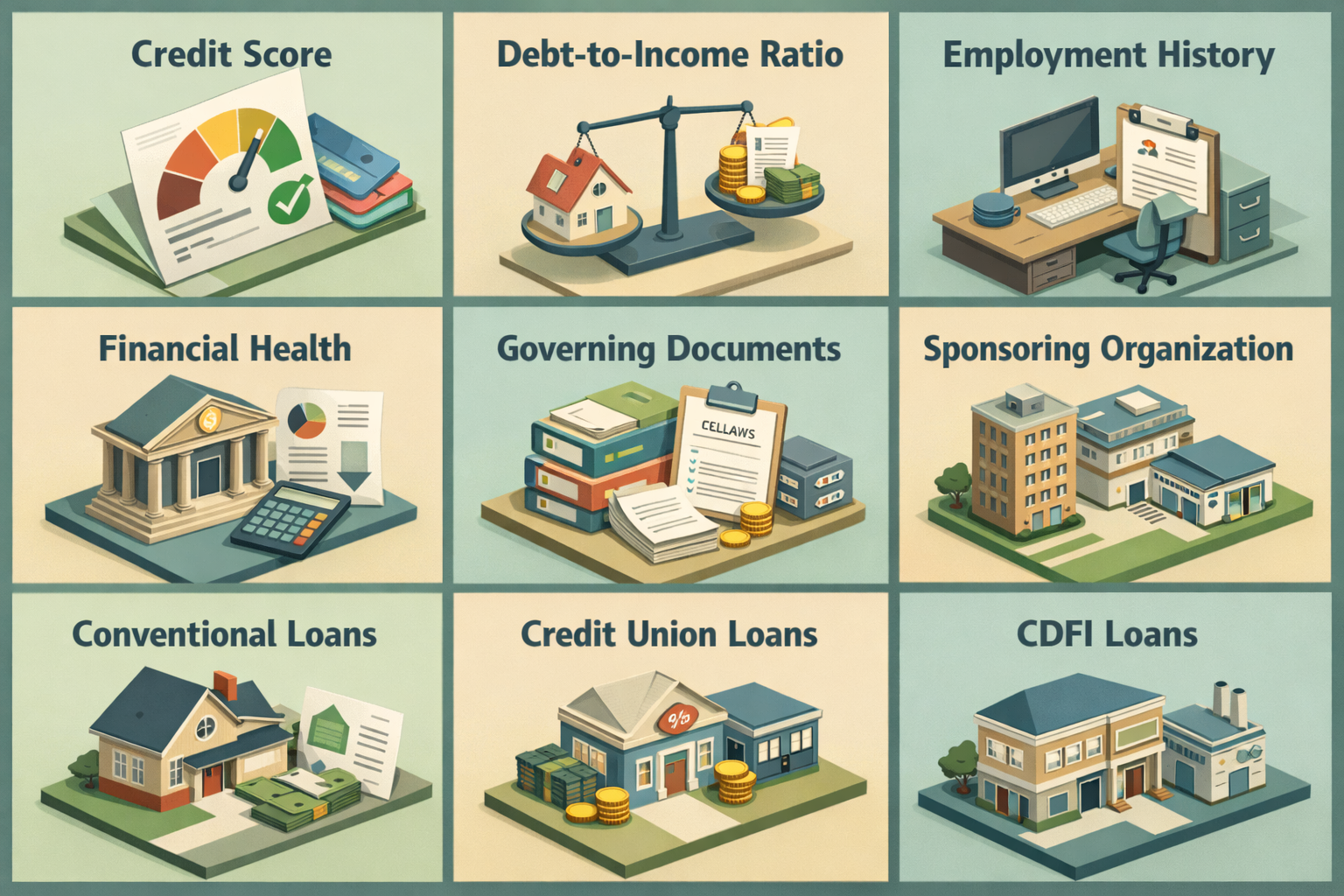
Meeting shared equity co-op mortgage requirements typically involves satisfying both borrower-level criteria and property-level criteria. Understanding both dimensions can help you prepare a stronger application.
Borrower Qualifications
On the borrower side, lenders will typically evaluate your credit score, debt-to-income ratio, employment history, and available assets. These factors are consistent with most mortgage applications. A stronger credit profile generally improves your chances of approval and may help you secure more favorable terms. Most lenders look for a credit score in a range that reflects responsible debt management, though exact minimums can vary by lender and loan program.
Your debt-to-income ratio — the percentage of your gross monthly income that goes toward debt payments — is another critical factor. Lenders may be more conservative with co-op loans due to the added complexity of the ownership structure, so keeping this ratio as low as possible before applying could be beneficial.
Co-op and Property-Level Requirements
On the property side, lenders will want to review the cooperative's financial health. This includes the co-op's reserve funds, underlying mortgage status (if the building itself carries a blanket mortgage), occupancy rates, and the governing documents that outline the resale formula and transfer approval process.
Lenders may also want to understand the role of the sponsoring organization — such as a community land trust or housing nonprofit — and confirm that the legal agreements are enforceable and clearly documented. Some programs require that the co-op be pre-approved or listed on an approved lender registry before individual unit financing is offered.
Loan Programs That May Work for Co-op Buyers
Not every loan program is compatible with shared equity co-op financing, but several mortgage options may be available depending on the co-op's structure and your location.
- Conventional co-op loans: Some conventional lenders offer share loans specifically for co-op purchases. These products typically require a review of the co-op's financials and governing documents. Fannie Mae does have guidelines for co-op financing, though shared equity restrictions may require additional review or exceptions.
- Credit union share loans: Many credit unions have experience with cooperative housing structures and may offer more flexible underwriting terms than larger banks. If you're buying into a co-op affiliated with a community organization, it may be worth asking whether that organization has a preferred lending partner.
- CDFI loans: Community development financial institutions are mission-driven lenders that often work closely with affordable housing developers, community land trusts, and limited-equity co-ops. They may offer loan products specifically tailored to shared equity arrangements.
- State and local housing finance agency programs: Some housing finance agencies offer down payment assistance or below-market loan products for buyers purchasing into income-restricted or resale-restricted housing. Availability varies by state and program, so it's worth researching options in your area.
- Seller or organization financing: In some cases, the sponsoring housing organization may offer direct financing or partner with a lender to provide a loan product designed for their specific co-op model. This option can simplify the process significantly.
It's worth noting that FHA and VA loans are generally not available for co-op share purchases in most traditional configurations, though policy details can evolve. Checking with a knowledgeable loan officer about current program eligibility is always a smart step.
Navigating the Resale Restriction and Its Impact on Financing
The resale restriction is perhaps the most distinctive feature of a shared equity co-op, and it has direct implications for how lenders structure and price a loan. Understanding how this restriction works can help you set realistic expectations and have more productive conversations with potential lenders.
Resale formulas vary by co-op and sponsoring organization. Some use an index-based formula tied to area median income or a regional price index. Others allow a fixed percentage of appreciation per year of ownership. Still others simply cap resale at the original purchase price plus documented capital improvements. The specific formula matters to lenders because it determines the potential resale value of the collateral in a worst-case scenario.
Lenders who are familiar with shared equity models typically conduct what's sometimes called a restricted appraisal or a review of the property's restricted value. This figure reflects what the unit could realistically sell for under the resale formula, rather than what it might fetch on the open market. Loan amounts are often based on this restricted value rather than full market value.
For buyers, this means your loan-to-value ratio may look different than it would in a standard purchase. You might also find that a larger down payment is required to offset the lender's risk associated with the restricted collateral. Working with a lender who regularly handles these transactions can help you navigate financing with confidence during underwriting.
Tips for Strengthening Your Application
If you're preparing to apply for financing on a shared equity co-op, a few proactive steps could make a meaningful difference in the outcome.
- Get organized early: Gather the co-op's governing documents, financial statements, resale formula, and any information about the sponsoring organization before you approach a lender. Being prepared signals seriousness and can speed up the review process.
- Work with a specialist: Seek out a loan officer or mortgage broker who has direct experience with co-op and shared equity transactions. Their familiarity with the structure could help you identify the right lender faster and avoid common pitfalls.
- Improve your financial profile: Pay down existing debt to improve your debt-to-income ratio, review your credit report for errors, and build up your savings for a down payment and reserves. A stronger financial profile may offset some of the lender's concerns about the complexity of the collateral.
- Connect with the co-op sponsor: The organization sponsoring the co-op has likely helped other buyers navigate financing before. They may have preferred lenders, sample loan documents, or guidance that can simplify your process considerably.
- Ask about grants and subsidies: Some shared equity housing programs come with grants, soft loans, or subsidies that can reduce the amount you need to finance. These resources may come from local housing agencies, nonprofits, or state programs and could meaningfully improve your affordability.
●Conclusion
Understanding mortgage options for co-ops with shared equity models isn't always straightforward, but it's absolutely manageable with the right preparation and the right lending partner. These housing structures offer a meaningful path to homeownership for many buyers who might otherwise be priced out of their communities — and the financing landscape, while specialized, is growing more accessible as lenders become more familiar with shared equity arrangements. Whether you're just beginning your research or you're ready to apply, taking the time to understand the structure, the requirements, and your options puts you in the best possible position to succeed. At LoanWise, we're here to help you navigate every step of the lending process with clarity and confidence.