
For real estate investors who earn income from properties located outside the United States, securing a jumbo mortgage in the U.S. can feel like navigating uncharted territory. Lenders have strict standards for large loan amounts, and adding a layer of foreign income to the equation makes the process even more nuanced. Whether you're a non-U.S. citizen purchasing a high-value American property or a U.S. resident with overseas rental income, understanding jumbo loan requirements with foreign real estate investment income is essential before you apply. This guide walks you through what lenders typically look for, what documentation you'll likely need, and how to position yourself for the best possible outcome.
What Makes Jumbo Loans Different from Conventional Mortgages
A jumbo loan is a type of mortgage that exceeds the conforming loan limits set by the Federal Housing Finance Agency (FHFA). Because these loans can't be purchased by Fannie Mae or Freddie Mac, lenders take on greater risk — and that typically means stricter qualification standards for borrowers.
For most U.S. markets, the conforming loan limit sits around a specific threshold that adjusts annually. Any loan amount above that limit falls into jumbo territory. In high-cost areas, those limits are higher, but the underlying principle remains the same: bigger loans carry bigger scrutiny.
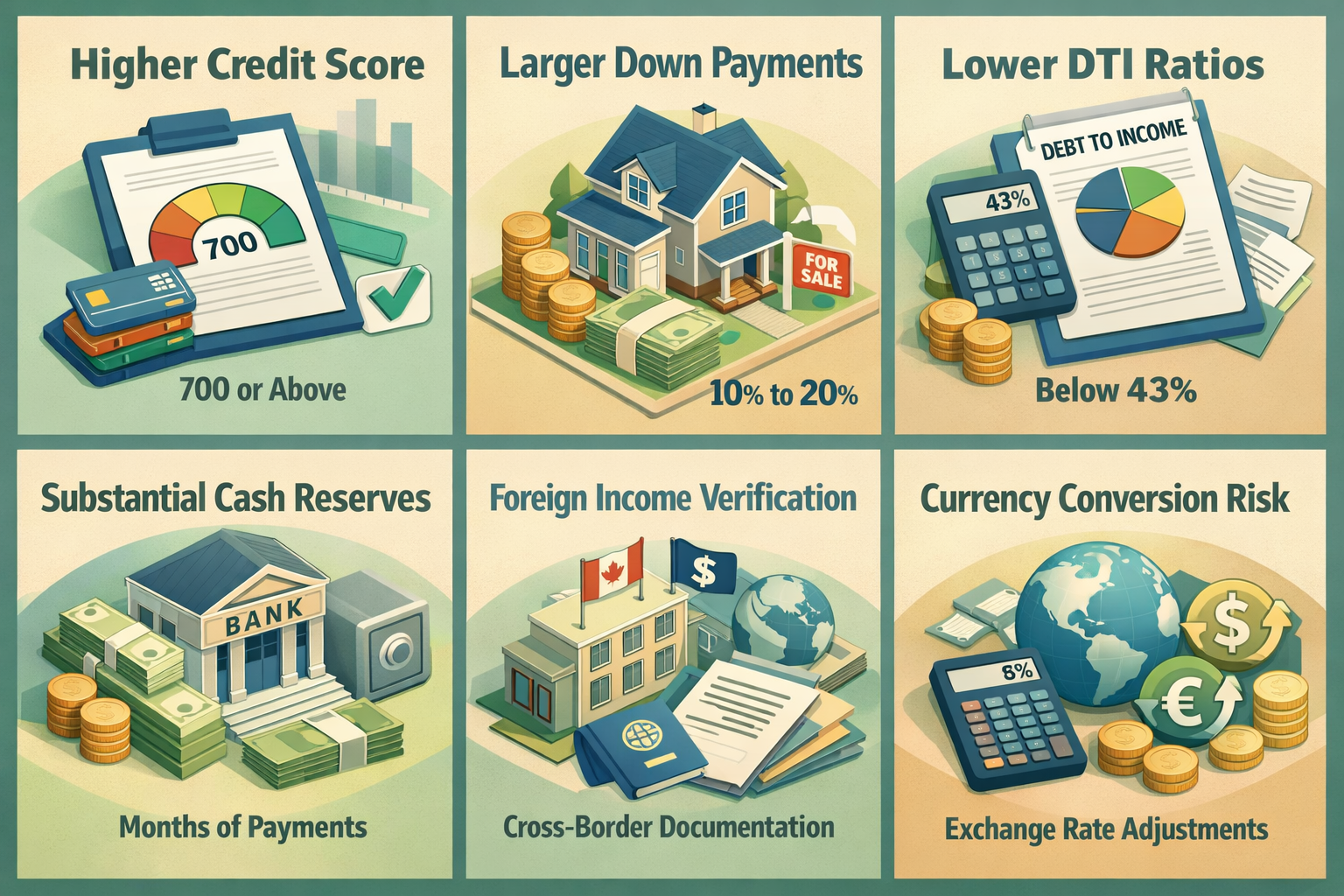
- Higher credit score requirements: Lenders often look for a credit score of 700 or above, with many preferring scores of 720 or higher.
- Larger down payments: Expect to put down at least 10% to 20%, though some lenders may require more depending on the loan size and borrower profile.
- Lower debt-to-income ratios: Jumbo lenders may want your total debt-to-income (DTI) ratio to stay below 43%, and some prefer it even lower.
- Substantial cash reserves: Many lenders require borrowers to have several months' worth of mortgage payments sitting in liquid or semi-liquid accounts after closing.
When you add foreign income to this picture, lenders may apply additional layers of review. That's because verifying income earned outside the U.S. involves cross-border documentation, currency conversion considerations, and differing accounting standards.
How Lenders Evaluate Jumbo Mortgage Foreign Income Sources
When it comes to a jumbo mortgage foreign income application, lenders aren't simply looking at how much you earn — they're focused on how verifiable and stable that income is. Foreign real estate investment income, such as rental revenue from overseas properties, can be considered, but it typically requires more documentation than domestic income.
Lenders generally want to see that the income is consistent, has a reasonable history, and is likely to continue. Most will ask for at least two years of documented earnings from foreign investment properties. They may also apply a conservative approach when calculating usable income, sometimes discounting rental receipts to account for vacancies, property management costs, or currency volatility.
Currency Conversion and Exchange Rate Risk
One of the most significant challenges with foreign real estate investment income is that it's often earned in a non-U.S. currency. Lenders will typically convert the income to U.S. dollars using a consistent exchange rate — often a recent average rate — and may apply a discount to account for fluctuation risk. Borrowers should be prepared for their gross foreign income to translate to a lower qualifying figure once conversion and risk adjustments are applied.
Income Stability and Source Documentation
Lenders will want to see evidence that the income isn't just a one-time event. Rental agreements, lease contracts, and a track record of deposits into your bank account may all be requested. Some lenders may also want a translated and certified copy of any foreign-language documents, along with a professional explanation of how the income is structured under the laws of the originating country.
Non-US Income Mortgage Qualification: Key Documentation You'll Need
Preparing your paperwork in advance is one of the smartest moves you can make when pursuing non-US income mortgage qualification. The documentation requirements for foreign real estate investment income can be more extensive than what domestic borrowers typically face, and missing items can cause delays or even derail your application.
Here's a breakdown of what lenders commonly request:
- Two years of foreign tax returns: If you file taxes in a foreign country, lenders may require translated and notarized copies. If you're a U.S. citizen or resident alien, they'll want your U.S. tax returns showing the foreign income reported on Schedule E or through foreign tax credit forms.
- Proof of property ownership: Official title documents or deed records for your foreign investment properties, translated into English if necessary.
- Rental agreements and lease history: Current and historical lease agreements can help demonstrate consistent rental income over time.
- Bank statements showing deposits: Typically 12 to 24 months of bank statements confirming that rental income has been received regularly.
- Foreign income letter or CPA letter: A letter from a licensed accountant or tax professional explaining the income source, its stability, and how it's reported can carry significant weight with underwriters.
- Currency conversion documentation: Some lenders may request documentation of the exchange rates used or official conversion statements.
Working with a mortgage professional who has experience handling international income scenarios can make a meaningful difference in how smoothly your application moves through underwriting.
Understanding Jumbo Loan Requirements with Foreign Real Estate Investment Income: Lender Overlays and Portfolio Products
Because jumbo loans are non-conforming by nature, individual lenders have wide latitude to set their own guidelines — often referred to as "lender overlays." This means that understanding jumbo loan requirements with foreign real estate investment income isn't a one-size-fits-all exercise. What one lender accepts, another may decline.
For borrowers with foreign income, portfolio lenders are often worth exploring. These are banks or financial institutions that keep loans on their own books rather than selling them to the secondary market. Because they're not bound by the same investor guidelines, they can be more flexible about how they evaluate foreign rental income, non-standard documentation, and cross-border financial profiles.
Non-QM Loan Programs as an Alternative Path
Non-qualified mortgage (Non-QM) programs may also be available to borrowers who don't fit neatly into conventional jumbo guidelines. These products often allow for alternative income verification methods, such as bank statement loans or asset depletion programs, which can be particularly helpful for investors whose foreign income is complex or difficult to document in traditional ways.
It's worth noting that Non-QM loans often come with higher interest rates and may require larger down payments than standard jumbo products. However, for the right borrower, they can open doors that would otherwise remain closed.
Foreign National Mortgage Programs
If you're not a U.S. citizen or permanent resident, some lenders offer foreign national mortgage programs specifically designed for international buyers. These programs acknowledge that foreign nationals may not have a U.S. credit history, U.S. tax filings, or domestic income — and they provide an alternative framework for qualifying based on assets, foreign credit reports, and investment income from overseas properties.
Investment Property Mortgage Considerations for International Real Estate Portfolios
Investors who own real estate both in the U.S. and abroad face a layered financial profile. When applying for an investment property mortgage in the United States, lenders will look at your entire debt picture — including obligations tied to foreign properties.
Even if your foreign mortgage payments are made in another currency and reported under a different legal framework, U.S. lenders may still factor those liabilities into your DTI calculation. This is an area where borrowers are often caught off guard. If you have existing mortgages or financing on your overseas properties, be prepared to provide documentation of those obligations as well.
Rental Income from U.S. vs. Foreign Properties
There's a practical difference in how lenders treat rental income from domestic versus international investment properties. U.S. rental income is typically easier to verify through tax returns and domestic bank accounts. Foreign rental income, as discussed, requires additional steps. Some lenders may be willing to count a percentage of your foreign rental income — often ranging from 70% to 75% after applying a vacancy and expense factor — though this varies by lender and loan program.
Asset-Based Qualifying as a Supplement
For high-net-worth investors who may not have a straightforward income stream, asset depletion or asset-based qualifying could serve as a supplement or alternative to income documentation. Under this approach, lenders calculate a hypothetical monthly income figure based on your total liquid and investment assets. This method may help bridge the gap when foreign rental income alone isn't sufficient to qualify for a large jumbo loan.
Credit Profile and Reserve Requirements for Foreign Income Jumbo Borrowers
Your credit history plays a major role in any jumbo mortgage application, and this is especially true when your income sources are non-traditional or international. If you're a U.S. citizen or long-term resident, lenders will pull your U.S. credit report and evaluate your score, payment history, and existing debt load in the usual way.
If you're a foreign national or have limited U.S. credit history, lenders may accept alternative credit documentation. This could include a letter of credit from your home country's bank, a report from an international credit bureau, or evidence of a long-standing banking relationship with a recognizable financial institution.
Cash Reserve Requirements May Be Elevated
Jumbo loans often come with cash reserve requirements that go well beyond what conforming loans require. For borrowers with foreign income, lenders may increase those reserve thresholds to account for the perceived additional risk. It's not uncommon for lenders to require 12 to 24 months of projected mortgage payments in reserves — and those reserves may need to be held in a U.S. bank account or converted into U.S. dollars to be counted.
Keeping funds organized, documented, and accessible before you apply can strengthen your application considerably. Large, unexplained deposits — even from legitimate foreign rental income — can trigger additional scrutiny during the underwriting process, so having a paper trail ready is always a smart approach.
Practical Steps to Strengthen Your Jumbo Loan Application as a Foreign Income Borrower
Preparation is your greatest advantage when applying for a jumbo mortgage with foreign real estate investment income. Here are some practical strategies that may help improve your chances of approval:
- Work with a specialized mortgage broker: Not all lenders are equipped to handle foreign income documentation. A broker with experience in international borrower profiles can connect you with lenders who are more comfortable with this type of application.
- Get your documents translated and certified early: Foreign-language documents typically need to be translated by a certified translator. Starting this process well in advance of your application can prevent delays.
- Establish a U.S. banking relationship: Having a U.S. bank account with a history of deposits — including transferred rental income — can help demonstrate financial activity in a format lenders recognize.
- Consult a U.S.-licensed CPA: A tax professional familiar with both U.S. and international income reporting can help you structure your documentation in a way that aligns with lender expectations.
- Build or strengthen your U.S. credit profile: If you plan to purchase in the U.S., establishing credit here — through a credit card, auto loan, or other product — well before applying for a jumbo loan can make a meaningful difference.
- Consider a larger down payment: Offering a down payment above the minimum threshold can reduce lender risk and may lead to more favorable terms or greater flexibility on income verification.
The landscape for borrowers with foreign income is evolving, and more lenders are developing products to serve this growing segment. Being well-prepared and working with the right professionals can help you navigate the process with greater confidence.
●Conclusion
Securing a jumbo mortgage when your income comes from real estate investments overseas is certainly more complex than a standard home loan application — but it's far from impossible. By understanding jumbo loan requirements with foreign real estate investment income, organizing your documentation carefully, and working with lenders or brokers who specialize in international borrower profiles, you can position yourself for a successful outcome. Whether you're purchasing a primary residence, a vacation home, or a U.S. investment property, the right preparation and the right lending partner can make all the difference. At LoanWise, we're here to help you explore your options and find the financing path that fits your unique financial picture.