
Owning a vacation rental property can be a rewarding investment, but it also comes with unique financing challenges. If you're looking to access the equity you've built in that property, a Home Equity Line of Credit (HELOC) might seem like a practical solution. However, understanding HELOC requirements for vacation rental property is essential before you apply — because lenders treat investment and short-term rental properties very differently than primary residences. From stricter equity thresholds to more detailed income documentation, the path to approval requires careful preparation. This guide walks you through everything you need to know.
What Is a HELOC and How Does It Work on a Rental Property?
A Home Equity Line of Credit is a revolving credit line secured by the equity in a property. Unlike a traditional home equity loan that provides a lump sum, a HELOC allows you to draw funds as needed during a set draw period — typically around ten years — and then repay the balance over a repayment period that may last another ten to twenty years.
When it comes to a vacation rental property, the mechanics are similar, but the lending environment is notably more cautious. Lenders view short-term rental properties as higher-risk collateral compared to a borrower's primary home. The reasoning is straightforward: if a borrower faces financial hardship, they're more likely to default on an investment property loan before they'd risk losing their own home.
As a result, lenders may apply tighter guidelines, charge higher interest rates, and require more thorough documentation before approving a HELOC on investment property vacation rental scenarios. Understanding these distinctions early can save you significant time and frustration during the application process.
Equity Requirements: How Much Do You Need?
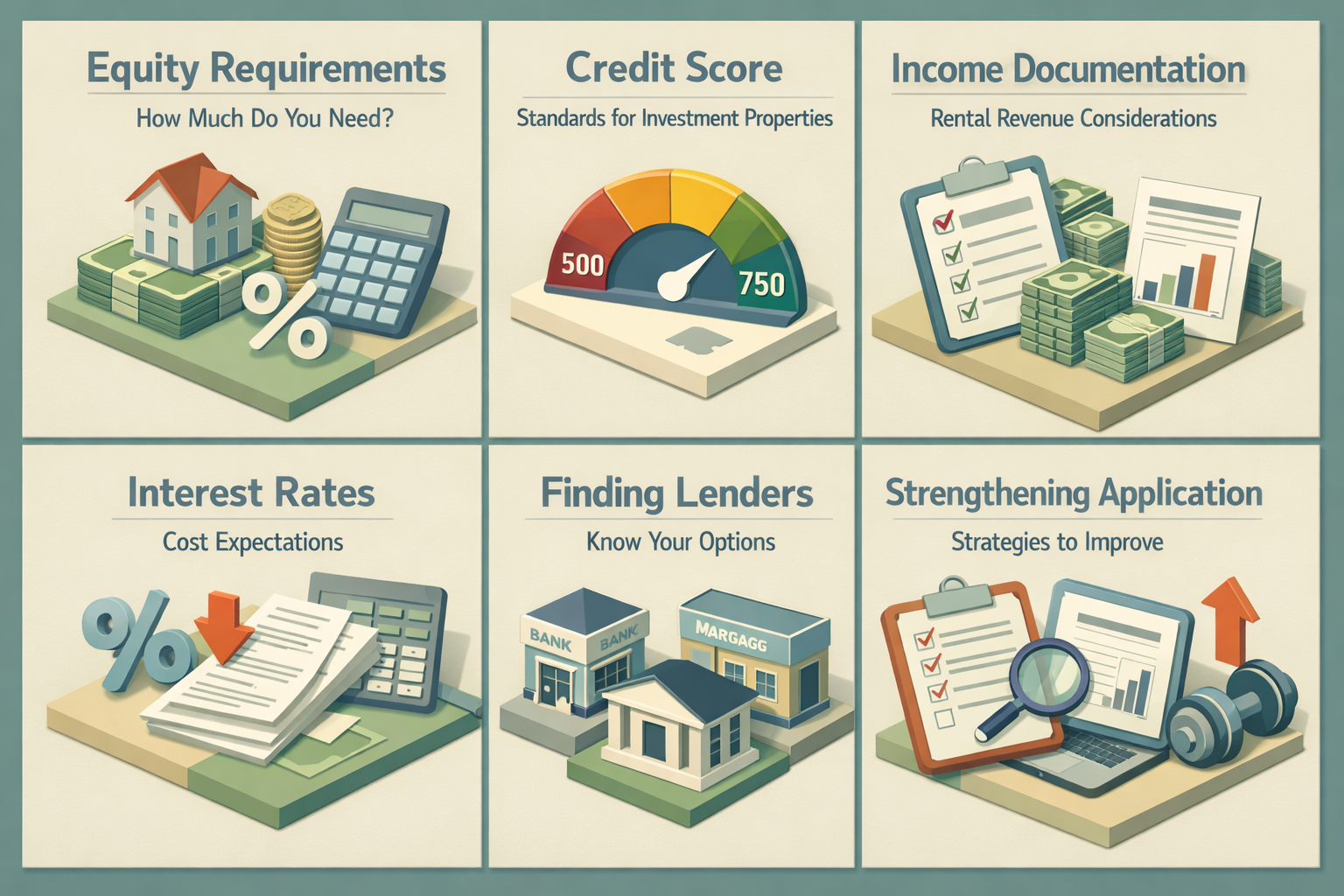
One of the most important factors in qualifying for a HELOC is how much equity you've built in your vacation rental. For primary residences, many lenders allow borrowers to access equity up to 85% of the home's appraised value, minus any outstanding mortgage balance. For investment properties, however, lenders typically require you to retain significantly more equity in the home.
Most lenders require that the combined loan-to-value (CLTV) ratio — which accounts for both your existing mortgage and the new HELOC — remain at or below 75% to 80% for non-owner-occupied properties. This means you'd generally need at least 20% to 25% equity remaining after the HELOC is factored in, and many lenders may require even more.
Here's a simplified example of how this might work:
- Appraised property value: $400,000
- Maximum CLTV at 75%: $300,000
- Existing mortgage balance: $200,000
- Maximum HELOC line available: $100,000
Keep in mind that appraisals for vacation rental properties can be more nuanced, since comps may be limited in resort or seasonal markets. A professional appraisal is typically required as part of the application, and the lender's valuation may differ from your own estimate.
Credit Score and Financial Profile Standards for Investment Property HELOCs
Your credit profile plays a critical role in understanding HELOC requirements for vacation rental property. Lenders generally look for a stronger credit score when the collateral is a non-owner-occupied property. While primary residence HELOCs may be available with scores in the mid-600s at some institutions, investment property HELOCs often require a minimum score of 700 or higher — and many lenders prefer scores of 720 or above to offer competitive terms.
Beyond your credit score, lenders will also review:
- Debt-to-income (DTI) ratio: Most lenders prefer a DTI at or below 43%, though some may allow slightly higher ratios depending on compensating factors like substantial cash reserves.
- Payment history: A clean track record on your existing mortgage and other obligations signals reliability to lenders.
- Cash reserves: Lenders may require you to demonstrate several months' worth of mortgage payments in liquid reserves — for both your primary residence and the rental property.
- Overall financial stability: Any recent bankruptcies, foreclosures, or significant derogatory marks on your credit report could disqualify you or result in much less favorable terms.
It's worth taking time to review your credit reports before applying. Disputing any errors and paying down revolving balances could meaningfully improve your score and strengthen your application.
Income Documentation and Rental Revenue Considerations
One area where vacation rental property HELOCs get particularly complex is income documentation. Lenders need to assess your ability to repay the credit line, and for a vacation rental, that means carefully evaluating both your personal income and the property's rental income.
Unlike a long-term rental with stable monthly leases, vacation rental income can be highly seasonal and variable. Platforms like short-term rental marketplaces may generate strong revenue in peak months and little to nothing in the off-season. Lenders may discount or exclude volatile rental income from their qualifying calculations, which could make your DTI look less favorable than expected.
Typically, lenders may ask for:
- Two years of federal tax returns, including Schedule E for rental income and expenses
- Recent rental income statements or booking platform reports
- Property management agreements if a third-party manages the property
- Proof of consistent occupancy rates where available
If your vacation rental hasn't been operating for at least one to two full tax years, some lenders may be unwilling to count that income at all. This is an important consideration for newer property owners who may not yet have a sufficient rental income history on paper.
Self-employed borrowers or those with complex income structures may face additional scrutiny. In some cases, non-QM (non-qualified mortgage) lenders who specialize in investment property financing could offer more flexible documentation options, though often at higher interest rates.
Interest Rates and Cost Expectations for a HELOC on Investment Property Vacation Rental
It's important to set realistic expectations about the cost of a HELOC on investment property vacation rental. Because lenders assume more risk with non-owner-occupied collateral, the interest rates on these lines of credit are typically higher than what you'd see for a primary residence HELOC.
HELOC rates are usually variable and tied to a benchmark index — often the prime rate — plus a margin determined by the lender. For primary residences, that margin might be relatively modest. For investment properties, lenders typically add a larger margin to compensate for the elevated risk, which could translate to a noticeably higher annual percentage rate (APR).
Additional costs to anticipate may include:
- Appraisal fees: A formal property appraisal is almost always required for investment property HELOCs.
- Origination or processing fees: Some lenders charge upfront fees to establish the credit line.
- Annual fees: Certain lenders charge yearly maintenance fees for keeping the line open.
- Early termination fees: Closing the HELOC before a specified period — sometimes three years — could trigger a penalty.
Before committing, it's wise to compare offers from multiple lenders and calculate the total cost of borrowing over your expected usage period, not just the initial rate.
Finding the Right Lender and Knowing Your Options
Not every lender offers HELOCs on investment or vacation rental properties. In fact, many major banks and credit unions restrict their HELOC products to primary residences only, which means your pool of lenders may be narrower than expected. This makes it especially important to do your research before applying.
Here are some lender types that may be worth exploring:
- Portfolio lenders: These institutions hold loans on their own books rather than selling them to the secondary market, which often gives them more flexibility to approve non-traditional borrowers and property types.
- Community banks and credit unions: Smaller institutions sometimes have more appetite for local investment properties and may offer relationship-based lending decisions.
- Non-QM or specialty lenders: For borrowers with complex income or newer rental properties, non-QM lenders may provide alternative qualification paths, though typically at higher rates.
- Mortgage brokers: A broker with experience in investment property lending can help identify lenders who are actively offering HELOCs on vacation rentals in your area.
When comparing lenders, look beyond the interest rate. Evaluate draw period terms, repayment flexibility, prepayment penalties, and whether the lender has experience with short-term rental properties specifically. A lender familiar with vacation rental markets may have a more realistic understanding of seasonal income patterns.
Strategies to Strengthen Your HELOC Application
If you're serious about pursuing a HELOC on your vacation rental, there are several steps you can take to improve your approval odds and secure better terms. Preparation makes a meaningful difference, especially when lenders are applying stricter standards to non-owner-occupied properties.
- Build your equity cushion: If your current CLTV is above 80%, consider making additional principal payments before applying to bring your ratio down into the range lenders prefer.
- Improve your credit score: Pay down credit card balances, avoid opening new accounts before applying, and dispute any inaccuracies on your credit reports.
- Document rental income thoroughly: Keep meticulous records of your booking history, rental income deposits, and operating expenses. The stronger your paper trail, the more confidence lenders may have in your rental's income potential.
- Reduce your DTI: Paying off or paying down other debts before applying can lower your debt-to-income ratio and make your financial profile more attractive.
- Build cash reserves: Having six or more months of mortgage payments in reserve — across both your primary home and the rental — demonstrates financial resilience to lenders.
- Work with an experienced advisor: A mortgage professional who specializes in investment property financing can guide you toward the right lenders and help you present your application in the best possible light.
Understanding HELOC requirements for vacation rental property isn't just about meeting the minimums — it's about positioning yourself as a low-risk borrower in a lending category where lenders are inherently more cautious.
●Conclusion
Accessing equity from a vacation rental property through a HELOC is entirely possible, but it requires a clear understanding of the elevated standards lenders apply to non-owner-occupied properties. From higher equity requirements and stronger credit score expectations to detailed income documentation and variable rate structures, the qualification process is more demanding than it might be for a primary residence line of credit. That said, for well-prepared investors with solid equity, good credit, and documented rental income, a HELOC on a vacation rental could be a powerful tool for funding renovations, purchasing additional properties, or consolidating higher-cost debt. Take the time to review your financial profile, explore lender options, and connect with a lending professional who understands the nuances of short-term rental property financing. The right guidance can make all the difference.