
If you own a home with a mother-in-law suite — whether it's an attached in-law apartment, a basement unit, or a separate guest house — you may be sitting on significant equity. A Home Equity Line of Credit (HELOC) could be a smart way to access that equity for renovations, debt consolidation, or other financial goals. However, understanding HELOC requirements for property with an existing mother-in-law suite is more nuanced than it might seem at first. Lenders evaluate these properties differently, and knowing what to expect before you apply can make the process much smoother.
What Is a HELOC and How Does It Work for Homeowners?
A Home Equity Line of Credit, or HELOC, is a revolving credit line secured by the equity in your home. Think of it like a credit card backed by your property. You borrow what you need, repay it, and borrow again during the draw period — which typically lasts around ten years. After that, you enter a repayment period where you pay down the outstanding balance.
HELOCs are popular among homeowners because they often come with lower interest rates than personal loans or credit cards. The amount you can borrow is generally based on your home's current appraised value minus what you still owe on your mortgage. Most lenders allow you to borrow up to 80% to 85% of your combined loan-to-value (CLTV) ratio, though this can vary by lender and borrower profile.
For properties with a HELOC guest house suite attached or a built-in in-law unit, the equity calculation may look very attractive — especially if the additional living space has boosted your property's overall appraised value. However, how that added unit is classified by the lender plays a big role in your approval odds and terms.
How Lenders Classify Properties with In-Law Suites
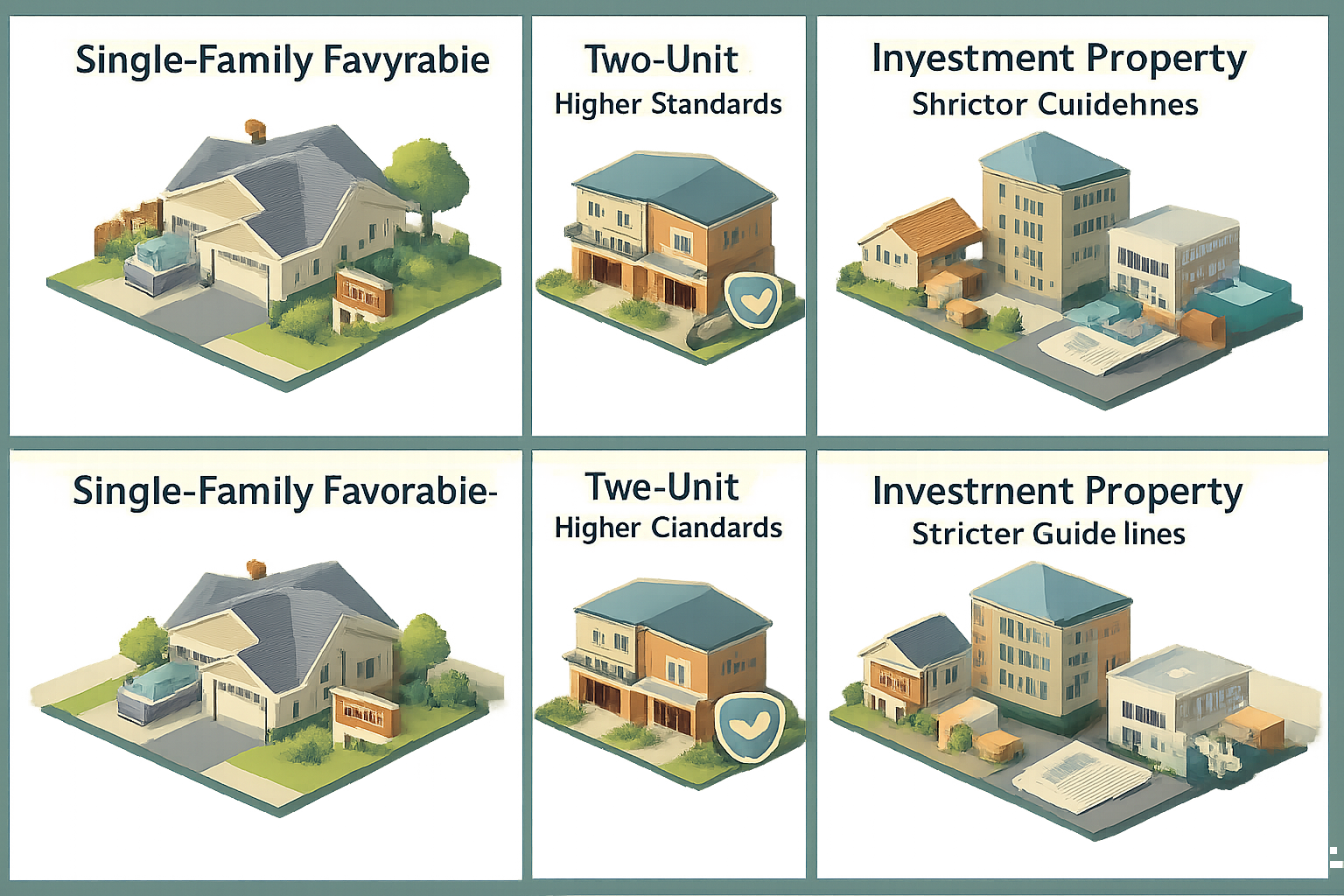
One of the first things a lender will determine when you apply for a HELOC on a property with an in-law suite is the property classification. This matters because lenders have different guidelines for single-family homes, two-family homes, and investment properties — and the classification affects your loan terms significantly.
A mother-in-law suite that is attached to the main living area, shares utilities, and has a single entrance may be treated as part of a standard single-family residence. In contrast, a HELOC guest house suite attached but with its own entrance, kitchen, and bathroom could be classified as a two-unit property in the eyes of an underwriter. A fully separate detached cottage or guest house is even more likely to be viewed as a multi-unit or accessory dwelling unit (ADU).
- Single-family classification: Typically the most favorable for HELOC approval and rates.
- Two-unit classification: May require higher equity thresholds and stronger credit qualifications.
- Investment property classification: Often carries stricter guidelines and higher interest rates if the unit is rented out.
It's worth noting that lender interpretations can vary, and appraisers play a critical role in determining how the property is classified. Getting a professional appraisal before you apply could give you a clearer picture of where your property stands.
Equity, Appraisal, and Loan-to-Value Considerations
Your home equity is the cornerstone of any HELOC application. For properties with a mother-in-law suite, the good news is that these units often add measurable value to a home — particularly in markets where multigenerational living or rental income potential is in high demand. This could mean a higher appraised value and, therefore, more accessible equity.
When a licensed appraiser evaluates your property, they'll consider the square footage, condition, and functionality of the in-law suite as part of the overall value assessment. A well-maintained, legally permitted suite with a private entrance, kitchen, and bathroom may contribute meaningfully to the property's market value.
However, lenders will also be attentive to your Combined Loan-to-Value (CLTV) ratio — that is, the total of your existing mortgage balance plus the requested HELOC amount, divided by your appraised property value. Most lenders prefer this ratio to stay at or below 80% to 85%. If your property has appreciated substantially due in part to the in-law suite, you may find that you have more available equity than you expected.
Keep in mind that unpermitted additions or modifications — such as a suite that was built without proper local permits — could negatively impact the appraisal or raise red flags during underwriting. Lenders may discount the value of unpermitted improvements or require documentation that the addition meets local building codes.
Credit Score and Income Requirements You Should Know
Beyond the property itself, lenders will scrutinize your personal financial profile before approving a HELOC. This is true for any home equity product, but it's especially important when your property includes an accessory dwelling unit, since lenders may apply different standards depending on the property classification.
Most lenders look for a minimum credit score of around 620 for HELOC approval, though borrowers with scores of 700 or above are typically offered more competitive interest rates and higher credit limits. If your property is classified as a two-unit or investment property, some lenders may require a higher minimum score — often in the range of 680 to 720 or more.
Your debt-to-income (DTI) ratio is another key factor. Lenders generally prefer a DTI of 43% or lower, meaning your total monthly debt payments — including the proposed HELOC — should not exceed 43% of your gross monthly income. If you're collecting rental income from a tenant in your mother-in-law suite, some lenders may allow you to count a portion of that rental income toward your qualifying income, which could strengthen your application.
- Gather two years of tax returns and income documentation before applying.
- If you receive rental income, have lease agreements and deposit records ready.
- Pay down existing revolving debt to lower your DTI prior to applying.
Occupancy Status and Its Impact on HELOC Approval
How you use your property — and specifically how the in-law suite is occupied — can significantly affect your HELOC eligibility and the terms you're offered. Lenders distinguish between owner-occupied and non-owner-occupied properties, and this distinction carries real weight in underwriting decisions.
If you live in the main home and your relative or family member uses the in-law suite at no charge, most lenders will likely treat the property as a primary residence. This is typically the most favorable scenario for HELOC qualification, as primary residences usually receive better rates and more flexible guidelines.
If the suite is rented to a tenant, however, the lender may evaluate the property more like an investment or income-generating asset. This doesn't necessarily disqualify you from a HELOC, but it may mean stricter requirements and slightly higher rates. Some lenders may also want to verify that renting out the suite is permitted under local zoning laws.
If the property is used purely as a rental with no owner occupancy, qualifying for a HELOC can be considerably more challenging. In these cases, borrowers might explore other financing options, such as a cash-out refinance or a commercial equity product, depending on the situation.
Navigating HELOC Requirements for Property with an Existing Mother-in-Law Suite
If you're serious about applying for a HELOC, taking a strategic approach can make a real difference. Understanding HELOC requirements for property with an existing mother-in-law suite means doing a bit of homework before you ever sit down with a lender.
Start by confirming that your mother-in-law suite is legally permitted. Check with your local building or planning department to verify that the unit was built with the appropriate permits and complies with current zoning ordinances. A legal, code-compliant unit is much more likely to be counted favorably in an appraisal and will reduce friction during underwriting.
Next, get a sense of your current equity position. You can use online valuation tools for a rough estimate, but a professional appraisal will give you the most accurate picture. Some lenders offer a free appraisal as part of the HELOC application process, though this varies.
It's also a good idea to shop multiple lenders. Not all lenders have the same guidelines for properties with accessory dwelling units or in-law suites. Credit unions, community banks, and online lenders may each have different thresholds and risk tolerances. Comparing offers could help you find a lender whose guidelines align well with your property type.
- Confirm permits and zoning compliance for the suite.
- Order or request a professional appraisal to know your equity position.
- Compare HELOC offers from at least three lenders.
- Ask each lender directly how they classify properties with in-law units.
- Prepare documentation for any rental income you receive from the suite.
Smart Ways to Use HELOC Funds on Properties with Accessory Units
Once you've secured a HELOC, having a thoughtful plan for the funds can help you maximize the financial benefit. Homeowners with in-law suites or accessory dwelling units are often in a particularly strong position, because strategic reinvestment in the property can yield both lifestyle and financial returns.
Many homeowners use HELOC funds to upgrade the in-law suite itself — modernizing the kitchen, adding a private bathroom, or improving the unit's energy efficiency. These improvements can increase the suite's rental appeal, boost overall property value, and potentially support higher rent if the unit is leased.
Others use the equity to fund broader home improvements such as roof replacement, HVAC upgrades, or accessibility modifications — changes that can benefit all residents of the property. HELOCs can also be used for debt consolidation, education expenses, or emergency reserves, offering flexibility that many fixed-term loans don't provide.
Regardless of how you plan to use the funds, it's wise to borrow only what you need and maintain a disciplined repayment strategy. Since a HELOC is secured by your home, responsible borrowing is essential to protecting your most valuable asset. Speaking with a licensed mortgage advisor can help you determine whether a HELOC is the right tool for your specific financial goals and property situation.
●Conclusion
Accessing your home's equity when your property includes a mother-in-law suite is absolutely possible — but it does require a clear understanding of how lenders evaluate these unique properties. From property classification and appraisal to occupancy status and credit requirements, each factor plays a role in shaping your HELOC options. By confirming your suite's legal status, understanding your equity position, and comparing lenders, you can approach the process with confidence. At LoanWise, we help homeowners navigate exactly these kinds of nuanced lending situations. Ready to explore your HELOC options? Connect with a LoanWise mortgage specialist today and find out how much of your home's equity you could put to work.