
Homeowners who have added an accessory dwelling unit to their property are in a unique financial position. Not only do they potentially benefit from rental income, but they may also be sitting on significant home equity that could be accessed through a Home Equity Line of Credit — commonly known as a HELOC. However, understanding HELOC requirements for property with accessory dwelling unit and rental income is more nuanced than it might seem at first glance. Lenders tend to evaluate these properties carefully, taking into account equity levels, rental income documentation, credit health, and the overall risk profile of the loan. If you're a homeowner or real estate investor with an ADU, this guide will walk you through what you need to know before applying.
What Is a HELOC and How Does It Work for ADU Properties
A Home Equity Line of Credit is a revolving credit line secured by the equity in your home. Think of it like a credit card that uses your property as collateral. You're approved for a maximum credit limit, and you can draw from it as needed during a set draw period — typically five to ten years — and then repay the balance during a repayment period that may last another ten to twenty years.
For homeowners with an accessory dwelling unit, a HELOC can be a strategic financing tool. ADUs — which include garage conversions, basement apartments, detached guest houses, and similar structures — often add meaningful value to a property. That added value contributes to your total home equity, which is the foundation of any HELOC approval. However, the presence of an ADU also introduces complexity that not all lenders are prepared to handle in the same way.
Lenders may classify your property differently depending on whether the ADU is legally permitted, how it's used, and whether it generates rental income. These factors can influence which loan programs you qualify for and what documentation you'll need to provide. It's worth having a clear picture of your property's legal status and current use before you begin the application process.
How Lenders Evaluate Home Equity on ADU Properties
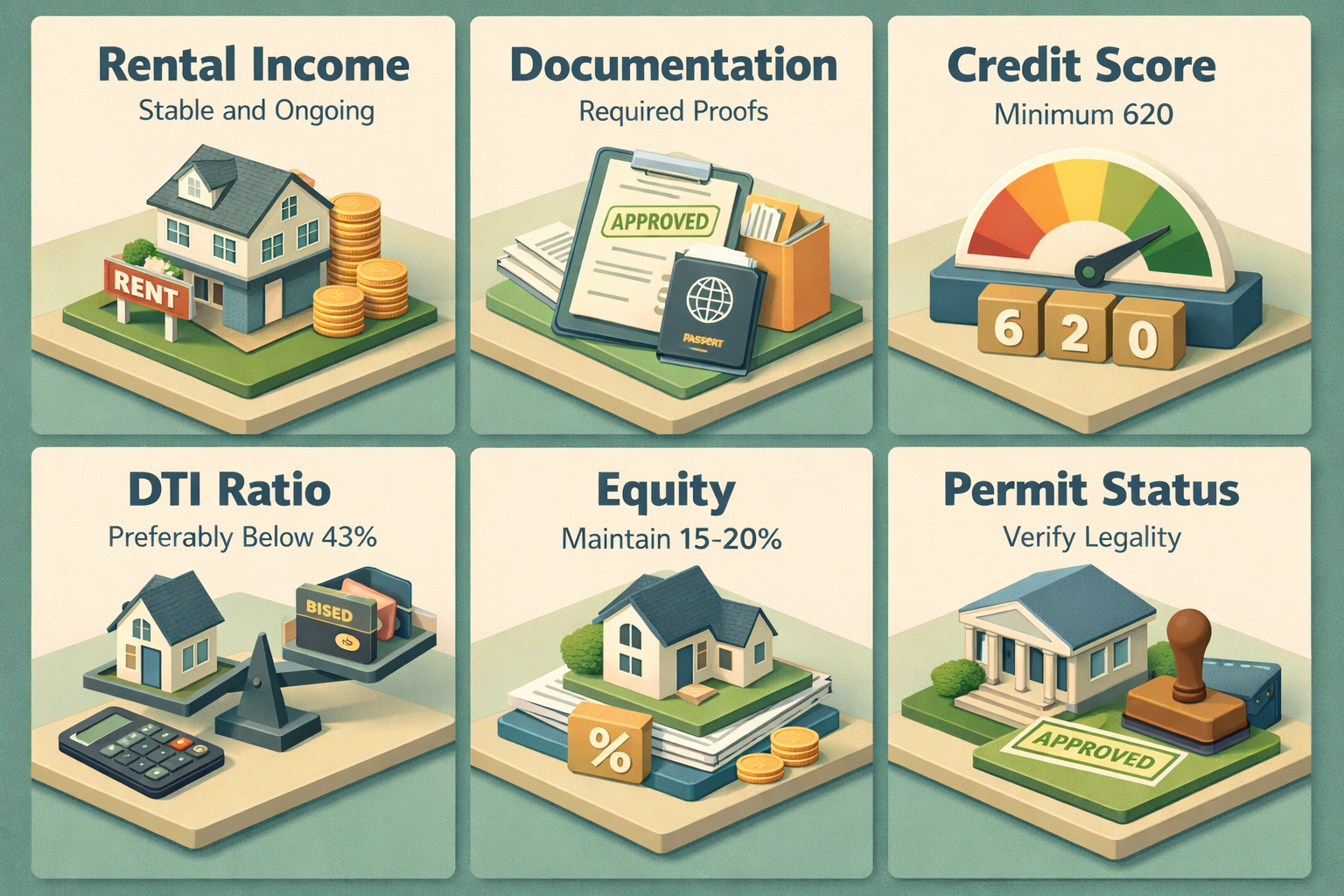
Equity is the cornerstone of any HELOC approval. Most lenders require that you maintain a certain amount of equity in your home after the line of credit is factored in. This is often expressed as a combined loan-to-value ratio, or CLTV. Many lenders cap the CLTV at around 80% to 85%, meaning you'd generally need to retain at least 15% to 20% equity in your home after the HELOC is in place.
When your property includes an ADU, the appraisal process becomes especially important. A licensed appraiser will assess the full market value of your property, including the contribution of the ADU. If the accessory unit is legally permitted and well-built, it could meaningfully increase the appraised value — which in turn may support a larger HELOC credit line.
However, if the ADU was built without proper permits or doesn't meet local zoning requirements, appraisers and lenders may discount its value or exclude it from the appraisal altogether. In some cases, an unpermitted ADU could even complicate or delay your application. If you're unsure about your ADU's permit status, it may be worth consulting with your local planning department before applying for a HELOC.
It's also worth noting that in high-cost housing markets, ADU properties often carry higher appraised values, which could give homeowners more flexibility when calculating their available equity. That said, the final determination always rests with the appraiser and the lender's internal guidelines.
How Rental Income from an ADU Affects HELOC Qualification
One of the more nuanced aspects of understanding HELOC requirements for property with accessory dwelling unit and rental income is how lenders treat that rental income when evaluating your ability to repay the line of credit. In general, rental income can help strengthen your application — but lenders typically apply specific rules about how much of it they'll count.
Most lenders won't accept the full amount of rent you collect each month at face value. Instead, they may use a percentage of the gross rental income — often somewhere in the range of 75% — to account for potential vacancies, property maintenance, and other ownership costs. The remaining percentage acts as a buffer against income interruptions.
To use rental income in your qualification, you'll generally need to provide documentation that proves the income is stable and ongoing. This commonly includes:
- Signed lease agreements — showing the rental terms and monthly payment amount
- Two years of tax returns — specifically Schedule E if you've been reporting the rental income to the IRS
- Bank statements — demonstrating consistent deposit of rental payments
- Property management statements — if you use a third-party manager to handle the ADU tenant
If you've only recently started renting the ADU and don't yet have a full tax history of rental income, some lenders may require a longer paper trail before they'll count it toward your qualifying income. Others might accept a signed lease and comparable rental analysis as supporting evidence, though policies vary by lender.
Credit Score and Debt-to-Income Ratio Standards for HELOC Approval
Beyond equity and income, your personal financial profile plays a central role in the HELOC approval process. Lenders typically look at two key metrics: your credit score and your debt-to-income ratio, or DTI.
For a HELOC, most lenders prefer a credit score of at least 620, though better terms and higher credit limits are generally available to borrowers with scores of 700 or above. A strong credit history signals to the lender that you manage debt responsibly and are likely to repay the credit line on time. If your score needs improvement, taking a few months to pay down revolving balances and correct any errors on your credit report could make a meaningful difference before you apply.
Your debt-to-income ratio measures how much of your monthly gross income goes toward paying existing debts — including your primary mortgage, car loans, student loans, and any other obligations. Lenders generally prefer a DTI below 43%, though some may accept slightly higher ratios depending on compensating factors like a strong credit score or significant equity. When rental income from the ADU is included in your qualifying income, it can help lower your effective DTI, making approval more attainable.
It's also important to remember that a HELOC is a variable-rate product in most cases. This means the interest rate — and therefore your monthly payment obligation — can fluctuate over time based on changes in a benchmark rate such as the prime rate. Lenders may stress-test your DTI at a higher hypothetical rate to ensure you could still afford repayment if rates rise.
Property Classification and Lender Guidelines for ADU Homes
One of the less obvious challenges in the HELOC application process for ADU owners is how the property gets classified. Lenders categorize residential properties based on the number of units, and this classification can affect which loan programs apply, what interest rates are available, and how the underwriting process unfolds.
A property with a single primary home and an attached or detached ADU is generally still considered a single-family or two-unit property, depending on how it's structured and how local zoning classifies it. Single-family classification is typically more favorable for HELOC applicants, as it tends to come with simpler underwriting requirements and broader lender participation.
If your property is classified as a two-unit or multi-family dwelling, you may face stricter equity requirements or encounter a narrower pool of lenders willing to extend a HELOC. Some lenders limit their HELOC products to owner-occupied single-family homes, which could rule out properties where the primary homeowner lives in one unit and rents the ADU to a tenant. In that scenario, exploring lenders who specifically work with small investment or owner-occupied multi-unit properties may be necessary.
It's always a good idea to ask lenders directly about their policies on ADU properties before submitting a formal application. Gathering this information upfront can save time and help you focus your search on lenders whose programs align with your property type and financial goals.
Tips for Strengthening Your HELOC Application as an ADU Owner
If you're planning to apply for a HELOC on a home with an accessory dwelling unit and rental income, a bit of preparation can go a long way toward a smoother approval process. Here are some practical strategies to consider:
- Verify your ADU's permit status: Confirm with your local building or planning department that your ADU is fully permitted and legally recognized. This supports a stronger appraisal and reduces the risk of lender pushback.
- Organize your rental income documentation: Gather at least two years of tax returns showing Schedule E rental income, current lease agreements, and bank statements that reflect consistent rental deposits.
- Review your credit report: Obtain your free annual credit report and dispute any errors. Paying down high balances on credit cards can also meaningfully improve your score before applying.
- Calculate your CLTV: Use a rough estimate of your home's current value and subtract your outstanding mortgage balance to get a sense of your available equity. Most lenders want your combined loan-to-value ratio to stay below 85%.
- Shop multiple lenders: HELOC guidelines vary significantly from one lender to the next, especially for properties with ADUs. Comparing offers from banks, credit unions, and mortgage companies could surface better terms and more flexible underwriting.
- Consider a co-borrower: If your individual income or credit score is on the lower end, adding a co-borrower with strong financials may help you qualify for a larger credit line or better rate.
Being proactive and well-organized going into the process may not only improve your chances of approval — it could also speed up the timeline from application to funding.
●Conclusion
Understanding HELOC requirements for property with accessory dwelling unit and rental income is an important step for any homeowner or real estate investor looking to leverage their home equity wisely. While the process involves more moving parts than a standard HELOC application, it's absolutely manageable with the right preparation. From confirming your ADU's permit status and organizing rental income documentation to reviewing your credit and shopping lenders, each step you take brings you closer to accessing the equity you've built. At LoanWise, we're here to help you navigate the lending landscape with clarity and confidence. If you're ready to explore your HELOC options, consider connecting with a lending specialist who understands the unique dynamics of ADU properties and rental income qualification.