
Homeowners with accessory dwelling units — whether that's a backyard cottage, a garage apartment, or an attached guest suite — are sitting on a unique financial asset. As ADUs have grown in popularity across the country, more homeowners are wondering whether they can leverage their home equity through a HELOC. The short answer is yes, it's often possible. But understanding HELOC requirements for a property with an accessory dwelling unit takes a bit more groundwork than a standard single-family home application. From how lenders classify your property to how your ADU affects your appraisal, there are several important factors to consider before you apply.
What Is a HELOC and How Does It Work for Homeowners
A Home Equity Line of Credit (HELOC) is a revolving credit line secured by the equity you've built in your home. Think of it like a credit card, but instead of unsecured borrowing, it's backed by your property. During the draw period — typically five to ten years — you can borrow funds as needed, up to your approved credit limit. After that, you enter a repayment period where you pay down the balance, usually over ten to twenty years.
HELOCs are commonly used for home renovations, debt consolidation, education expenses, or even investment opportunities. For homeowners with an ADU, a HELOC can be a smart way to fund further improvements to the unit, finance other projects, or simply access liquidity from an appreciating asset.
The amount you can borrow through a HELOC generally depends on your home's current market value, how much you still owe on your mortgage, and lender-specific guidelines. Most lenders allow you to borrow up to a combined loan-to-value (CLTV) ratio of around 80% to 85%, though this can vary. For ADU properties, that calculation may include some additional nuances.
How Lenders Classify Properties With Accessory Dwelling Units
One of the first things a lender will assess when you apply for a HELOC on a property with a guest house or secondary unit is how that property is classified. In most cases, a home with a single ADU is still considered a single-family residence, which makes the lending process relatively straightforward. However, if the property appears to function more like a duplex or multi-unit building, lenders may treat it differently — sometimes applying stricter requirements or different loan programs altogether.
Classification typically depends on factors like whether the ADU has a separate entrance, its own kitchen, utility meters, and how the local municipality has zoned the property. If your ADU was legally permitted and built to code, lenders are generally more comfortable including it under the single-family classification. Unpermitted units, on the other hand, can complicate the process significantly.
It's worth speaking with your lender early in the process to clarify how they'll classify your specific property. Some lenders have more experience with ADU properties than others, and working with one who understands the nuances can make a meaningful difference in your application experience.
How Your ADU Affects the Home Appraisal and Equity Calculation
The appraisal is arguably one of the most important steps in the HELOC process for ADU properties. A licensed appraiser will assess your home's current market value, and the presence of an accessory dwelling unit can influence that number — often positively. ADUs may add measurable value to a property, especially in markets where rental income potential is a key selling point.
Appraisers typically use comparable sales (often called "comps") from nearby homes that have similar features. If your neighborhood has other ADU properties that have sold recently, those sales can help support a higher appraised value for your home. In areas where ADUs are less common, the appraiser may need to make adjustments, which could affect the outcome.
The higher your appraised value — relative to what you owe — the more equity you have available. Since HELOCs are tied directly to available equity, a well-appraised ADU property could give you access to a more substantial credit line. That said, if the ADU is unpermitted or in poor condition, it may not contribute positively to the appraisal and could even raise red flags with the lender.
Homeowners planning to apply for a HELOC for an ADU property might consider making modest improvements to the unit before the appraisal to help ensure it's presented in the best possible condition.
Core Credit and Financial Requirements Lenders Typically Expect
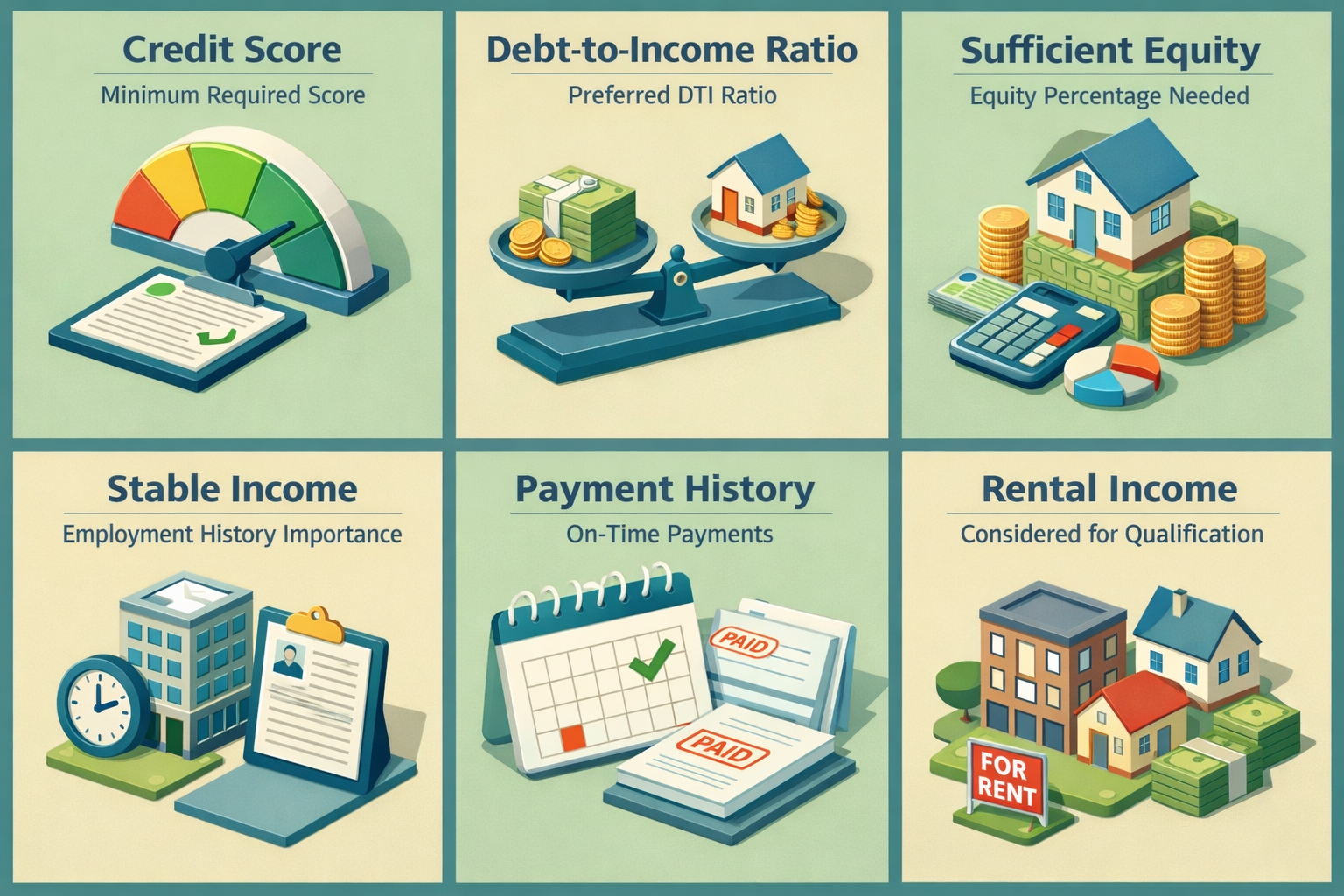
Beyond the property classification and appraisal, lenders will evaluate your personal financial profile just as they would for any other home equity product. Here are the key factors most lenders consider:
- Credit Score: Most lenders prefer a minimum credit score of around 620 for a HELOC, though many competitive lenders may look for scores of 680 or higher. A stronger credit score often results in better interest rates and terms.
- Debt-to-Income Ratio (DTI): Lenders want to see that your existing debt obligations — including your primary mortgage — don't overwhelm your monthly income. A DTI below 43% is commonly preferred, though this can vary by lender.
- Sufficient Equity: You'll typically need at least 15% to 20% equity remaining in your home after the HELOC is factored in. Lenders use the combined loan-to-value (CLTV) ratio to calculate this.
- Stable Income and Employment: Lenders want confidence that you can repay what you borrow. Consistent employment history or verifiable self-employment income is important.
- Payment History: A track record of on-time mortgage payments and other credit obligations strengthens your application considerably.
If your ADU generates rental income, some lenders may allow you to count a portion of that income toward your qualifying income — though documentation such as a signed lease or tax records showing rental income is typically required.
Permitted vs. Unpermitted ADUs — Why It Matters for Your HELOC
One of the most common challenges homeowners face when applying for a home equity loan for a guest house or ADU is the permitted status of the unit. A permitted ADU has been reviewed and approved by the local government, built to code, and officially recorded as part of the property. An unpermitted ADU, by contrast, was added without the required approvals.
Lenders and appraisers treat these two situations very differently. A legally permitted ADU may contribute to the home's appraised value and is less likely to raise compliance concerns. An unpermitted unit, however, could:
- Be excluded from the appraisal value entirely
- Trigger lender concerns about liability and resale complications
- Result in a denial or require the unit to be removed before funding
If your ADU is currently unpermitted, it may be worth exploring the permitting process in your local jurisdiction before you apply for a HELOC. Many cities and counties have streamlined their ADU permitting in recent years, and getting the unit properly permitted could meaningfully improve your HELOC prospects and overall property value.
Practical Steps to Prepare Before Applying for a HELOC on an ADU Property
Preparation is key when it comes to understanding HELOC requirements for a property with an accessory dwelling unit. Taking the right steps before you apply can improve your chances of approval and help you secure better terms. Here's a practical checklist to consider:
- Verify the ADU's permitted status with your local planning or building department. Obtain any documentation that confirms it was legally built and approved.
- Review your credit report for errors and take steps to improve your score if needed. Even a modest improvement can affect the rate you're offered.
- Calculate your current equity by estimating your home's market value and subtracting your outstanding mortgage balance. Online tools can give you a rough idea, but a formal appraisal will be more accurate.
- Gather income documentation including recent pay stubs, W-2s, and tax returns. If you collect rental income from the ADU, have copies of your lease agreement and relevant tax schedules ready.
- Shop multiple lenders. HELOC products vary widely by institution. Credit unions, community banks, and online lenders may each offer different terms, and not all of them have the same experience with ADU properties.
- Ask lenders directly about ADU policies before submitting a full application. Some lenders have specific overlays or internal guidelines for properties with secondary units.
Being proactive about documentation and communication can make the process smoother and reduce the chance of surprises during underwriting.
●Conclusion
Tapping into your home equity through a HELOC is a powerful financial move — and owning a property with an accessory dwelling unit may actually work in your favor when it comes to property value and available equity. The key is going in prepared. From confirming your ADU's permitted status to understanding how lenders classify your property, each step you take beforehand builds a stronger application. Whether you're hoping to renovate the guest house, consolidate debt, or invest in another opportunity, a well-planned HELOC could be an excellent financial tool. If you're ready to explore your options, consider connecting with a lending specialist at LoanWise who can walk you through your specific situation and help you find the right product for your goals.