
If you own a home with a separate in-law suite, you already know that your property is a little different from the typical single-family house. Maybe you built the suite for aging parents, use it as a rental unit, or simply enjoy the extra space. Whatever the reason, that added living area can significantly influence how lenders view your home — especially when you're trying to access your equity through a Home Equity Line of Credit. Understanding HELOC requirements for a property with a separate in-law suite is an important first step before you apply. Lenders may have specific guidelines around how the suite is classified, how it affects your home's value, and whether rental income from it can help you qualify. This article breaks it all down so you can approach the process with confidence.
What Is a HELOC and How Does It Work for Homeowners
A Home Equity Line of Credit, or HELOC, is a revolving line of credit secured by the equity you've built in your home. Think of it like a credit card, but with your property as collateral. Lenders typically allow you to borrow up to a certain percentage of your home's appraised value, minus what you still owe on your mortgage. This is often referred to as your combined loan-to-value ratio, or CLTV.
HELOCs generally have two phases: a draw period and a repayment period. During the draw period — which often lasts around ten years — you can borrow funds as needed and make interest-only payments. Once the repayment period begins, you pay back both principal and interest over the remaining term. Interest rates on HELOCs are usually variable, meaning they can change over time based on market conditions.
For homeowners, a HELOC can be a flexible and cost-effective way to fund home improvements, consolidate debt, or cover major expenses. However, when your property includes unique features like a separate in-law suite, the path to approval may involve a few extra steps and considerations.
How Lenders Classify Homes with In-Law Suites and Accessory Dwelling Units
One of the first things a lender will want to determine is how your property is classified. A separate in-law suite — sometimes called an accessory dwelling unit (ADU), a guest house, or a secondary unit — can be treated differently depending on its characteristics and local zoning laws.
If your in-law suite is fully self-contained with its own kitchen, bathroom, and entrance, lenders may classify it in one of several ways:
- Part of a single-family residence: The most common classification when the suite is attached or integrated into the main structure and not separately metered.
- A two-family or multi-unit property: If the suite is a separate structure with its own utilities and entrance, some lenders may classify your home as a duplex or two-unit property, which could change the loan guidelines that apply.
- An ADU on a single-family lot: Many lenders now have specific ADU guidelines that allow the property to remain classified as single-family while acknowledging the secondary unit.
The classification matters because it directly affects which loan programs are available to you, your required equity stake, and how income from the unit is treated. It's worth checking with your local zoning office and discussing the classification with your lender before you apply.
Understanding HELOC Requirements for a Property with a Separate In-Law Suite
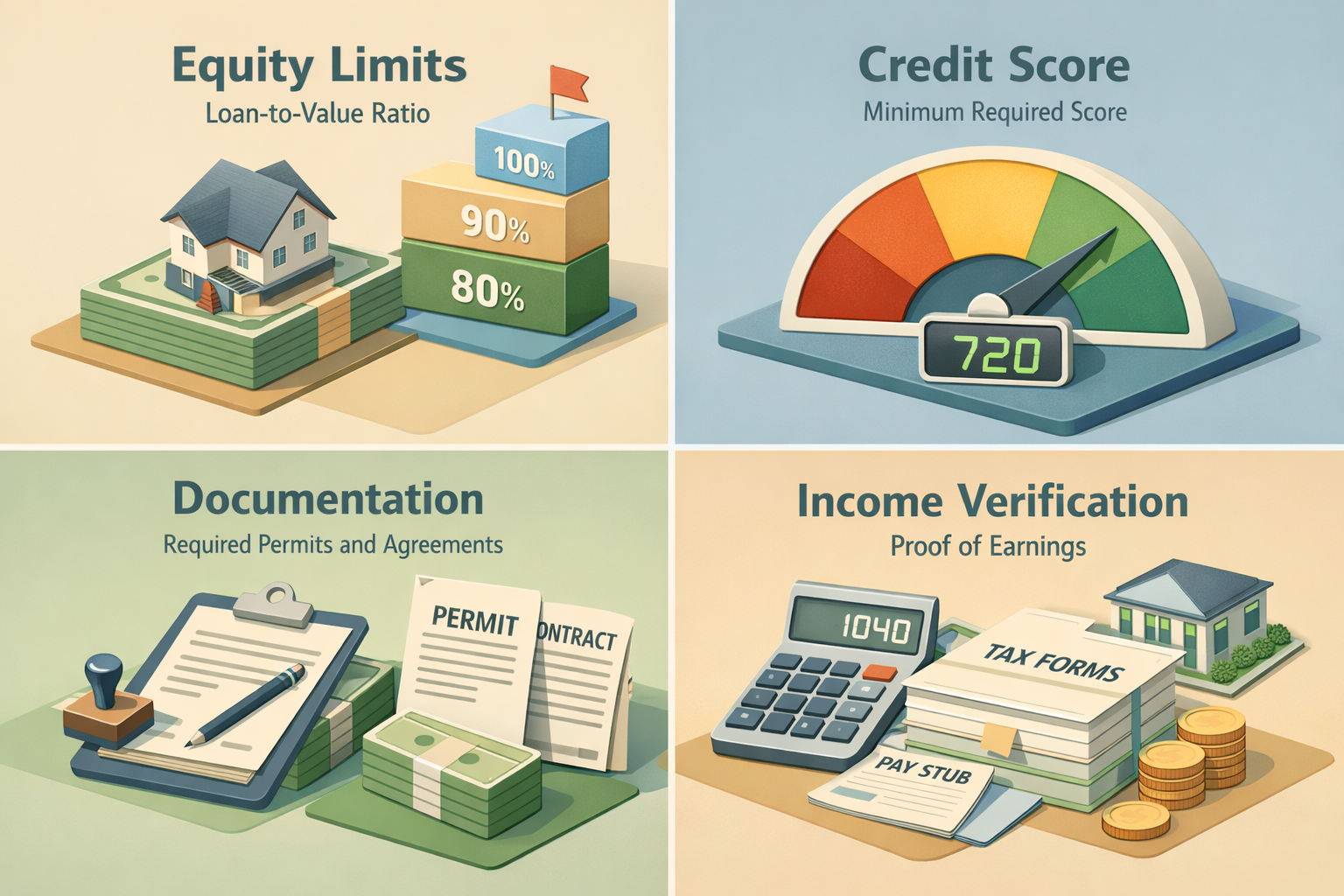
When you apply for a HELOC on a home with a secondary unit, lenders will typically evaluate several key factors. Understanding HELOC requirements for a property with a separate in-law suite means knowing what documentation, equity levels, and creditworthiness standards you'll need to meet.
Equity and Loan-to-Value Limits
Most lenders require you to maintain a certain level of equity in your home after drawing on a HELOC. Commonly, lenders may allow a combined loan-to-value ratio of up to 80% to 85%, though this can vary by lender and property type. If your property is classified as a two-unit home, some lenders may apply stricter CLTV limits, so it's helpful to compare options across multiple lenders.
Credit Score and Debt-to-Income Ratio
Your personal credit profile plays a significant role in HELOC approval. Lenders typically look for a credit score of at least 620, though many prefer 680 or higher for more favorable terms. Your debt-to-income ratio (DTI) — the percentage of your gross monthly income that goes toward debt payments — should generally be below 43%, though some lenders may allow slightly higher ratios depending on other compensating factors.
Property Appraisal and Inspection
An appraisal is almost always required for a HELOC. The appraiser will assess the current market value of your home, taking the in-law suite into account. A well-maintained, legally permitted suite may boost your home's appraised value, which could increase the home equity available to you. However, an unpermitted or non-code-compliant suite might actually create appraisal challenges or raise lender concerns.
Documentation of the In-Law Suite
Be prepared to provide documentation about the secondary unit. Lenders may ask for building permits, a certificate of occupancy, or confirmation from your local municipality that the suite is legally recognized. If you rent the suite out, you may need to provide a lease agreement and evidence of rental income, such as bank statements or tax returns.
How Rental Income from the In-Law Suite Can Strengthen Your Application
One potential advantage of owning a home with a HELOC with in-law suite is the ability to count rental income toward your qualifying income. If your in-law suite is currently rented out, some lenders may allow you to include a portion of that rental income when calculating your DTI.
Lenders typically want to see a reliable rental history before counting this income. You may need to provide:
- A signed lease agreement showing rental terms and monthly rent amount
- Recent bank statements showing rental deposits
- Schedule E from your federal tax returns if you've been reporting rental income
- Proof that the unit is legally permitted and habitable
Keep in mind that lenders often apply a vacancy factor — typically around 25% — when calculating usable rental income to account for potential periods when the unit may be unoccupied. So if your tenant pays $1,500 per month, the lender might only count $1,125 toward your qualifying income. Even with this adjustment, rental income could meaningfully improve your debt-to-income ratio and help you qualify for a larger line of credit.
If the suite is occupied by a family member who doesn't pay rent, you generally won't be able to count that as qualifying income. However, it may still positively influence the appraised value of your home, depending on how comparable properties are evaluated in your market.
Permitted vs. Unpermitted Suites — What Every Homeowner Should Know Before Applying
Whether your in-law suite is permitted or unpermitted is one of the most important factors that can affect your HELOC application. A permitted suite is one that was built with proper local government approval and inspected to meet building codes. An unpermitted suite was added without formal approval and may not comply with safety or zoning standards.
Lenders generally prefer — and in many cases require — that secondary units be legally permitted. Here's why this matters:
- Appraisal complications: An appraiser may not be able to include the value of an unpermitted suite in the home's assessed value, which could reduce the equity you can borrow against.
- Lender risk concerns: Some lenders may view an unpermitted unit as a liability, especially if local authorities could require its removal or impose fines.
- Insurance implications: Homeowners insurance policies may not cover damage to unpermitted structures, which can further complicate HELOC approval.
If your suite is unpermitted, you may want to explore the permitting process with your local building department before applying for a HELOC. In some cases, retroactive permitting is possible and could significantly improve your application's chances of approval. This step takes time, but it might be well worth the effort if it unlocks access to your tapping your home equity.
Practical Steps to Strengthen Your HELOC Application on a Multi-Use Property
Getting approved for a HELOC when your home includes a separate suite doesn't have to be complicated, but it does require some thoughtful preparation. Here are some practical strategies that may improve your approval odds:
- Verify your property's legal status: Confirm how your home is classified with your local zoning and tax authorities. Make sure the classification matches what you'll represent on your loan application.
- Get your permits in order: If the suite isn't currently permitted, consult with your local building department about the process for bringing it into compliance. A legally recognized unit is far easier to work with during the lending process.
- Strengthen your credit profile: Pay down existing revolving debt, avoid new credit inquiries, and address any errors on your credit report well before you apply.
- Organize your income documentation: If you collect rent, gather at least two years of tax returns and recent bank statements that clearly show rental deposits. Consistent documentation makes it easier for lenders to count that income.
- Shop multiple lenders: Not all lenders have the same guidelines for properties with in-law suites or ADUs. Some may be more experienced with these property types and offer more favorable terms. Working with a mortgage professional who specializes in unique property types can save you time and frustration.
- Request a preliminary value estimate: Before formally applying, you might ask a local real estate agent for a market analysis or request a broker price opinion to get a rough idea of your home's current value and potential equity position.
●Conclusion
Navigating the lending process with a non-traditional property doesn't have to feel overwhelming. Understanding HELOC requirements for a property with a separate in-law suite gives you a real advantage when it's time to sit down with a lender. By knowing how your property is classified, ensuring your suite is legally permitted, organizing your rental income documentation, and maintaining a solid credit profile, you put yourself in the best possible position to access the equity you've worked hard to build. Every homeowner's situation is unique, so working with an experienced mortgage professional who understands the nuances of properties with secondary units can make a meaningful difference. If you're ready to explore your options, the LoanWise team is here to help you find the right path forward.