
For millions of Americans, student loan debt is simply part of life. Whether you graduated a few years ago or have been chipping away at your balance for decades, those monthly payments don't disappear when you're ready to buy a home. The good news is that carrying student loans doesn't automatically disqualify you from getting a mortgage. In fact, the Federal Housing Administration (FHA) loan program was designed with everyday borrowers in mind — including those managing education-related debt. Understanding FHA loan requirements with substantial student loan debt is one of the most important steps a prospective homebuyer can take before starting the mortgage process. This guide breaks down exactly how student loans affect your FHA application, what lenders are looking for, and how you can position yourself for the best possible outcome.
What Makes FHA Loans a Popular Choice for Borrowers with Student Debt
FHA loans are government-backed mortgages insured by the Federal Housing Administration. Because the government provides that insurance, lenders are often more willing to work with borrowers who have lower credit scores, smaller down payments, or higher levels of existing debt. This flexibility makes FHA loans particularly appealing to first-time homebuyers — many of whom are also carrying student loan balances.
Compared to conventional loans, FHA loans typically allow for a higher debt-to-income (DTI) ratio, which is a key factor when student loans are in the picture. A borrower's DTI is calculated by dividing their total monthly debt obligations by their gross monthly income. The lower this ratio, the more borrowing room a lender sees. FHA guidelines may allow DTI ratios up to around 43% in many cases, and sometimes higher with compensating factors like strong reserves or a solid credit history.
Additionally, FHA loans generally require a down payment as low as 3.5% for borrowers who meet the minimum credit score threshold, which is typically around 580. For those with scores between 500 and 579, a 10% down payment may be required. This lower barrier to entry can be a lifeline for borrowers who've been prioritizing student loan payments over saving a large down payment.
How Student Loans Are Calculated in Your FHA Debt-to-Income Ratio
One of the most critical — and often misunderstood — aspects of FHA loan approval with student loans is how lenders count those balances against you. The rules have shifted over the years, and understanding the current guidelines could make a meaningful difference in your application.
Under current FHA guidelines, if your student loans are in active repayment, lenders will use the actual monthly payment shown on your credit report or student loan statement. This is a positive development for borrowers who are on income-driven repayment (IDR) plans, because these plans often result in lower monthly payments compared to a standard 10-year repayment schedule.
However, there's an important caveat. If your student loan payment is listed as $0 — for example, because you're on a deferred plan or an IDR plan where your calculated payment happens to be zero — FHA guidelines may require lenders to use a calculated payment instead. In this scenario, lenders may use 1% of the outstanding loan balance as the assumed monthly payment. For borrowers with large balances, this can significantly inflate the DTI ratio and affect qualification.
For example, if you have $80,000 in student loans and your actual payment under an IDR plan is $0, the lender might count $800 per month toward your DTI. That could be the difference between qualifying for the home you want or having to adjust your budget. It's worth speaking with a loan officer early in the process to understand exactly how your specific situation will be handled.
Credit Score Expectations When Student Loan Debt Is a Factor
Your credit score plays a major role in FHA loan approval with student loans, and student loans can influence that score in both positive and negative ways. On the positive side, a long-standing student loan account in good standing can contribute to a healthy credit history and a favorable payment track record — both of which credit scoring models value.
On the other hand, missed or late student loan payments can cause notable damage to your credit score, which may complicate your FHA application. If you've had any delinquencies on your student loans, you'll want to address those before applying for a mortgage. Getting current on your payments and allowing some time to pass can help your score recover.
For FHA borrowers, a credit score of 580 or above is typically needed to access the 3.5% down payment option. Scores below 580 but at or above 500 may still qualify, though the required down payment increases. It's also worth noting that individual lenders may impose their own minimum score requirements — known as lender overlays — that are stricter than FHA's official guidelines. Shopping around among multiple lenders can help you find one whose internal criteria match your financial profile.
If your credit score needs improvement, consider focusing on reducing revolving credit balances, disputing any inaccuracies on your credit report, and making all current debt payments on time consistently. Even modest improvements in your score can open up better loan terms.
Understanding FHA Loan Requirements with Substantial Student Loan Debt and DTI Strategy
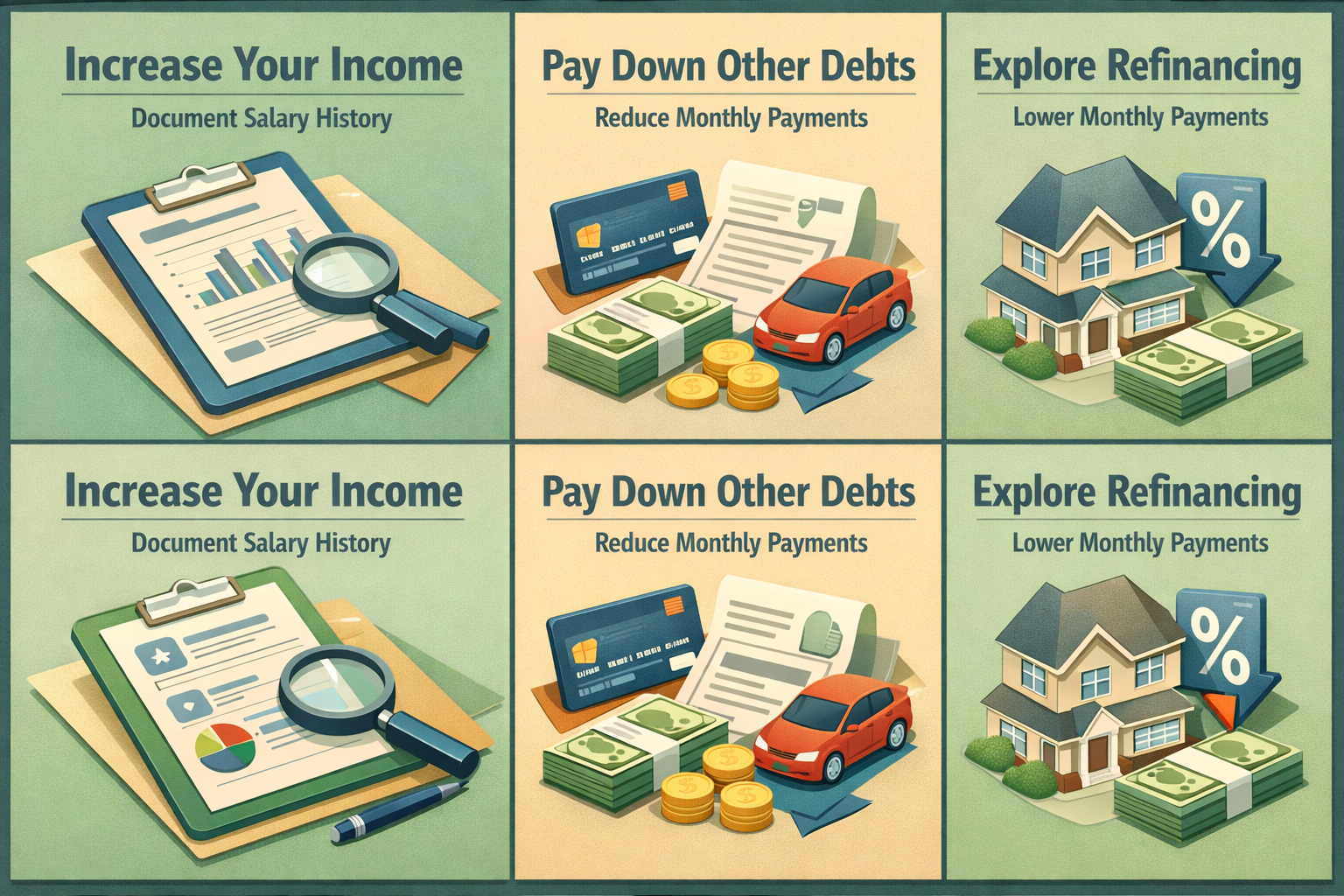
Truly understanding FHA loan requirements with substantial student loan debt means thinking strategically about your overall financial picture. Your DTI ratio is arguably the most powerful lever you can pull to improve your chances of approval, and there are several ways to work on it before you apply.
Increase Your Income Where Possible
Lenders use your gross monthly income as the denominator in the DTI calculation. If you've recently received a raise, taken on a side income, or transitioned to a higher-paying role, make sure this is documented and reflected in your application. Lenders typically want to see a two-year history of income, especially for self-employed borrowers, but recent increases in salary for W-2 employees can often be counted.
Pay Down Other Debts First
If you're carrying credit card balances, an auto loan, or personal loan payments, reducing or eliminating these can meaningfully lower your DTI. Even paying off a smaller debt that carries a $150 monthly payment can shift your DTI enough to change your loan scenario. Prioritize debts with the highest monthly payments relative to their outstanding balance for the most efficient impact.
Explore Refinancing or Consolidating Student Loans
In some cases, refinancing your student loans to extend the repayment term — or enrolling in an income-driven repayment plan — can lower the monthly payment that appears on your credit report. This may reduce the figure a lender uses in your DTI calculation. However, be cautious: refinancing federal student loans into private loans eliminates access to federal protections and forgiveness programs. It's worth consulting a financial advisor before making that move.
FHA Loan Limits, Property Requirements, and What to Expect at Closing
Beyond debt ratios and credit scores, there are a few other FHA loan requirements worth knowing. FHA loans come with loan limits that vary by county and are updated annually by the Department of Housing and Urban Development (HUD). These limits are based on the local median home price, so borrowers in high-cost areas may have access to higher loan limits than those in more affordable markets.
FHA loans also require the property to meet minimum safety and livability standards as assessed by an FHA-approved appraiser. This means that homes in poor condition — with issues like a damaged roof, outdated electrical systems, or structural concerns — may not pass FHA appraisal requirements. For buyers eyeing fixer-uppers, the FHA 203(k) rehabilitation loan program could be an alternative worth exploring.
Another cost to factor in is mortgage insurance. FHA loans require both an upfront mortgage insurance premium (UFMIP), which is typically 1.75% of the loan amount and can be rolled into the loan, and an annual mortgage insurance premium (MIP) paid monthly. Unlike conventional loans, FHA mortgage insurance may remain for the life of the loan if your down payment is less than 10%, depending on when the loan was originated. This ongoing cost should be factored into your affordability calculations.
At closing, you'll also need to budget for standard closing costs, which typically range from 2% to 5% of the loan amount. Some of these costs may be negotiated or covered by seller concessions, which FHA allows up to 6% of the purchase price — a helpful option for buyers trying to preserve cash.
Practical Steps to Strengthen Your FHA Application Before You Apply
Preparing thoroughly before submitting your mortgage application can save you time, stress, and potentially thousands of dollars in the long run. Here's a practical checklist for borrowers managing student loan debt who are working toward FHA loan approval:
- Pull your credit reports early: Review all three bureaus (Equifax, Experian, and TransUnion) for errors or outdated information. Dispute anything inaccurate well before applying.
- Document your student loan payment status: Get up-to-date statements showing your actual monthly payment. If you're on an IDR plan, have documentation ready that reflects your current payment amount.
- Calculate your current DTI: Add up all your monthly debt payments and divide by your gross monthly income. If you're above 43%, consider what debts you can reduce before applying.
- Save for more than the minimum down payment: A larger down payment reduces your loan amount, improves your DTI, and may affect your mortgage insurance terms over time.
- Build cash reserves: Lenders and FHA guidelines may look favorably on borrowers who have savings beyond what's needed for the down payment and closing costs. Reserves act as a compensating factor if other parts of your application are borderline.
- Work with an experienced FHA lender: Not all lenders interpret FHA guidelines the same way, and some have more experience with complex debt profiles. Seek out lenders who specialize in FHA lending and understand how to navigate student loan scenarios.
It's also a good idea to get pre-approved before house hunting. Pre-approval gives you a clear sense of your budget and shows sellers you're a serious buyer.
●Conclusion
Student loan debt is a reality for a large portion of today's homebuyers, but it doesn't have to be a barrier. Understanding FHA loan requirements with substantial student loan debt is about knowing the rules, preparing your finances thoughtfully, and working with the right professionals. FHA loans offer genuine flexibility — lower down payments, more lenient credit requirements, and room for higher debt loads — that can make homeownership achievable even when student loans are part of the equation. The key is to go in informed, plan ahead, and lean on qualified guidance when needed. If you're ready to explore your options, connecting with a knowledgeable FHA lender could be your most valuable first step.