
Buying a multi-family property can be one of the smartest financial moves a homebuyer or real estate investor makes. You get a place to live while tenants help cover the mortgage — a strategy often called "house hacking." But before you dive in, it's important to know how the financing works. Specifically, understanding FHA loan limits for multi-family property purchase is a critical first step. FHA loans are government-backed mortgages insured by the Federal Housing Administration, and they come with borrower-friendly terms like lower down payments and flexible credit requirements. However, they also come with loan limits that vary based on the number of units and the location of the property. This guide will walk you through everything you need to know so you can move forward with confidence.
What Makes FHA Loans a Popular Choice for Multi-Unit Properties
FHA loans have long been a go-to option for first-time homebuyers, but they're also increasingly popular among buyers looking to purchase multi-family properties. One of the biggest reasons is the relatively low down payment requirement — typically as low as 3.5% for borrowers with a credit score of 580 or higher. For a duplex, triplex, or fourplex, that can make a significant difference in how much cash you need upfront.
Another advantage is that FHA loans allow borrowers to use projected rental income from the other units to help qualify for the loan. This means the income you expect to collect from tenants may be factored into your debt-to-income calculations, potentially making it easier to get approved for a larger loan amount than you might qualify for with a conventional mortgage alone.
It's also worth noting that FHA multi-family loans require the borrower to live in one of the units as their primary residence. This owner-occupancy rule is a key condition of the program. If you're looking to purchase a rental property without living in it, you'd likely need to explore other financing options. But for buyers who are comfortable with this requirement, an FHA loan can open the door to property ownership and rental income at the same time.
How FHA Loan Limits Are Structured by Unit Count
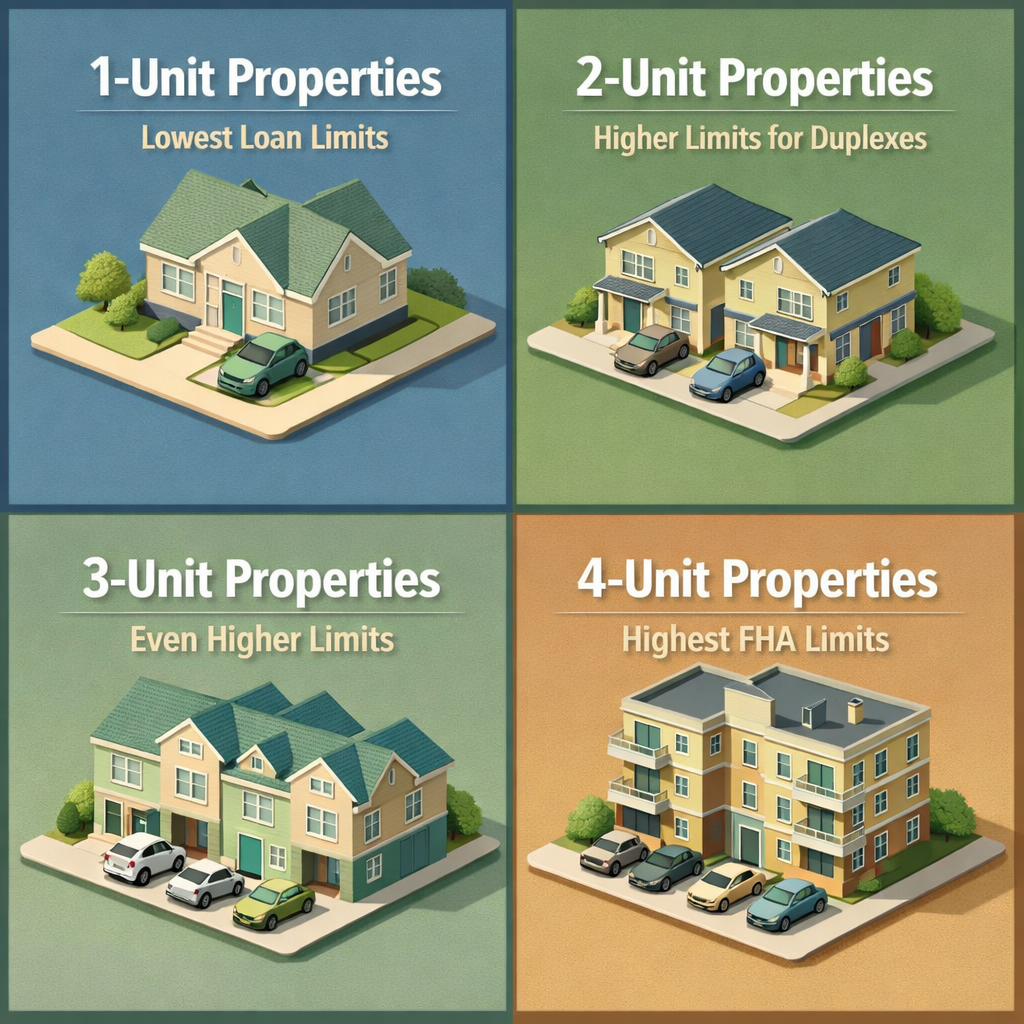
One of the most important aspects of understanding FHA loan limits for multi-family property purchase is recognizing that the caps aren't one-size-fits-all. The Federal Housing Administration sets different loan limits based on two key factors: the number of units in the property and the geographic location of the home.
FHA loan limits are established at the county level and are updated annually by the U.S. Department of Housing and Urban Development (HUD). They're typically divided into two categories: floor limits, which apply to lower-cost areas, and ceiling limits, which apply to high-cost markets like major metropolitan areas.
Here's how the unit structure generally works:
- 1-unit properties have the lowest loan limits, reflecting the cost of a single-family home.
- 2-unit properties (duplexes) have higher limits to account for the increased purchase price of a two-family building.
- 3-unit properties (triplexes) carry even higher limits.
- 4-unit properties (fourplexes) have the highest FHA loan limits available under the standard program.
Because these limits change each year and vary widely by county, it's essential to look up the current FHA loan limits for the specific area where you're purchasing. HUD publishes updated limits annually, and most FHA-approved lenders can provide this information quickly. Always verify the current caps before making an offer on a property.
High-Cost Areas and How Location Affects Your Borrowing Ceiling
Geography plays a major role in determining how much you can borrow with an FHA loan on a multi-unit property. In higher-cost housing markets — think coastal cities, tech hubs, and densely populated metro areas — FHA loan limits are set considerably higher than in rural or lower-cost regions. This is by design: the program aims to remain relevant and accessible regardless of where borrowers live.
HUD calculates area loan limits based on local median home prices. If the median price in a given county is significantly above the national baseline, the FHA ceiling for that area rises accordingly. In some high-cost counties, the limit for a fourplex could potentially reach into the millions, making FHA financing viable even in expensive markets.
On the other hand, buyers in more affordable regions will work with lower loan limits. If the property you're eyeing costs more than the FHA limit for your county and unit count, you won't be able to finance the entire purchase through an FHA loan. In that case, you may need to bring a larger down payment, consider a conventional loan, or explore a combination strategy with your lender.
The practical takeaway here is simple: always confirm the FHA loan limits for the specific county where you plan to buy before assuming FHA financing will cover the full purchase price. A knowledgeable mortgage professional can help you match your property goals to the right loan program.
Qualifying for an FHA Multi-Unit Loan: Credit, Income, and Reserves
Beyond the loan limits themselves, there are several qualification benchmarks you'll need to meet when applying for an FHA loan on a multi-family property. Understanding these requirements upfront can help you prepare and avoid surprises during the approval process.
Credit Score Requirements
FHA loans are known for being more accessible to borrowers with less-than-perfect credit. Generally, a credit score of 580 or above may allow you to qualify with the minimum 3.5% down payment. Scores between 500 and 579 might still qualify, but typically require a larger down payment — often around 10%. Scores below 500 are generally not eligible for FHA financing. Individual lenders may also impose their own credit overlays, meaning their internal minimums could be higher than the FHA's baseline.
Debt-to-Income Ratio
Your debt-to-income (DTI) ratio measures how much of your gross monthly income goes toward monthly debt obligations. FHA guidelines typically allow a DTI of up to 43%, though some lenders may accept higher ratios with compensating factors. As mentioned, a portion of projected rental income from the non-owner-occupied units may be counted, which can work in your favor.
Cash Reserves
For multi-family properties — especially triplexes and fourplexes — lenders often require you to demonstrate that you have cash reserves available after closing. These reserves act as a financial buffer in case of vacancy or unexpected repairs. The exact amount required can vary by lender, but it's common to see requirements of one to three months' worth of mortgage payments for two-unit properties, and potentially more for larger ones.
Using Rental Income to Strengthen Your FHA Loan Application
One of the most powerful tools available to buyers pursuing an FHA multi-unit loan is the ability to use anticipated rental income as part of your qualifying income. This feature can dramatically improve your debt-to-income ratio and help you qualify for a higher loan amount than your personal income alone might support.
However, there are rules about how this income is calculated. Lenders typically don't count the full rent you expect to collect. Instead, they apply a vacancy factor — a percentage reduction meant to account for the reality that units won't always be occupied. In most cases, lenders may credit approximately 75% of the expected rental income toward your qualifying figures, though this can vary.
If the property already has tenants in place, lenders may use existing lease agreements to document the rental income. For vacant units, an FHA-approved appraiser will provide a rent schedule as part of the appraisal, estimating the fair market rent for each unit. This appraisal-based estimate is typically what lenders use when no lease is in place.
It's also worth noting that FHA loan limits multi-unit property guidelines require the property to meet certain condition standards before financing is approved. The FHA appraisal process is more thorough than a conventional appraisal, assessing both the value of the property and its safety and habitability. If there are significant repair issues, they may need to be addressed before or shortly after closing.
Common Pitfalls to Avoid When Navigating FHA Multi-Unit Financing
Even well-prepared buyers can run into obstacles when pursuing an FHA loan for a multi-unit property. Being aware of common mistakes can save you time, money, and frustration.
- Not verifying local loan limits early: FHA loan limits change annually and vary by county. Assuming a national average applies to your area could lead to a financing gap late in the transaction.
- Overlooking the owner-occupancy requirement: FHA loans require you to occupy one unit as your primary residence. Attempting to use FHA financing for a pure investment property is not permitted and could be considered mortgage fraud.
- Underestimating reserve requirements: Buyers sometimes focus entirely on the down payment and closing costs, forgetting that lenders may require additional reserves for multi-unit properties. Running short on reserves can delay or derail approval.
- Ignoring property condition issues: The FHA appraisal standards are strict. Properties with health and safety issues — such as roof damage, mold, or faulty electrical systems — may not pass FHA inspection without repairs. Factor potential rehab costs into your budget.
- Working with a lender unfamiliar with FHA multi-unit rules: Not every lender has deep experience with FHA loans on 2-to-4-unit properties. Choosing an FHA-specialized lender can make the process smoother and help you avoid missteps.
Taking the time to understand these potential stumbling blocks before you start your property search puts you in a much stronger position going forward.
Is an FHA Multi-Unit Loan the Right Fit for Your Goals
An FHA loan on a multi-family property can be an excellent strategy — but it's not the right fit for every buyer. Before committing to this path, it's helpful to weigh the advantages against the limitations and consider how they align with your personal and financial goals.
On the positive side, FHA loans offer low down payments, more flexible credit requirements, and the ability to use rental income to qualify. For first-time buyers or those with moderate savings, these features can make multi-unit homeownership achievable much sooner than a conventional loan might allow. The built-in income potential of a duplex or triplex also helps offset monthly mortgage costs over time.
On the other hand, FHA loans do come with mortgage insurance premiums — both an upfront fee and an annual premium — which add to the overall cost of the loan. Depending on how long you keep the loan, this can add up. Additionally, the owner-occupancy requirement means you can't use an FHA loan to build a purely passive rental portfolio.
For real estate investors looking to scale beyond four units, FHA financing won't apply at all — you'd need to explore commercial mortgage products or conventional investment property loans. But for someone ready to take their first step into real estate investing while securing a primary residence, understanding FHA loan limits for multi-family property purchase and using this program strategically could be a genuinely powerful move.
Speaking with an experienced mortgage advisor who works with FHA multi-unit loans regularly is one of the best ways to assess whether this path makes sense for your specific situation, timeline, and budget.
●Conclusion
Navigating the world of multi-unit financing doesn't have to feel overwhelming. With the right information and the right lending partner, buying a duplex, triplex, or fourplex with an FHA loan can be a realistic and rewarding goal. The key is to start with a clear picture of the loan limits in your target area, understand the qualification requirements, and plan for factors like reserves and property condition well in advance. At LoanWise, we're here to help homebuyers and real estate investors make informed decisions at every stage of the financing journey. Whether you're just beginning your research or ready to get pre-approved, our team can guide you through the details and connect you with the right loan program for your needs. Reach out today to explore your options.